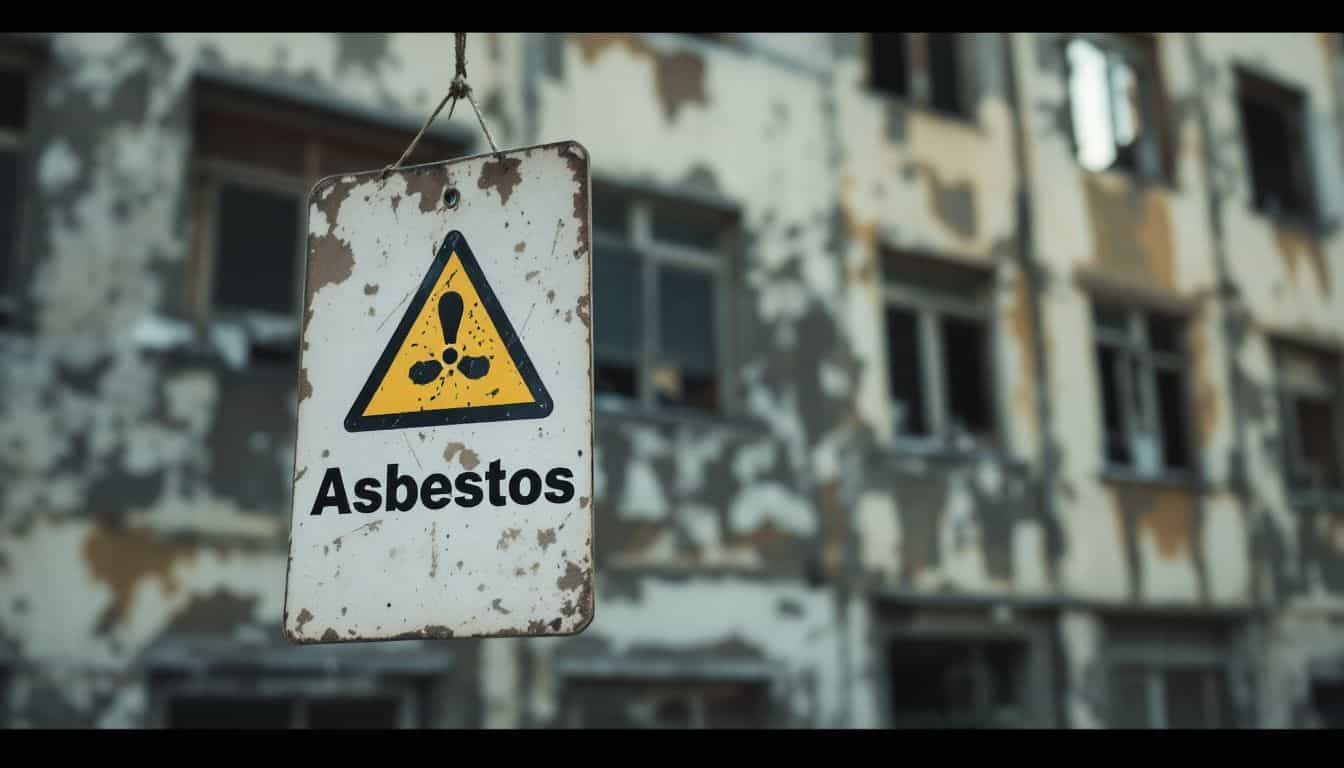
Asbestos Management: Why Every Duty Holder Needs a Robust Plan
Asbestos doesn’t announce itself. It sits quietly inside walls, ceiling tiles, pipe lagging, and floor coverings — often completely undisturbed for decades. But the moment someone drills, cuts, or sands into it, the risk becomes immediate and serious. Effective asbestos management is not a bureaucratic exercise; it’s the practical framework that keeps building occupants, maintenance workers, and contractors safe every single day.
If you’re responsible for a non-domestic building constructed before the year 2000, you almost certainly have a legal duty to manage asbestos. Here’s what that actually means in practice.
What Is Asbestos Management and Who Is Responsible?
Asbestos management refers to the entire process of identifying, assessing, monitoring, and controlling asbestos-containing materials (ACMs) within a building. It’s not a one-off task — it’s an ongoing programme of work that evolves as the building changes.
Under the Control of Asbestos Regulations, the “duty to manage” falls on the duty holder. That’s typically the building owner, employer, or anyone who has control over the maintenance and repair of a non-domestic premises. If you manage a commercial building, school, hospital, industrial unit, or housing association property, this duty applies to you.
Failing to meet this duty isn’t just a health risk — it’s a criminal offence that can result in prosecution, significant fines, and civil liability.
The Legal Framework: What the Regulations Actually Require
The Control of Asbestos Regulations set out clear duties for anyone responsible for non-domestic premises. The HSE’s guidance document HSG264 provides the practical framework for how surveys should be conducted and how information should be recorded and acted upon.
The core legal requirements for duty holders include:
- Taking reasonable steps to find out whether ACMs are present and their condition
- Presuming materials contain asbestos unless there is strong evidence they don’t
- Making and keeping an up-to-date asbestos register
- Assessing the risk from any ACMs identified
- Preparing and implementing a written asbestos management plan
- Providing information about ACM locations to anyone who might disturb them
- Reviewing and monitoring the plan regularly
The regulations don’t require you to remove all asbestos. In many cases, managing it in place is the safer and more practical option — provided it’s in good condition and unlikely to be disturbed.
Starting With a Survey: The Foundation of Good Asbestos Management
You cannot manage what you haven’t found. Before any management plan can be written, you need a thorough survey of the premises to locate and assess all potential ACMs.
An asbestos management survey is the standard starting point for most occupied buildings. It involves a visual inspection and sampling of suspected materials to confirm whether asbestos is present, identify the type of asbestos, assess the material’s condition, and determine the risk it poses. The surveyor will produce a detailed report that forms the basis of your asbestos register — the document everything else is built upon.
Management Survey vs Refurbishment and Demolition Survey
It’s worth understanding the difference between survey types. A management survey is designed for buildings in normal occupation and use — it’s intrusive enough to locate ACMs in accessible areas without causing significant disruption.
A demolition survey, by contrast, is required before any major building work, renovation, or demolition. It’s far more intrusive and must be completed before work begins in the affected area. Both types follow the HSG264 methodology.
Building and Maintaining Your Asbestos Register
The asbestos register is the central document of your management programme. Think of it as the live record of every ACM in your building — where it is, what condition it’s in, and what action (if any) is required.
A well-maintained register should include:
- The location of each ACM (room, floor, specific element)
- The type of asbestos identified (e.g. chrysotile, amosite, crocidolite)
- The material’s condition — good, fair, or poor
- A risk assessment score for each item
- The recommended action: monitor, repair, seal, or remove
- Dates of any previous inspections or works
The register must be accessible to anyone who might disturb the materials — that includes maintenance staff, contractors, and emergency services. It should never sit in a filing cabinet that nobody knows about.
Presuming Asbestos Is Present
Where materials cannot be sampled or tested, the regulations require you to presume they contain asbestos and manage them accordingly. This precautionary approach is deliberate — it’s far safer to treat an unconfirmed material as hazardous than to assume it’s safe and disturb it without protection.
Risk Assessment: Prioritising What Needs Attention
Not all ACMs pose the same level of risk. A well-sealed asbestos insulating board in good condition behind a fixed partition presents a very different risk profile to damaged pipe lagging in a busy maintenance corridor.
Risk assessment looks at several factors:
- Condition of the material — is it intact, damaged, or deteriorating?
- Location — is it in a high-traffic area, accessible to maintenance staff, or enclosed?
- Type of asbestos — some fibre types are considered more hazardous than others
- Likelihood of disturbance — will building work, maintenance, or day-to-day activity put the material at risk?
The outcome of the risk assessment determines the priority and nature of the action required. High-risk items need immediate attention; lower-risk materials may simply require periodic monitoring and reinspection.
Writing and Implementing the Asbestos Management Plan
Once you have your survey results, register, and risk assessments in place, these feed directly into your written asbestos management plan. This document sets out exactly how the ACMs in your building will be managed going forward.
An effective plan will cover:
- Roles and responsibilities — who is the duty holder, who manages day-to-day compliance, who is the appointed surveyor?
- The asbestos register — where it’s held, how it’s accessed, and how it’s updated
- Procedures for planned maintenance and construction work — how contractors are informed and controlled
- Emergency procedures — what happens if ACMs are accidentally disturbed
- Training requirements — who needs asbestos awareness training and when
- Inspection and monitoring schedule — how often ACMs will be reinspected
- Action plans for remediation — timelines and responsibilities for any repair, encapsulation, or removal work
The plan must be a living document. It should be reviewed whenever the building changes, following any incident involving ACMs, and at regular intervals regardless — typically annually as a minimum.
Informing Contractors and Maintenance Staff
One of the most critical — and most frequently overlooked — elements of asbestos management is communicating the register’s contents to people doing work in the building. A contractor who doesn’t know there’s asbestos pipe lagging above the ceiling tiles they’re about to open is in serious danger.
Before any maintenance, repair, or construction work begins, the relevant sections of the asbestos register must be shared with those carrying out the work. This should be part of your standard permit-to-work or contractor induction process. It’s not optional — it’s a legal requirement.
Scheduled Inspections and Condition Monitoring
Asbestos management is not a set-and-forget exercise. ACMs that are in good condition today can deteriorate over time — particularly in areas subject to vibration, moisture, or physical impact. Regular reinspections are essential to catch any changes before they become a hazard.
The frequency of inspections should be risk-based. Higher-risk materials in accessible locations may warrant six-monthly checks; stable, well-protected ACMs might only need annual review. Your management plan should specify the schedule for each item in the register.
After each inspection, update the register with the findings. If the condition of any ACM has changed, reassess the risk and adjust the action plan accordingly.
When Asbestos Needs to Be Removed
Removal is not always the right answer — but sometimes it is. If an ACM is in poor condition, at high risk of disturbance, or located in an area earmarked for refurbishment, removal may be the most appropriate course of action.
Licensed asbestos removal must be carried out by a contractor licensed by the HSE. This applies to the most hazardous materials, including asbestos insulation, asbestos insulating board, and asbestos coatings. Some lower-risk materials can be removed by trained, non-licensed workers — but the rules around this are specific and must be followed carefully.
Any removal work must be planned, notified to the relevant authorities where required, and carried out with appropriate controls in place. Once complete, the asbestos register must be updated to reflect the removal.
Asbestos Awareness Training: A Legal Requirement
Anyone who might come into contact with ACMs in the course of their work — maintenance staff, electricians, plumbers, decorators — must receive appropriate asbestos awareness training. This is a legal requirement under the Control of Asbestos Regulations.
Training doesn’t mean these workers can carry out licensed removal work. It means they understand what asbestos is, where it might be found, what it looks like, and — critically — what to do if they suspect they’ve encountered it. The answer is always to stop work immediately and seek advice.
Awareness training should be refreshed regularly. It should also be part of the induction process for any new member of staff whose role could bring them into contact with building fabric.
The Health Risks That Make This Non-Negotiable
Asbestos is the single greatest cause of work-related deaths in the UK. The diseases it causes — mesothelioma, asbestosis, asbestos-related lung cancer, and pleural thickening — have long latency periods, often developing decades after exposure. There is no cure for mesothelioma.
The fibres released when ACMs are disturbed are invisible to the naked eye and can remain airborne for hours. By the time someone realises they’ve been exposed, the damage may already be done.
Proper asbestos management — knowing where the asbestos is, keeping it in good condition, and controlling who works near it — is the most effective way to prevent exposure. This is why the regulatory framework is so robust, and why cutting corners is never an acceptable option.
Common Mistakes That Undermine Asbestos Management
Even well-intentioned duty holders can fall short. The most common failures include:
- An out-of-date register — if the building has changed since the last survey, the register no longer reflects reality
- Failing to share the register with contractors — the information is only useful if the people who need it actually have it
- No written management plan — a register alone is not enough; the plan sets out how the information will be acted upon
- Skipping reinspections — ACM conditions change; a register that isn’t periodically reviewed becomes a false sense of security
- Assuming new buildings are asbestos-free — if the building was constructed or refurbished before 2000, ACMs may be present regardless of its apparent age or condition
- No asbestos awareness training for staff — the duty holder’s obligations extend to ensuring the people working in the building are adequately informed
Each of these failures creates genuine risk — and each is also a potential regulatory breach. The good news is that all of them are entirely avoidable with a properly structured management programme.
Asbestos Management Across the UK: Local Expertise Matters
Whether you’re managing a commercial property in the capital or overseeing a portfolio of industrial units in the Midlands or North West, the duty to manage asbestos applies equally. Local knowledge of building stock, construction periods, and common ACM types can make a real difference to the quality of a survey and the management plan that follows.
Supernova Asbestos Surveys provides specialist services across the country. If you need an asbestos survey London, our teams are experienced with the city’s diverse mix of Victorian, Edwardian, and post-war commercial buildings.
For properties in the North West, our asbestos survey Manchester service covers the full range of commercial and industrial premises across the region. And for duty holders in the West Midlands, our asbestos survey Birmingham team brings the same rigorous methodology to every project.
How Supernova Asbestos Surveys Can Help
With over 50,000 surveys completed nationwide, Supernova Asbestos Surveys has the experience, accreditation, and local knowledge to support duty holders at every stage of the asbestos management process — from initial survey through to register maintenance, reinspections, and removal coordination.
We work with property managers, facilities teams, local authorities, housing associations, and private landlords across the UK. Our surveyors follow HSG264 methodology as standard, and every report we produce is clear, actionable, and built to support a robust management plan.
To book a survey or discuss your asbestos management obligations, call us on 020 4586 0680 or visit asbestos-surveys.org.uk. We’ll help you understand exactly where you stand and what needs to happen next.
Frequently Asked Questions
What is the difference between an asbestos register and an asbestos management plan?
The asbestos register is the record of all ACMs found in a building — their location, type, condition, and risk score. The asbestos management plan is the document that sets out how those materials will be managed going forward. Both are required under the Control of Asbestos Regulations, and one without the other leaves you non-compliant.
How often does an asbestos management plan need to be reviewed?
At a minimum, the plan should be reviewed annually. It should also be reviewed following any incident involving ACMs, whenever the building undergoes significant changes, and after any reinspection that identifies a change in the condition of a material. The plan is a living document — it should never be filed away and forgotten.
Does asbestos always need to be removed?
No. The regulations do not require removal in all cases. If an ACM is in good condition and unlikely to be disturbed, managing it in place is often the safer and more practical option. Removal is typically required when the material is damaged, deteriorating, or located in an area earmarked for refurbishment or demolition. Any removal work must be carried out by an HSE-licensed contractor where the material type requires it.
Who is classed as a duty holder under the Control of Asbestos Regulations?
The duty holder is anyone who has responsibility for the maintenance and repair of a non-domestic building. This typically includes building owners, employers, and managing agents. In some cases, the duty may be shared between multiple parties — for example, a landlord and a tenant — depending on the terms of the lease and the nature of the control each party exercises over the premises.
What happens if a duty holder fails to comply with asbestos management requirements?
Non-compliance with the Control of Asbestos Regulations is a criminal offence. The HSE has powers to issue improvement notices, prohibition notices, and to prosecute duty holders who fail to meet their obligations. Penalties can include significant fines and, in serious cases, custodial sentences. Duty holders may also face civil liability if workers or occupants are harmed as a result of inadequate asbestos management.