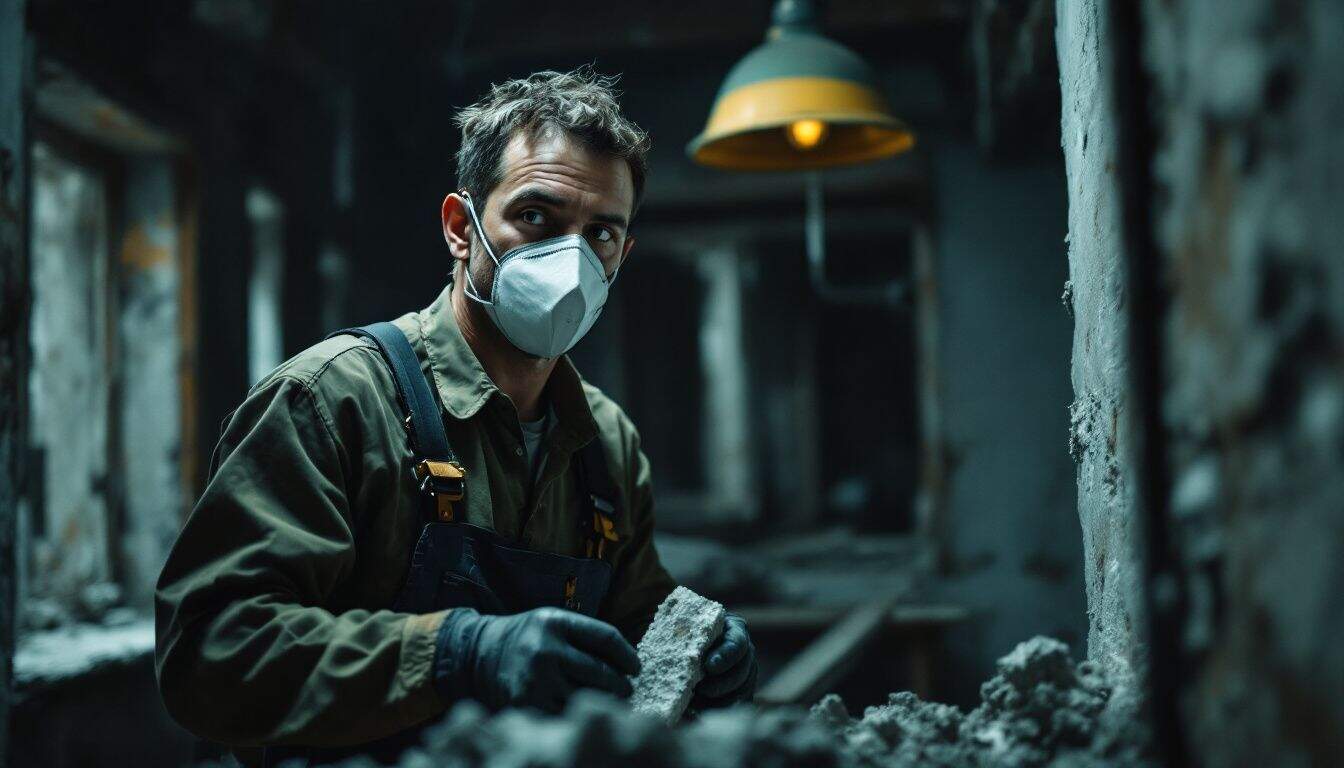
Why Every Building Owner Needs a Solid Asbestos Management Plan
Asbestos doesn’t announce itself. It sits quietly inside walls, ceiling tiles, pipe lagging, and floor coverings — and in thousands of UK buildings, it’s still there right now. Effective asbestos management is the difference between a building that’s genuinely safe and one that’s a ticking liability for everyone inside it.
Whether you’re a landlord, facilities manager, or building owner, understanding what a proper asbestos management plan looks like — and why the law demands one — is non-negotiable.
What Is Asbestos Management and Who Is Responsible?
Asbestos management refers to the ongoing process of identifying, assessing, monitoring, and controlling asbestos-containing materials (ACMs) within a building. It’s not a one-off exercise — it’s a continuous duty.
Under the Control of Asbestos Regulations, the legal responsibility falls on the “duty holder.” This is typically the person or organisation that owns or has control over a non-domestic building. If you manage a commercial property, a block of flats, a school, or any premises built before the year 2000, this duty almost certainly applies to you.
The duty to manage asbestos isn’t optional. It’s a legal requirement, and failing to meet it carries serious consequences.
The Legal Framework: What UK Regulations Actually Require
The Control of Asbestos Regulations set out clearly what duty holders must do. The HSE’s guidance document HSG264 provides the practical framework for how surveys should be conducted and how findings should be recorded and acted upon.
In plain terms, the regulations require you to:
- Arrange an asbestos survey to identify all ACMs in your building
- Create and maintain an asbestos register recording every ACM found
- Carry out a risk assessment for each ACM identified
- Develop a written, site-specific asbestos management plan
- Ensure the plan is accessible, readable, and kept up to date
- Conduct annual re-inspections for ACMs being managed in place
- Share relevant asbestos information with anyone who might disturb the materials
These aren’t suggestions — they’re obligations. The Health and Safety at Work Act reinforces this further, placing a general duty of care on employers and building owners to protect the health of anyone on their premises.
Penalties for Non-Compliance
The consequences of ignoring asbestos management duties are significant. Fines for serious breaches can reach up to £30,000 in magistrates’ courts, with unlimited fines possible in higher courts.
Prosecution is a real risk, not a theoretical one — the HSE actively investigates asbestos failures. Beyond fines, building owners can be held liable for asbestos-related diseases suffered by occupants or workers, creating financial and reputational exposure that no business can afford to ignore.
The Health Risks That Make Asbestos Management So Critical
Asbestos fibres are microscopic. When ACMs are disturbed — during renovation work, maintenance, or even routine drilling — those fibres become airborne and can be inhaled without anyone realising. The consequences can be fatal.
Asbestos exposure is linked to several serious and often terminal conditions:
- Mesothelioma — an aggressive cancer of the lining of the lungs, with no cure
- Asbestosis — a chronic scarring of lung tissue that progressively impairs breathing
- Lung cancer — with asbestos exposure significantly increasing risk, particularly in smokers
- Pleural thickening — which restricts lung expansion and causes breathlessness
What makes asbestos particularly dangerous is the latency period. Diseases typically don’t manifest until decades after exposure, meaning workers or occupants may not realise the harm done until it’s far too late.
Who Is Most at Risk?
Tradespeople — electricians, plumbers, joiners, plasterers — are among the most exposed groups in the UK. They regularly work in older buildings without always knowing what’s inside the walls or above the ceiling tiles.
Building occupants, including office workers, teachers, and residents, also face risk if ACMs are in poor condition and fibres are being released. A robust asbestos management plan protects all of these people by ensuring ACMs are monitored and any deterioration is caught early.
Components of an Effective Asbestos Management Plan
A well-constructed asbestos management plan isn’t a folder gathering dust on a shelf. It’s a living document that actively guides how your building is managed day to day. Here’s what it must contain.
The Asbestos Register
The asbestos register is the foundation of any management plan. It’s a detailed record of every ACM found during the survey, including:
- The type of asbestos present (e.g., chrysotile, amosite, crocidolite)
- The exact location within the building
- The current condition of each material
- The risk rating assigned to each ACM
- Any areas that were inaccessible during the survey and require future inspection
The register must be kept up to date. If building work uncovers new ACMs, or if materials are removed, the register must reflect those changes immediately. It must also be made available to any contractor working on the building — this is a legal requirement under the Control of Asbestos Regulations.
Risk Assessments
Not all asbestos is equally dangerous. ACMs that are in good condition and are unlikely to be disturbed can often be safely managed in place. The risk assessment process determines the right approach for each material identified.
A proper risk assessment considers:
- The type of asbestos — amphibole fibres such as amosite and crocidolite are generally considered more hazardous than chrysotile
- The condition of the material — is it intact, damaged, or friable?
- The likelihood of disturbance during normal building use or maintenance
- Who is likely to be in the area and how frequently
- Whether any planned works might disturb the material
Based on this assessment, each ACM is assigned a priority for action — whether that’s monitoring, encapsulation, or asbestos removal by a licensed contractor.
Scheduled Re-Inspections
Asbestos doesn’t stay the same. Materials degrade, buildings are altered, and conditions change. That’s why the management plan must include a programme of regular re-inspections.
The standard approach is:
- Annual re-inspections for ACMs being managed in place
- More frequent checks — for example, quarterly — for higher-risk materials or areas with significant footfall or maintenance activity
- Immediate reassessment following any incident that might have disturbed an ACM
After each inspection, the asbestos register must be updated and any remedial actions recorded. This creates a clear audit trail that demonstrates ongoing compliance.
Asbestos Awareness Training
Training is a core component of asbestos management that’s frequently underestimated. The Control of Asbestos Regulations require that anyone liable to disturb ACMs — or to supervise those who might — receives appropriate asbestos awareness training.
This training should cover:
- The properties of asbestos and why it’s hazardous
- Where ACMs are likely to be found in your specific building
- How to recognise materials that might contain asbestos
- The correct procedures to follow if asbestos is suspected or found unexpectedly
- Emergency procedures if ACMs are accidentally disturbed
Training records should be kept as part of the management plan documentation. They form part of your evidence of compliance if the HSE ever investigates.
Clear Assignment of Responsibilities
An asbestos management plan must name who is responsible for each aspect of its implementation. This includes who manages the register, who commissions re-inspections, who briefs contractors, and who makes decisions about remediation.
Without clear ownership, plans fail in practice. Inspections get missed, contractors aren’t briefed, and the register becomes out of date — all of which create legal and safety risks.
Choosing the Right Type of Asbestos Survey
Before a management plan can be written, you need reliable data about what’s in your building. That data comes from a professional asbestos survey — and the type of survey you need depends on what’s happening with the building.
A management survey is the standard survey for buildings in normal occupation. It’s designed to locate and assess ACMs that could be disturbed during everyday use or routine maintenance. It’s the appropriate starting point for most duty holders putting together their first management plan.
If you’re planning refurbishment work, major maintenance, or demolition, a standard management survey isn’t sufficient. A demolition survey is required before any intrusive or structural work begins. This type of survey is more thorough and involves destructive inspection techniques to locate all ACMs, including those hidden inside the building’s structure.
Using the wrong survey type — or skipping the survey altogether — is one of the most common asbestos management failures. It leaves duty holders exposed both legally and practically.
Asbestos Management Across the UK: Location Matters
The age of a building’s housing stock varies considerably across the UK, and with it, the likelihood of encountering asbestos. Older industrial cities and densely built urban areas often have a higher proportion of pre-2000 buildings where ACMs may be present.
If you manage properties in the capital, an asbestos survey London from a qualified surveyor is the essential first step in building your management plan. For properties in the North West, an asbestos survey Manchester will ensure your buildings are assessed to the same rigorous standard. And for those managing premises in the Midlands, an asbestos survey Birmingham provides the detailed findings you need to fulfil your legal duty.
Regardless of location, the legal obligations and the surveying standards under HSG264 are identical. What matters is working with a qualified, accredited surveyor who understands both the technical and regulatory requirements.
What Happens When Asbestos Management Goes Wrong
The consequences of poor asbestos management play out in several ways — and none of them are good.
For workers and occupants: Undetected or poorly managed ACMs put people at risk of exposure. Given the long latency period of asbestos-related diseases, the harm may not be apparent for decades — but it will come.
For duty holders: Prosecution, unlimited fines, and civil liability for asbestos-related illnesses. The HSE has made clear that it takes asbestos management failures seriously, and enforcement action is not uncommon.
For businesses: Reputational damage, disruption to operations if a building must be closed for emergency remediation, and the cost of reactive removal — which is always significantly more expensive than planned, managed work.
Proactive asbestos management isn’t just about compliance. It’s about protecting people and protecting your organisation from risk.
How to Get Started With Your Asbestos Management Plan
If you don’t have an asbestos management plan in place — or if your existing one is out of date — here’s a straightforward path forward:
- Commission an asbestos survey. A management survey (or refurbishment/demolition survey if works are planned) conducted by a UKAS-accredited surveyor is the starting point. This gives you the data you need.
- Review the survey report and asbestos register. Understand what’s been found, where it is, and what condition it’s in.
- Complete risk assessments for each ACM. Determine which materials need immediate action and which can be safely monitored.
- Write your management plan. Document responsibilities, inspection schedules, training requirements, and procedures for contractors.
- Implement the plan. Brief your team, inform contractors, and schedule your first re-inspections.
- Review and update regularly. The plan is only effective if it’s kept current. Set calendar reminders for re-inspections and register updates.
If you’re unsure where to start or whether your current arrangements are adequate, a professional asbestos management consultant can review your position and identify any gaps before they become a problem.
Get Professional Support From Supernova Asbestos Surveys
Supernova Asbestos Surveys has completed over 50,000 surveys nationwide, working with landlords, facilities managers, local authorities, and businesses of all sizes. Our UKAS-accredited surveyors operate across the whole of the UK, delivering management surveys, demolition surveys, and full asbestos management support to the standards required by HSG264 and the Control of Asbestos Regulations.
Whether you need a first survey, a re-inspection, or a complete review of your existing management plan, we can help. Call us on 020 4586 0680 or visit asbestos-surveys.org.uk to get started.
Frequently Asked Questions
What is an asbestos management plan and who needs one?
An asbestos management plan is a written document that records all asbestos-containing materials in a building, assesses the risks they pose, and sets out how those risks will be controlled. Under the Control of Asbestos Regulations, duty holders — typically those who own or control non-domestic premises — are legally required to have one if asbestos is present or likely to be present in their building.
Do I need an asbestos survey before creating a management plan?
Yes. An asbestos survey is the essential first step. Without it, you cannot know what ACMs are present, where they are, or what condition they’re in. A management survey is appropriate for buildings in normal use, while a refurbishment or demolition survey is required before any intrusive works take place. Both must be carried out by a competent, ideally UKAS-accredited, surveyor.
How often does an asbestos management plan need to be reviewed?
The plan should be reviewed and updated at least annually, and immediately following any event that might affect the condition or location of ACMs — such as building works, accidental damage, or the discovery of new materials. Re-inspections of managed ACMs are also required at least annually under the Control of Asbestos Regulations.
Can asbestos be left in place rather than removed?
Yes — in many cases, managing asbestos in place is the safest and most practical approach. If an ACM is in good condition and is unlikely to be disturbed during normal building use, it can be monitored and managed rather than removed. Removal is generally only necessary when materials are in poor condition, are at high risk of disturbance, or when refurbishment or demolition works are planned.
What are the penalties for failing to comply with asbestos management duties?
Fines for serious breaches can reach up to £30,000 in magistrates’ courts, with unlimited fines in higher courts. Duty holders can also face prosecution and civil liability for any asbestos-related illnesses suffered by workers or occupants. The HSE actively investigates asbestos management failures, and enforcement action — including improvement notices and prohibition notices — is not uncommon.