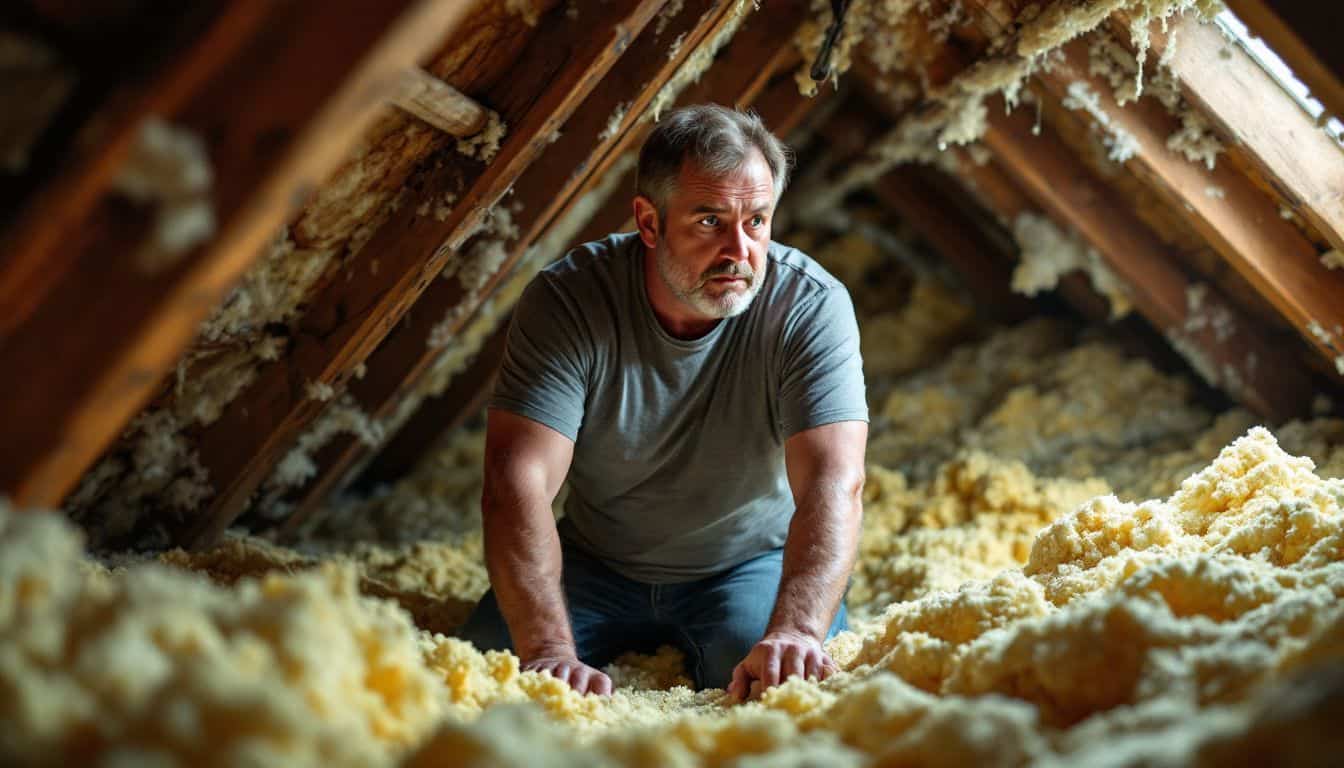
The Hidden Danger in Your Building: What Every Property Manager Needs to Know About Asbestos
Thousands of people die every year in the UK from diseases caused by asbestos exposure — many of them tradespeople who disturbed asbestos-containing materials during routine maintenance, often without knowing those materials were there. If you own, manage, or maintain a building constructed before 2000, asbestos is a risk you cannot afford to overlook. The consequences of getting it wrong are severe: irreversible illness, criminal prosecution, and civil liability.
This is not a historical problem. Asbestos remains the single largest cause of work-related deaths in the UK. Understanding where it hides, what it does to the body, and what the law requires of you is essential for anyone responsible for a building.
Why Asbestos Remains a Serious Threat in UK Buildings
Asbestos was used extensively in UK construction throughout the twentieth century. It was cheap, durable, and highly effective as a fire retardant and insulator — which is why it ended up in everything from pipe lagging and roof sheets to floor tiles and textured coatings. Its use was not fully banned in the UK until 1999.
That means millions of buildings still in active use today contain asbestos-containing materials (ACMs). The material is not always dangerous when left completely undisturbed. The danger arises when those materials are damaged, deteriorating, or disturbed during maintenance, renovation, or demolition — releasing microscopic fibres into the air that can be inhaled deep into the lungs.
The latency period between exposure and disease is typically 20 to 50 years. That long delay makes asbestos uniquely insidious: a maintenance worker exposed today may not develop symptoms until decades from now, long after the connection to a specific job or building is difficult to trace.
The Health Risks Caused by Asbestos Exposure
Asbestos fibres are so small they are invisible to the naked eye. Once inhaled, the body cannot expel them. They accumulate in lung tissue over time, causing progressive and often fatal damage. There is no safe level of asbestos exposure — even relatively brief or low-level exposure carries risk.
Mesothelioma
Mesothelioma is a cancer of the lining of the lungs (pleura) or abdomen (peritoneum), and it is almost exclusively caused by asbestos exposure. It is aggressive, incurable, and carries a very poor prognosis. Most people diagnosed with mesothelioma survive less than two years after diagnosis.
Crucially, mesothelioma is not confined to those who worked directly with asbestos. Anyone regularly present in environments where asbestos was disturbed — including office workers in affected buildings and family members of those who brought fibres home on their clothing — can develop the disease.
Lung Cancer
Asbestos exposure significantly increases the risk of lung cancer. The risk is substantially compounded for those who smoke. Workers involved in demolition, refurbishment, and building repairs face elevated exposure levels, particularly when working with friable (crumbly) asbestos materials that release fibres more readily.
Asbestosis
Asbestosis is a chronic, irreversible lung condition caused by prolonged inhalation of asbestos fibres. The fibres cause scarring of the lung tissue — pulmonary fibrosis — which progressively reduces lung function. Symptoms include breathlessness, a persistent cough, and fatigue. The condition can be fatal and has no cure.
Asbestosis typically develops after sustained, heavy exposure over many years, but it remains a genuine risk for tradespeople who regularly work in older buildings without adequate precautions in place.
Other Asbestos-Related Diseases
Asbestos exposure has also been linked to cancers of the larynx and ovary, as well as pleural plaques and pleural thickening — conditions affecting the lining of the lungs that can cause chronic breathlessness and discomfort. The International Agency for Research on Cancer classifies all forms of asbestos as Group 1 carcinogens, the highest risk category.
This classification applies to all asbestos types, including chrysotile (white asbestos), which was historically considered less dangerous than amphibole types such as crocidolite (blue) and amosite (brown). All types are hazardous. None can be treated as safe.
Your Legal Duties as a Property Owner or Manager
If you own or manage a non-domestic building — or the common areas of a residential block — you have a legal duty to manage asbestos under the Control of Asbestos Regulations. Failure to comply is a criminal offence and can result in significant fines, enforcement notices, or prosecution.
The Duty to Manage
The duty to manage asbestos applies to all non-domestic premises and the common parts of multi-occupancy residential buildings. As a dutyholder, you are legally required to:
- Take reasonable steps to identify whether asbestos-containing materials are present in your building
- Assess the condition of any ACMs found and the likelihood that they will be disturbed during normal use or maintenance
- Produce and maintain an asbestos register documenting the location, type, and condition of all ACMs
- Develop and implement an asbestos management plan setting out how ACMs will be controlled
- Ensure that contractors and maintenance workers are informed of the location of ACMs before they begin work
- Review and update the register and management plan regularly
The HSE’s guidance document HSG264 provides detailed practical guidance on meeting the duty to manage and sets out how asbestos surveys should be carried out. It is the benchmark standard for asbestos management in the UK and should be the reference point for any dutyholder or surveyor.
Licensed and Non-Licensed Work
Not all asbestos work requires an HSE licence, but the higher-risk activities do. Work involving asbestos insulation, asbestos insulating board (AIB), and asbestos coatings must be carried out by an HSE-licensed contractor. This includes removal, repair, and disturbance of these materials.
Some lower-risk asbestos work is classified as notifiable non-licensed work (NNLW). It does not require a licence, but it must be notified to the relevant enforcing authority, and workers must be medically examined and appropriately trained. Only a small category of genuinely low-risk work can be carried out without notification.
When in doubt, treat any unknown material as if it contains asbestos and seek professional advice before proceeding. Professional asbestos removal by a licensed contractor is the only safe approach when ACMs need to be disturbed or taken out entirely.
Landlord Responsibilities
Landlords have a duty of care to tenants and occupants. This means keeping asbestos-containing materials in a safe condition, carrying out regular inspections, and ensuring that any maintenance contractors are made aware of ACMs before starting work. Landlords who fail to manage asbestos properly can face civil liability as well as regulatory enforcement action.
Where Asbestos Hides in Buildings
Asbestos was used in a remarkable range of building products. In any building constructed or significantly refurbished before 2000, the following locations should always be treated as potential sources of ACMs.
Common Locations of Asbestos-Containing Materials
- Pipe and boiler lagging: Asbestos insulation was widely used around hot water pipes, boilers, and heating systems. This is often one of the most hazardous forms of ACM because it can become friable over time.
- Ceiling tiles and textured coatings: Artex and similar textured coatings applied to ceilings and walls frequently contained asbestos. They remain present in a large number of domestic and commercial properties.
- Asbestos cement products: Roofing sheets, guttering, downpipes, soffits, and external cladding panels were commonly made from asbestos cement. These are generally lower risk when intact but can release fibres if drilled, cut, or broken.
- Floor tiles and adhesives: Vinyl floor tiles and the adhesive used to fix them often contained asbestos. Sanding, scraping, or breaking these tiles can release fibres.
- Insulating board: Asbestos insulating board (AIB) was used in partition walls, ceiling panels, fire doors, and around electrical equipment. It is a higher-risk material, and its removal requires a licensed contractor.
- Sprayed coatings: Sprayed asbestos was used as fireproofing on structural steelwork and in some ceiling voids. It is one of the most hazardous ACM types because it is highly friable.
- Electrical components: Older electrical installations may contain asbestos in fuse boxes, storage heaters, and wiring insulation.
- Fire doors and door linings: Many older fire doors contain asbestos insulating board within their cores.
Signs That Asbestos Materials May Have Been Disturbed
Because asbestos fibres are invisible, you cannot rely on visual inspection alone to determine whether fibres have been released. However, certain physical signs should prompt immediate further investigation:
- Crumbling, cracked, or deteriorating insulation, ceiling tiles, or floor coverings
- Visible dust or fibrous residue around older building materials
- Water damage or damp affecting areas where ACMs are known or suspected to be present
- Sagging ceilings or damaged wall panels in older buildings
- Evidence of previous repairs or disturbance to materials that may contain asbestos
If you notice any of these signs, stop any maintenance work in the affected area immediately and arrange for a professional asbestos survey before proceeding.
Safe Practices for Asbestos Management in Property Maintenance
Effective asbestos management is not simply about ticking regulatory boxes. It is about protecting the people who work in and occupy your building. These practical steps will help you manage asbestos risks responsibly and lawfully.
Commission a Professional Asbestos Survey
Before carrying out any maintenance, refurbishment, or demolition work on a building that may contain asbestos, a professional survey should be carried out by a competent, accredited surveyor. There are two main types of survey:
- Management survey: Used to locate and assess the condition of ACMs that could be disturbed during normal occupancy and routine maintenance. A management survey is the standard survey required to fulfil the duty to manage and should be the starting point for any dutyholder who does not already have an up-to-date asbestos register.
- Refurbishment and demolition survey: Required before any refurbishment or demolition work begins. A demolition survey is more intrusive than a management survey and aims to locate all ACMs in the areas to be affected by the planned work, including those that may be hidden within the building fabric.
Both survey types must be carried out in accordance with HSG264. Samples taken during the survey are analysed in a UKAS-accredited laboratory to confirm whether materials contain asbestos and to identify the fibre type present.
If you manage properties in the capital, an asbestos survey London from a qualified specialist will ensure your building is properly assessed and your legal obligations are met. Property managers in the north-west can arrange an asbestos survey Manchester to cover commercial and residential premises across the region. For those managing properties in the Midlands, an asbestos survey Birmingham provides the detailed assessment needed before any planned maintenance or renovation work.
Maintain an Up-to-Date Asbestos Register
Your asbestos register is a live document, not a one-off exercise. It should be updated whenever new ACMs are identified, when the condition of known materials changes, or when ACMs are removed or encapsulated. The register must be readily accessible to maintenance contractors and others who may disturb ACMs in the course of their work.
Make the register part of your standard contractor induction process. Every person working on your building should know where ACMs are located before they pick up a tool.
Manage ACMs In Situ Where Appropriate
Removal is not always the safest or most appropriate option. Asbestos-containing materials that are in good condition and are unlikely to be disturbed can often be managed safely in situ — monitored regularly and encapsulated or sealed if necessary. Disturbing ACMs unnecessarily can create a greater risk than leaving them undisturbed.
The decision to remove or manage in situ should always be made on the basis of a professional risk assessment, not assumption or convenience. A qualified surveyor can advise on the most appropriate course of action for each material identified.
Use Licensed Contractors for Higher-Risk Work
When ACMs do need to be removed or disturbed, always use appropriately licensed and qualified contractors. For higher-risk materials — asbestos insulation, AIB, and asbestos coatings — an HSE-licensed contractor is a legal requirement, not an optional extra. Attempting to manage or remove these materials without the correct licence and controls puts workers, occupants, and the public at risk, and exposes the dutyholder to serious legal consequences.
Ask contractors for evidence of their HSE licence before work begins. A reputable contractor will have no hesitation in providing it.
Train Your Maintenance Team
Anyone who is liable to disturb asbestos in the course of their work must receive appropriate asbestos awareness training. This includes in-house maintenance staff, caretakers, and facilities managers — not just specialist contractors. The Control of Asbestos Regulations place this obligation on employers, and it is not optional.
Awareness training does not qualify workers to carry out asbestos work — it teaches them to recognise potential ACMs, understand the risks, and know when to stop and seek professional advice. That knowledge alone can save lives.
Review Your Asbestos Management Plan Regularly
An asbestos management plan is not a document you produce once and file away. It should be reviewed at regular intervals and updated whenever circumstances change — for example, when refurbishment work is planned, when the condition of ACMs deteriorates, or when new materials are identified. The HSE expects dutyholders to demonstrate that their management plans are being actively implemented and kept current.
Asbestos in Residential Properties
The duty to manage asbestos under the Control of Asbestos Regulations applies primarily to non-domestic premises and the common parts of multi-occupancy residential buildings. However, asbestos is present in a large number of private homes built or refurbished before 2000, and homeowners and private landlords still have responsibilities they need to understand.
Private homeowners do not have the same statutory duty to manage asbestos as commercial dutyholders, but they do have a duty of care to anyone working on their property. If you are planning renovation work on an older home, commissioning a survey before work begins is strongly advisable — both to protect the workers you engage and to protect yourself from liability if something goes wrong.
Private landlords letting residential properties must ensure that any asbestos in their properties is maintained in a safe condition and that maintenance contractors are made aware of any known ACMs. Where the property includes common areas — stairwells, communal hallways, shared plant rooms — the duty to manage applies fully.
What Happens If Asbestos Is Disturbed Without Proper Controls
The consequences of disturbing asbestos without adequate controls can be severe and wide-ranging. Fibres released during uncontrolled disturbance can contaminate large areas of a building, putting workers, occupants, and visitors at risk. Remediation of a contaminated area — including professional decontamination and air testing — is costly, disruptive, and time-consuming.
From a regulatory perspective, the HSE takes enforcement action seriously. Improvement notices, prohibition notices, and prosecution are all tools available to inspectors where dutyholders have failed to manage asbestos properly. Fines for serious breaches can be substantial, and individuals — not just organisations — can face personal liability.
The reputational damage of a serious asbestos incident can also be significant. Tenants, clients, and employees will rightly question the competence and duty of care of a building manager who allowed an avoidable asbestos exposure event to occur.
Get Professional Support From Supernova Asbestos Surveys
Supernova Asbestos Surveys is one of the UK’s leading asbestos surveying companies, with over 50,000 surveys completed nationwide. Our accredited surveyors carry out management surveys, refurbishment and demolition surveys, asbestos sampling, and air testing across the UK — for commercial landlords, housing associations, local authorities, schools, and private property owners.
We work in accordance with HSG264 and all relevant HSE guidance, and our laboratory analysis is carried out by UKAS-accredited facilities. Whether you need a straightforward management survey for a small commercial premises or a large-scale programme of surveys across a property portfolio, we have the expertise and capacity to deliver.
Call us today on 020 4586 0680 or visit asbestos-surveys.org.uk to request a quote or speak to one of our surveyors. Do not wait until asbestos becomes a problem — find out what is in your building before work begins.
Frequently Asked Questions
How do I know if my building contains asbestos?
The only reliable way to confirm whether a building contains asbestos is to commission a professional asbestos survey carried out by a qualified, accredited surveyor. Visual inspection alone is not sufficient — many ACMs look identical to non-asbestos materials. If your building was constructed or refurbished before 2000, you should assume asbestos may be present until a survey has confirmed otherwise.
Is asbestos dangerous if it is left undisturbed?
Asbestos-containing materials that are in good condition and are not being disturbed generally pose a low risk. The danger arises when materials are damaged, deteriorating, or disturbed during maintenance or renovation work, which can release fibres into the air. This is why the preferred approach is often to manage ACMs in situ rather than remove them, provided they remain in a stable condition and are monitored regularly.
What are my legal obligations as a property manager regarding asbestos?
If you manage a non-domestic building or the common areas of a residential block, you have a legal duty to manage asbestos under the Control of Asbestos Regulations. This includes identifying ACMs, assessing their condition, maintaining an asbestos register, producing a management plan, and ensuring contractors are informed of any ACMs before starting work. Failure to comply is a criminal offence.
Do I need a licensed contractor to remove asbestos?
It depends on the type of asbestos material involved. Higher-risk materials — including asbestos insulation, asbestos insulating board, and asbestos coatings — must be removed by an HSE-licensed contractor. Some lower-risk work is classified as notifiable non-licensed work and has its own requirements. Always seek professional advice before any asbestos removal work is carried out, and never attempt to remove higher-risk materials without a licensed contractor.
How often should an asbestos management plan be reviewed?
Your asbestos management plan should be reviewed at regular intervals — typically at least annually — and updated whenever circumstances change. This includes when new ACMs are identified, when the condition of known materials deteriorates, when refurbishment or maintenance work is planned, or when ACMs are removed or encapsulated. The HSE expects dutyholders to demonstrate that their management plans are actively maintained and implemented, not simply produced and filed.