
Asbestos claims are still very much part of the UK property landscape. The reason is simple: asbestos has not vanished from older buildings, and when it is poorly managed, disturbed during works, or ignored until materials deteriorate, the legal and human consequences can be severe.
If you manage property, oversee maintenance, or commission refurbishment and demolition, asbestos claims are not a distant legal topic. They sit right alongside your duties under the Control of Asbestos Regulations, your obligations to contractors and occupants, and your need to keep projects moving without exposing people to avoidable risk.
Why asbestos claims still happen in the UK
Many people assume asbestos stopped being a live issue once its use was banned. In practice, asbestos-containing materials remain in a huge number of commercial, public and residential buildings, particularly those built or refurbished before the ban.
Asbestos is often safest when it is in good condition and left undisturbed. Problems arise when materials are drilled, cut, broken, removed without proper controls, or allowed to degrade over time.
That is why asbestos claims still arise from everyday property failures such as:
- Maintenance work starting without checking the asbestos register
- Refurbishment beginning before the correct survey has been completed
- Demolition disturbing hidden asbestos-containing materials
- Poor communication between duty holders, contractors and occupants
- Failure to inspect and monitor known asbestos materials
- Historic workplace exposure only being diagnosed decades later
The long latency of asbestos-related disease is one of the main reasons asbestos claims remain so common. A worker exposed many years ago may only receive a diagnosis long after the original work took place, which means decisions made today can still carry legal consequences far into the future.
The legal framework behind asbestos claims
Most asbestos claims sit against a wider background of health and safety law, employer duties and property management responsibilities. In the UK, the key framework is the Control of Asbestos Regulations.
These regulations place duties on employers, landlords, building owners and others responsible for non-domestic premises. At the centre of that duty is a straightforward principle: identify asbestos risks and manage them properly so nobody is exposed to avoidable harm.
What the duty to manage means in practice
For non-domestic premises, the duty to manage asbestos means taking reasonable steps to find out whether asbestos is present, where it is, what condition it is in, and how the risk will be controlled.
This is not a one-off paperwork exercise. It needs to be reviewed, updated and reflected in the way the building is actually run.
In practical terms, that usually means:
- Arranging a suitable asbestos survey
- Maintaining an up-to-date asbestos register
- Assessing the risk from asbestos-containing materials
- Preparing and implementing an asbestos management plan
- Sharing relevant asbestos information with anyone liable to disturb materials
- Reviewing the condition of known materials over time
HSG264 and HSE guidance
Surveying should follow HSG264, which sets out the recognised approach to asbestos surveys. Duty holders should also follow relevant HSE guidance on identifying, recording and managing asbestos in premises.
When asbestos claims are brought, the quality of the survey, the accuracy of the register, and the action taken after asbestos was identified can all become central issues. If a duty holder had clear information but failed to act on it, that can seriously weaken their position.
Civil claims and enforcement are separate issues
A point that is often missed is that regulatory enforcement and civil liability are not the same thing. The HSE or local authority may investigate a breach of asbestos law, but an affected person may also bring asbestos claims through the civil courts.
One incident can therefore trigger several problems at once:
- Immediate site disruption
- Regulatory investigation
- Remedial and decontamination costs
- Potential prosecution
- Compensation claims from workers, occupants or others affected
Who can bring asbestos claims?
Asbestos claims are often associated with former industrial workers, but the reality is much broader. Exposure can affect many different people depending on where asbestos was present, what work was being carried out, and how well the risk was managed.
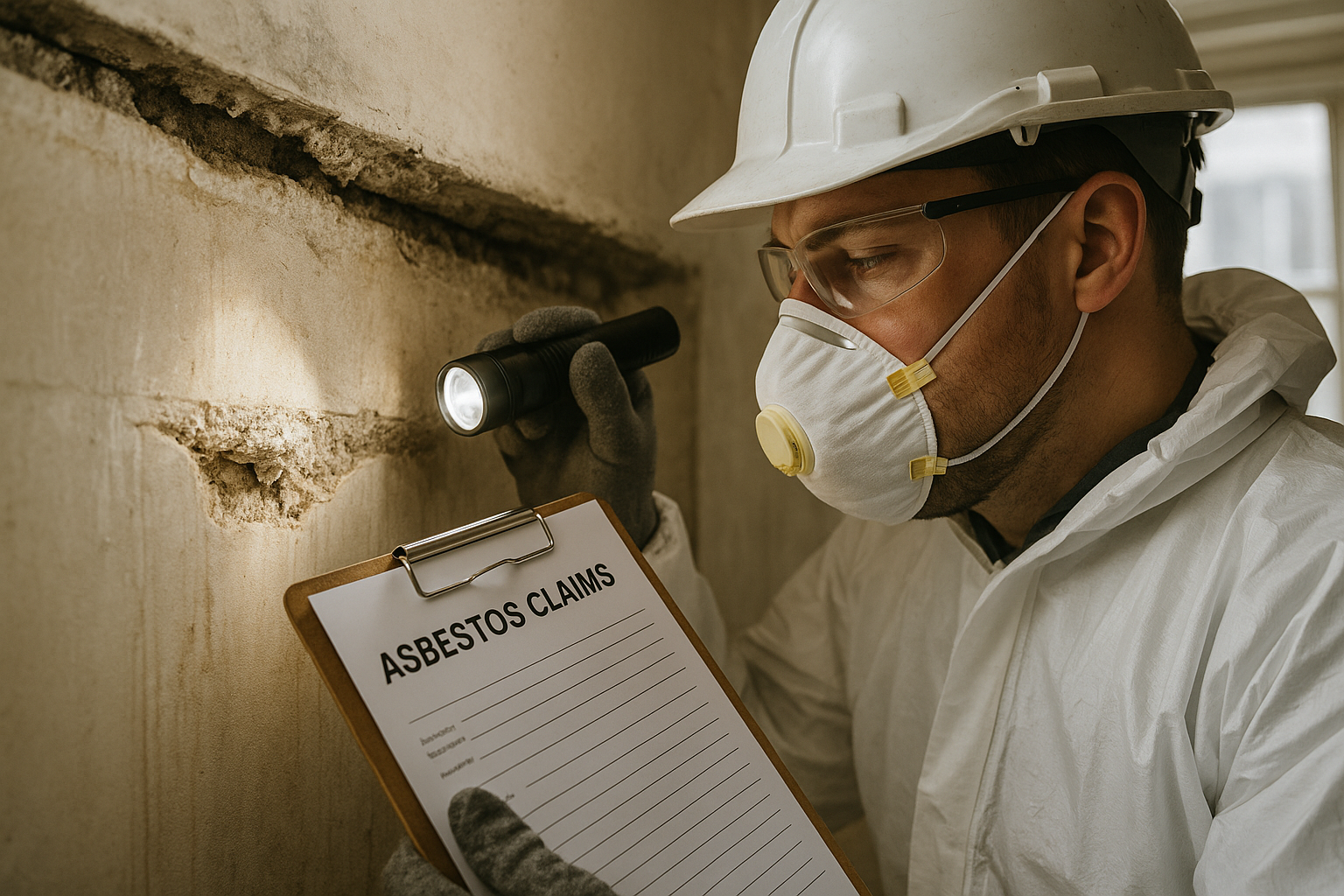
Potential claimants may include:
- Construction workers
- Maintenance engineers
- Electricians, plumbers and joiners
- Factory and warehouse staff
- Teachers, caretakers and school staff
- Office workers in contaminated premises
- Residents exposed through unsafe building works
- Family members exposed to asbestos dust on work clothing in historic cases
Most asbestos claims depend on proving three broad points:
- There was asbestos exposure
- There was a breach of duty or failure to manage risk properly
- That exposure caused or materially contributed to illness or loss
The exact legal route depends on the diagnosis, the evidence available, and whether the employer, occupier or duty holder can still be identified.
Illnesses commonly linked to asbestos claims
Not every asbestos exposure leads to disease, but asbestos fibres are known to cause serious and sometimes fatal conditions. These illnesses sit at the centre of many asbestos claims in the UK.
Mesothelioma
Mesothelioma is a cancer affecting the lining of the lungs or, less commonly, the abdomen. It is strongly associated with asbestos exposure and is one of the best-known conditions in asbestos litigation.
Claims involving mesothelioma are often handled urgently because of the seriousness of the diagnosis. Even relatively limited exposure can become highly significant in these cases.
Asbestos-related lung cancer
Lung cancer can also be linked to asbestos exposure. These asbestos claims can be more evidentially complex, especially where there are other risk factors such as smoking, but asbestos exposure may still be a material contributing factor.
Asbestosis
Asbestosis is a chronic lung disease caused by inhaling asbestos fibres over time. It can lead to breathlessness, coughing and permanent lung damage, and it is often associated with prolonged or repeated occupational exposure.
Pleural thickening and pleural plaques
Pleural thickening can affect breathing and quality of life. Pleural plaques may show previous asbestos exposure, although their legal significance depends on the circumstances and the nature of the claim.
For duty holders, the practical point is clear: poor asbestos management can create health consequences that last for decades, and asbestos claims often follow where those failures could have been prevented.
How employer and duty holder failures lead to asbestos claims
Most asbestos claims do not arise simply because asbestos existed in a building. They arise because someone failed to identify it, failed to communicate the risk, or failed to control work properly.

Common failings include:
- No asbestos survey before occupation or planned works
- Outdated, incomplete or inaccessible asbestos registers
- Contractors not given asbestos information before starting work
- Assuming a material is safe without sampling or evidence
- Intrusive works carried out relying only on a management survey
- Damaged asbestos insulating board, lagging or sprayed coatings being ignored
- Poor supervision of removal or remedial works
- Failure to stop work when suspicious materials are uncovered
These are exactly the issues that later appear in witness statements, expert reports and court proceedings. Good records and good site control often make the difference between demonstrating compliance and facing avoidable asbestos claims.
Survey type matters
A common mistake is using the wrong survey for the work planned. A management survey is designed to help manage asbestos during normal occupation and routine maintenance.
It is not intended to locate all asbestos before major intrusive works. Where refurbishment, strip-out or structural changes are planned, a more intrusive survey is required to access hidden areas and identify materials likely to be disturbed.
For full takedown or major structural dismantling, a demolition survey is essential before work starts. Using the wrong survey is one of the clearest ways a project can drift towards avoidable exposure and later asbestos claims.
Practical steps to reduce the risk of asbestos claims
If you are responsible for a building, the most effective way to reduce asbestos claims is to prevent exposure in the first place. That means treating asbestos management as an active process rather than a file that sits untouched until a contractor asks for it.
The following steps are practical, realistic and directly useful on live sites and occupied premises.
1. Know which buildings are likely to contain asbestos
Flag properties built or refurbished before the ban. Older offices, schools, retail units, warehouses, industrial buildings and residential blocks should all be assessed on the basis that asbestos may be present unless there is reliable evidence to the contrary.
2. Match the survey to the work
Normal occupation and routine maintenance call for one level of information. Refurbishment and demolition need a different level entirely.
Before works begin, ask a simple question: will this job disturb hidden building fabric? If the answer is yes, review whether your existing asbestos information is actually suitable.
3. Keep the asbestos register current
An asbestos register is only useful if it reflects the real condition of the building. If materials have been removed, damaged, encapsulated or newly identified, the register and management plan should be updated promptly.
Outdated records are a frequent feature in asbestos claims because they suggest the duty holder was not managing the risk in a meaningful way.
4. Brief contractors properly
Do not assume contractors will ask for asbestos information. Make it part of your mobilisation process.
Before work starts, provide site-specific asbestos information, explain any restrictions, and make sure the people doing the work understand what they can and cannot disturb.
5. Inspect known materials regularly
Known asbestos-containing materials should be checked periodically and after any leak, impact, vandalism, unauthorised work or other event that could affect their condition.
If damage is found, act quickly. Delays create both health risks and legal exposure.
6. Stop work when the scope changes
Many incidents happen because a small maintenance task turns into something more intrusive. If contractors need to open up additional areas, remove finishes or access hidden voids, stop and review the asbestos information before the work continues.
7. Use competent specialists
Surveyors, analysts and asbestos contractors should be competent for the work they are carrying out. Cheap shortcuts in asbestos management often become very expensive once contamination, delays and asbestos claims enter the picture.
8. Create a clear audit trail
Keep records of surveys, registers, management plans, contractor briefings, inspections, decisions and remedial works. If an incident is ever investigated, a clear paper trail can show that reasonable steps were taken in line with the Control of Asbestos Regulations and HSE guidance.
What evidence supports asbestos claims?
When asbestos claims are investigated, evidence matters. Claimants usually need both medical evidence and exposure evidence, while employers and duty holders need records that show what they knew and what they did about it.
Relevant evidence may include:
- Medical records and diagnosis reports
- Employment history and job descriptions
- Witness statements from colleagues, occupiers or family members
- Historic site plans and maintenance records
- Method statements and permit systems
- Asbestos surveys, registers and management plans
- Sampling, air monitoring and laboratory reports
- Training records and contractor briefings
- Insurance records for historic employers
From a property management perspective, poor document control is a major weakness. If you cannot show what information was available, who received it, and how decisions were made, defending asbestos claims becomes much harder.
Asbestos claims where the employer no longer exists
One reason asbestos claims can be legally complex is that exposure often took place decades ago. By the time a person is diagnosed, the original employer may have closed, merged or disappeared.
That does not always prevent a claim. In some cases, historic employers’ liability insurers can still be traced, allowing a route to compensation. There may also be statutory routes available for certain asbestos-related conditions, depending on the circumstances.
For current duty holders, the lesson is not to assume old exposure is someone else’s problem. Historic records, building information and insurance documents can all become relevant later.
Where asbestos claims most often start for property managers
For property managers, asbestos claims often begin long before any solicitor is involved. They start with a missed warning sign, a rushed programme, or a contractor being sent in without the right information.
High-risk situations include:
- Office refurbishments in older buildings
- Retail fit-outs on tight programmes
- School holiday works
- Plant room upgrades
- Roofing and façade repairs
- Void property strip-outs
- Fire, flood or impact damage exposing hidden materials
- Reactive maintenance where walls, ceilings or ducts need to be opened up
If any work is planned in an older property, review the asbestos information early. Do not wait until the contractor is on site and the programme is under pressure.
Regional support for multi-site portfolios
If you manage a portfolio across different locations, consistency matters. You need the same standard of survey quality, reporting and practical advice whether the building is in the capital, the Midlands or the North West.
That is why many duty holders arrange local support through services such as asbestos survey London, asbestos survey Manchester and asbestos survey Birmingham. Consistent surveying across your estate makes it easier to maintain registers, brief contractors and reduce the risk of asbestos claims caused by gaps between sites.
What to do if asbestos is discovered or disturbed
When suspicious material is found, speed matters, but so does control. A rushed reaction can make the situation worse.
If asbestos is suspected or accidentally disturbed:
- Stop work immediately
- Keep people out of the affected area
- Prevent further disturbance
- Inform the responsible person or duty holder
- Review existing asbestos information
- Arrange inspection, sampling or assessment by a competent specialist
- Do not restart work until the risk has been properly assessed and controlled
For property managers, this response should be built into contractor induction and emergency procedures. Fast, clear action can reduce contamination, protect occupants and limit the chain of events that leads to asbestos claims.
Why prevention is always cheaper than defending asbestos claims
By the time asbestos claims are being discussed, something has usually already gone wrong. There may be illness, contamination, project delays, enforcement action, legal costs or reputational damage.
Preventive asbestos management is usually far less disruptive than dealing with the aftermath of poor decisions. The basics are not complicated, but they do need to be done properly:
- Survey the building appropriately
- Maintain an accurate register
- Share information with the right people
- Review materials regularly
- Plan intrusive works properly
- Use competent specialists
- Keep clear records
These steps will not erase historic exposure, but they can greatly reduce the chance of new incidents and future asbestos claims.
Get expert help before asbestos claims become a problem
If you are planning works, managing an older building, or reviewing compliance across a property portfolio, Supernova Asbestos Surveys can help you identify risks early and put the right information in place. We carry out asbestos surveys nationwide, including management, refurbishment and demolition surveys, with clear reporting that supports practical decision-making on site.
To arrange a survey or discuss your property, call 020 4586 0680 or visit asbestos-surveys.org.uk. Supernova Asbestos Surveys is here to help you manage asbestos properly and reduce the risk of avoidable asbestos claims.
Frequently Asked Questions
Are asbestos claims still common in the UK?
Yes. Asbestos claims still arise because many older buildings continue to contain asbestos-containing materials, and asbestos-related diseases can take decades to develop after exposure.
Can asbestos claims arise from building management failures?
Yes. Asbestos claims often follow failures such as not carrying out the right survey, not maintaining an asbestos register, not sharing information with contractors, or allowing asbestos-containing materials to deteriorate or be disturbed.
What is the difference between a management survey and a demolition survey?
A management survey is used to help manage asbestos during normal occupation and routine maintenance. A demolition survey is far more intrusive and is required before demolition or major structural dismantling so hidden asbestos can be identified before work starts.
What should a property manager do if asbestos is accidentally disturbed?
Stop work immediately, isolate the area, prevent further access, inform the responsible person, and arrange assessment by a competent asbestos specialist. Work should not restart until the risk has been properly assessed and controlled.
How can I reduce the risk of asbestos claims on my property portfolio?
Use the correct survey type, keep your asbestos register up to date, brief contractors properly, inspect known materials regularly, stop work if the scope changes, and maintain a clear audit trail of decisions and actions.