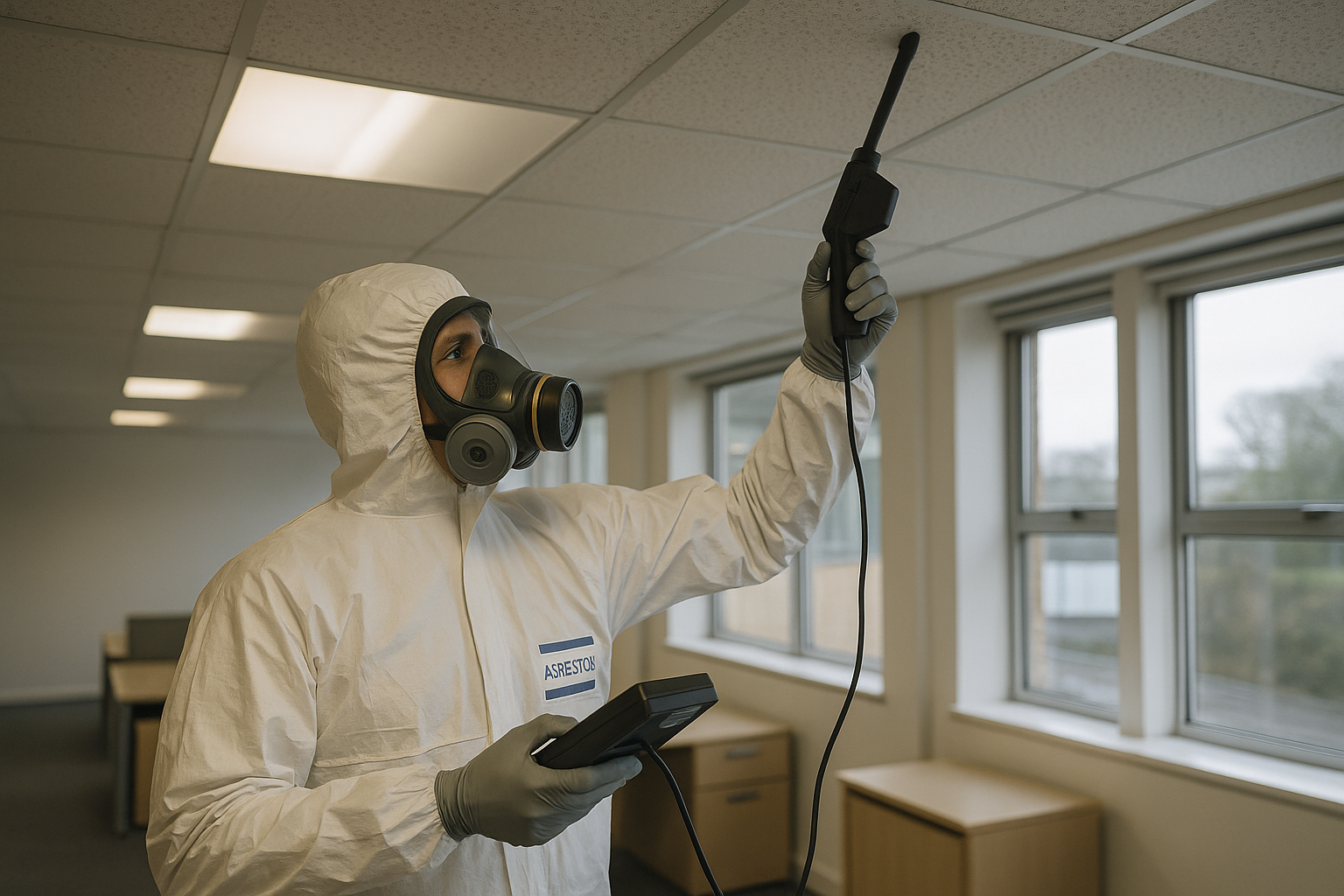
You do not need a dramatic discovery to take home inspection asbestos seriously. A cracked ceiling coating, old floor tiles lifting in the kitchen, damaged boxing around pipes, or a weathered garage roof in an older property can all raise a sensible question: could this contain asbestos? The safest response is to stop work, avoid disturbing the material, and get clear professional advice before anyone drills, sands, cuts or removes anything.
Many homes across the UK still contain asbestos-containing materials, particularly in properties built or refurbished before asbestos use was fully prohibited. That does not always mean an immediate hazard. It does mean you need the right survey, accurate sampling where needed, and practical guidance based on the material, its condition and any work you are planning.
Why home inspection asbestos matters
A proper home inspection asbestos assessment helps you make safe decisions before decorating, maintenance, refurbishment, purchase or sale. The main risk comes when asbestos fibres are released into the air and inhaled.
Materials in good condition can sometimes remain safely in place. Problems usually begin when someone unknowingly disturbs them during DIY, routine repairs or larger building work.
A professional inspection helps answer the questions that actually matter:
- Is the material likely to contain asbestos?
- Does it need sampling and laboratory analysis?
- Is it damaged or likely to be disturbed?
- Can it stay where it is and be managed safely?
- Does any work need a licensed contractor?
For homeowners, landlords and property managers, those answers are far more useful than online image searches or guesswork.
Where asbestos is commonly found in homes
When people think about home inspection asbestos, they often picture garage roofs or loft spaces. In reality, asbestos was used in a wide range of domestic materials because it was heat resistant, durable and inexpensive.
The exact locations depend on the age of the property, the type of construction, and any previous refurbishment. A surveyor looks at the building as a whole and assesses where asbestos-containing materials are likely to be present.
Typical domestic locations
- Textured coatings on ceilings and walls
- Vinyl floor tiles and bitumen adhesive
- Soffits, gutters and downpipes
- Asbestos cement garage roofs, shed roofs and wall panels
- Pipe lagging and thermal insulation
- Boiler insulation and airing cupboard linings
- Asbestos insulating board in partitions, ceiling tiles and boxing
- Roofing felt and some undercloak materials
- Fuse boards, backing boards and heat-resistant panels
- Bath panels, toilet cisterns and window infill panels
Not every old material contains asbestos. Appearance alone is not enough to confirm it, which is why suspect materials should be assessed professionally rather than picked at, broken open or tested with DIY methods.
Higher-risk and lower-risk materials
Some asbestos products are more likely to release fibres if damaged. Pipe lagging, sprayed coatings and asbestos insulating board are generally higher risk than asbestos cement products.
Lower risk does not mean no risk. Cement sheets, roof panels and floor tiles can still release fibres if they are broken, drilled, sawn or badly deteriorated.
Signs you should arrange a home inspection asbestos assessment
You do not need visible dust clouds for asbestos to be a concern. Very often, the trigger for a home inspection asbestos visit is planned work, a property purchase, or visible ageing in materials that may contain asbestos.
Common warning signs include:
- Cracked or broken ceiling tiles or wall boards
- Damaged boxing around pipework
- Old floor tiles lifting, cracking or breaking up
- Crumbling insulation around pipes or boilers
- Weathered garage or shed roofing sheets
- Flaking textured coatings before redecoration
- Unknown board materials exposed during renovation
- Dust or debris after drilling into older walls or ceilings
If you are buying, selling or managing an older property, planned works are often the clearest reason to arrange an inspection. It is much easier to identify asbestos before trades arrive than after materials have been disturbed.
What to do immediately if you suspect asbestos
If you think a material may contain asbestos, your next steps matter. The priority is to prevent disturbance and reduce the chance of fibres spreading.
- Stop work straight away. Put down tools and do not continue drilling, scraping, sanding or stripping out.
- Keep away from the material. Do not touch it, break it or try to inspect it more closely.
- Restrict access. Keep children, pets, occupants and contractors out of the area.
- Do not clean debris yourself. Sweeping and standard vacuuming can spread fibres.
- Arrange professional advice. A competent surveyor or sampler can assess the material safely.
If debris is already present, leave the area alone until you have been advised on the safest next step.
What not to do
- Do not drill, sand, scrape or cut suspect materials
- Do not remove old boards, tiles or insulation yourself
- Do not use a standard vacuum or brush
- Do not place suspect waste in household bins
- Do not rely on online photos to identify asbestos
These are the mistakes that turn a manageable issue into a wider contamination problem.
How a professional home inspection asbestos survey works
A professional home inspection asbestos survey is more than a quick look around. The right approach depends on what you need, whether the property is occupied, and what work is planned.
Under the Control of Asbestos Regulations, asbestos should be identified so risks can be managed properly. Survey work is generally carried out in line with HSG264 and relevant HSE guidance.
Management survey
A management survey is used to locate, as far as reasonably practicable, the presence and extent of asbestos-containing materials that could be disturbed during normal occupation, routine maintenance or minor installation work.
This is often suitable where a property is in use and no major refurbishment is planned. The surveyor inspects accessible areas, assesses the condition of suspect materials and provides recommendations for safe management.
Refurbishment and demolition survey
If you are planning structural work, stripping out, rewiring, replacing kitchens or bathrooms, removing ceilings, lifting floors or opening up walls, a more intrusive survey is usually required. A demolition survey or refurbishment and demolition survey is designed to locate asbestos in the areas affected by the planned works.
It is more invasive than a management survey and may require the area to be vacant while the inspection takes place. This is the right approach when materials will be disturbed by the work.
Sampling and laboratory analysis
Where a material is suspected, the surveyor may take a small sample using controlled methods. That sample is then analysed by an accredited laboratory to confirm whether asbestos is present.
If you only need one or two suspect materials checked, asbestos testing can be a practical option. If concerns are wider across the property, a full survey is usually the better route.
For homeowners who want a fast route to check a particular material before work starts, dedicated asbestos testing services can help clarify whether a ceiling coating, board, tile or cement sheet needs further action.
Can you identify asbestos by sight alone?
No. A lot of asbestos-containing materials look very similar to non-asbestos alternatives. Cement boards, fibre boards, textured coatings, floor tiles and insulation products can be impossible to distinguish visually with certainty.
That is why a home inspection asbestos decision should never be based on appearance alone. A competent surveyor may recognise materials that strongly resemble known asbestos products, but confirmation usually requires sampling and analysis unless the material is presumed to contain asbestos for safety reasons.
A practical rule is simple: if you are not sure, treat it as suspect until testing or survey evidence says otherwise.
When asbestos can be managed in place
Not all asbestos needs to be removed. In many homes, asbestos-containing materials can remain safely in place if they are in good condition, sealed where appropriate and unlikely to be disturbed.
This is often the case with sound asbestos cement sheets, undamaged floor tiles or stable textured coatings in low-impact areas.
Management in place may be appropriate when:
- The material is in good condition
- It is sealed, enclosed or otherwise protected
- It is not in a location where it will be knocked, drilled or cut
- No refurbishment work is planned nearby
- Its presence has been recorded and communicated to anyone doing future work
A survey report should set out the condition of the material and sensible next steps. That may include periodic reinspection, local sealing, or making sure contractors are told before any work starts.
When asbestos removal is the safer option
Removal becomes more likely when asbestos is damaged, deteriorating, exposed in a high-traffic area or certain to be disturbed by planned works. In those situations, leaving it in place is rarely the practical answer.
If removal is needed, use a competent contractor. Some asbestos work must be carried out by a licensed contractor, while some lower-risk tasks may fall under non-licensed or notifiable non-licensed work. The category depends on the material, its condition and the type of work involved.
If the next step is disposal or remediation, professional asbestos removal helps ensure the work is assessed properly and handled in line with legal duties and HSE guidance.
Situations that often point towards removal
- Damaged asbestos insulating board
- Deteriorating pipe lagging or thermal insulation
- Broken asbestos cement panels creating debris
- Refurbishment that will disturb known asbestos materials
- Repeated damage in accessible household areas
Trying to remove these materials without the right controls can contaminate a much larger area than the original defect.
Legal and practical points for homeowners, landlords and property managers
Domestic owner-occupiers do not have the same duty to manage asbestos as those responsible for non-domestic premises. Even so, responsibilities can still arise when tradespeople are brought in to work.
If you commission work, you should provide relevant information about known asbestos so contractors are not put at risk. For landlords, managing agents and those overseeing common parts of residential buildings, duties may be wider under the Control of Asbestos Regulations.
The common parts of flats and residential blocks can fall within the duty to manage, including:
- Stairwells
- Corridors
- Plant rooms
- Service risers
- Roof spaces
- Shared basements
Practical steps include:
- Keep survey reports and sample results on file
- Share asbestos information with contractors before work starts
- Do not rely on old assumptions if new areas are being opened up
- Arrange the correct survey type for the planned work
- Use competent, properly insured professionals
If you are unsure which survey is appropriate, ask before any stripping out begins. One call at the right time can prevent delays, contamination and unnecessary cost.
Buying, selling or renovating? Plan asbestos checks early
A home inspection asbestos assessment is especially useful during property transactions and renovation planning. Buyers, surveyors and contractors often spot suspect materials when time pressure is already high.
Early checks give you room to make decisions without holding up a sale or building project. They also help you avoid a common mistake: booking trades first and asking asbestos questions later.
Before buying a property
If the home is older and you can see suspect materials such as garage roofing, textured coatings or service duct panels, ask for specialist advice. A general building survey is not the same as an asbestos survey.
Before renovation
If you plan to remove ceilings, replace flooring, alter walls, rewire, fit a new boiler or refurbish a kitchen or bathroom, arrange the right asbestos survey first. This is particularly relevant in older properties where hidden asbestos-containing materials are more likely.
Before instructing contractors
Make sure every contractor knows about any known or suspected asbestos before work starts. If there is uncertainty, arrange testing or a survey before anyone begins.
Practical advice for different types of property
The way you approach home inspection asbestos can vary depending on the type of building and how it is being used. The principles stay the same, but the likely risks and priorities can differ.
Houses
In houses, common concerns include garage roofs, textured coatings, floor tiles, boiler cupboards, pipe boxing and outbuildings. If you are planning DIY, be especially cautious around older materials that may look harmless but can release fibres when disturbed.
Flats and maisonettes
For flats, the picture is often split between the private dwelling and the common parts. Service risers, ceiling voids, communal plant areas and shared corridors may all need consideration, especially where maintenance or refurbishment is planned.
Rental properties
Landlords should be organised. Keep reports accessible, brief contractors before work starts, and do not assume previous minor works mean all asbestos has already been identified.
Older renovated homes
Properties that have been modernised over time can be particularly tricky. New finishes may hide older asbestos-containing materials underneath, so visible upgrades should never be treated as proof that asbestos is absent.
Common mistakes that cause avoidable asbestos problems
Most serious domestic asbestos issues start with a simple error. Someone assumes a board is plasterboard, a tile is just old vinyl, or a ceiling coating is safe to sand back before painting.
These are the mistakes to avoid:
- Starting renovation work without the correct survey
- Assuming a general building survey covers asbestos in detail
- Using online photos to identify materials
- Letting trades start before asbestos information is shared
- Breaking off a sample yourself
- Trying to save money with DIY removal
- Ignoring minor damage because the material has “always been there”
The practical fix is straightforward: if the property is older and the material is unknown, pause and verify before disturbing it.
Choosing the right surveyor or contractor
Not every situation needs the same service, so ask direct questions before booking. A good provider should explain what type of survey is suitable, whether sampling is likely, how intrusive the work will be, and what happens if asbestos is found.
Look for a company that can give clear, usable advice rather than vague warnings. The report should help you decide what to do next, whether that is management, further testing, or removal.
If your property is in the capital, booking an asbestos survey London service can help you move quickly when sales, maintenance or refurbishment deadlines are tight. If you are based in the North West, an asbestos survey Manchester appointment can be the fastest way to check suspect materials before contractors attend. For properties in the Midlands, arranging an asbestos survey Birmingham visit can prevent delays and keep planned works on track.
What happens after asbestos is identified?
Once asbestos has been confirmed, the next step depends on the material, its condition and whether it will be disturbed. There is no one-size-fits-all answer.
You will usually fall into one of these routes:
- Manage in place if the material is sound and unlikely to be disturbed.
- Repair or encapsulate if minor protection is enough to reduce risk.
- Remove if the material is damaged, deteriorating or in the way of planned works.
What matters most is that the decision is based on evidence, not assumption. A clear survey report and, where needed, lab-confirmed results give you a proper basis for action.
Need expert help with home inspection asbestos?
If you have spotted a suspect material, are planning renovation work, or need clarity before buying or managing a property, Supernova Asbestos Surveys can help. We carry out surveys, sampling and practical asbestos advice across the UK, with straightforward reporting and experienced support at every stage.
Call 020 4586 0680 or visit asbestos-surveys.org.uk to book the right survey, arrange testing, or discuss the safest next step for your property.
Frequently Asked Questions
What should I do first if I suspect asbestos in my home?
Stop work immediately and avoid disturbing the material. Keep people out of the area, do not clean up debris yourself, and arrange professional assessment or testing.
Can asbestos in a home be left in place?
Yes, if the material is in good condition, sealed where appropriate and unlikely to be disturbed. A surveyor can confirm whether management in place is suitable or whether removal is the safer option.
Do I need an asbestos survey before renovating my home?
If planned works will disturb the fabric of an older property, yes. A refurbishment or demolition survey is usually needed before intrusive work such as rewiring, stripping out kitchens, lifting floors or opening walls.
Can I identify asbestos by looking at it?
No. Many asbestos-containing materials look similar to non-asbestos products. Visual inspection alone cannot confirm asbestos, so sampling and laboratory analysis are often needed.
Is a general home survey the same as a home inspection asbestos survey?
No. A general building survey may note suspect materials, but it does not replace a dedicated asbestos survey carried out in line with HSG264 and relevant HSE guidance.