Asbestos Exposure at Home: What Every UK Homeowner Needs to Know
Millions of UK homes built before 2000 contain asbestos-containing materials (ACMs). Most of the time, those materials pose no immediate risk — but asbestos exposure becomes a very real danger the moment those materials are disturbed, damaged, or deteriorate with age. Understanding where asbestos hides, how to respond when you suspect it, and when to call in professionals could genuinely protect your family’s long-term health.
This isn’t scaremongering. Asbestos-related diseases — including mesothelioma, asbestosis, and lung cancer — are responsible for thousands of deaths in the UK every year. The fibres are microscopic, odourless, and invisible to the naked eye. You won’t know you’ve inhaled them until it’s far too late.
Where Asbestos Hides in Older UK Homes
Asbestos was used extensively in UK construction from the 1950s through to the late 1990s. Its fire resistance, durability, and insulating properties made it a builder’s favourite — which means it ended up in a surprisingly wide range of household materials.
Common locations where ACMs are found in domestic properties include:
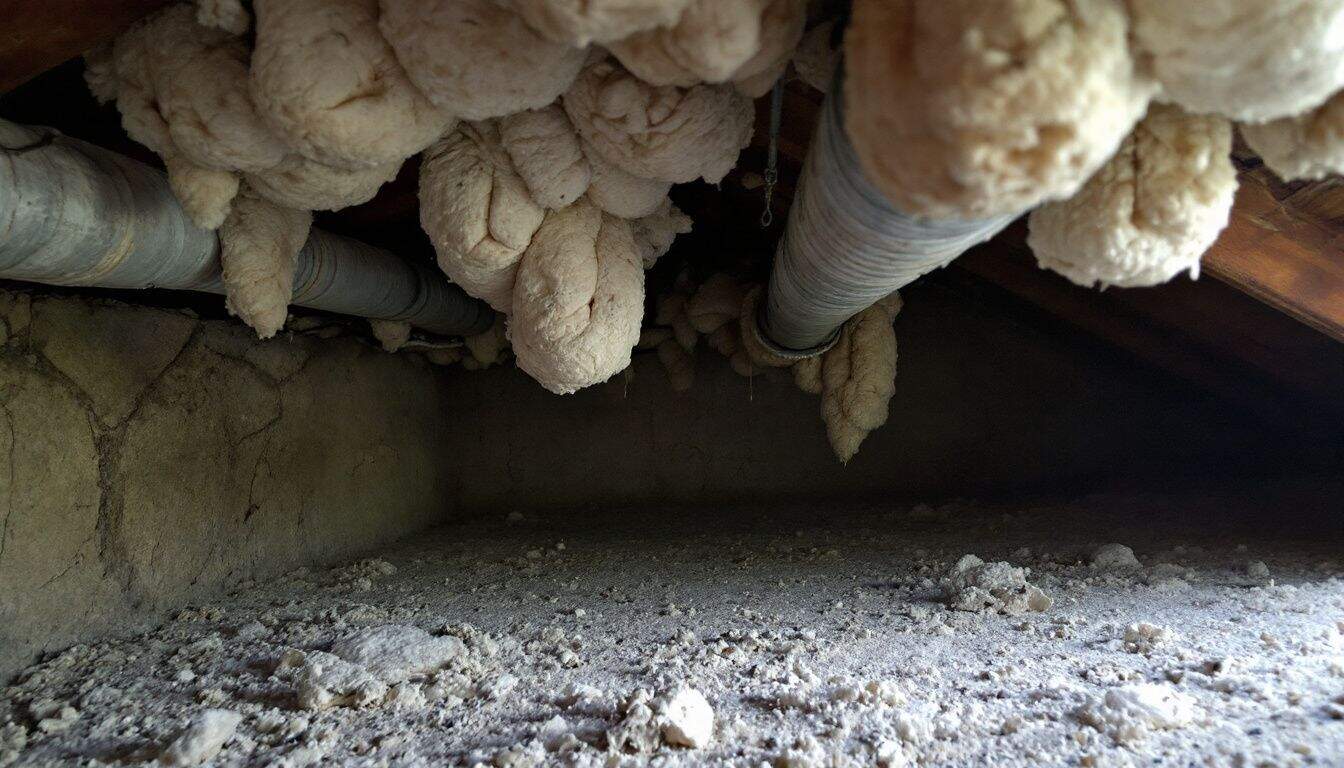
- Pipe lagging and boiler insulation — particularly in older heating systems and airing cupboards
- Textured coatings — such as Artex on ceilings and walls, widely applied from the 1960s to 1980s
- Floor tiles and adhesive — vinyl floor tiles, especially in kitchens and bathrooms, frequently contained chrysotile (white asbestos)
- Roof tiles, guttering, and soffit boards — asbestos cement was a standard roofing and cladding material
- Garage roofs and outbuildings — corrugated asbestos cement sheeting is still common in older properties
- Insulating board — used around fireplaces, in partition walls, and as ceiling tiles
- Vermiculite insulation — loft insulation products containing vermiculite may contain asbestos
- Air ducts and vent linings — particularly in properties with older ducted heating systems
If your home was built or significantly renovated before 2000, there’s a reasonable chance at least one of these materials is present. Age alone doesn’t make them dangerous — but it does mean they warrant careful attention.
Can You Identify Asbestos Visually?
No — and this is one of the most important points to understand. Asbestos cannot be confirmed by sight alone. Many ACMs look identical to their non-asbestos equivalents, and even experienced surveyors cannot make a definitive identification without laboratory analysis.
If you spot materials that look brittle, fibrous, or deteriorating — particularly in older parts of your home — treat them as potentially hazardous and arrange proper asbestos testing before doing anything else. Never attempt to scrape, sand, drill, or otherwise disturb a material you suspect might contain asbestos.
Understanding the Real Risk of Asbestos Exposure
Not all asbestos exposure carries the same level of risk. The key factors that determine danger are the type of asbestos, the condition of the material, and whether fibres have become airborne.
ACMs in good condition that are left undisturbed are generally considered low risk. The danger escalates significantly when materials are:
- Crumbling, cracked, or visibly deteriorating
- Damaged by impact, water ingress, or general wear
- Being drilled, cut, sanded, or sawn during renovation work
- Located in high-traffic areas where repeated disturbance is likely
The three main types of asbestos found in UK buildings are chrysotile (white), amosite (brown), and crocidolite (blue). Brown and blue asbestos are considered the most hazardous due to the shape and durability of their fibres in lung tissue. All three types were banned from use in UK construction by 1999.
Prolonged or repeated asbestos exposure — particularly in occupational settings — carries the highest risk. But domestic exposure during DIY renovations is a growing concern, precisely because homeowners often don’t realise what they’re dealing with until it’s too late.
What to Do If You Suspect Asbestos in Your Home
Suspecting asbestos doesn’t require panic — it requires a calm, methodical response. The single most important rule is this: do not disturb the material.
Immediate Steps to Take
- Stop all work in the area immediately. If you’re mid-renovation and have disturbed a material you now suspect contains asbestos, cease all activity at once.
- Clear the area. Ask everyone — including children and pets — to leave the room or space.
- Seal off the affected area. Close doors and windows. If necessary, use heavy-duty plastic sheeting and strong tape to seal doorways and vents.
- Turn off ventilation systems. Heating, air conditioning, and extractor fans can circulate airborne fibres throughout the property.
- Do not clean up yourself. Sweeping, vacuuming with a standard hoover, or using compressed air will make things significantly worse by redistributing fibres.
- Contact a licensed professional. A qualified asbestos surveyor or removal contractor should assess the situation before the area is re-entered.
If the material has been significantly disturbed and you believe fibres may have been released, avoid re-entering the space without appropriate respiratory protection. A licensed professional will advise on the appropriate next steps, including whether air monitoring is necessary.
Sealing Off Suspected Areas
Temporary containment buys time and limits the spread of any fibres that may have become airborne. Use 1000-gauge polythene sheeting to cover doorways, seal around windows, and block any ventilation openings.
Secure all edges firmly with duct tape and post clear warning notices on all entry points to prevent others from accidentally entering the space. Keep the area sealed until a professional has assessed and — if necessary — cleared it.
Professional Asbestos Inspection and Testing
If you have reason to believe ACMs are present in your home — whether because of its age, visible damage to materials, or upcoming renovation work — the correct course of action is to arrange a professional survey and, where appropriate, laboratory-based asbestos testing by an accredited analyst.
In the UK, asbestos surveys are governed by the Control of Asbestos Regulations and conducted in accordance with HSE guidance document HSG264. There are two main types of survey relevant to domestic properties:
- Management survey — identifies ACMs in their current condition to help manage the risk on an ongoing basis. Suitable for properties not undergoing significant works.
- Refurbishment survey — a more intrusive survey required before any renovation or refurbishment work begins. This survey locates all ACMs that could be disturbed during works.
- Demolition survey — required before any demolition work, this is the most thorough type of survey and covers the entire structure.
Choosing a Qualified Asbestos Surveyor
Not all asbestos surveyors are equal. When selecting a professional, look for the following:
- Accreditation by a recognised body such as UKAS (United Kingdom Accreditation Service)
- Surveyors holding the P402 qualification (Building Surveys and Bulk Sampling for Asbestos) or equivalent
- Clear, transparent reporting that complies with HSG264 requirements
- Professional indemnity and public liability insurance
- A willingness to explain findings clearly and answer your questions
Ask for a detailed written quote before work begins, and make sure the scope of the survey is clearly defined — particularly if you’re planning renovation work and need a refurbishment survey rather than a standard management survey.
What Happens During an Asbestos Survey
A qualified surveyor will carry out a thorough visual inspection of the property, identifying materials that may contain asbestos. Where sampling is required, small bulk samples are carefully collected using appropriate PPE and sealed for laboratory analysis.
Samples are sent to a UKAS-accredited laboratory, where analysts use polarised light microscopy or electron microscopy to confirm the presence and type of asbestos fibres. You’ll receive a formal report detailing the location, condition, and risk rating of any ACMs identified, along with recommendations for management or removal.
Safe Asbestos Removal: When and How
Not all ACMs need to be removed. In many cases, materials in good condition are best left in place and managed — removal itself carries risk if not carried out correctly.
However, removal becomes necessary when:
- Materials are significantly damaged or deteriorating
- Renovation or demolition work will disturb the material
- The material poses an ongoing risk that cannot be managed effectively in situ
Under the Control of Asbestos Regulations, the removal of licensed asbestos materials — including pipe lagging, sprayed coatings, and insulating board — must be carried out by a contractor holding a licence issued by the HSE. Attempting to remove these materials yourself is not only dangerous but illegal.
For lower-risk materials such as asbestos cement, removal may be carried out by a non-licensed contractor, but strict notification, risk assessment, and disposal requirements still apply. Professional asbestos removal ensures that all legal obligations are met and that waste is disposed of at a licensed facility.
What Professional Removal Involves
Licensed removal contractors will establish a controlled work area — often using a negative-pressure enclosure — to prevent fibres from escaping into the wider property. Workers wear full PPE including disposable coveralls and appropriate respiratory protective equipment (RPE).
Once removal is complete, the area undergoes a thorough clean using HEPA-filtered vacuum equipment and damp wiping. Air monitoring may be carried out to confirm that fibre levels have returned to background levels before the enclosure is dismantled and the area is handed back for use.
Preventing Asbestos Exposure During Home Renovations
DIY renovations in older properties are one of the most common causes of unintentional domestic asbestos exposure. Drilling into an Artex ceiling, sanding old floor tiles, or ripping out a boiler cupboard can release significant quantities of fibres if ACMs are present.
The golden rule is simple: before you start any renovation work in a property built before 2000, commission a refurbishment survey. This applies whether you’re fitting a new kitchen, converting a loft, or replacing a bathroom floor.
Practical steps to protect yourself during renovations:
- Always assume materials in older properties may contain asbestos until proven otherwise
- Commission a refurbishment and demolition survey before any intrusive work begins
- Share the survey report with your contractor before work starts
- Ensure contractors are aware of any ACMs and have a plan for managing or avoiding them
- Never dry-sand, dry-cut, or use power tools on suspected ACMs
- If in doubt, stop work and seek professional advice immediately
Regular Maintenance and Ongoing Asbestos Management
For properties where ACMs have been identified and left in place — as is often the case following a management survey — ongoing monitoring is essential. The HSE recommends that the condition of known ACMs is checked regularly and any deterioration is addressed promptly.
Practical maintenance measures include:
- Keeping an up-to-date asbestos register for the property, noting the location and condition of all known ACMs
- Carrying out periodic visual checks — at least annually — for signs of damage or deterioration
- Repairing minor damage to ACMs using appropriate sealant products, carried out by a professional
- Ensuring any tradespeople working in the property are made aware of the location of ACMs before they begin work
- Cleaning surfaces near ACMs with a damp cloth rather than dry dusting, and using a HEPA-filtered vacuum where necessary
If you’re a landlord, you have a legal duty under the Control of Asbestos Regulations to manage asbestos in your properties and to share relevant information with anyone who might disturb it. This duty applies to the common parts of residential buildings — such as communal hallways, plant rooms, and roof spaces — as well as to commercial premises.
Asbestos Surveys Across the UK
Asbestos exposure is a risk wherever older buildings exist — and that means virtually every town and city in the UK. Whether you own a Victorian terrace or a 1980s semi-detached, the age of your property is the single most reliable indicator that ACMs may be present.
Supernova Asbestos Surveys provides professional asbestos surveys across the country. If you’re based in the capital, our team carries out asbestos survey London work across all boroughs and property types. We also cover major cities including asbestos survey Manchester and asbestos survey Birmingham, with surveyors available nationwide.
Every survey is carried out by qualified professionals in line with HSG264 and the Control of Asbestos Regulations, with clear reporting and practical recommendations tailored to your property.
Frequently Asked Questions
How do I know if my home contains asbestos?
You cannot tell by looking. The only reliable way to confirm whether a material contains asbestos is through laboratory analysis of a bulk sample. If your home was built or renovated before 2000, it’s worth commissioning a professional asbestos survey — particularly before any renovation work begins. A surveyor will identify suspect materials and arrange for samples to be tested at an accredited laboratory.
Is asbestos exposure dangerous even if I only disturb it briefly?
Even a single, short-term exposure can be harmful if a significant quantity of fibres is released — for example, when drilling into insulating board or sanding textured coatings. The risk depends on the type of asbestos, the quantity of fibres released, and how long you were exposed. There is no known safe level of asbestos exposure, which is why prevention is always the right approach.
Can I remove asbestos myself?
For licensed asbestos materials — such as pipe lagging, sprayed coatings, and insulating board — removal must by law be carried out by an HSE-licensed contractor. Attempting to remove these materials yourself is illegal and extremely dangerous. For lower-risk materials such as asbestos cement, non-licensed removal is permitted in some circumstances, but strict controls still apply. In all cases, professional removal is strongly recommended.
Do I need an asbestos survey before selling my home?
There is currently no legal requirement for homeowners to commission an asbestos survey before selling a residential property. However, if you are aware of ACMs in your home, you are expected to disclose this information. Buyers and their solicitors are increasingly asking about asbestos, and having a survey in place can help the sale proceed more smoothly — particularly for older properties.
How often should ACMs be checked once identified?
The HSE recommends that the condition of known ACMs is monitored regularly. In practice, this means a visual inspection at least once a year, or sooner if there has been any damage, water ingress, or disturbance near the material. Any deterioration should be reported to a qualified professional promptly. Keeping an accurate asbestos register and updating it after each inspection is considered best practice.
Speak to a Professional Today
Asbestos exposure is entirely preventable when the right steps are taken. Whether you’re concerned about materials in your home, planning a renovation, or simply want peace of mind, Supernova Asbestos Surveys can help.
With over 50,000 surveys completed nationwide, our qualified surveyors provide fast, reliable asbestos surveys and testing in full compliance with UK regulations. Call us today on 020 4586 0680 or visit asbestos-surveys.org.uk to book your survey or request a quote.