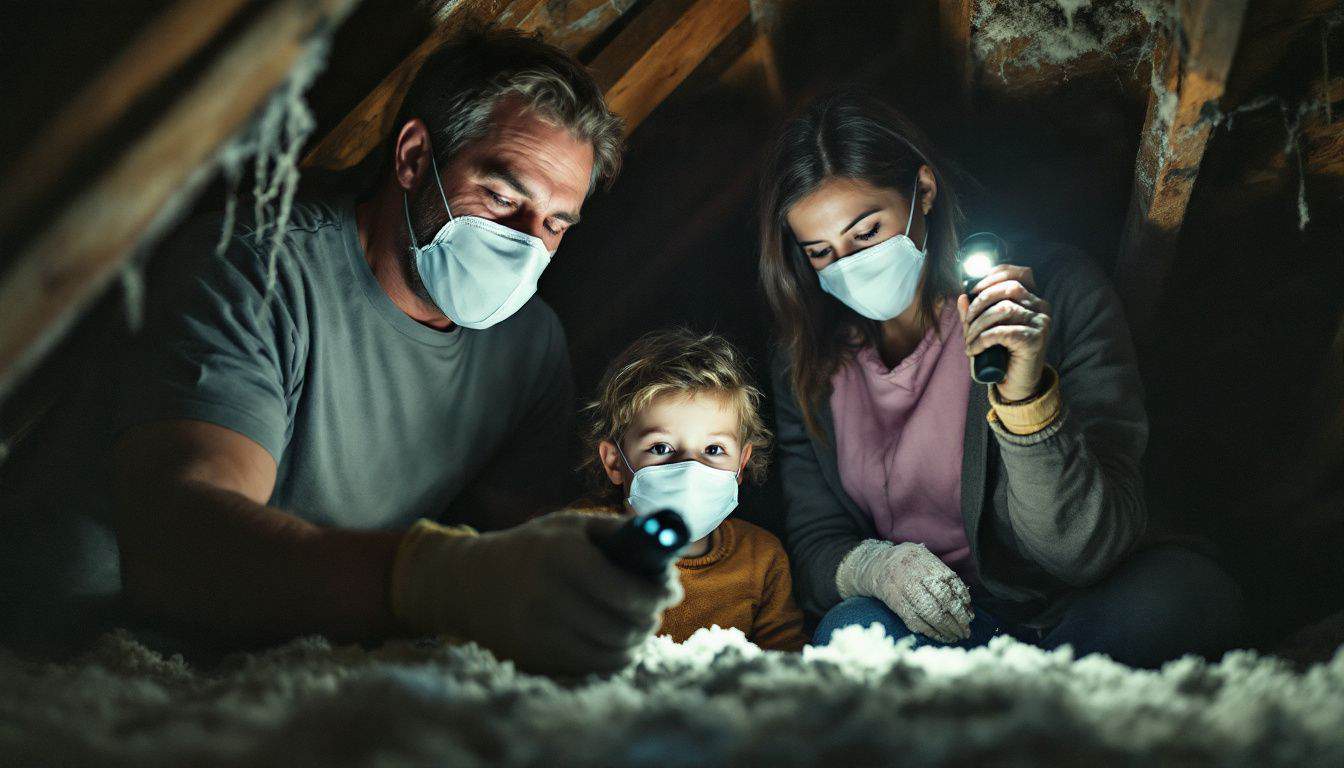
What Every Homeowner Needs to Know About Home Inspection Asbestos Risks
Asbestos was used extensively in UK homes built before 2000 — and millions of those properties are still standing today. If your home was built or refurbished during that era, there is a very real chance that asbestos-containing materials (ACMs) are hidden somewhere inside. A proper home inspection asbestos survey is not just a precaution; for many UK homeowners, it is a necessity.
The fibres released by disturbed ACMs are invisible to the naked eye and can cause devastating, irreversible lung conditions — including mesothelioma and asbestosis — decades after exposure. The good news is that asbestos in good condition and left undisturbed poses a much lower risk. The danger comes when you renovate, drill, sand, or otherwise disturb materials without first knowing what is in them.
Where Is Asbestos Most Commonly Found in UK Homes?
Asbestos was used in hundreds of building products throughout most of the twentieth century. It was cheap, fire-resistant, and an excellent insulator — which is exactly why it ended up almost everywhere.
In a typical pre-2000 UK property, you might find ACMs in the following locations:
- Artex and textured coatings — applied to ceilings and walls, particularly popular from the 1960s through to the 1980s
- Pipe lagging and boiler insulation — older central heating systems frequently used asbestos insulation around pipework
- Floor tiles and adhesive — vinyl floor tiles and the black mastic adhesive beneath them often contained chrysotile asbestos
- Roof tiles and soffits — asbestos cement was widely used for garage roofs, outbuildings, and exterior cladding
- Ceiling tiles — suspended ceiling systems in older properties frequently incorporated ACMs
- Insulation boards — used around fireplaces, in airing cupboards, and behind storage heaters
- Guttering and downpipes — asbestos cement was a common material for external drainage
- Loft insulation — loose-fill asbestos was used in some properties, particularly in the 1960s and 1970s
The critical point is that you cannot identify asbestos by sight alone. Many ACMs look identical to their asbestos-free counterparts. The only way to confirm presence or absence is through laboratory analysis of a physical sample.
Why Home Inspection Asbestos Surveys Matter Before Any Renovation
The single most dangerous time for asbestos exposure in a domestic setting is during renovation work. Drilling into an Artex ceiling, ripping up old floor tiles, or removing pipe lagging without knowing the material composition can release millions of fibres into the air of your home.
Under the Control of Asbestos Regulations, duty holders in non-domestic premises are legally required to manage asbestos. While private homeowners are not subject to the same statutory duty, the health risks are identical — and the moral obligation to protect your family is just as pressing.
Before any of the following activities, a home inspection asbestos survey is strongly advisable:
- Loft conversions or extensions
- Kitchen or bathroom refurbishments
- Removing or altering internal walls
- Replacing a boiler or heating system
- Re-roofing a garage or outbuilding
- Any work involving drilling, cutting, or sanding of older building materials
Professional asbestos testing before work begins is far cheaper — and far safer — than dealing with the consequences of uncontrolled fibre release.
Recognising the Warning Signs: When Should You Be Concerned?
While you cannot visually confirm asbestos, there are circumstances and material conditions that should prompt you to seek professional advice without delay.
Age of the Property
Any home built or significantly refurbished before 2000 should be treated as potentially containing asbestos until proven otherwise. The older the property, the higher the likelihood — and the greater the variety of ACMs that may be present.
Condition of Building Materials
Asbestos in good condition is generally lower risk. However, materials that are crumbling, cracked, water-damaged, or showing signs of physical deterioration are far more likely to release fibres. Pay particular attention to:
- Damaged or flaking ceiling coatings
- Cracked or broken floor tiles
- Deteriorating pipe insulation or lagging
- Damaged soffits or roof sheets on outbuildings
Planned Disturbance
Even if materials appear to be in good condition, any planned work that will involve cutting, drilling, or removing them warrants an inspection first. Do not rely on a builder’s visual assessment — insist on laboratory-confirmed testing.
What Happens During a Professional Home Inspection for Asbestos?
A professional asbestos survey carried out by a qualified surveyor is a methodical, structured process. It is very different from a quick visual walk-around.
The Survey Process
A qualified surveyor will attend your property and systematically inspect all accessible areas. They will look for materials that are known or suspected to contain asbestos, assess their condition, and take physical samples where appropriate.
Samples are collected carefully to minimise fibre release, sealed immediately, and sent to an accredited laboratory for analysis. Results are typically returned within a few working days.
The Asbestos Report
Following the inspection, you will receive a written report detailing:
- The location of all suspected or confirmed ACMs
- The condition of each material
- A risk assessment for each identified material
- Recommendations for management, encapsulation, or removal
This report is your roadmap. It tells you what is present, where it is, what condition it is in, and what action — if any — is required. Keep it safe; it will be invaluable for any future renovation work or property sale.
Types of Survey
For domestic properties, there are two main types of survey to be aware of:
- Management survey — identifies ACMs that could be disturbed during normal occupation or minor maintenance. This is appropriate for most homeowners who are not planning major works.
- Demolition survey — a more intrusive inspection required before any significant renovation or demolition work. This survey accesses areas that a management survey would not disturb.
Your surveyor will advise which type is appropriate for your situation. HSE guidance document HSG264 sets out the standards that professional surveyors are expected to meet.
Immediate Steps If You Suspect Asbestos in Your Home
If you discover damaged or deteriorating materials that you suspect may contain asbestos, the most important thing you can do is stop and do nothing further until a professional has assessed the situation.
Do Not Disturb the Area
Avoid sweeping, vacuuming, or touching materials you suspect contain asbestos. Even a standard household vacuum cleaner will not capture asbestos fibres — it will simply blow them back into the air. Keep the area clear of family members, especially children.
Seal Off the Affected Zone
If the material is actively deteriorating or has been accidentally damaged, use heavy-duty polythene sheeting to seal off the area as best you can. Turn off any heating or ventilation systems that might circulate air through the space. This limits the spread of any fibres that may already be airborne.
Contact a Qualified Surveyor
Do not attempt to collect your own samples for testing. While a testing kit can be a useful starting point for some homeowners, improper sampling technique can itself cause fibre release. A qualified professional will collect samples safely and ensure the results are accurate and legally defensible.
Asbestos Testing: Confirming What Is Actually There
Formal asbestos testing involves the laboratory analysis of samples taken from suspect materials. The analysis identifies not just whether asbestos is present, but which type — and that matters, because different asbestos types carry different risk profiles.
The three main types found in UK properties are:
- Chrysotile (white asbestos) — the most commonly used, found in a wide range of products
- Amosite (brown asbestos) — frequently used in insulation boards and ceiling tiles
- Crocidolite (blue asbestos) — considered the most hazardous; used in some spray coatings and pipe insulation
Knowing which type is present informs both the risk assessment and the approach to management or removal.
Asbestos Removal: When Is It Necessary?
Not all asbestos needs to be removed. In many cases, ACMs that are in good condition and are not going to be disturbed can be safely managed in place — a process sometimes called encapsulation or enclosure. A surveyor will advise on the most appropriate course of action based on the type of material, its condition, and its location.
However, removal becomes necessary when:
- The material is in poor condition and cannot be effectively encapsulated
- Renovation work will inevitably disturb the ACM
- The property is being demolished
- The material poses an ongoing risk to occupants
When removal is required, it must be carried out by a licensed contractor for certain high-risk ACMs — particularly those containing amphibole asbestos types such as amosite or crocidolite. For lower-risk materials, a competent contractor trained in asbestos removal may carry out the work, but it must still follow the requirements of the Control of Asbestos Regulations.
Professional asbestos removal ensures that the work is done safely, waste is disposed of correctly at a licensed facility, and you receive a clearance certificate confirming the area is safe to reoccupy.
DIY Asbestos Removal: Why It Is Never Worth the Risk
It is tempting, particularly for confident DIY enthusiasts, to consider handling asbestos themselves. This is strongly inadvisable. The health consequences of uncontrolled asbestos exposure — mesothelioma, lung cancer, asbestosis — can take 20 to 40 years to manifest, which means the damage is done long before symptoms appear.
Beyond the health risk, improper removal can contaminate your home, requiring far more extensive and expensive remediation than the original removal would have cost. Disposing of asbestos waste illegally also carries significant penalties under UK law. Asbestos waste is classified as hazardous waste and must be transported by licensed waste carriers to an approved disposal site — any contractor who suggests otherwise should not be trusted with the work.
The Legal Framework: What UK Homeowners Need to Know
The Control of Asbestos Regulations place legal duties primarily on employers and duty holders in commercial premises. However, homeowners commissioning work on their properties still have responsibilities — particularly when hiring contractors.
If you are having building work done on your home, you have a duty to inform contractors of any known asbestos in the property. Contractors in turn are legally required to assess the risk of asbestos exposure before work begins. Providing them with your asbestos survey report fulfils this obligation and protects both parties.
This is one reason why commissioning a home inspection asbestos survey before any building work is not just good practice — it is the responsible thing to do as a property owner.
Protecting Your Family: Practical Steps You Can Take Today
You do not need to wait until you are planning a renovation to take action. Here are practical steps any homeowner can take right now:
- Find out when your home was built. If it was built or significantly refurbished before 2000, treat it as potentially containing asbestos.
- Commission a management survey. Even if you are not planning work, knowing what is in your home gives you peace of mind and a solid baseline record.
- Do not disturb suspect materials. If you notice any deteriorating building materials, keep the area clear and seek professional advice promptly.
- Tell your contractors. Always share your asbestos survey report with any tradesperson working in your home before they start.
- Keep your report updated. If work is carried out and materials are removed or encapsulated, update your records accordingly.
Supernova Asbestos Surveys operates nationwide, covering major cities and surrounding areas. Whether you need an asbestos survey in London, an asbestos survey in Manchester, or an asbestos survey in Birmingham, our qualified surveyors are ready to help.
Get a Professional Home Inspection Asbestos Survey With Supernova
Supernova Asbestos Surveys has completed over 50,000 surveys across the UK. Our qualified surveyors carry out home inspection asbestos assessments to HSG264 standards, providing clear, actionable reports that tell you exactly what is in your property and what — if anything — needs to be done about it.
We offer management surveys, refurbishment and demolition surveys, laboratory-confirmed asbestos testing, and full asbestos removal services — all under one roof. You will never be left wondering what to do next.
To book a survey or speak with one of our team, call us on 020 4586 0680 or visit asbestos-surveys.org.uk. Protecting your family starts with knowing what is in your home.
Frequently Asked Questions
Do I need a home inspection asbestos survey if my house was built after 2000?
If your home was built after 2000, it is very unlikely to contain asbestos-containing materials, as the use of all forms of asbestos was banned in the UK in 1999. However, if your post-2000 property was built using reclaimed or salvaged materials, or if it has been significantly altered using older building components, it is worth seeking professional advice to be certain.
Can I test for asbestos myself at home?
DIY testing kits are available and can provide a useful initial indication, but they carry risks if used incorrectly. Improper sampling technique can disturb materials and release fibres. For a legally defensible result and a full risk assessment, a professional survey carried out by a qualified surveyor is always the recommended approach.
How long does a home asbestos survey take?
For a typical domestic property, a management survey usually takes between one and three hours, depending on the size and complexity of the home. A refurbishment or demolition survey — which is more intrusive — may take longer. Your surveyor will give you a realistic time estimate when you book.
Is asbestos in my home dangerous if I leave it alone?
Asbestos-containing materials that are in good condition and are not being disturbed generally pose a low risk. The danger arises when ACMs are damaged, deteriorating, or subjected to drilling, cutting, or sanding. A professional survey will assess the condition of any materials found and advise whether management in place or removal is the appropriate course of action.
How much does a home inspection asbestos survey cost?
The cost of a domestic asbestos survey varies depending on the size of the property and the type of survey required. Management surveys for smaller homes are generally very affordable, and the cost is minimal compared to the potential health and financial consequences of uncontrolled asbestos exposure. Contact Supernova Asbestos Surveys on 020 4586 0680 for a no-obligation quote.