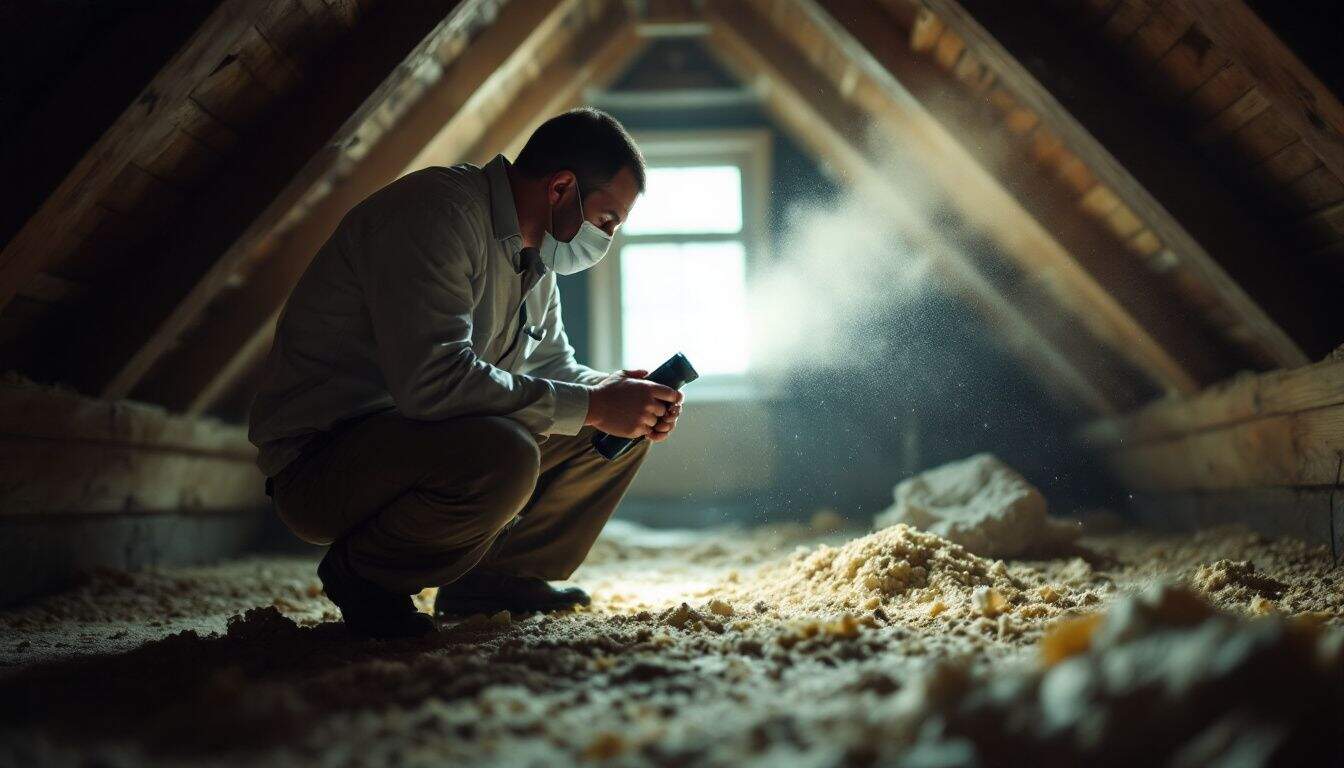
Does Your Home Put Your Family at Risk? What an Asbestos Survey Actually Reveals
If your home was built before 2000, there is a very real chance it contains asbestos-containing materials (ACMs). Whether it is necessary to conduct an asbestos survey to protect your family is not purely a legal question — it is about keeping the people you love safe from one of the most dangerous substances ever used in UK construction.
Asbestos fibres, once disturbed, become airborne and invisible to the naked eye. The diseases they cause — mesothelioma, asbestosis, and lung cancer — can take 20 to 40 years to develop. That delay is precisely why so many people underestimate the risk until it is far too late.
Why Asbestos Still Matters in UK Homes Today
Asbestos was widely used in UK construction right up until it was fully banned in 1999. Three main types were used: white asbestos (chrysotile), brown asbestos (amosite), and blue asbestos (crocidolite). All three are hazardous, and all three can still be found in properties built or refurbished before the ban.
ACMs in good condition and left completely undisturbed are generally considered low risk. The danger arises during renovation, drilling, cutting, sanding, or any activity that releases fibres into the air. Many homeowners carry out DIY work completely unaware they are exposing themselves and their families to potentially lethal material.
The UK has one of the largest volumes of pre-2000 housing stock in Europe, and asbestos was used extensively throughout residential and commercial construction for much of the twentieth century. It was cheap, fire-resistant, and versatile — which is exactly why it ended up in so many buildings.
Where Asbestos Hides in a Domestic Property
Asbestos was used throughout residential construction, often in places that are routinely disturbed during everyday maintenance and renovation. Knowing where to look is the first step towards protecting your household.
Common locations include:
- Artex and textured coatings on ceilings and walls
- Floor tiles and the adhesive beneath them
- Roof tiles, guttering, and fascia boards
- Pipe lagging and boiler insulation
- Garage roofs and outbuildings, particularly cement sheeting
- Soffit boards and ceiling tiles
- Insulating board around fireplaces and heating systems
- Textured decorative finishes applied during the 1970s and 1980s
If any of these materials are present in your home and you are planning any kind of building work, a survey is the only reliable way to know what you are dealing with before work begins. Visual inspection alone is not enough — you cannot identify asbestos simply by looking at it.
Is It Necessary to Conduct an Asbestos Survey to Protect Your Family?
For private homeowners living in their own property, there is currently no legal obligation under the Control of Asbestos Regulations to commission a survey. But the absence of a legal requirement does not mean the absence of risk.
The regulations were designed primarily for non-domestic premises and duty holders, yet the health risk to your family is identical regardless of whether you own or rent. The HSE is clear that properties built before 2000 should be treated with caution, particularly before any refurbishment or maintenance work begins.
Conducting a survey before you start any project is not overcautious — it is the sensible, responsible approach. In practical terms, an asbestos survey answers three critical questions:
- Is asbestos present? A surveyor will identify and sample suspected ACMs throughout the property.
- What condition is it in? The risk depends heavily on whether materials are intact, damaged, or deteriorating.
- What action is needed? The survey report will recommend whether materials should be managed in place, encapsulated, or removed.
Without this information, you are making decisions about your home — and your family’s health — completely blind. A professional survey removes that uncertainty entirely.
When an Asbestos Survey Is a Legal Requirement
While private homeowners have discretion, there are clear legal circumstances where a survey is not optional. Understanding these requirements helps property owners, landlords, and employers stay on the right side of the law.
Non-Domestic Buildings
Under the Control of Asbestos Regulations, duty holders of non-domestic premises built before 2000 are legally required to manage asbestos. This means commissioning a management survey to locate and assess all ACMs, then creating an asbestos register and a written management plan.
The management plan must be regularly reviewed and ACMs re-inspected, typically on an annual basis. Failure to comply can result in enforcement action, significant fines, and in serious cases, prosecution. If you are a business owner, employer, or commercial landlord, this is not a grey area.
Refurbishment and Demolition Projects
Before any refurbishment or demolition work begins on a property — whether domestic or non-domestic — a demolition survey is a legal requirement where ACMs may be present. This is a more intrusive inspection that accesses all areas likely to be affected by the planned works.
The survey must be carried out before work starts, and the area surveyed must be vacated during the inspection. Samples are taken and sent to accredited laboratories for analysis. Any ACMs identified must be removed or safely managed before contractors begin — this protects both the workers and your family from contamination spreading throughout the property.
Communal Areas in Residential Buildings
Landlords of residential properties have a duty to manage asbestos in communal areas — staircases, corridors, basements, plant rooms, and roof spaces. These areas fall under the same duty to manage as non-domestic premises.
If you manage a block of flats or a house in multiple occupation (HMO), you need to understand your obligations and ensure a management survey has been carried out. Tenants are entitled to know whether ACMs have been identified in communal areas and what management measures are in place.
The Specific Risks for Homeowners in Pre-2000 Properties
The sheer volume of pre-2000 housing stock in the UK means the majority of homes could contain some form of ACM. Many homeowners have lived in their properties for years without incident — but that changes the moment any kind of building work begins.
Even relatively minor jobs can disturb ACMs. Drilling into an artex ceiling to fit a light fitting, sanding down old floor tiles, cutting through a soffit board — any of these activities can release fibres if the material contains asbestos. You will not know you have been exposed until years later, if at all.
Buying or Selling a Pre-2000 Property
Before buying a property built before 2000, it is worth arranging a survey as part of your due diligence. Sellers are not legally required to disclose the presence of asbestos, but the cost of a survey is modest compared to the cost of remediation — or the long-term cost to your family’s health.
If you are selling, having a completed survey available can provide genuine reassurance to buyers and help avoid delays in the transaction. It demonstrates transparency and removes a significant unknown from the process, which is increasingly valued by informed buyers and their solicitors.
Planning a Renovation or Refurbishment
For homeowners planning any renovation — even something as straightforward as a kitchen or bathroom refit — a survey carried out in advance will identify any ACMs in the areas to be worked on. This allows you to have materials safely removed before your contractors begin, protecting both them and your family throughout the project.
Contractors who disturb ACMs unknowingly can spread fibres throughout a property via dust and debris. The cost of decontamination following an uncontrolled release is considerably higher than the cost of a survey and planned removal beforehand.
What Happens During an Asbestos Survey?
A professional asbestos survey is carried out by a trained and qualified surveyor, typically holding a P402 qualification or equivalent. The level of intrusiveness depends on the type of survey being conducted, and it is important to understand which type your situation requires.
Management Surveys
A management survey is the standard survey for properties in normal occupation. The surveyor will visually inspect all accessible areas, take samples of suspected ACMs, and assess the condition of any materials identified. Samples are sent to an accredited laboratory for analysis.
The resulting report includes a full asbestos register listing all ACMs found, their location, condition, and a risk assessment. This forms the basis of your asbestos management plan going forward and gives you a clear picture of what is present in your property. It is the starting point for any responsible approach to managing asbestos in a building that remains in use.
Refurbishment and Demolition Surveys
This type of survey is more intrusive and is required before any significant building work. The surveyor will access areas that would not normally be disturbed — inside wall cavities, beneath floors, above false ceilings. The property or the affected area must be vacated during the survey.
All ACMs identified must be removed by a licensed contractor before work begins. This is non-negotiable when dealing with notifiable ACMs, which must only be handled by contractors licensed by the HSE. The HSG264 guidance document sets out the standards that all asbestos surveys must meet, and any reputable surveyor will work to those standards.
How to Choose the Right Asbestos Surveyor
Not all asbestos surveyors are equal. The quality of the survey report and the accuracy of the findings depend entirely on the competence and accreditation of the company you appoint. Choosing the wrong surveyor can leave dangerous materials undetected.
When choosing a surveyor, look for the following:
- UKAS accreditation — The surveying company should be accredited by the United Kingdom Accreditation Service for asbestos surveying and air testing.
- Qualified surveyors — Individual surveyors should hold the P402 certificate for asbestos surveying or an equivalent recognised qualification.
- Clear, detailed reporting — The survey report should include photographic evidence, a full asbestos register, and clear recommendations.
- Independent advice — A good surveyor will give you an honest assessment, not push you towards unnecessary remediation work.
- Transparent pricing — A reputable company will provide a clear, fixed quote before any work begins.
Always ask to see evidence of accreditation before commissioning a survey. The HSG264 guidance sets out the standards that asbestos surveys must meet, and any reputable surveyor will be familiar with its requirements and able to demonstrate compliance.
Asbestos Surveys Across the UK: Why Local Expertise Matters
Construction methods, materials, and the types of ACMs present can vary significantly depending on the age and location of a property. Local knowledge of regional housing stock and commercial building types genuinely adds value to the survey process.
If you need an asbestos survey London for a Victorian terrace or a period commercial premises, surveyors familiar with the capital’s diverse and often complex building stock will deliver a more thorough inspection. London’s housing ranges from Georgian townhouses to post-war council estates, each with its own asbestos profile.
For those based in the north west, an asbestos survey Manchester carried out by surveyors with experience of pre-war industrial and residential buildings in the region ensures nothing is overlooked. The area’s industrial heritage means asbestos was used extensively in both commercial and domestic construction.
In the Midlands, an asbestos survey Birmingham from a team that understands the local property landscape — from Victorian back-to-backs to post-war social housing and commercial premises — provides the depth of knowledge that generic national services cannot always match.
Wherever your property is located, using a surveyor with genuine regional experience means you are getting more than a tick-box exercise. You are getting an inspection informed by an understanding of how properties in your area were built and what materials were commonly used.
The Cost of Not Acting: Understanding the Real Stakes
The financial cost of an asbestos survey is modest relative to the potential consequences of not having one. Unplanned exposure during renovation work can result in contractors halting a project, emergency air testing, decontamination costs, and potential legal liability if workers are exposed on your property.
Beyond the financial implications, the health consequences are irreversible. Mesothelioma, the cancer most closely associated with asbestos exposure, has no cure. Asbestosis causes progressive and permanent lung damage. Lung cancer linked to asbestos exposure carries a poor prognosis.
These are not distant, abstract risks. They are the documented outcomes for people who were exposed to asbestos fibres — often without knowing it — during building work on properties just like yours. Asking whether it is necessary to conduct an asbestos survey to protect your family becomes a very different question when you understand what the alternative looks like.
A survey does not just identify a problem. It gives you control. It tells you exactly what is present, where it is, what condition it is in, and what you need to do about it. That knowledge protects your family, your contractors, and anyone else who spends time in your home.
Frequently Asked Questions
Is it a legal requirement for homeowners to have an asbestos survey?
For private homeowners living in their own property, there is currently no legal obligation under the Control of Asbestos Regulations to commission an asbestos survey. However, the legal position changes significantly if you are a landlord, employer, or duty holder of a non-domestic premises. For anyone planning renovation or demolition work on a pre-2000 property, a refurbishment or demolition survey is effectively a legal requirement before work begins. The absence of a legal duty for owner-occupiers does not reduce the health risk — it simply means the decision rests with you.
How do I know if my home contains asbestos?
You cannot identify asbestos by sight alone. Many ACMs look identical to non-asbestos-containing materials. The only reliable way to confirm whether a material contains asbestos is to have it sampled and tested by an accredited laboratory. A professional asbestos survey will identify all suspected materials, take samples, and provide a full report with results. If your property was built or refurbished before 2000, you should assume asbestos may be present until a survey confirms otherwise.
What is the difference between a management survey and a refurbishment survey?
A management survey is designed for properties in normal occupation. It covers all accessible areas and identifies ACMs that could be disturbed during routine maintenance. A refurbishment or demolition survey is more intrusive and is required before any significant building work. It accesses areas that would not normally be reached — inside walls, beneath floors, above ceilings — and the affected area must be vacated during the inspection. The type of survey you need depends on what you are planning to do with the property.
How long does an asbestos survey take?
The duration depends on the size and type of property and the type of survey being conducted. A management survey on a standard domestic property typically takes between one and three hours. A refurbishment or demolition survey on a larger property may take longer, particularly if the surveyor needs to access concealed areas. Laboratory analysis of samples usually takes between three and five working days, after which you will receive your full survey report.
What should I do if asbestos is found in my home?
Finding asbestos in your home does not automatically mean it needs to be removed. ACMs in good condition that are not likely to be disturbed can often be safely managed in place. Your survey report will include recommendations based on the condition and location of any materials found. Where removal is necessary — particularly before renovation work — this must be carried out by a licensed contractor for notifiable ACMs. Your surveyor will advise you on the appropriate course of action and can help you understand your options before you make any decisions.
Get Professional Asbestos Survey Support from Supernova
Supernova Asbestos Surveys has completed over 50,000 surveys across the UK, working with homeowners, landlords, businesses, and contractors to identify and manage asbestos safely. Our UKAS-accredited surveyors deliver clear, detailed reports that give you the information you need to protect your family and comply with your legal obligations.
Whether you need a management survey, a refurbishment survey, or specialist advice before a renovation project, our team is ready to help. Call us today on 020 4586 0680 or visit asbestos-surveys.org.uk to get a quote or find out more about our services nationwide.