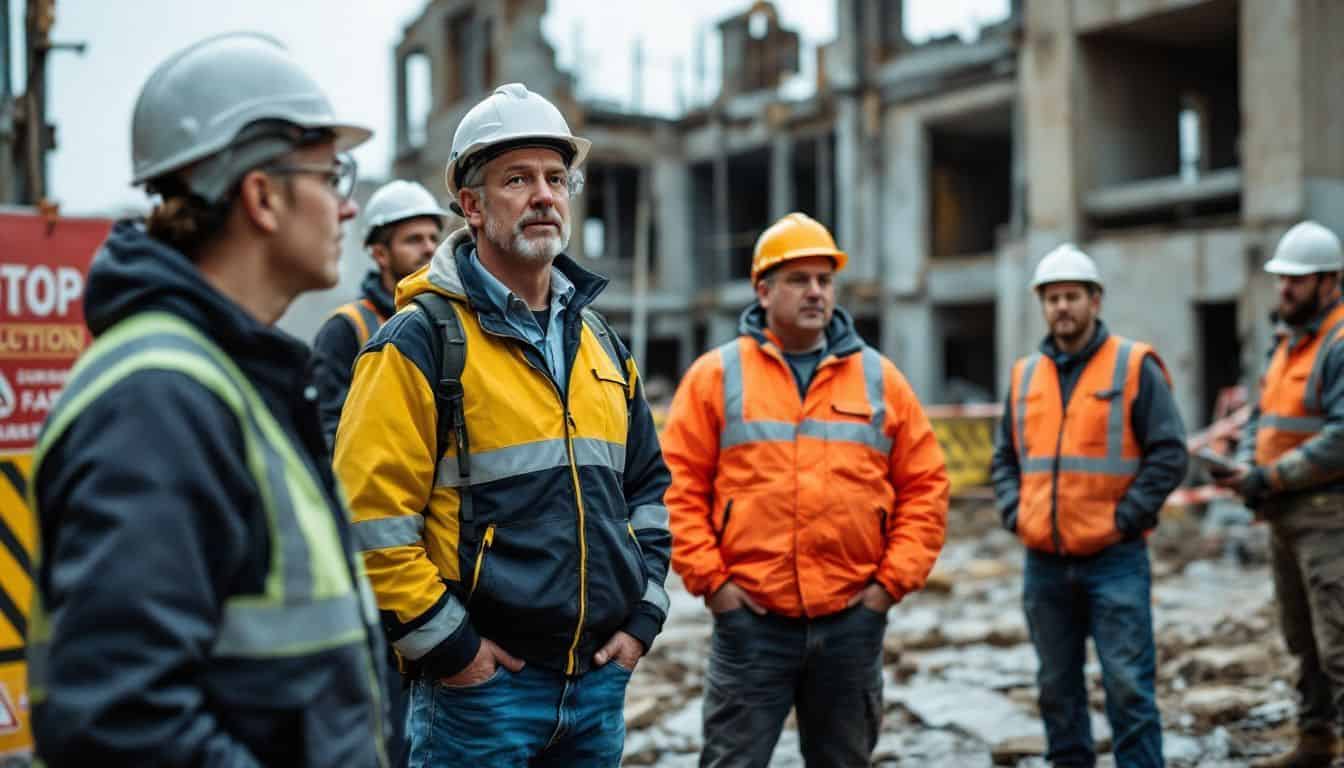
Raising Asbestos Awareness Among UK Construction Workers: What’s Actually Being Done
Every week, construction workers across the UK disturb asbestos without knowing it. It happens during routine refurbishments, loft conversions, and demolitions — in buildings that look perfectly ordinary from the outside. The question of whether there are any efforts to raise awareness about asbestos among construction workers in the UK has a clear answer: yes, significant ones. But awareness gaps remain stubbornly wide, and the stakes could not be higher.
Asbestos-related diseases still kill more people in the UK each year than any other single work-related cause. The fibres released during disturbance are invisible, odourless, and lethal — sometimes decades after exposure. That’s why the industry, regulators, and employers have all had to step up.
The Scale of the Problem Construction Workers Face
The Health and Safety Executive (HSE) estimates that a vast number of UK buildings — potentially hundreds of thousands — still contain asbestos-containing materials (ACMs). Asbestos was banned from use in new construction in the UK in 1999, but the legacy of its widespread use throughout the twentieth century remains embedded in walls, ceilings, floors, and pipework across the country.
Construction workers are among the most at-risk groups precisely because their work involves disturbing existing building fabric. Electricians, plumbers, carpenters, and demolition crews all routinely work in environments where ACMs may be present. Without proper training and awareness, any one of them could inadvertently release fibres.
The materials most commonly encountered on site include:
- Sprayed coatings on structural steelwork and ceilings
- Pipe lagging and thermal insulation
- Asbestos cement roofing sheets and guttering
- Floor tiles and their adhesives
- Textured decorative coatings such as Artex
- Insulating board used in partition walls and ceiling tiles
Many of these materials look unremarkable. Without training, workers have no reliable way to identify them visually.
HSE Campaigns and Regulatory Efforts to Raise Awareness
The HSE has consistently led national efforts to raise awareness about asbestos among construction workers in the UK. Its campaigns have used multiple channels to reach tradespeople who might otherwise never engage with formal health and safety communications.
The Asbestos and You Campaign
One of the most notable recent initiatives was the “Asbestos and You” campaign, which launched in March 2023 with a deliberate focus on younger and newer construction workers. The campaign took a multi-channel approach, using social media platforms, industry partnerships, and video content to reach audiences who are less likely to read formal guidance documents.
A documentary-style video featured a tradesperson who had been diagnosed with mesothelioma, putting a human face on the statistics. Another video — “A Day in the Life of an Asbestos Removal Expert” — walked viewers through what professional asbestos work actually looks like, demystifying the process and reinforcing why protective measures matter.
Over 400 Jewson builders’ merchant stores across the UK distributed campaign materials, putting asbestos safety information directly into the hands of tradespeople at the point of purchase. This kind of trade counter engagement is particularly effective because it reaches workers in a familiar, non-institutional setting.
Online Resources and Download Figures
The HSE’s digital resources have seen substantial engagement. The Asbestos and You quick guide has been downloaded tens of thousands of times, and related web pages have accumulated significant page view numbers — reflecting genuine demand for accessible, practical information.
The HSE also maintains a dedicated asbestos section on its website, providing guidance for duty holders, workers, and employers. These resources cover everything from how to commission a survey to what to do if you suspect you’ve disturbed asbestos unexpectedly.
HSE Inspections and Enforcement
Awareness campaigns alone are not sufficient. The HSE backs its educational work with active enforcement. Inspectors visit construction sites to check that asbestos management plans are in place, that workers have received appropriate training, and that any work involving ACMs is being carried out in compliance with the Control of Asbestos Regulations.
Employers found to be non-compliant face improvement notices, prohibition notices, and — in serious cases — prosecution. The financial and reputational consequences of non-compliance are significant, which provides a powerful incentive for employers to take awareness and training seriously.
Are There Any Efforts to Raise Awareness About Asbestos Among Construction Workers UK — Through Training?
Training is the most direct and sustained form of asbestos awareness work. The Control of Asbestos Regulations place a legal obligation on employers to ensure that any worker who might encounter asbestos during their work receives appropriate training before they start.
Asbestos Awareness Training (Category A)
Category A training — sometimes called asbestos awareness training — is designed for workers who might accidentally disturb asbestos during the normal course of their work. This includes a wide range of trades: electricians, plumbers, gas engineers, painters and decorators, and general builders.
The training covers:
- What asbestos is and where it is likely to be found
- The health risks associated with asbestos exposure
- How to recognise materials that may contain asbestos
- What to do if you suspect you’ve found or disturbed asbestos
- The importance of not disturbing suspect materials and reporting findings
This training does not qualify workers to remove asbestos — it equips them to avoid it and respond correctly when they encounter it.
Licensed and Non-Licensed Work Training
For workers who carry out non-licensed asbestos work — tasks involving lower-risk materials under specific conditions — additional training is required. And for licensed asbestos removal contractors, the training requirements are more rigorous still, covering safe systems of work, respiratory protective equipment, decontamination procedures, and waste disposal.
The HSG264 guidance document, produced by the HSE, provides detailed technical guidance on asbestos surveys and is an essential reference for surveyors, contractors, and duty holders alike.
Refresher Training Requirements
Asbestos awareness training is not a one-time event. The HSE recommends that it is refreshed at least annually. This is particularly important given that the construction workforce is mobile and diverse, with workers frequently moving between employers and sites. Annual refreshers help ensure that awareness remains current and that workers don’t become complacent.
Legal and Regulatory Framework Underpinning Awareness
The awareness campaigns and training initiatives described above exist within a robust legal framework. Understanding that framework helps explain why employers and duty holders have strong incentives to take asbestos seriously.
The Control of Asbestos Regulations
The Control of Asbestos Regulations set out the legal duties of employers, self-employed workers, and those who manage non-domestic premises. Key requirements include:
- Identifying whether asbestos is present before work begins
- Assessing the risk from any ACMs identified
- Preparing a written plan of work before any asbestos work is undertaken
- Ensuring workers are trained appropriately for the work they carry out
- Providing suitable personal protective equipment and respiratory protective equipment
- Monitoring air quality and carrying out health surveillance where required
- Disposing of asbestos waste safely and legally
Compliance with these regulations is not optional. They apply to any work that could expose employees to asbestos, regardless of the scale of the project.
The Duty to Manage
Regulation 4 of the Control of Asbestos Regulations imposes a specific duty to manage asbestos on those responsible for non-domestic premises. This duty requires the responsible person to find out whether asbestos is present, assess its condition and the risk it poses, and put in place a written management plan to control that risk.
A management survey is the standard way to fulfil this duty. It involves a qualified surveyor inspecting the premises, sampling suspect materials, and producing a detailed report that forms the basis of the asbestos management plan.
Before any refurbishment or demolition work takes place, a more intrusive demolition survey is required. This ensures that all ACMs in the affected areas are identified before work begins, so that they can be removed safely before the main contractor moves in.
What Happens When Awareness Falls Short
Despite the campaigns, training requirements, and regulatory framework, awareness gaps persist. A survey conducted by a training provider in 2024 found that a significant proportion of tradespeople still lack confidence in identifying asbestos-containing materials. This is not a failure of the system in isolation — it reflects the scale of the challenge.
The construction workforce is large, diverse, and constantly changing. Many workers are self-employed or work for small firms where formal training provision may be inconsistent. Language barriers can make engagement with written guidance difficult. And the sheer volume of buildings that still contain asbestos means that the risk is genuinely widespread.
When workers disturb asbestos without knowing it, the consequences can be serious — both for their health and for the health of anyone else in the vicinity. Uncontrolled disturbance of ACMs can also create significant legal liability for employers and duty holders.
If asbestos is discovered unexpectedly during work, the correct response is to stop work immediately, prevent others from entering the area, and contact a qualified asbestos professional. Work should not resume until the material has been assessed and — where necessary — removed by a licensed contractor. Professional asbestos removal ensures that the work is carried out safely, in compliance with the regulations, and with proper waste disposal.
Industry and Trade Body Involvement
Awareness efforts are not limited to the HSE. Trade bodies, industry associations, and training organisations all play a role in keeping asbestos safety visible within the construction sector.
The Asbestos Removal Contractors Association (ARCA) and the Asbestos Testing and Consultancy Association (ATaC) both provide guidance, training resources, and professional standards for their members. These organisations help ensure that the contractors and surveyors working with asbestos maintain consistently high standards.
Builders’ merchants, as demonstrated by the Jewson partnership in the Asbestos and You campaign, have also shown that the trade supply chain can be an effective channel for reaching workers who might not engage with formal regulatory communications. Getting safety information to workers at the point where they buy their materials is a practical and underused approach.
Professional asbestos surveyors also contribute to awareness through their day-to-day work. When a surveyor visits a property and explains their findings to a building manager or contractor, that conversation is itself a form of awareness-raising — one that is grounded in the specific context of that building and that person’s responsibilities.
What Employers Can Do Right Now
If you manage a construction business or are responsible for a property, there are concrete steps you can take to ensure your workers and your building are properly protected.
- Commission a survey before any refurbishment or demolition work. This is a legal requirement, not a recommendation.
- Ensure all workers have received appropriate asbestos awareness training and that records are kept up to date.
- Keep your asbestos register current. If your management survey is more than a few years old, or if the condition of known ACMs has changed, commission an updated survey.
- Share asbestos information with contractors before they start work on your premises. You have a legal duty to do this.
- Use licensed contractors for any work involving licensable asbestos materials. Check that your contractor holds the appropriate HSE licence.
- Encourage workers to report concerns. A worker who spots a suspect material and reports it is doing exactly the right thing — make sure your culture supports that behaviour.
Supernova Asbestos Surveys operates across the UK, including in major urban centres. Whether you need an asbestos survey in London, an asbestos survey in Manchester, or an asbestos survey in Birmingham, our qualified surveyors can provide fast, accurate results backed by over 50,000 surveys completed nationwide.
Frequently Asked Questions
What training do UK construction workers legally need regarding asbestos?
Under the Control of Asbestos Regulations, any worker who might encounter asbestos during their work must receive appropriate training before starting. For most tradespeople, this means Category A asbestos awareness training, which covers how to recognise ACMs, the health risks involved, and what to do if asbestos is suspected or disturbed. Workers carrying out non-licensed or licensed asbestos work require more detailed training specific to those activities. Training should be refreshed at least annually.
How can I tell if a building contains asbestos before starting work?
You cannot reliably identify asbestos-containing materials by sight alone — laboratory analysis of samples is required for confirmation. Before any refurbishment or demolition work, a qualified surveyor must carry out an asbestos survey in accordance with HSG264 guidance. This will identify any ACMs present, assess their condition, and provide recommendations for management or removal before work begins.
What should a construction worker do if they accidentally disturb asbestos?
Stop work immediately and leave the area. Do not try to clean up the material yourself. Prevent others from entering the affected zone and inform your supervisor or site manager straight away. The area should be assessed by a qualified asbestos professional before anyone re-enters. If there is any possibility of significant fibre release, the HSE may need to be notified and a licensed contractor engaged to carry out decontamination and removal.
Are there any efforts to raise awareness about asbestos among construction workers in the UK beyond HSE campaigns?
Yes. Trade bodies such as ARCA and ATaC provide guidance and training standards for their members. Builders’ merchants have partnered with campaigns to distribute safety materials at the point of sale. Training providers offer online and in-person asbestos awareness courses. Professional asbestos surveyors contribute to awareness through their direct engagement with clients and contractors. The effort is industry-wide, not limited to the regulator alone.
How often should an asbestos management plan be reviewed?
An asbestos management plan should be reviewed regularly — at minimum annually, and whenever there is a change in the condition of known ACMs, a change in the use of the building, or any planned refurbishment or maintenance work that might disturb asbestos. The duty holder is responsible for keeping the plan current and ensuring that anyone who might encounter asbestos in the building is made aware of its location and condition.
Get Expert Asbestos Support From Supernova
Supernova Asbestos Surveys has completed over 50,000 surveys across the UK, working with construction firms, property managers, local authorities, and private landlords. Our UKAS-accredited surveyors provide fast turnaround, clear reports, and practical advice that helps you stay compliant and keep your workers safe.
Call us on 020 4586 0680 or visit asbestos-surveys.org.uk to book a survey or speak to one of our team about your asbestos management responsibilities.