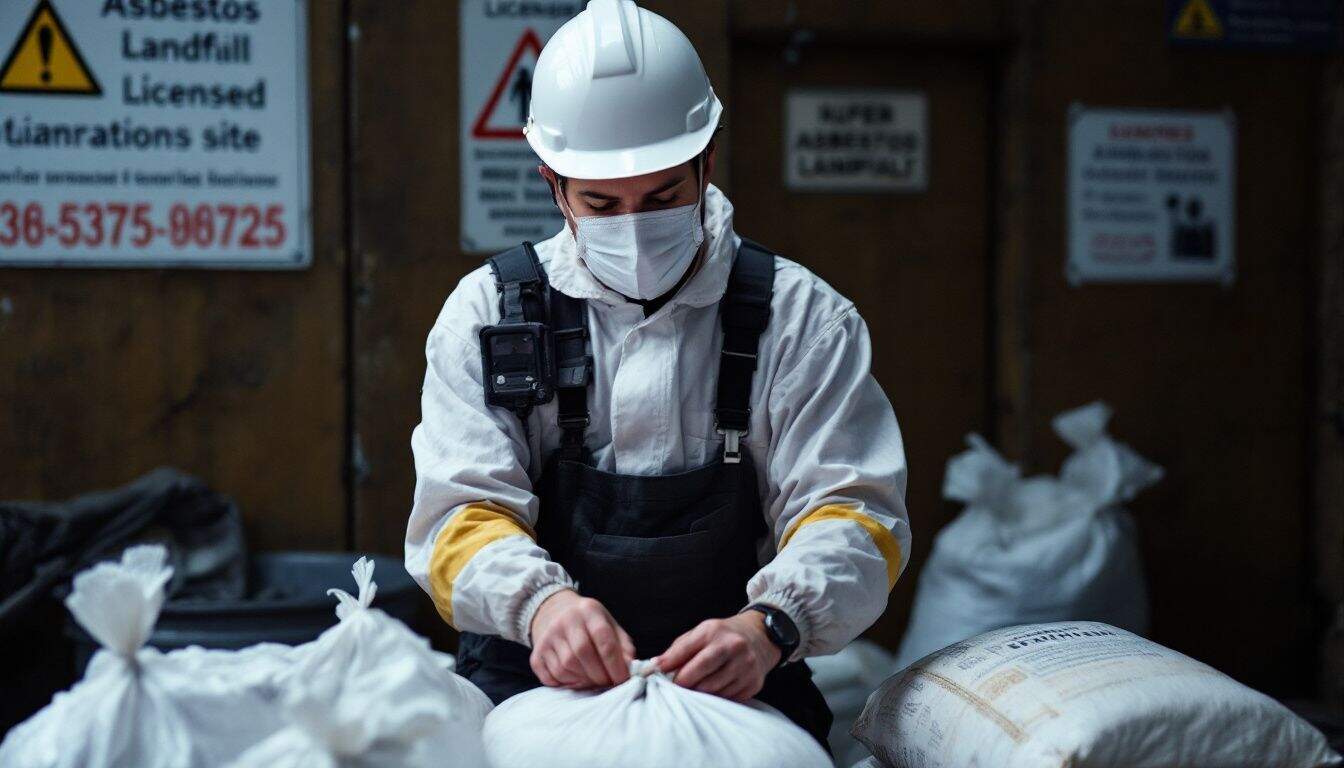
Asbestos Waste Removal in the UK: What You Need to Know
Asbestos waste removal is one of the most tightly regulated processes in the UK construction and property management sector — and for good reason. Get it wrong, and you’re not just risking a fine; you’re putting lives at risk. Whether you’re a landlord, facilities manager, or contractor dealing with a building that contains asbestos-containing materials (ACMs), understanding how removal and disposal works is essential.
This post walks you through the entire process, from the moment a licensed contractor steps on site to the point where asbestos waste is safely buried in an approved landfill. No fluff — just the facts you need to stay compliant and protect people.
Why Asbestos Waste Is Classified as Hazardous
In the UK, asbestos waste is legally classified as hazardous waste. This classification exists because asbestos fibres, when disturbed, become airborne and can be inhaled — leading to serious and often fatal diseases including mesothelioma, asbestosis, and lung cancer.
These diseases typically develop decades after exposure, which makes asbestos particularly dangerous. Someone who worked around disturbed asbestos in the 1980s may only now be showing symptoms. That long latency period is precisely why the regulatory framework around asbestos waste removal is so strict.
The Health and Safety Executive (HSE) enforces the Control of Asbestos Regulations, which set out clear duties for anyone who manages, removes, or disposes of asbestos. Alongside this, the Environmental Protection Act governs how hazardous waste — including asbestos — must be handled from the point of removal through to final disposal.
Who Can Legally Carry Out Asbestos Removal?
Not just anyone can remove asbestos. The law is clear: certain types of asbestos work require a licence issued by the HSE, while other lower-risk work is notifiable but may be carried out without a full licence. Understanding the difference matters.
Licensed Contractors
For the removal of most asbestos-containing materials — particularly those that are friable (crumbly) or in poor condition — you need a licensed asbestos removal contractor. These contractors hold an HSE licence and are typically members of industry bodies such as the Asbestos Removal Contractors Association (ARCA), which sets professional standards across the sector.
Licensed contractors are trained to work safely with ACMs, set up controlled work areas, and manage asbestos waste from start to finish. They also hold a Hazardous Waste Carriers Licence, which authorises them to transport asbestos off-site legally.
If you need professional asbestos removal carried out to the correct legal standard, always verify that the contractor holds a current HSE licence before any work begins.
Notifiable Non-Licensed Work (NNLW)
Some lower-risk asbestos work — such as minor repairs to asbestos cement or working with textured coatings — falls into the category of Notifiable Non-Licensed Work. This still requires prior notification to the relevant enforcing authority, health surveillance for workers, and strict controls, but does not require a full HSE licence.
Even for NNLW, asbestos waste must be handled and disposed of as hazardous waste. The classification of the material doesn’t change just because the work category is lower risk.
Safety Protocols During Asbestos Removal
Before any asbestos waste removal begins, licensed contractors establish a controlled work area. This typically involves sealing off the affected zone with polythene sheeting and creating a negative pressure enclosure — essentially a contained environment where asbestos fibres cannot escape into the wider building.
Personal Protective Equipment (PPE)
All workers involved in asbestos removal must wear appropriate PPE throughout the process. This includes:
- Disposable coveralls (Type 5, Category 3)
- Respiratory protective equipment (RPE) with a suitable protection factor — typically a full-face mask with a P3 filter or powered air-purifying respirator
- Disposable gloves
- Protective boot covers
PPE is not reusable in the traditional sense. Contaminated coveralls and gloves are treated as asbestos waste themselves and must be bagged and disposed of accordingly. Workers pass through a decontamination unit — a three-stage airlock system — when leaving the work area to prevent fibres from being carried out on clothing or skin.
Wetting and Suppression Techniques
To minimise the release of fibres during removal, contractors wet the ACMs before and during the removal process. Water — sometimes combined with a surfactant — is applied to suppress dust. This is a fundamental technique set out in HSE guidance document HSG264 and is non-negotiable on licensed sites.
Materials are removed carefully to avoid unnecessary breakage. The goal is always to keep ACMs as intact as possible to reduce fibre release.
How Asbestos Waste Must Be Packaged
Once asbestos has been removed, it must be packaged correctly before it leaves the work area. This is not optional — improper packaging is a serious breach of the Control of Asbestos Regulations and can result in significant enforcement action.
Double-Bagging Requirements
Asbestos waste must be double-bagged in heavy-duty polythene bags (minimum 500-gauge thickness). Each bag must be sealed securely — typically with tape and a goose-neck tie — to prevent any leakage of fibres or dust.
Larger pieces of ACM that cannot be bagged must be wrapped in at least two layers of heavy-duty polythene sheeting and sealed in the same way. The packaging must be robust enough to withstand normal handling during transport without tearing or splitting.
Labelling Requirements
Every package of asbestos waste must be clearly labelled. The label must include:
- The word “ASBESTOS” prominently displayed
- The type of asbestos contained (where known)
- A warning that the material is hazardous
- The name and address of the producer of the waste
Labels must be durable and remain legible throughout transport and disposal. Using the correct UN hazard labels for hazardous goods is also required where loads are subject to ADR (transport of dangerous goods) regulations — typically when loads exceed 1,000kg of bonded asbestos.
Asbestos Skips
Where asbestos waste is placed in a skip for collection, the skip must be fitted with a lockable lid that remains secured during transport. Open-top skips are not acceptable for asbestos waste. The skip itself must be clearly marked to indicate it contains hazardous asbestos waste.
Transporting Asbestos Waste Legally
Moving asbestos waste from a site to a disposal facility is not something that can be done in an ordinary van without the right documentation and licensing. The law requires certified carriers who hold a valid Waste Carriers Licence issued by the Environment Agency (or SEPA in Scotland, or Natural Resources Wales in Wales).
Waste Transfer Documentation
Every movement of asbestos waste must be accompanied by a Hazardous Waste Consignment Note. This document records:
- The nature and quantity of the waste being transported
- The producer of the waste (the contractor or site owner)
- The carrier transporting it
- The destination facility receiving it
Consignment notes must be kept for a minimum of three years. This creates an auditable paper trail — often called the duty of care chain — that demonstrates the waste was handled responsibly from site to final disposal.
Failure to produce proper documentation is a criminal offence. The Environment Agency and local authorities carry out spot checks on waste carriers, and penalties for non-compliance can be severe.
Disposal of Asbestos Waste: Licensed Landfill Sites
Once packaged and transported correctly, asbestos waste in the UK can only be disposed of at licensed landfill sites that are authorised to accept hazardous waste. Not all landfills accept asbestos — only those with the appropriate environmental permit and dedicated asbestos disposal cells.
How Licensed Landfills Handle Asbestos
Asbestos is buried in dedicated cells within the landfill that are designed to contain hazardous materials long-term. These cells are lined to prevent leachate from contaminating groundwater, and asbestos layers are covered with non-asbestos material to suppress any dust.
In Scotland, the Scottish Environment Protection Agency (SEPA) oversees the operation of these cells, carrying out regular inspections to ensure compliance with the Landfill Directive. Similar oversight is provided by the Environment Agency in England and Natural Resources Wales in Wales.
Once a cell reaches capacity, it is capped and left undisturbed. The site’s environmental permit includes long-term aftercare obligations — the landfill operator cannot simply walk away once the cell is full.
What Landfills Can and Cannot Accept
Licensed landfill sites that accept asbestos must be permitted to receive waste containing more than 0.1% asbestos by weight. Below this threshold, some materials may be treated differently, but in practice, any material suspected of containing asbestos should be treated as hazardous until confirmed otherwise.
It is illegal to dispose of asbestos waste at unlicensed sites, in skips not authorised for hazardous waste, or in general waste streams. Fly-tipping asbestos is a serious criminal offence carrying unlimited fines and potential imprisonment.
Regulatory Framework: What the Law Requires
Asbestos waste removal in the UK sits at the intersection of several pieces of legislation. Understanding which regulations apply — and when — is essential for anyone managing asbestos-containing materials.
Control of Asbestos Regulations
The Control of Asbestos Regulations are the primary piece of legislation governing all asbestos work in Great Britain. They set out the duty to manage asbestos in non-domestic premises, the licensing requirements for removal work, the training requirements for workers, and the standards for protective equipment and waste management.
HSE guidance document HSG264 provides detailed technical guidance on how surveys should be conducted, but the Control of Asbestos Regulations underpin all enforcement activity.
Environmental Protection Act
The Environmental Protection Act establishes the duty of care for waste producers and carriers. Anyone who produces asbestos waste — including property owners who commission removal work — has a legal duty to ensure that waste is handled, transported, and disposed of responsibly.
This means that even as a building owner, you cannot simply hand asbestos waste over to an unlicensed carrier and consider your obligations discharged. You have a continuing duty of care until the waste reaches a licensed disposal facility.
COSHH Regulations
The Control of Substances Hazardous to Health (COSHH) Regulations also apply to asbestos work. They require employers to assess the risks from hazardous substances and implement appropriate control measures. For asbestos, this means proper packaging, labelling, and transport arrangements that prevent worker or public exposure.
The Asbestos Register and Your Duty to Manage
Before any asbestos waste removal can take place, you need to know what you’re dealing with. For non-domestic premises — and increasingly for residential properties with multiple occupants — the duty to manage asbestos requires the responsible person to maintain an asbestos register.
This register records the location, type, condition, and risk assessment of all known or presumed ACMs in the building. It forms the basis for any remediation decisions, including removal. Without a current and accurate register, you cannot effectively plan asbestos waste removal or demonstrate compliance.
If you manage properties in London, our asbestos survey London service can help you establish or update your asbestos register quickly and accurately. Similarly, if your properties are in the North West, our asbestos survey Manchester team is available to carry out management or refurbishment surveys ahead of any planned removal work. For properties across the Midlands, our asbestos survey Birmingham service provides the same thorough approach.
Common Mistakes to Avoid
Even well-intentioned property managers and contractors make errors when it comes to asbestos waste removal. Here are the most common — and how to avoid them:
- Using an unlicensed contractor: Always verify HSE licence status before work begins. Check the HSE’s public register of licensed contractors.
- Inadequate packaging: Single-bagging or using standard bin bags is not acceptable. Use the correct gauge polythene and double-bag everything.
- Missing documentation: Every movement of asbestos waste requires a consignment note. Keep copies for at least three years.
- Disposing via general waste: Asbestos waste cannot go into general skips or household waste streams. It must go to a licensed hazardous waste facility.
- No prior survey: Commencing removal work without a refurbishment and demolition survey (as required by HSG264) is a regulatory breach and a safety risk.
- Assuming low-risk means no regulation: Even notifiable non-licensed work generates hazardous waste that must be disposed of correctly.
Costs and Practical Considerations
Asbestos waste removal costs vary considerably depending on the volume of material, the type of asbestos, the accessibility of the affected area, and the disposal facility used. Licensed removal work is more expensive than unlicensed work — but the cost of non-compliance, including enforcement notices, fines, and potential prosecution, is far greater.
When budgeting for asbestos removal, factor in:
- The cost of the pre-removal survey (refurbishment and demolition survey)
- Licensed contractor fees for the removal itself
- PPE and decontamination equipment
- Packaging materials (specialist bags, polythene sheeting)
- Transport by a licensed waste carrier
- Disposal fees at a licensed landfill
- Air monitoring during and after the work (required for licensed work)
- A four-stage clearance procedure including a final air test before the area is reoccupied
Getting multiple quotes from licensed contractors is sensible, but price should never be the only consideration. Check licences, insurance, and references before appointing anyone to carry out asbestos waste removal on your behalf.
Frequently Asked Questions
What makes asbestos waste different from other hazardous waste?
Asbestos waste is classified as hazardous specifically because of the risk posed by airborne fibres. Unlike many other hazardous materials, asbestos fibres are microscopic, odourless, and invisible — meaning exposure can occur without any obvious warning. This is why packaging, transport, and disposal requirements are so stringent. The fibres do not break down in the environment, making proper containment at licensed landfill sites essential for long-term safety.
Can I remove asbestos myself and dispose of it at a tip?
For most asbestos-containing materials, no — you cannot legally remove or dispose of asbestos yourself without the appropriate licences and training. Some household waste recycling centres do accept small quantities of asbestos cement from domestic properties, but this varies by local authority and strict conditions apply. For any commercial property or significant quantity of ACMs, licensed contractors and licensed landfill disposal are legally required.
How do I know if a waste carrier is licensed to transport asbestos?
You can check whether a waste carrier is registered by searching the Environment Agency’s public register of waste carriers, brokers, and dealers in England. Similar registers exist in Scotland (SEPA) and Wales (Natural Resources Wales). A legitimate licensed carrier will also provide you with a copy of their Hazardous Waste Carriers Licence on request. Never allow asbestos waste to be collected by a carrier who cannot produce this documentation.
What happens if asbestos waste is fly-tipped?
Fly-tipping asbestos is a serious criminal offence in the UK. Penalties include unlimited fines and up to 12 months’ imprisonment on summary conviction, or up to five years on conviction on indictment. Local authorities and the Environment Agency have powers to investigate and prosecute fly-tipping, and they actively do so. If you discover fly-tipped asbestos, do not disturb it — contact your local authority or the Environment Agency immediately.
Do I need an asbestos survey before removal work starts?
Yes. Before any refurbishment or demolition work that may disturb asbestos, a refurbishment and demolition survey is required. This is set out in HSE guidance HSG264 and is a legal requirement under the Control of Asbestos Regulations. The survey identifies the location, type, and condition of all ACMs that may be disturbed, allowing the removal contractor to plan the work safely and compliantly. Skipping this step is both a regulatory breach and a significant safety risk.
Work With Supernova Asbestos Surveys
Supernova Asbestos Surveys has completed over 50,000 surveys across the UK, helping property owners, managers, and contractors stay compliant and keep people safe. Whether you need a management survey to update your asbestos register, a refurbishment and demolition survey ahead of planned works, or advice on the asbestos waste removal process, our experienced team is here to help.
We operate nationwide, with specialist local teams covering London, Manchester, Birmingham, and beyond. To discuss your requirements, call us on 020 4586 0680 or visit asbestos-surveys.org.uk to request a quote or find out more about our services.