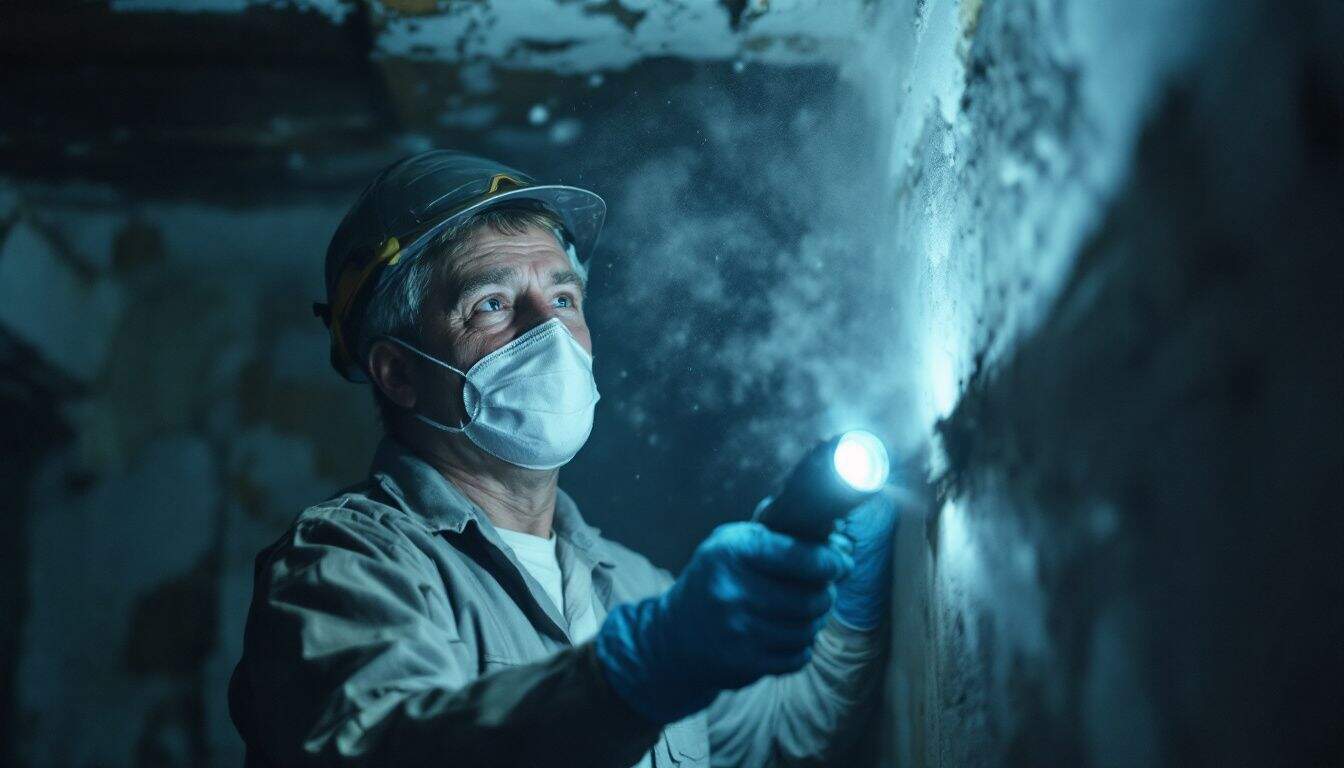
Why You Need an Asbestos Survey for Renovation Before You Pick Up a Tool
If you’re planning to renovate a building constructed before 2000, there’s a real chance asbestos is hiding somewhere inside it — in the walls, the ceiling tiles, the pipe lagging, or the floor adhesive. Carrying out an asbestos survey for renovation work isn’t optional. Disturbing asbestos-containing materials without one isn’t just dangerous, it’s a criminal offence under UK law.
Asbestos-related diseases still kill more people in the UK each year than road traffic accidents. The fibres are invisible to the naked eye, they have no smell, and by the time symptoms appear, the damage is already done. The only reliable way to protect workers, residents, and yourself is to know exactly what you’re dealing with before work begins.
What Is an Asbestos Survey?
An asbestos survey is a structured inspection of a building carried out by a qualified surveyor to locate and assess any asbestos-containing materials (ACMs). The surveyor physically inspects accessible areas, takes samples where necessary, and sends those samples to an accredited laboratory for analysis.
The findings are compiled into a written report — often called an asbestos register — which records the location, type, condition, and risk level of any ACMs found. That register then forms the basis of your asbestos management plan and informs how renovation work can safely proceed.
Surveys must be carried out by a competent surveyor with the appropriate training and, where required, UKAS-accredited laboratory support. The HSE’s guidance document HSG264 sets out exactly what a compliant survey must include. This is not a job for a general builder or a DIY inspection.
The Different Types of Asbestos Survey Explained
Not all asbestos surveys are the same. The type you need depends entirely on what you’re planning to do with the building. Using the wrong survey type — or skipping one altogether — can leave you legally exposed and your workers at serious risk.
Management Survey
A management survey is used for buildings that are occupied and in normal use. It identifies ACMs that could be disturbed during routine maintenance or everyday activities, and the surveyor assesses whether materials should be managed in place, monitored, or removed.
This type of survey is the baseline for any duty holder’s asbestos management obligations under the Control of Asbestos Regulations. It does not, however, give you the green light to start major renovation work. For that, you need a refurbishment survey.
Refurbishment Survey
A refurbishment survey is specifically designed for buildings or areas that are about to undergo renovation, refurbishment, or significant alteration. It’s more intrusive than a management survey — the surveyor needs to access areas that will be disturbed during the works, which can mean opening up wall cavities, lifting floor coverings, or inspecting above suspended ceilings.
This survey must be completed before any renovation work begins. There are no exceptions. If your contractor starts work without one, both they and you are in breach of the Control of Asbestos Regulations.
Demolition Survey
Where a building or part of a building is being demolished entirely, a demolition survey is required. This is the most thorough and intrusive type of survey, designed to locate all ACMs throughout the full structure — including areas that are normally inaccessible.
Every ACM must be identified and removed before demolition work begins. The demolition survey ensures nothing is missed and that all materials are disposed of correctly as hazardous waste.
Re-Inspection Survey
Once asbestos has been identified and a management plan is in place, the condition of those materials needs to be checked periodically. A re-inspection survey revisits known ACMs to confirm whether their condition has deteriorated and whether the risk level has changed.
Re-inspections are typically carried out annually, though higher-risk materials may require more frequent checks. If you’re buying a building with an existing asbestos register, a re-inspection confirms whether that information is still accurate before you rely on it.
Legal Requirements: What the Law Actually Says
The Control of Asbestos Regulations place clear duties on anyone who owns, manages, or has responsibility for a non-domestic building. Regulation 4 requires duty holders to manage asbestos — and that starts with knowing where it is.
For renovation and refurbishment work specifically, the regulations require that a suitable survey is carried out before any work that could disturb ACMs begins. This applies to commercial properties, public buildings, and many residential properties where work is being carried out by contractors.
The HSE’s guidance document HSG264 provides the technical framework for how surveys should be planned, conducted, and reported. Surveyors must follow this guidance, and clients commissioning surveys should know what a compliant report looks like.
Failure to comply is not treated lightly. The HSE has the power to issue improvement notices, prohibition notices, and prosecute duty holders. Fines for serious breaches can be substantial, and where workers are harmed, the consequences for individuals can include custodial sentences.
Where Asbestos Hides in Old Buildings
Asbestos was used in hundreds of building products throughout the twentieth century and wasn’t phased out completely in the UK until 1999. If your building was constructed or refurbished before that date, any of the following could contain ACMs:
- Sprayed coatings on structural steelwork and ceilings
- Pipe and boiler lagging
- Insulating board used in partition walls, ceiling tiles, and fire doors
- Textured coatings on walls and ceilings (such as Artex)
- Vinyl floor tiles and the adhesive used to fix them
- Roof sheeting and soffit boards
- Gaskets and rope seals in plant rooms
- Bitumen roof felt and damp-proof courses
Many of these materials are in perfectly stable condition and pose no immediate risk if left undisturbed. The danger comes when they’re cut, drilled, sanded, or broken — which is precisely what renovation work involves.
A thorough asbestos survey for renovation work maps all of this out before a single tool is picked up, so contractors know what they’re dealing with and can plan accordingly.
Health Risks: Why Asbestos Exposure Is So Serious
Asbestos fibres are microscopic. When ACMs are disturbed, those fibres become airborne and can be inhaled without anyone realising it. Once inside the lungs, they cannot be expelled, and over time they cause scarring and cellular damage that leads to serious, often fatal, disease.
The conditions linked to asbestos exposure include:
- Mesothelioma — a cancer of the lining of the lungs or abdomen with a very poor prognosis
- Asbestos-related lung cancer — particularly prevalent in those who also smoked
- Asbestosis — progressive scarring of the lung tissue causing breathlessness and reduced lung function
- Pleural thickening — a non-malignant condition that still causes significant breathing difficulties
These diseases have a long latency period — symptoms can take decades to appear after exposure. That means workers renovating buildings today could be affected thirty or forty years from now. By the time a diagnosis is made, it’s too late to undo the damage.
Wearing a dust mask during renovation work is not a substitute for proper asbestos management. Only a survey tells you what you’re actually dealing with.
What Happens If You Skip the Survey?
Some clients try to cut corners by starting renovation work without commissioning an asbestos survey first. The risks fall into three distinct categories: health, legal, and financial.
Health Consequences
If asbestos is disturbed during renovation work without prior identification, fibres can be released across a wide area. Workers on site are at immediate risk, but so are anyone else in or near the building — including future occupants. Contamination can spread through ventilation systems and on workers’ clothing.
Legal Consequences
The HSE takes a dim view of duty holders who fail to meet their obligations under the Control of Asbestos Regulations. If an inspection reveals that renovation work was carried out without a prior survey, the project can be shut down immediately. Prosecution can follow, with significant fines and — in serious cases — custodial sentences for those responsible.
Financial Consequences
Discovering asbestos mid-renovation is far more expensive than dealing with it upfront. Work must stop while an emergency survey is carried out, the area is assessed, and a licensed contractor is brought in to deal with the contamination. Delays can run to weeks, and the cost of reactive remediation is typically far higher than planned removal.
Decontamination of tools, clothing, and the wider site adds further expense — and that’s before any legal costs are considered.
How to Prepare for Your Asbestos Survey
Getting the most from your survey means doing a little preparation beforehand. Here’s what to think about:
- Gather any existing information. If the building has a previous asbestos register or management plan, share it with the surveyor. It won’t replace a new survey, but it helps them plan their inspection more effectively.
- Provide access. A refurbishment survey needs to access the areas that will be disturbed during work. Make sure the surveyor can get into roof spaces, plant rooms, ceiling voids, and any other areas relevant to the planned works.
- Define the scope of works. The more detail you can give the surveyor about what you’re planning to do, the more targeted and useful their report will be.
- Choose a qualified surveyor. Check that your surveyor holds the relevant qualifications and that any laboratory analysis is carried out by a UKAS-accredited lab. HSG264 is clear on the standards that must be met.
- Allow enough time. Don’t commission a survey the week before work is due to start. Laboratory results take time, and the report needs to be reviewed and acted on before contractors begin.
What Happens After the Survey?
Once the survey is complete, you’ll receive a written report detailing every ACM found — its location, type, condition, and risk priority. From there, your options depend on what was found and what work you’re planning.
Materials in good condition that won’t be disturbed by the renovation can often be managed in place and monitored over time. Materials that will be disturbed — or that are already in poor condition — will need to be removed before work begins.
Licensed contractors must carry out the removal of higher-risk asbestos types, and the waste must be disposed of correctly as hazardous material. Our asbestos removal service covers everything from initial survey findings through to safe, compliant removal and disposal.
Once removal is complete, the asbestos register should be updated to reflect the current state of the building. This is particularly important if you’re planning to sell or let the property after renovation.
Asbestos Surveys Across the UK
Supernova Asbestos Surveys operates nationwide, with surveyors covering every region of the country. Whether you’re managing a renovation project in a major city or a more rural location, we have the local expertise and fast turnaround times to keep your project on track.
If you’re based in the capital, our asbestos survey London service covers all London boroughs and the surrounding area. For projects in the North West, our asbestos survey Manchester team provides the same professional standard of survey with local knowledge. And for clients in the Midlands, our asbestos survey Birmingham service is ready to help wherever your project is located.
With over 50,000 surveys completed nationwide, we have the experience to handle everything from a straightforward single-room refurbishment to a complex multi-site demolition programme.
Frequently Asked Questions
Do I need an asbestos survey before a small renovation, such as fitting a new kitchen?
Yes, if the building was constructed before 2000 and the work involves disturbing the fabric of the building — drilling walls, lifting floors, removing ceiling tiles — a refurbishment survey is required before work begins. The size of the renovation doesn’t change the legal obligation. Even a seemingly minor job can disturb ACMs if the building hasn’t been surveyed.
How long does an asbestos survey for renovation take?
The on-site inspection can typically be completed in a few hours for a small to medium-sized property, though larger or more complex buildings will take longer. Laboratory analysis of samples usually takes a few working days. You should allow at least a week from commissioning the survey to receiving your completed report — more if the project is large or access is limited.
What’s the difference between a management survey and a refurbishment survey?
A management survey is designed for occupied buildings in normal use. It identifies ACMs that could be disturbed during routine maintenance but is not sufficient for renovation work. A refurbishment survey is more intrusive, accessing areas that will be affected by the planned works. If you’re about to renovate, you need a refurbishment survey — not a management survey.
Who is responsible for commissioning an asbestos survey before renovation?
Under the Control of Asbestos Regulations, the duty to manage asbestos falls on the duty holder — typically the building owner, landlord, or employer who has control of the premises. Before renovation work begins, it is the duty holder’s responsibility to ensure a suitable survey has been carried out and that contractors are made aware of the findings before they start work.
What happens if asbestos is found during the survey?
Finding asbestos doesn’t necessarily mean work has to stop entirely. ACMs in good condition that won’t be disturbed by the renovation can often be managed in place. Materials that will be disturbed must be removed by a licensed contractor before renovation work begins. Your surveyor will provide a prioritised report that makes clear which materials need action and which can be safely managed.
Get Your Asbestos Survey for Renovation Booked Today
Don’t let an avoidable problem derail your renovation project or put workers at risk. Supernova Asbestos Surveys has completed over 50,000 surveys across the UK, and our qualified surveyors are ready to help you get the right survey in place before work begins.
Call us on 020 4586 0680 or visit asbestos-surveys.org.uk to request a quote or find out more about our survey services. We’ll make sure you have everything you need to start your renovation safely and legally.