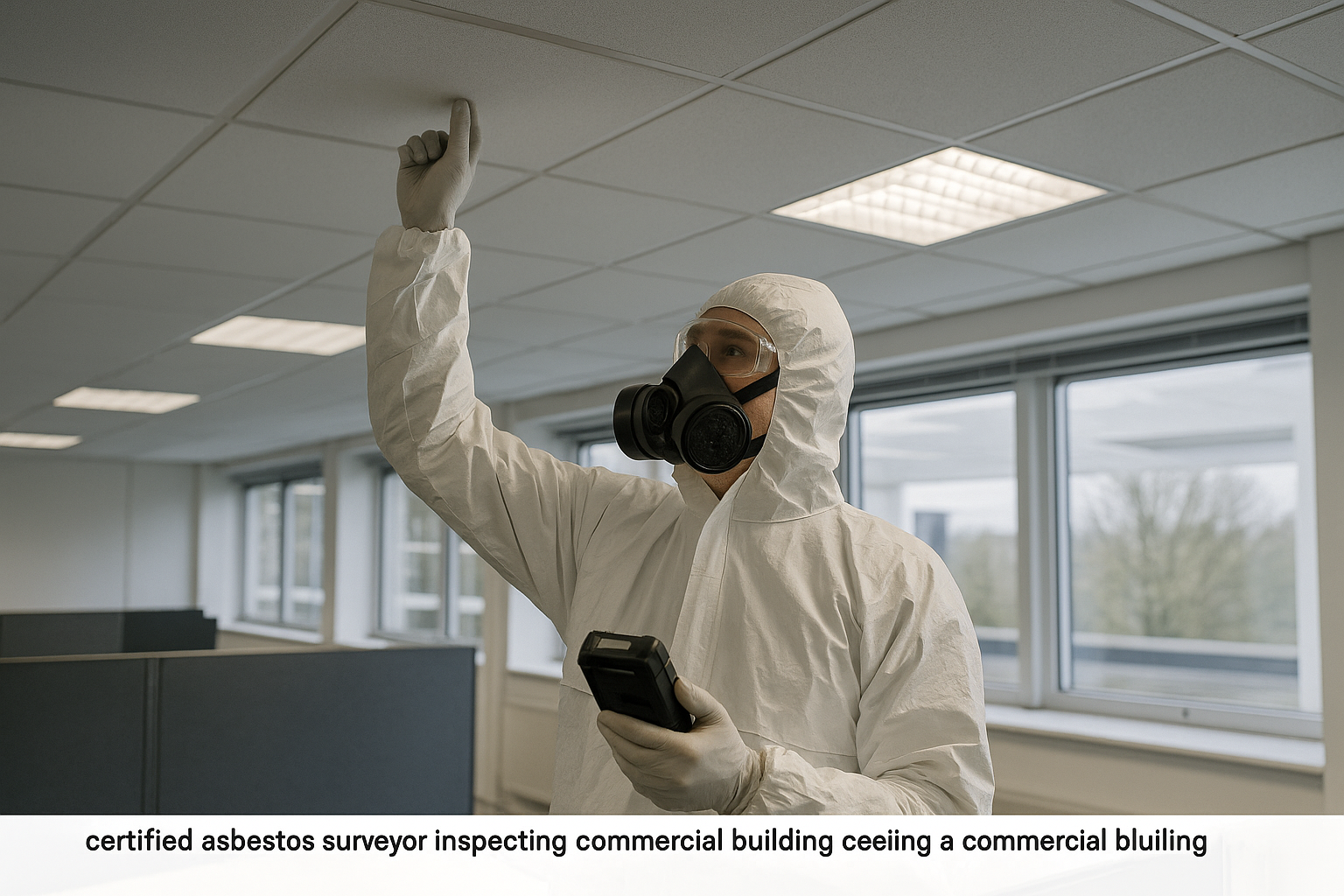
Managing Asbestos in Schools: What Every Dutyholder Needs to Know
Schools are rarely straightforward buildings to manage. Older blocks, repeated refurbishments, and constant daily wear mean that managing asbestos has to be organised, documented, and reviewed properly. If you hold responsibility for a school site, getting this right protects staff, pupils, contractors, and your organisation’s legal standing.
Many UK schools were built or altered during the decades when asbestos-containing materials were widely used in construction. That does not automatically make the building unsafe. It does mean that managing asbestos must be treated as an active, ongoing duty — not a paper exercise gathering dust in a filing cabinet.
Under the Control of Asbestos Regulations, dutyholders must identify asbestos-containing materials so far as is reasonably practicable, assess the risk, and put arrangements in place to manage it. In schools, that duty typically falls to the organisation with maintenance and repair responsibility — supported by headteachers, estates teams, business managers, and governors where relevant.
Why Managing Asbestos Matters in School Buildings
Asbestos is still present in a significant number of education buildings across the UK, because it was used extensively for insulation, fire protection, and durability. You may find it in ceiling tiles, pipe insulation, wall panels, floor tiles, boiler rooms, service ducts, risers, storerooms, and outbuildings.
The main risk arises when materials are damaged or disturbed. Drilling, sanding, lifting ceiling tiles, replacing light fittings, or carrying out refurbishment can all release fibres if the material contains asbestos. That is precisely why managing asbestos in a school is about control — knowing what is present, where it is, what condition it is in, and how people are prevented from disturbing it.
Who Is Responsible for Managing Asbestos?
The legal duty sits with the dutyholder. In a school setting, that could be the local authority, academy trust, governing body, proprietor, or another party with clear responsibility for maintenance and repair. The exact arrangement depends on how the school is structured and governed.
In practice, effective managing asbestos also depends on named individuals on site. A facilities manager, site manager, or estates lead often handles day-to-day arrangements, but they must have the authority, access to records, and adequate budget to act when needed.
What the Dutyholder Is Required to Do
- Find out whether asbestos is present, and if so, where it is and what condition it is in
- Presume materials contain asbestos where there is uncertainty and no evidence to the contrary
- Keep an up-to-date asbestos register
- Assess the risk of anyone being exposed to asbestos fibres
- Prepare and implement an asbestos management plan
- Review the plan and the condition of materials regularly
- Provide relevant information to anyone liable to disturb asbestos, including all contractors
When these steps are weak or incomplete, managing asbestos quickly becomes reactive. That is when schools run into serious problems during maintenance jobs, emergency repairs, and holiday works.
Start With the Right Asbestos Survey
You cannot make sound decisions without reliable information. A professional survey carried out by a competent asbestos surveying organisation is the foundation of managing asbestos properly. Surveys should follow the approach set out in HSG264, the HSE’s guidance on asbestos surveys.
The right type of survey depends on what the building is being used for and what work is planned. Using the wrong survey type is a common and avoidable mistake.
Management Survey
For normal occupation and routine maintenance, a management survey is usually the starting point. Its purpose is to locate, as far as reasonably practicable, the presence and extent of suspected asbestos-containing materials that could be damaged or disturbed during normal occupancy, including foreseeable maintenance and minor works.
This type of survey supports the school’s asbestos register and management plan, and helps those responsible with the day-to-day task of managing asbestos across the site.
Refurbishment Survey
If you are replacing kitchens, rewiring classrooms, upgrading toilets, installing new heating systems, or carrying out any intrusive works, a refurbishment survey will usually be required. This is a more intrusive investigation, because it must identify all asbestos in the area affected before any work begins.
Do not rely on an old management survey for refurbishment works. That is a common failure in managing asbestos, particularly during school holiday projects when contractors are under time pressure and cutting corners feels tempting.
Demolition Survey
If a structure is due to be demolished, a demolition survey is required. This is a fully intrusive investigation that aims to identify all asbestos-containing materials so they can be properly dealt with before demolition begins. For schools with ageing temporary blocks, garages, plant rooms, or outbuildings, this is a critical part of managing asbestos safely and lawfully.
Re-Inspection Survey
Where asbestos has already been identified and remains in place, a re-inspection survey confirms whether the condition of those materials has changed. This supports ongoing monitoring and helps you update risk assessments and prioritise action where needed.
Regular re-inspection is essential because managing asbestos is never a one-off task. Materials age, areas are repurposed, and accidental damage happens regardless of how well-run a site is.
Building an Asbestos Register That Actually Gets Used
An asbestos register should be clear enough that a site manager, caretaker, or visiting contractor can understand it quickly. If the register is vague, outdated, or difficult to access, it will not support safe decision-making when it matters most.
For practical managing asbestos, your register should include:
- The exact location of each suspected or confirmed asbestos-containing material
- A clear description of the material
- The product type, where known
- The condition at the time of inspection
- The material assessment or risk information from the survey
- Any actions taken, such as encapsulation, labelling, or restricted access
- The date of the last inspection or review
Keep the register where relevant staff can access it easily. Digital access is often best, but there must also be a clear process for contractors to review the relevant information before starting any work on site.
Creating an Asbestos Management Plan That Works in Practice
The register tells you what is there. The management plan explains how your school controls the risk. Good managing asbestos depends on this plan being specific, realistic, and embedded into day-to-day operations — not filed away and forgotten.
What Your Management Plan Should Set Out
- Who the dutyholder is and their contact details
- Who manages asbestos information on site
- How asbestos risks are assessed and prioritised
- How staff and contractors are informed before work begins
- What to do if materials are accidentally damaged
- How inspections and reviews are scheduled
- How records are updated after maintenance, removal, or changes to the building
A useful plan also assigns responsibilities by role. For example, the site manager checks access controls, the business manager keeps records current, and project leads confirm survey requirements before any works begin. Vague plans that assign responsibility to no one in particular are rarely followed.
Questions Your Plan Should Be Able to Answer Quickly
- What asbestos-containing materials are currently on site?
- Which areas present higher risk because of damage, access, or planned works?
- Who must be informed before any maintenance work starts?
- What happens if a ceiling tile, panel, or pipe covering is damaged?
- When are re-inspections due and who is responsible for arranging them?
If your current paperwork cannot answer those questions quickly, your approach to managing asbestos needs tightening without delay.
Assessing Risk and Deciding What Action to Take
Not every asbestos-containing material requires removal. In many cases, the safest approach is to leave it in place and prevent disturbance. Effective managing asbestos means judging risk based on condition, location, and the realistic likelihood of contact.
A material in good condition inside a locked service riser may present very low risk. Damaged insulation board in a busy corridor or storage cupboard is a very different matter entirely.
Factors to Consider When Assessing Risk
- Condition: Is the material intact, sealed, cracked, or broken?
- Surface treatment: Is it painted, encapsulated, or exposed?
- Accessibility: Can pupils, staff, or contractors reach it easily?
- Activity in the area: Is the space frequently used or subject to knocks and vibration?
- Planned maintenance: Are electricians, plumbers, or IT installers likely to work nearby?
- Material type: Some materials release fibres more readily than others when disturbed
Use the survey findings alongside your practical knowledge of how the school operates. That combination is the difference between basic record-keeping and genuinely effective managing asbestos.
Manage, Repair, Encapsulate, or Remove?
Once risk is assessed, the next decision is what action is proportionate. HSE guidance is clear on the principle: if asbestos-containing materials are in good condition and unlikely to be disturbed, leaving them in place and managing them is often the correct approach.
- Manage in place — Common for lower-risk materials in sound condition. Works well when there is clear labelling, controlled access, and robust contractor procedures. For many schools, this is the core of managing asbestos on a day-to-day basis.
- Repair or encapsulate — Where a material is slightly damaged but stable, repair or encapsulation may be suitable. This should only be specified and carried out by competent people using the correct method for the material and its condition. Improvised or temporary fixes can create additional risk.
- Remove — Necessary where materials are significantly damaged, high risk, repeatedly disturbed, or in the way of planned refurbishment or demolition. Some asbestos removal work must be carried out by a licensed contractor depending on the material type and scope of work. Always obtain competent advice before proceeding.
Training Staff and Controlling Contractor Access
One of the most significant failures in managing asbestos is assuming that records alone will keep people safe. They will not. Staff and contractors need the right information at the right time, delivered in a way they can actually act on.
Staff Awareness
Anyone who may encounter asbestos during their work should have suitable asbestos awareness training. In a school, that can include site staff, caretakers, maintenance teams, and anyone who might drill, fix, lift panels, or access ceiling voids. They do not need to identify every asbestos product by sight, but they do need to know how to avoid disturbing suspect materials, where the register is kept, and how to report damage immediately.
Contractor Control
Before any contractor starts work, they must be given the relevant asbestos information for the area they will enter. This is both a legal requirement and a practical cornerstone of managing asbestos. Use a clear pre-start process:
- Check the scope of work against the asbestos register
- Review the register for the specific area involved
- Confirm whether existing survey information is adequate for the planned work
- Provide the contractor with the relevant records in writing
- Record that they have received and understood the information
- Establish a clear instruction to stop work immediately if suspect materials are uncovered
This matters even for small jobs. Replacing a noticeboard, fitting data cabling, or accessing a ceiling void can all disturb asbestos if controls are not in place.
Monitoring Condition and Keeping Records Current
Buildings change constantly. Rooms are repainted, partitions are added, leaks occur, and service routes are altered. That is why managing asbestos requires regular re-inspection and record updates — not just a survey carried out once and then forgotten.
Asbestos-containing materials left in place should be checked periodically, with the frequency based on condition and risk. Higher-risk materials or busy areas may need more frequent attention than low-risk, sealed materials in restricted spaces.
What to Check During Inspections
- Cracks, chips, or surface abrasion
- Water damage or staining
- Signs of impact from furniture or equipment
- Evidence of unauthorised drilling, cutting, or alterations
- Deterioration of encapsulation or protective seals
- Changes in room use that increase the likelihood of disturbance
Every inspection should feed back into the register and management plan. If the condition of a material worsens, your control measures need to change to reflect that. That is how effective managing asbestos works in practice — it is a cycle, not a one-time event.
Common Locations for Asbestos in School Buildings
Knowing where asbestos is commonly found helps site staff and contractors stay alert. While a professional survey is the only reliable way to confirm presence, the following locations are frequently identified during surveys of school buildings:
- Ceiling tiles, particularly in older classrooms, corridors, and sports halls
- Pipe lagging and boiler insulation in plant rooms and service areas
- Insulating board used in partition walls, door panels, and service risers
- Floor tiles and the adhesive beneath them in older buildings
- Roof sheeting and soffit panels on outbuildings, temporary classrooms, and garages
- Textured coatings on walls and ceilings
- Guttering, downpipes, and rainwater goods on older structures
This list is not exhaustive. Managing asbestos in a school means never assuming a material is safe simply because it looks intact or unremarkable.
Supernova Asbestos Surveys: Supporting Schools Across the UK
Supernova Asbestos Surveys works with schools, academies, local authorities, and multi-academy trusts to help them meet their legal duties and manage asbestos safely. With over 50,000 surveys completed nationwide, our surveyors understand the specific challenges of school estates — including the need to work around term times, safeguarding requirements, and complex building histories.
Whether you need a management survey for a single site, a refurbishment survey ahead of summer works, or support across a portfolio of schools, we can help. We operate across the UK, including asbestos survey London, asbestos survey Manchester, and asbestos survey Birmingham, as well as throughout the rest of England, Scotland, and Wales.
Call us on 020 4586 0680 or visit asbestos-surveys.org.uk to discuss your requirements or book a survey.
Frequently Asked Questions
Does every school need an asbestos survey?
If you are the dutyholder for a school built before the year 2000, you must have a process in place to identify whether asbestos-containing materials are present. For most schools, that means commissioning a professional management survey if one has not already been carried out, or reviewing and updating existing survey records if they are out of date. Presuming materials do not contain asbestos without evidence is not an acceptable approach under the Control of Asbestos Regulations.
How often should asbestos be re-inspected in a school?
There is no single fixed interval that applies to all materials. Re-inspection frequency should be based on the condition of each material and the risk it presents. In practice, many schools carry out annual re-inspections of known asbestos-containing materials, with higher-risk items checked more frequently. Your asbestos management plan should set out the schedule clearly and record when each inspection was carried out.
Can asbestos-containing materials be left in place in a school?
Yes, in many cases leaving materials in place and managing them is the correct approach. HSE guidance supports this where materials are in good condition and unlikely to be disturbed. The key is having a robust management plan, a current asbestos register, effective controls on who can access the area, and a process for informing contractors before any work begins. Removal is not always the safest option, as disturbance during removal can itself create risk if not properly managed.
Who needs asbestos awareness training in a school?
Any member of staff who may encounter asbestos-containing materials during their normal duties should have appropriate asbestos awareness training. In a school setting, this typically includes site managers, caretakers, and maintenance staff. It may also include anyone who carries out minor tasks such as drilling, hanging equipment, or accessing ceiling voids. The training does not need to be highly technical — the goal is to ensure people know how to recognise suspect materials, avoid disturbing them, and report concerns promptly.
What should I do if asbestos is accidentally damaged in a school?
Stop work in the affected area immediately and restrict access. Do not attempt to clean up dust or debris without competent advice. Notify the dutyholder and refer to your asbestos management plan, which should set out the emergency procedure for exactly this situation. Depending on the material and extent of damage, you may need to arrange air testing, specialist cleaning, or remediation before the area can be reoccupied. Prompt, calm action is far better than delay or improvisation.