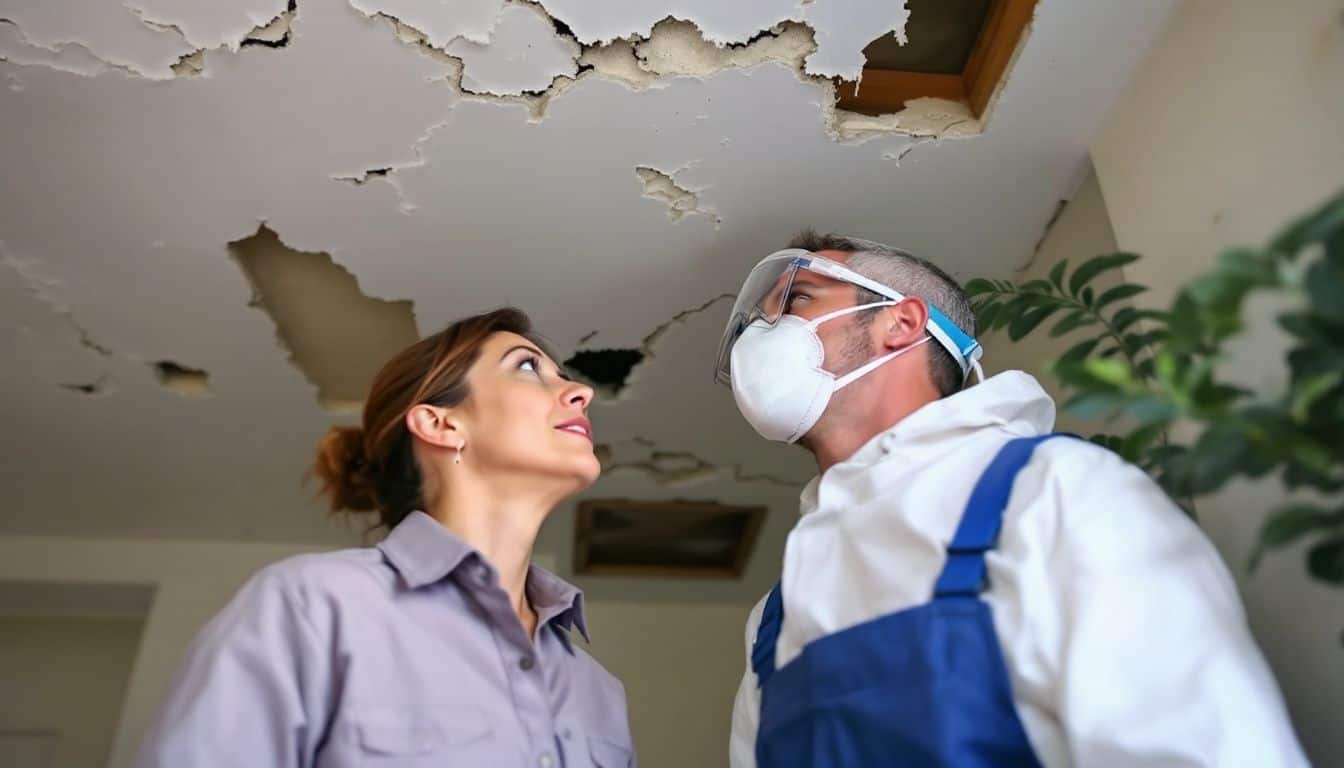
Asbestos Remediation: What It Means for Your Property and Any Planned Transaction
Finding asbestos in a property stops many transactions dead in their tracks — but it doesn’t have to. Asbestos remediation covers everything from full removal through to encapsulation and managed retention, and understanding your options puts you firmly back in control, whether you’re buying, selling, or managing a building you’re responsible for.
Asbestos remains the single largest cause of work-related deaths in the UK, responsible for thousands of fatalities every year. That figure alone explains why buyers, lenders, and solicitors treat its presence so seriously — and why getting remediation right matters far beyond the transaction itself.
Identifying Asbestos Before You Do Anything Else
You cannot remediate what you haven’t identified. Before any remediation decision is made, a professional asbestos survey is essential. Attempting to manage or remove asbestos-containing materials (ACMs) without first knowing exactly what you’re dealing with is both dangerous and potentially unlawful.
Properties built or refurbished before 2000 are likely to contain ACMs. Common locations include ceiling tiles, floor tiles, pipe lagging, roof sheets, textured coatings such as Artex, and insulation boards. Many of these materials look entirely innocuous — which is precisely why professional assessment is non-negotiable.
Asbestos Management Surveys
A management survey is the standard starting point for any occupied or in-use building. It identifies the location, type, and condition of ACMs, and assesses the risk they pose to anyone who lives or works in the building.
The survey results feed directly into an asbestos register and an asbestos management plan — both of which are legal requirements for non-domestic premises under the Control of Asbestos Regulations. Annual re-inspections are then used to monitor the condition of any ACMs left in place, ensuring deterioration is caught early.
Refurbishment and Demolition Surveys
Where any significant works are planned — including extensions, strip-outs, or full demolition — a demolition survey is required. This is a more intrusive investigation that locates all ACMs in areas affected by the planned work, including those hidden within the building’s structure.
This type of survey must be completed before any contractor enters the site to begin work. Failing to do so exposes workers to uncontrolled asbestos fibre release — and exposes the duty holder to serious legal liability.
Where you need laboratory confirmation of suspect materials, asbestos testing of bulk samples by a UKAS-accredited laboratory provides definitive results and forms part of a defensible evidence trail.
The Legal Framework Around Asbestos Remediation
Asbestos management in the UK is governed primarily by the Control of Asbestos Regulations, supported by the HSE guidance document HSG264. Together, these set out who is responsible for managing asbestos, what surveys are required, and how removal and disposal must be handled.
For commercial and public buildings, the duty to manage asbestos falls on the person in control of the premises — typically the owner, landlord, or facilities manager. For domestic properties, the legal landscape is slightly different, but the health risks are identical.
Disclosure Obligations in Property Transactions
Sellers are legally obliged to disclose known asbestos to potential buyers. Concealing its presence — or failing to investigate when there is reasonable cause to suspect it — can constitute misrepresentation and expose the seller to civil action, including claims for compensation.
Solicitors routinely raise asbestos as part of the conveyancing process, particularly for older properties. Buyers who discover undisclosed asbestos after completion have grounds to pursue the seller, and in serious cases, criminal penalties can apply. The practical advice is straightforward: commission a survey, get the facts, and disclose them. Transparency protects both parties and keeps the transaction moving.
Licensed vs. Non-Licensed Work
Not all asbestos work requires a licensed contractor, but high-risk materials — including sprayed coatings, insulation, and lagging — must be removed by a contractor holding an HSE licence. Licensed contractors are also required to notify the relevant enforcing authority before work begins.
Using an unlicensed contractor for licensable work is a criminal offence. It also invalidates any insurance cover and leaves the duty holder personally exposed. Always verify a contractor’s licence status via the HSE’s public register before work commences.
Asbestos Remediation Options Explained
Asbestos remediation is not a single solution — it is a range of approaches, each suited to different materials, conditions, and circumstances. The two principal methods are removal and encapsulation, and the right choice depends on the condition of the ACMs, the intended use of the building, and the financial context of the transaction.
Professional Removal
Asbestos removal is the most definitive solution. Once ACMs are removed and disposed of correctly at a licensed waste facility, the hazard is eliminated entirely. This is the preferred outcome for most buyers and lenders, and it removes the ongoing management obligation from the duty holder.
The process involves setting up a controlled enclosure, using negative pressure units to prevent fibre release, and workers wearing full personal protective equipment including respirators. Removal generates regulated waste that must be disposed of at a licensed site — but it provides a clean result, and for properties going through a sale, that clarity is often worth the additional cost.
Encapsulation
Encapsulation involves applying a specialist sealant or binding agent to ACMs, preventing fibres from becoming airborne without physically removing the material. It is a recognised and legitimate remediation method, particularly where ACMs are in good condition and unlikely to be disturbed.
Encapsulation does not eliminate the asbestos — it manages it. The material remains in the building, the asbestos register must be maintained, and annual re-inspections are still required. For property transactions, encapsulation can be a pragmatic solution, but buyers and their solicitors will want to see documentation confirming the work was carried out correctly, along with a clear ongoing management plan.
Repair and Sealing of Damaged ACMs
Where ACMs are only partially damaged or showing early signs of deterioration, targeted repair — rather than full encapsulation or removal — may be appropriate as a short-term measure. This involves addressing the damaged area specifically to prevent fibre release while a longer-term remediation strategy is developed.
This approach is only suitable where the overall condition of the material is still manageable. It is not a substitute for a proper remediation plan and should always be documented in the asbestos register.
How Asbestos Remediation Affects Property Value and Transactions
The presence of unmanaged asbestos in a property has a direct and measurable impact on its market value. Properties with known ACMs that have not been remediated or properly managed can attract significant price reductions from buyers — and in some cases, the discount demanded is steeper still depending on the extent and condition of the materials.
Lenders are increasingly cautious about properties with asbestos, particularly where ACMs are in poor condition. Some mortgage products will not be offered until remediation has been completed and certified, which can stall or collapse a transaction entirely.
The Buyer’s Perspective
Buyers are right to take asbestos seriously. The health consequences of exposure — mesothelioma, asbestosis, and lung cancer — can take decades to manifest, but they are irreversible when they do. A buyer taking on a property with unmanaged asbestos is also taking on the legal duty to manage it, along with the associated costs.
Many buyers will commission their own asbestos testing as part of their due diligence, particularly if the seller’s survey is dated or does not cover all areas of the property. This is entirely reasonable and should be facilitated by the seller.
The Seller’s Perspective
For sellers, the strategic question is whether to invest in remediation before marketing the property or to price the property to reflect the asbestos and leave remediation to the buyer. There is no universally correct answer — it depends on the extent of the asbestos, the likely buyer profile, and the current market.
What is clear is that proactive asbestos remediation, properly documented and certified, removes a significant source of buyer anxiety. A property where ACMs have been professionally removed or encapsulated, with a clean survey report and a full paper trail, is a far more straightforward transaction than one where asbestos remains unaddressed.
Sellers should also be aware that an asbestos management survey carried out before marketing gives them control of the narrative — rather than waiting for a buyer’s surveyor to raise concerns mid-transaction.
Preparing a Property for Sale When Asbestos Is Present
If you’re selling a property that contains asbestos, a clear and methodical approach protects both the transaction and your legal position. Work through the following steps:
- Commission a professional survey. Establish exactly what ACMs are present, where they are, and what condition they’re in. This is the foundation of everything that follows.
- Decide on a remediation approach. Based on the survey findings, determine whether removal, encapsulation, or management in place is the most appropriate course of action. Take advice from a qualified surveyor.
- Use licensed contractors where required. For licensable work, verify the contractor’s HSE licence before engaging them. Obtain a written specification and completion certificate on conclusion of the works.
- Compile full documentation. Gather the survey report, the remediation specification, the contractor’s completion certificate, and any laboratory analysis. This package should be available for buyers and their solicitors from the outset.
- Disclose fully and early. Provide asbestos information as part of the property information questionnaire. Attempting to minimise or conceal asbestos is both legally risky and counterproductive — it tends to surface during the buyer’s due diligence anyway.
- Maintain the asbestos register if encapsulation was used. If ACMs remain in the building, ensure the register is current and that a management plan is in place. Buyers will need this documentation to fulfil their own legal obligations.
What Good Asbestos Remediation Documentation Looks Like
Documentation is not a bureaucratic afterthought — it is the evidence that protects you legally and commercially. A complete remediation file should include:
- The original asbestos survey report, including site plans and photographs
- Laboratory analysis confirming the type and classification of ACMs identified
- The remediation specification, detailing the scope of work, method, and materials used
- Waste consignment notes confirming correct disposal at a licensed facility
- The contractor’s completion certificate and, where applicable, their HSE licence number
- Air clearance certificates following removal works, issued by an independent UKAS-accredited analyst
- An updated asbestos register reflecting the current state of the building
Any buyer, lender, or solicitor reviewing this file should be able to trace the entire remediation process from initial identification through to completion. Gaps in the paper trail create uncertainty — and uncertainty delays or kills transactions.
Asbestos Remediation Across the UK: Regional Considerations
Asbestos is a national issue, but the volume of older building stock in major urban centres means demand for professional remediation services is particularly concentrated in cities. Properties built during the post-war construction boom — heavily represented in London, Manchester, Birmingham, and other industrial centres — carry a significantly higher likelihood of containing ACMs.
If you’re managing a property or transaction in the capital, a professional asbestos survey London service ensures compliance with the same national regulatory standards, delivered by surveyors with detailed knowledge of the local building stock.
In the North West, where industrial and commercial properties from the mid-twentieth century are common, an asbestos survey Manchester provides the same rigorous assessment tailored to the region’s specific building types and construction history.
In the Midlands, where mixed commercial and residential stock presents its own challenges, an asbestos survey Birmingham gives property owners and managers the evidence base they need to make informed remediation decisions and progress transactions with confidence.
Wherever your property is located, the regulatory requirements are identical. What varies is the building stock, the typical ACM profiles, and the practical logistics of survey and remediation work. Using a surveying firm with national coverage and regional expertise makes a meaningful difference to the quality and relevance of the advice you receive.
Choosing the Right Asbestos Remediation Partner
Not all asbestos surveyors and remediation contractors are equal. When selecting a partner for any aspect of asbestos remediation — from initial survey through to removal and documentation — look for the following:
- UKAS accreditation for any laboratory analysis of samples
- HSE licence for any contractor undertaking licensable removal work
- Membership of a recognised trade body, such as ARCA or ACAD, for remediation contractors
- Independence between surveying and removal — the surveyor who identifies ACMs should not be the same organisation carrying out removal, to avoid conflicts of interest
- Clear, written documentation at every stage, including method statements, risk assessments, and completion certificates
- Experience with your property type — commercial, industrial, residential, and listed buildings each present different challenges
The cheapest option is rarely the right option when it comes to asbestos. Cutting corners on remediation creates legal exposure, health risk, and — in the context of a transaction — the very uncertainty you were trying to eliminate.
Frequently Asked Questions
What is asbestos remediation and does it always mean removal?
Asbestos remediation refers to any action taken to manage, reduce, or eliminate the risk posed by asbestos-containing materials (ACMs) in a building. It does not always mean removal. Recognised remediation approaches include full removal, encapsulation (sealing the material to prevent fibre release), and targeted repair of damaged areas. The right approach depends on the type and condition of the ACMs, the intended use of the building, and the requirements of any planned transaction. A professional asbestos survey is always the first step before any remediation decision is made.
Do I have to disclose asbestos when selling a property?
Yes. Sellers are legally obliged to disclose known asbestos to potential buyers. Concealing its presence, or failing to investigate when there is reasonable cause to suspect it, can constitute misrepresentation and expose the seller to civil liability. Solicitors routinely raise asbestos during conveyancing, and buyers who discover undisclosed ACMs after completion have legal recourse. The safest and most practical approach is to commission a survey before marketing, disclose the findings fully, and document any remediation work carried out.
How does asbestos affect a property’s value?
Unmanaged asbestos in poor condition can significantly reduce a property’s market value and complicate its sale. Buyers and their lenders will factor in the cost and disruption of remediation, and some mortgage products will not be offered until ACMs have been professionally addressed. Conversely, a property where asbestos has been properly remediated and documented — with a complete paper trail — is a far more straightforward proposition for buyers, lenders, and solicitors, and is less likely to suffer a price reduction or transaction delay.
What is the difference between licensed and non-licensed asbestos work?
Under the Control of Asbestos Regulations, some asbestos work can be carried out by non-licensed contractors, while higher-risk work — including the removal of sprayed coatings, thermal insulation, and asbestos insulating board — must be carried out by a contractor holding a current HSE licence. Licensed contractors must also notify the relevant enforcing authority before work begins. Using an unlicensed contractor for licensable work is a criminal offence and invalidates insurance cover. Always verify licence status via the HSE’s public register before engaging any remediation contractor.
How long does asbestos remediation take?
Timescales vary considerably depending on the extent of the ACMs, the remediation method chosen, and the size and complexity of the property. A straightforward encapsulation of a small area may take a day or two. Full removal of ACMs across a large commercial building, including the setup of controlled enclosures, negative pressure units, and independent air clearance testing, can take several weeks. Your surveyor and contractor should provide a clear programme at the outset so that the remediation timeline can be factored into any transaction schedule.
Get Expert Help with Asbestos Remediation
Supernova Asbestos Surveys has completed over 50,000 surveys nationwide, providing property owners, managers, buyers, and sellers with the professional assessment and documentation they need to manage asbestos safely and confidently. Whether you need a survey to establish what’s present, laboratory testing to confirm results, or guidance on the right remediation approach for your property, our team is ready to help.
Call us on 020 4586 0680 or visit asbestos-surveys.org.uk to book your survey or speak to one of our specialists today.