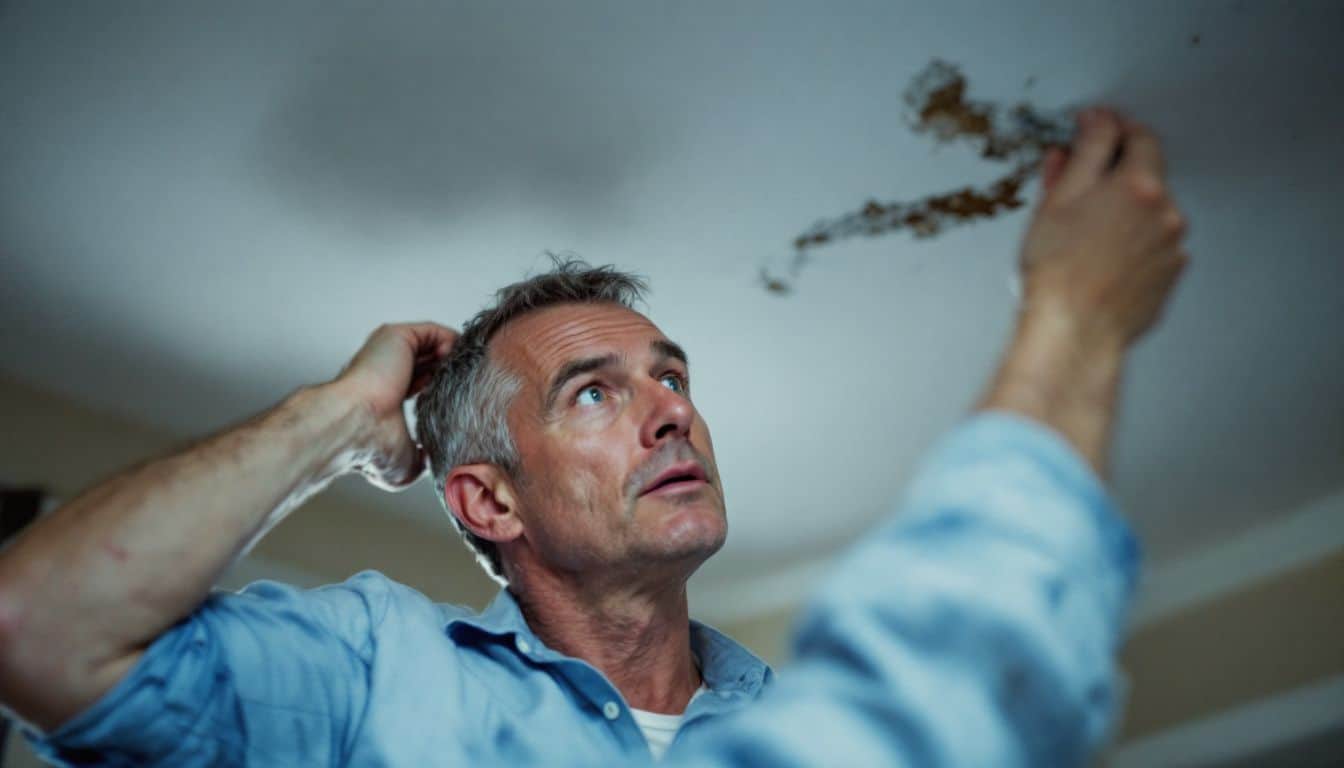
Do I Need an Asbestos Survey to Sell My Flat? What UK Sellers Actually Need to Know
Selling a flat throws up plenty of questions, and asbestos is one that stops a lot of sellers in their tracks. If your building went up before 2000, the question do I need an asbestos survey to sell my flat is entirely reasonable — and the honest answer is: it depends on several factors worth understanding properly before you list.
This isn’t a simple yes or no. The legal position, the practical reality, and what your buyer’s solicitor or mortgage lender will actually demand can all point in different directions. Let’s work through it clearly.
The Legal Position on Asbestos Surveys for Residential Flat Sales
There is no blanket legal requirement for a private homeowner to commission an asbestos survey before selling a flat. The Control of Asbestos Regulations place a duty to manage asbestos squarely on the duty holders of non-domestic premises — offices, warehouses, schools, and similar buildings.
However, the picture changes the moment you factor in shared or common areas. If your flat sits within a larger building — a converted Victorian terrace, a purpose-built block, a mansion flat — those communal hallways, stairwells, plant rooms, and roof spaces are classified differently from your private dwelling.
Common Areas and the Duty to Manage
The common parts of a residential building are treated as non-domestic under the Control of Asbestos Regulations. That means whoever manages those areas — a freeholder, a managing agent, or a residents’ management company — has a legal duty to manage any asbestos present.
If that duty hasn’t been discharged, it becomes a conveyancing issue fast. Buyers’ solicitors routinely ask for asbestos management plans and survey records for common areas. If none exist, transactions can stall — sometimes for weeks.
Fire Risk Assessments and Asbestos in Flat Blocks
Blocks of flats with common areas are also subject to mandatory fire risk assessment requirements under the Regulatory Reform (Fire Safety) Order. A thorough fire risk assessment will often flag asbestos-containing materials as a factor — particularly if those materials could be disturbed during maintenance or emergency works.
Buyers and their solicitors increasingly ask to see both documents together. If your managing agent or freeholder can’t produce either, that’s a red flag that will slow or derail your sale.
When Do I Need an Asbestos Survey to Sell My Flat? — and When You Probably Don’t
There are genuine circumstances where an asbestos survey adds little practical value. Understanding these helps you avoid unnecessary expenditure — while also knowing when you genuinely can’t skip it.
Flats in Buildings Constructed After 1999
Asbestos was banned from use in construction in the UK in 1999. Any building with a verified construction date of 2000 or later should not contain asbestos-containing materials (ACMs). If you can demonstrate through building records, planning documents, or an NHBC certificate that the property was built after this date, an asbestos survey is very unlikely to be required or requested.
That said, if there’s any ambiguity about construction dates — common in converted properties or buildings that have been significantly extended — don’t assume. Check the records first before deciding to skip the survey.
No Planned Renovation Works in a Self-Contained Dwelling
For private residential dwellings without common areas, if no renovation or refurbishment is planned, there is no legal requirement to survey. Asbestos in good condition and left undisturbed poses minimal risk. The legal obligation to survey kicks in when materials are likely to be disturbed — during a kitchen refit, for example, or a loft conversion.
If you’re selling a flat as-is with no works planned, and it’s a genuinely self-contained private dwelling, you may not be legally required to produce a survey. But what’s legally required and what your transaction will actually demand are sometimes two very different things.
What Buyers, Solicitors, and Mortgage Lenders Actually Expect
Even when there’s no strict legal obligation on the seller, the practical demands of a property transaction often make an asbestos survey the sensible route. This is where many sellers get caught out.
Solicitors and Conveyancers
Conveyancers acting for buyers are increasingly thorough on asbestos. They will ask whether you’re aware of any asbestos in the property — and crucially, sellers have a legal obligation not to misrepresent the property’s condition. If you know asbestos is present and fail to disclose it, that’s a serious legal exposure.
If you don’t know, the safest position is often to find out. An asbestos management survey gives you documented evidence of the property’s condition, which you can pass to the buyer with confidence.
Mortgage Lenders
Many mortgage lenders — particularly on older properties — will require evidence that asbestos has been assessed before they’ll approve a loan. If your buyer is purchasing with a mortgage, their lender may request an asbestos survey as a condition of the offer.
This can cause significant delays if you haven’t already arranged one. Getting ahead of this, especially on pre-2000 properties, can genuinely speed up your sale and prevent last-minute complications.
Cash Buyers and Property Investors
Cash buyers and property investors often have their own due diligence processes. Many will commission their own asbestos testing regardless of what you provide. Providing a professional survey upfront demonstrates transparency and can strengthen your negotiating position considerably.
The Risks of Skipping an Asbestos Survey When Selling
Deciding not to get a survey isn’t without consequences. Here’s what sellers — and ultimately buyers — risk when asbestos isn’t properly assessed before a transaction completes.
Health Risks to Future Occupants
Asbestos fibres cause serious and often fatal diseases — mesothelioma, asbestosis, and lung cancer among them. These conditions can take decades to develop after exposure, which is precisely why the hazard is so insidious.
Disturbing asbestos unknowingly during renovation works is one of the most common routes to exposure. A buyer who discovers asbestos after purchase and disturbs it during works — without knowing it was there — faces real health consequences. As a seller, that’s a situation you want no part of.
Legal Exposure for Sellers
UK property law requires sellers to disclose material facts that affect the property’s value or safety. Knowingly concealing asbestos is a serious matter and can result in claims against you after completion. The courts have consistently taken a dim view of non-disclosure in property transactions.
Getting a survey and disclosing the findings — even if asbestos is present — is far safer than hoping the issue won’t surface. Transparency protects you legally and keeps the transaction on track.
Impact on Property Value and Insurance
Asbestos discovered mid-transaction — or worse, after completion — can significantly affect the sale price. The cost of professional asbestos removal can run into thousands of pounds depending on the extent and location of the materials.
Buyers will factor this into their offers, and insurers may adjust premiums or refuse cover altogether for properties with unmanaged asbestos. A clean survey — or a survey that identifies manageable, stable ACMs — is a far better selling tool than silence on the matter.
What Type of Asbestos Survey Do You Need When Selling a Flat?
If you’ve decided a survey is the right move — or your buyer’s solicitor has made it a condition — it helps to understand which type of survey applies to your situation. Not all surveys are the same, and commissioning the wrong type can mean you end up repeating the exercise.
Management Survey
A management survey is the standard survey for properties in normal occupation. It’s designed to locate, as far as reasonably practicable, the presence and extent of any suspect ACMs that could be disturbed during normal use and maintenance. This is the type most commonly requested during flat sales.
It involves a visual inspection and sampling of suspect materials, with samples sent to an accredited laboratory for analysis. The resulting report documents the location, condition, and risk rating of any ACMs found, and forms the basis of an asbestos management plan.
Refurbishment Survey
If renovation works are planned — either by you before sale or by the buyer after — a more intrusive refurbishment survey is required. This goes beyond the management survey to locate all ACMs that could be disturbed during the proposed works. It’s a legal requirement under HSE guidance before any significant refurbishment begins.
If your buyer is purchasing specifically to refurbish, expect this to come up during the transaction. It’s worth flagging early so it doesn’t catch anyone off guard.
Demolition Survey
If the property is being sold for demolition — less common with flats but not unheard of in larger block disposals — a demolition survey is required. This is the most intrusive type of survey and must be completed before demolition works commence. It ensures all ACMs are identified and safely removed prior to the building being brought down.
What Happens if Asbestos Is Found?
Finding asbestos during a survey doesn’t automatically mean your sale falls through — far from it. The key is how the findings are managed and communicated.
Not all asbestos needs to be removed. Stable, undisturbed materials in good condition can often be managed in situ, with an asbestos management plan in place. Your surveyor will advise on the appropriate course of action based on the type, location, and condition of any ACMs identified.
Where removal is recommended — or where a buyer makes it a condition of purchase — professional removal by a licensed contractor is essential. Attempting to remove asbestos yourself is illegal for certain material types and extremely dangerous. Always use a licensed specialist.
Where materials are identified as suspect but not yet confirmed, asbestos testing through laboratory analysis of a sample will give you a definitive answer. Visual identification alone is never sufficient — many ACMs look identical to non-asbestos materials.
Practical Steps for Flat Sellers Dealing with Asbestos
Here’s a straightforward checklist to work through before you list your flat:
- Establish your building’s construction date. If it’s post-1999 and you have documentation to prove it, an asbestos survey is very unlikely to be needed.
- Check whether your flat has common areas. If it does, ask the freeholder or managing agent for the asbestos management plan and fire risk assessments. These should already exist.
- Be honest in your property information forms. If you know asbestos is present, disclose it. If you don’t know, say so — and consider commissioning a survey to find out.
- Commission a management survey if in doubt. For pre-2000 properties, this is usually the most practical step. It protects you legally, gives buyers confidence, and can prevent costly delays.
- Get professional testing on suspect materials. If a surveyor identifies materials that may contain asbestos, laboratory analysis confirms it. Don’t rely on visual identification alone.
- If ACMs are found, take advice on management or removal. Not all asbestos needs to be removed — stable, undisturbed materials in good condition can often be managed in situ. Your surveyor will advise on the right approach.
Regional Considerations: Where You’re Selling Matters
Asbestos is a national issue, but the density of older housing stock varies significantly by region. Cities with large amounts of pre-1980 housing — including purpose-built flat blocks from the post-war era — tend to see more asbestos-related queries during property transactions.
If you’re selling a flat in the capital and need a quick turnaround, our asbestos survey London service covers the full capital with experienced, accredited surveyors who understand the pace of London transactions. Getting a survey booked promptly can be the difference between a smooth exchange and a sale that drags on for months.
Wherever you’re based in the UK, the same principles apply: pre-2000 property, common areas, or any planned works all point strongly towards commissioning a survey before you list.
Frequently Asked Questions
Do I legally have to get an asbestos survey before selling my flat?
There is no blanket legal requirement for private sellers to commission an asbestos survey before selling a residential flat. However, if the building has common areas, the duty holder — typically the freeholder or managing agent — is legally required to manage asbestos in those areas under the Control of Asbestos Regulations. In practice, buyers’ solicitors and mortgage lenders often request survey evidence, making it a practical necessity even when it’s not a strict legal requirement.
What if my flat is in a pre-2000 building but I’ve never noticed any asbestos?
Asbestos-containing materials are often not visible or obvious. They can be present in textured coatings such as Artex, floor tiles, pipe lagging, ceiling tiles, and insulation boards — none of which look like the loose fibrous material most people picture. The only way to confirm whether a material contains asbestos is through laboratory analysis of a sample. Visual inspection alone is not sufficient, and assuming a material is safe because it looks unremarkable is a risk not worth taking.
Can a buyer’s survey pick up asbestos?
Standard homebuyer reports and building surveys do not include asbestos identification. Surveyors carrying out these inspections are not asbestos specialists and will typically note that asbestos cannot be ruled out in older properties, recommending a specialist survey. Only an accredited asbestos surveyor can properly identify and assess ACMs in line with HSG264 guidance.
What happens if asbestos is found during the survey — will it kill my sale?
Not necessarily. Many flat sales proceed perfectly well after asbestos is identified, provided the findings are clearly documented and a management plan is in place. Buyers are often more comfortable with a known, managed situation than with uncertainty. Where removal is required, getting this done before exchange — or agreeing a price reduction to reflect the cost — keeps the transaction moving. Transparency is almost always the better strategy.
How long does an asbestos survey take, and will it delay my sale?
A management survey for a typical flat can usually be completed within a few hours, with the report available within a few working days. Commissioning a survey early — ideally before you accept an offer — means you have the documentation ready when solicitors ask for it. Waiting until the buyer’s solicitor requests it mid-transaction is when delays happen. Getting ahead of the process is the simplest way to keep your sale on track.
Get Your Asbestos Survey Sorted Before You List
At Supernova Asbestos Surveys, we’ve completed over 50,000 surveys nationwide. Our accredited surveyors work quickly, report clearly, and understand the pressures of property transactions. Whether you need a management survey for a flat sale, testing on suspect materials, or advice on what your situation actually requires, we’re here to help.
Call us on 020 4586 0680 or visit asbestos-surveys.org.uk to book your survey or get a fast quote. Don’t let asbestos uncertainty slow your sale down — get the facts, get the documentation, and move forward with confidence.