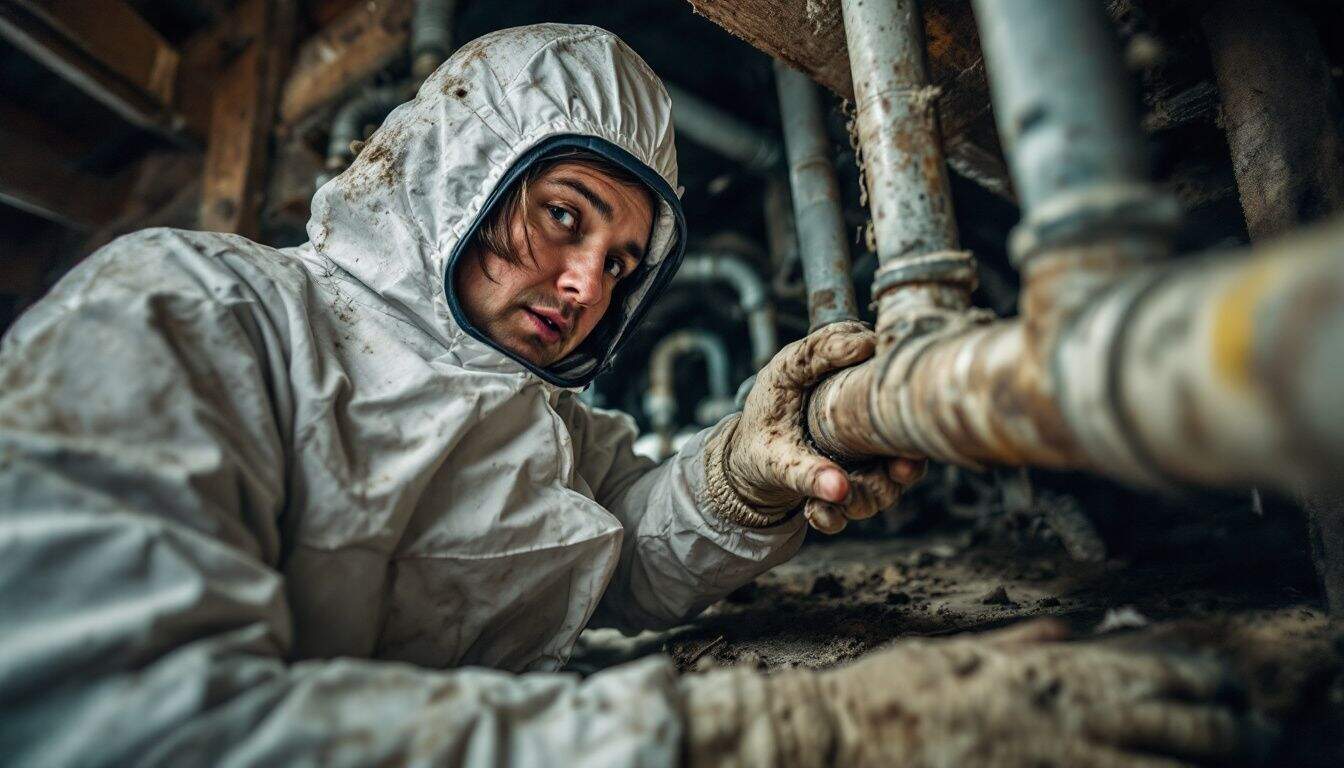
What Buyers Need to Know About RICS Asbestos Surveys in Property Transactions
Buying a property built before the year 2000 carries a risk that many buyers overlook until it’s too late — asbestos. Whether you’re purchasing a family home, a commercial unit, or an investment property, understanding how RICS asbestos surveys work could save you from significant health risks, legal headaches, and unexpected costs further down the line.
This isn’t a box-ticking exercise. A properly conducted asbestos survey is one of the most important pieces of due diligence you can carry out before exchanging contracts.
Why Asbestos Still Matters in UK Property Transactions
Asbestos was widely used in UK construction from the 1950s right through to the late 1990s. It was cheap, fire-resistant, and incredibly versatile — which is exactly why it ended up in floor tiles, ceiling tiles, pipe lagging, roofing felt, textured coatings, and insulation boards across millions of properties.
When asbestos-containing materials (ACMs) are disturbed, they release microscopic fibres into the air. Inhaling those fibres can cause mesothelioma, asbestosis, and lung cancer — diseases that can take decades to develop but remain incurable. Asbestos is still the single largest cause of work-related deaths in the UK.
From a property transaction perspective, undisclosed or poorly managed asbestos can affect valuations, complicate mortgage applications, and expose both buyers and sellers to legal liability. Getting the survey right from the outset protects everyone involved.
What Is a RICS Asbestos Survey and Why Does Accreditation Matter?
A RICS asbestos survey is an inspection carried out — or overseen — by a surveyor accredited by the Royal Institution of Chartered Surveyors. RICS accreditation signals that the professional has met rigorous standards of competence, ethics, and technical knowledge.
Not every person who calls themselves an asbestos surveyor holds meaningful qualifications. The asbestos surveying sector has its own specialist accreditation bodies — most notably UKAS-accredited organisations — but RICS membership provides an additional layer of assurance, particularly in the context of property transactions where surveyors are assessing overall condition and value.
When you’re buying a property, you want confidence that whoever assessed the building for asbestos understood both the technical requirements of the survey and the implications for the property itself. Always verify a surveyor’s credentials directly on the RICS website before accepting any report as reliable.
BOHS and P402 Qualifications
Beyond RICS membership, look for surveyors who hold the British Occupational Hygiene Society (BOHS) P402 qualification — the recognised standard for asbestos surveying in the UK. This qualification demonstrates that the surveyor understands how to identify ACMs, take samples correctly, and produce reports in line with HSE guidance.
A credible surveyor will hold both relevant qualifications and work within a UKAS-accredited organisation. If you’re ever unsure, ask directly — any competent professional will be happy to confirm their credentials.
The Three Types of Asbestos Survey — and Which One You Need
One of the most common mistakes buyers make is assuming that any asbestos survey will do. In reality, the type of survey required depends entirely on what the property is being used for and what you plan to do with it.
Management Survey
A management survey is the standard survey for occupied buildings. It’s designed to locate ACMs that could be disturbed during normal occupation and routine maintenance — think drilling into walls, replacing light fittings, or redecorating.
The survey is less intrusive than other types, but it still involves inspection of accessible areas and, where necessary, sampling of suspected materials. The resulting report forms the basis of an asbestos management plan, which sets out how identified ACMs should be monitored and managed going forward.
For buyers purchasing a property they intend to occupy without major works, a management survey is typically the starting point.
Refurbishment Survey
If you’re planning to renovate, extend, or carry out significant works on a property, a refurbishment survey is mandatory before any work begins. This is a far more intrusive inspection — surveyors will access areas that are normally hidden, including wall cavities, floor voids, and above ceiling tiles.
The purpose is to identify every ACM that could be disturbed during the planned works. It must be completed before any contractor sets foot on site. Skipping this step isn’t just dangerous — it’s a breach of the Control of Asbestos Regulations.
Demolition Survey
Before any building or structure is demolished, a demolition survey must be carried out. This is the most thorough and destructive type of survey, requiring access to every part of the building — including those that would normally be inaccessible. All ACMs must be identified and removed before demolition work proceeds.
If you’re purchasing a property with a view to demolishing it, factor a demolition survey into your pre-purchase due diligence. The cost of identifying and removing asbestos before demolition is always lower than the cost of dealing with contamination after the fact.
How to Review an Asbestos Survey Report Properly
Receiving an asbestos survey report as part of a property transaction is one thing. Knowing how to read it critically is another. Here’s what to look for.
The Asbestos Register
Every survey report should include an asbestos register — a detailed list of all ACMs found (or presumed to be present) in the property. Each entry should include:
- The location of the material (room, floor, specific element)
- The type of asbestos identified or suspected
- The condition of the material (good, damaged, deteriorating)
- A risk assessment score
- Recommended action (manage in place, monitor, encapsulate, or remove)
If the register is vague, incomplete, or lacks specific locations, treat this as a red flag. A credible report leaves no ambiguity about where ACMs are and what their condition is.
Sampling and Laboratory Analysis
Where materials are suspected to contain asbestos, samples should be taken and sent to a UKAS-accredited laboratory for analysis. The report should clearly state which samples were taken, from where, and what the laboratory results showed.
If a surveyor has marked materials as “presumed asbestos” without sampling, that’s not necessarily wrong — in some cases it’s the appropriate approach — but you should understand the difference between a confirmed identification and a presumption. Presumed ACMs must still be managed as if they contain asbestos.
Areas Not Accessed
Reputable survey reports will clearly document any areas that could not be accessed during the survey — locked rooms, sealed voids, areas requiring specialist access equipment. This is important because it means those areas remain unassessed. As a buyer, you need to understand the limitations of any report you’re relying on.
Legal Obligations and Disclosure Requirements
The Control of Asbestos Regulations place a legal duty on those responsible for non-domestic premises to manage asbestos. This includes maintaining an up-to-date asbestos register and management plan. While this duty applies primarily to non-domestic properties, the implications for property transactions are significant.
What Sellers Are Required to Disclose
In a property transaction, sellers are expected to provide accurate information about known hazards — including asbestos. Relevant documents that should be requested include:
- Any existing asbestos survey reports
- The asbestos register and management plan (for commercial properties)
- Records of any previous asbestos removal or remediation works
- The Health and Safety File (for properties where one exists)
Failure to disclose known asbestos issues can expose sellers to claims of misrepresentation or breach of contract. Buyers who discover undisclosed ACMs after completion may have grounds for legal action.
Non-Disclosure: The Legal Consequences
The consequences of non-disclosure go beyond civil claims. Where asbestos has been knowingly concealed, sellers and their advisers may face regulatory scrutiny. Insurance companies can also refuse to cover asbestos-related claims if proper surveys were not conducted or if material information was withheld.
Your solicitor should be asking the right questions during conveyancing. If asbestos documentation hasn’t been provided, push for it before exchange.
What Happens If Asbestos Is Found?
Finding asbestos in a property you’re considering buying doesn’t automatically mean you should walk away. The key questions are: what type of asbestos is present, what condition is it in, and what does the surveyor recommend?
Asbestos in good condition that is not likely to be disturbed can often be safely managed in place. This is frequently the case with textured coatings, floor tiles, or insulation boards that are intact and undamaged. The management plan will set out a monitoring regime to ensure the material remains safe.
Where ACMs are damaged, deteriorating, or in locations where disturbance is likely, asbestos removal may be recommended. This should always be carried out by a licensed contractor — for certain types of asbestos (including sprayed coatings and pipe lagging), the law requires a licensed contractor. Removal costs can be significant, and this should be factored into any price negotiation.
Using Survey Findings in Price Negotiations
A thorough asbestos survey gives you real leverage in negotiations. If the report identifies ACMs requiring remediation, get a quote from a licensed removal contractor and use that figure to negotiate a price reduction or request that the seller arranges removal before completion.
Don’t accept vague assurances that asbestos “isn’t a problem.” Insist on documented evidence — either a clean survey report or confirmation that remediation has been completed and signed off.
Asbestos Surveys and Related Compliance Checks
Asbestos is rarely the only compliance issue worth investigating in an older property. If you’re purchasing a building where multiple people live or work, a fire risk assessment is another legal requirement that deserves attention.
Under the Regulatory Reform (Fire Safety) Order, the responsible person for most non-domestic premises must carry out or commission a suitable and sufficient fire risk assessment. For HMOs, blocks of flats, and commercial properties, fire safety and asbestos management often sit alongside each other as core compliance obligations.
Ensuring both are addressed before or immediately after purchase protects you legally and reduces the risk of enforcement action from local authorities or the HSE.
Choosing the Right Asbestos Surveyor
With thousands of asbestos surveyors operating across the UK, quality varies considerably. Here’s what to look for when appointing a surveyor for a property transaction:
- UKAS accreditation — The surveying organisation should hold UKAS accreditation for asbestos surveying (ISO 17020). Check the UKAS directory.
- BOHS P402 or equivalent qualification — The individual surveyor should hold a recognised qualification for asbestos surveying.
- RICS membership — For property transaction contexts, RICS accreditation adds assurance of professional standards and ethical conduct.
- Relevant experience — Ask specifically about experience with the type of property you’re purchasing — residential, commercial, industrial.
- Clear reporting — Request a sample report before appointing. A good surveyor produces clear, detailed, actionable reports.
- Professional indemnity insurance — Confirm the surveyor carries adequate PI insurance. This protects you if the survey is later found to be inadequate.
Supernova Asbestos Surveys operates nationwide and has completed over 50,000 surveys across the UK. Whether you need an asbestos survey in London, an asbestos survey in Manchester, or an asbestos survey in Birmingham, our qualified surveyors deliver thorough, HSE-compliant reports you can rely on in a property transaction.
HSE Guidance and the Regulatory Framework
Asbestos surveys in the UK must be conducted in accordance with HSG264 — the HSE’s definitive guidance document on asbestos surveying. HSG264 sets out the methodology for survey planning, sampling, analysis, and reporting. Any survey that doesn’t follow this guidance is not fit for purpose.
The Control of Asbestos Regulations provide the overarching legal framework, placing duties on building owners and managers to identify, assess, and manage asbestos. The duty to manage applies to non-domestic premises, but the principles of good practice apply across all property types.
When reviewing a survey report, check that it explicitly references HSG264. If it doesn’t, question whether the methodology used meets the required standard.
Frequently Asked Questions
What does a RICS asbestos survey involve?
A RICS asbestos survey involves a qualified surveyor inspecting a property to identify asbestos-containing materials. The surveyor will visually assess accessible areas, take samples where necessary, and produce a detailed report including an asbestos register and risk assessment. The survey must follow HSE guidance document HSG264 to be considered valid and fit for purpose in a property transaction.
Do I need an asbestos survey before buying a property?
There is no absolute legal requirement for a buyer to commission an asbestos survey before purchasing a residential property, but it is strongly advisable for any property built before 2000. For commercial properties, the duty to manage asbestos under the Control of Asbestos Regulations means an up-to-date survey and management plan should already exist — and you should request this documentation as part of your due diligence.
What is the difference between a management survey and a refurbishment survey?
A management survey is designed for properties in normal use. It identifies ACMs that could be disturbed during routine occupation and maintenance. A refurbishment survey is required before any significant renovation or building work begins. It is more intrusive, accessing hidden areas to ensure all ACMs are identified before contractors start work. Using the wrong survey type for the situation is a common and potentially dangerous mistake.
Can asbestos affect the value of a property?
Yes. The presence of ACMs — particularly in poor condition or requiring removal — can affect property valuations and complicate mortgage applications. Some lenders will decline to lend on properties with certain types of asbestos until remediation has been completed. Having a clear, professional asbestos survey report actually helps in this regard, because it demonstrates that the issue is understood and managed rather than unknown.
What should I do if the seller hasn’t provided an asbestos survey?
If no asbestos survey has been provided for a pre-2000 property, request one as a condition of proceeding. You can commission your own survey — this gives you an independent, reliable assessment rather than relying on a document produced on the seller’s behalf. Your solicitor should raise the absence of asbestos documentation formally during the conveyancing process. Never proceed to exchange without understanding the asbestos status of a property you’re buying.
Ready to Commission a Survey You Can Trust?
Supernova Asbestos Surveys has completed over 50,000 surveys across the UK, working with property buyers, owners, managing agents, and developers. Our surveyors are fully qualified, our reports follow HSG264 methodology, and we cover the whole of the UK.
Whether you need a management survey, a refurbishment survey ahead of planned works, or a demolition survey before a site clearance, we’ll give you the information you need to proceed with confidence. We also offer fire risk assessments for properties where this is a compliance requirement.
Call us on 020 4586 0680 or visit asbestos-surveys.org.uk to get a quote or book a survey.