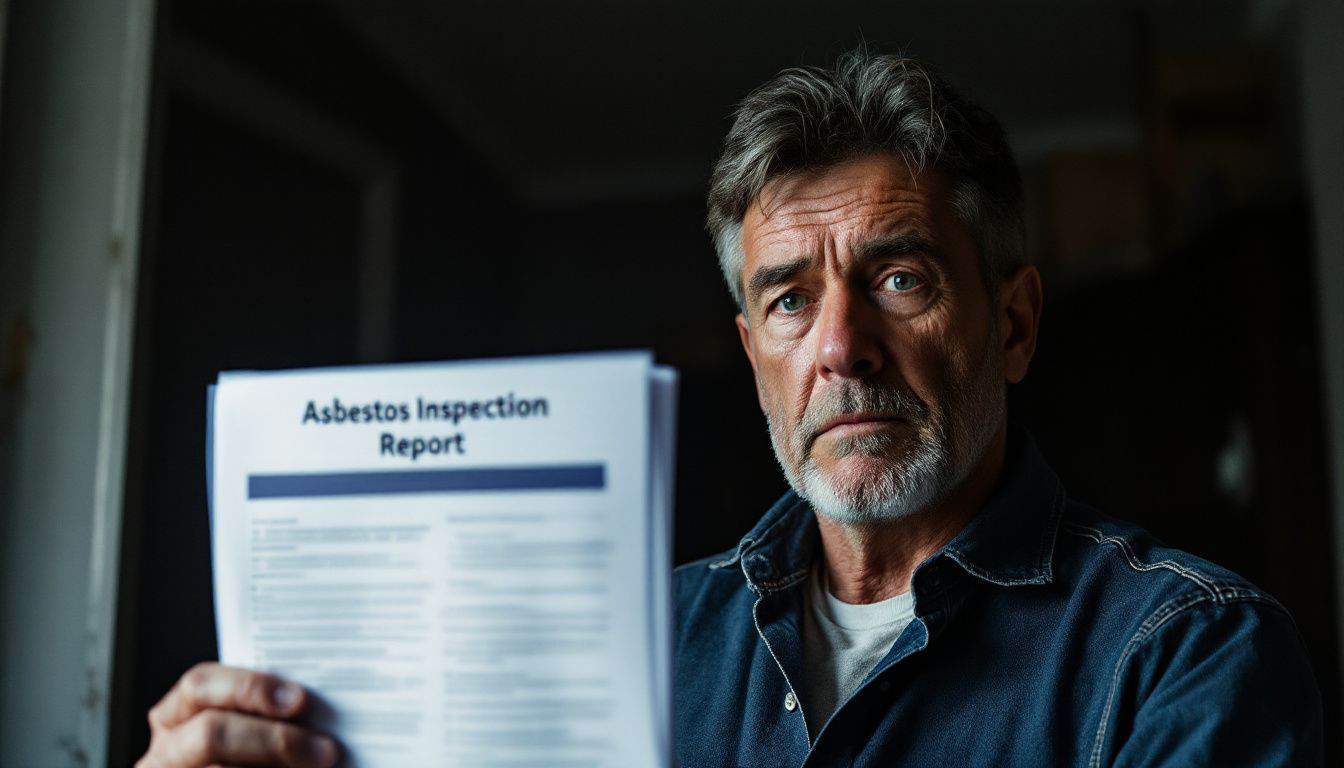
Who Is Responsible for Asbestos in Property — And What Happens When It’s Found?
Asbestos doesn’t announce itself. It sits quietly inside walls, beneath floor tiles, above suspended ceilings — and the moment a property changes hands, everyone involved suddenly wants to know the same thing: who is responsible for asbestos in property, and what needs to happen next?
The answer depends on the type of property, who owns it, who occupies it, and what’s being done with it. Get it wrong and the consequences range from a collapsed sale to criminal prosecution. Get it right and you protect everyone — buyers, sellers, tenants, and workers alike.
Understanding Who Is Responsible for Asbestos in Property Under UK Law
The Control of Asbestos Regulations place a clear legal duty on those who own, manage, or occupy non-domestic premises to manage asbestos-containing materials (ACMs). This is known as the “duty to manage” and it applies to anyone with responsibility for maintenance or repair of non-domestic buildings — including landlords, managing agents, and employers who control a workplace.
For residential properties, the picture is slightly different. Private homeowners have no formal duty to manage asbestos in their own homes under the same regulations, but they do have obligations around disclosure during a sale, and they must use licensed contractors if any licensed asbestos work is required.
The key legislation you need to know:
- Control of Asbestos Regulations — governs the duty to manage, licensing requirements, and safe working practices
- Health and Safety at Work etc. Act — places a general duty of care on employers and those in control of premises
- HSE guidance document HSG264 — the practical guide to asbestos surveying that licensed surveyors follow
Failing to meet these obligations isn’t a technicality. Prosecution can result in unlimited fines and, in serious cases, a custodial sentence.
What Happens When Asbestos Is Found During a Property Transaction?
Discovering asbestos during a sale or purchase doesn’t have to derail the deal — but it does require a measured, transparent response. The worst thing either party can do is ignore it or hope it stays buried in the survey report.
The Seller’s Obligations
Sellers have a legal and ethical duty to disclose the presence of asbestos to prospective buyers. Concealing known ACMs can expose a seller to claims of misrepresentation and, in some circumstances, criminal liability.
Transparency is always the right approach — both commercially and legally. If a management survey has already been carried out, share the report with the buyer’s solicitor as part of the conveyancing process. If no survey exists and asbestos is suspected, commission one before exchange.
The Buyer’s Position
Buyers discovering ACMs during due diligence have several options. They can negotiate a reduction in the purchase price to account for future management or removal costs, request that the seller arrange removal prior to completion, or proceed on the basis of an agreed asbestos management plan.
Walking away entirely is also an option, but rarely necessary if the asbestos is in good condition and properly managed. The key is ensuring all findings are documented and that both parties have access to the same information before exchange.
How Solicitors and Conveyancers Are Involved
Solicitors acting for both parties should be made aware of any asbestos findings at the earliest opportunity. They will ensure that appropriate enquiries are raised, that survey reports are disclosed, and that any agreed remediation is documented within the contract.
Tenants in rented properties who have unresolved asbestos concerns and whose landlord has failed to act can escalate the matter to the Housing Ombudsman Service.
Identifying Asbestos in a Property
Asbestos was used extensively in UK construction from the 1950s through to the late 1990s. Any building constructed or refurbished before the year 2000 should be treated as potentially containing ACMs until proven otherwise.
Common Locations for Asbestos-Containing Materials
- Pipe lagging and boiler insulation
- Textured coatings such as Artex on ceilings and walls
- Roof sheets and guttering, particularly corrugated cement
- Floor tiles and the adhesive beneath them
- Ceiling tiles and partition boards
- Airing cupboards and water tank insulation
- Fire doors and fire-resistant panels
Asbestos cannot be identified visually with any certainty. Only laboratory analysis of a sample taken by a trained surveyor can confirm its presence. Do not attempt to take samples yourself — disturbing ACMs without proper controls creates a serious inhalation risk.
The Three Types of Asbestos Most Commonly Found
The three regulated types are crocidolite (blue asbestos), amosite (brown asbestos), and chrysotile (white asbestos). All three are hazardous. Blue and brown asbestos are considered higher risk due to the shape and durability of their fibres, but no form of asbestos should be treated as safe when disturbed.
Types of Asbestos Survey and When You Need Each One
Not every situation calls for the same type of survey. Commissioning the wrong one can leave you legally exposed or without the information you actually need.
Management Survey
A management survey is the standard survey required for any building that is in use. It identifies the location, type, and condition of ACMs that could be disturbed during normal occupation and routine maintenance.
The surveyor will inspect all accessible areas and produce a report that forms the basis of your asbestos management plan. This is the survey you need when asbestos is discovered during a property transaction and no refurbishment or demolition is planned.
Refurbishment and Demolition Survey
Before any structural work, renovation, or demolition takes place, a demolition survey is legally required. This is a more intrusive inspection — surveyors will access voids, lift floors, and open up the fabric of the building to locate all ACMs, including those hidden within the structure.
This survey must be completed before any contractor begins work. Starting refurbishment or demolition without one is a serious breach of the regulations and places workers at immediate risk.
Creating and Maintaining an Asbestos Management Plan
For non-domestic properties, the duty holder must not only identify ACMs but actively manage them. This means producing a written asbestos management plan and keeping it up to date.
A robust asbestos management plan should include:
- A full record of all ACMs identified, including their location, type, and condition
- A risk assessment for each ACM, rating the likelihood of disturbance and the potential for fibre release
- A schedule for monitoring the condition of ACMs at regular intervals
- Clear instructions for anyone carrying out maintenance or repair work in the building
- Records of any remediation, encapsulation, or removal work carried out
The plan must be reviewed and updated annually, or whenever the condition of ACMs changes or new materials are discovered. Keeping accurate records is not optional — it is a legal requirement and provides essential protection if enforcement action is ever taken.
Safe Working Practices and PPE Requirements
Anyone working with or near asbestos must follow strict safety protocols. This applies equally to licensed contractors carrying out removal and to maintenance workers who may inadvertently encounter ACMs during routine tasks.
Personal Protective Equipment
The minimum PPE requirements when working with asbestos include:
- Disposable coveralls (Type 5 category minimum)
- Respiratory protective equipment — a half-face mask with P3 filter as a minimum for low-risk work, full-face air-fed equipment for licensed work
- Disposable gloves
- Overshoes or disposable boot covers
The workplace exposure limit for asbestos fibres is 0.1 fibres per cubic centimetre of air, measured over a four-hour period. Air monitoring should be carried out during and after any removal work to confirm that fibre levels remain below this control limit.
Controlling the Work Area
Before any asbestos work begins, the area must be sealed using heavy-duty polythene sheeting and negative pressure units where required. Warning signs must be posted and access restricted to authorised personnel only.
These controls prevent fibres from migrating to other areas of the building and protect building occupants from inadvertent exposure during and after the work.
The Asbestos Removal Process
Some asbestos work can be carried out by trained, non-licensed operatives — but the majority of removal involving higher-risk materials such as sprayed coatings, lagging, and asbestos insulating board (AIB) requires a contractor holding a current HSE licence.
For licensed asbestos removal, the process follows a defined sequence:
- Plan the work — produce a written method statement and risk assessment before starting
- Notify the enforcing authority — licensed work must be notified to the HSE at least 14 days before it begins
- Prepare the enclosure — seal the area, establish a decontamination unit, and test the enclosure before starting
- Remove the asbestos — using wet methods where possible to suppress fibre release
- Clean and decontaminate — thorough cleaning using H-class vacuums and wet wiping, followed by a four-stage visual clearance inspection
- Air clearance testing — an independent analyst must confirm that fibre levels meet the clearance criterion before the enclosure is dismantled
- Dispose of waste — asbestos waste is classified as hazardous and must be double-bagged, labelled, and transported to a licensed disposal facility by a registered waste carrier
Keep full records of every stage. These documents will be required if the property is ever sold, refurbished, or inspected by an enforcement authority.
How Asbestos Affects Property Value and Negotiations
Asbestos presence does not automatically destroy a property’s value, but it does affect negotiations. The impact depends on the type and condition of the ACMs, the cost of management or removal, and how transparently the issue has been handled.
Buyers who discover asbestos through their own due diligence — rather than through seller disclosure — are far more likely to walk away or demand a significant price reduction. Proactive disclosure, supported by a current survey and a clear management plan, demonstrates responsible ownership and gives buyers confidence.
Where removal costs are significant, it is reasonable to negotiate a reduction in the asking price equivalent to the estimated remediation cost, supported by quotes from licensed contractors. Some insurers will cover part of the removal cost — check the policy before assuming the full financial burden falls on the seller.
Responsibilities in Different Property Types
Understanding who is responsible for asbestos in property shifts depending on how the building is used and who holds control over it. The rules are not one-size-fits-all.
Commercial and Industrial Properties
In commercial premises, the duty holder is typically the building owner, landlord, or managing agent. Where a tenant takes on full repairing obligations under a lease, responsibility for asbestos management may transfer to them — but this must be explicitly set out in the lease agreement.
Both parties should ensure the asbestos register is handed over at the start of any tenancy and that the management plan is updated whenever works are carried out. Failure to do so can leave both landlord and tenant exposed to enforcement action.
Residential Rental Properties
Private landlords renting out residential properties have a duty of care to their tenants. While the formal “duty to manage” under the Control of Asbestos Regulations applies specifically to non-domestic premises, landlords must still ensure that any ACMs in their properties do not pose a risk to occupants.
If ACMs are in good condition and unlikely to be disturbed, they can remain in place — but the landlord should keep a record and monitor their condition. If the condition deteriorates, action must be taken promptly.
Common Parts of Multi-Occupancy Buildings
In blocks of flats or mixed-use buildings, responsibility for asbestos in common areas — stairwells, plant rooms, roof spaces, and service corridors — typically falls to the freeholder or managing agent. Individual leaseholders are generally responsible only for the interior of their own unit.
This distinction should be clearly set out in the lease. Where it isn’t, disputes over who is responsible for asbestos management in shared spaces can become protracted and costly. Commissioning a survey of all common parts at the outset removes any ambiguity.
Asbestos Surveys Across the UK — Where We Work
Supernova Asbestos Surveys operates nationally, with dedicated teams covering major cities and their surrounding areas. Whether you need an asbestos survey in London, an asbestos survey in Manchester, or an asbestos survey in Birmingham, our UKAS-accredited surveyors can mobilise quickly and deliver accurate, actionable reports.
With over 50,000 surveys completed across England, Scotland, and Wales, we have the experience to handle everything from a single residential property to a large commercial portfolio. Every survey is carried out in line with HSG264 and the Control of Asbestos Regulations.
Frequently Asked Questions
Who is legally responsible for managing asbestos in a commercial building?
The legal responsibility falls on the “duty holder” — the person or organisation that has control over the maintenance and repair of the building. This is typically the building owner, landlord, or managing agent. Where a tenant has taken on full repairing obligations under a lease, responsibility may transfer to them, but this must be explicitly stated in the lease agreement. The Control of Asbestos Regulations set out these duties in detail.
Does a seller have to disclose asbestos when selling a property?
Yes. Sellers have both a legal and ethical obligation to disclose known ACMs to prospective buyers. Concealing the presence of asbestos can constitute misrepresentation and, in serious cases, attract criminal liability. The safest approach is to commission a management survey before marketing the property and to provide the report to the buyer’s solicitor as part of the conveyancing process.
Can asbestos be left in place rather than removed?
Yes, in many cases. ACMs that are in good condition and unlikely to be disturbed can legally remain in place, provided they are recorded in an asbestos register, monitored regularly, and managed in accordance with a written asbestos management plan. Removal is not always the safest option — disturbing intact ACMs during unnecessary removal can create more risk than leaving them undisturbed.
What type of survey do I need before starting a renovation?
Before any refurbishment, renovation, or demolition work, you legally require a refurbishment and demolition survey. This is a more intrusive inspection than a standard management survey and is designed to locate all ACMs — including those hidden within the fabric of the building — before any contractor begins work. Starting without one is a breach of the Control of Asbestos Regulations.
How do I find a qualified asbestos surveyor?
Look for a surveyor accredited by UKAS (United Kingdom Accreditation Service) and operating in line with HSG264. Supernova Asbestos Surveys meets both requirements and has completed over 50,000 surveys across the UK. You can book a survey by calling 020 4586 0680 or visiting asbestos-surveys.org.uk.
Book Your Asbestos Survey With Supernova
Whether you’re buying, selling, letting, or planning works on a property, getting the right asbestos survey in place protects you legally and commercially. Supernova Asbestos Surveys provides fast, accurate, HSG264-compliant surveys for residential and commercial properties across the UK.
Call us on 020 4586 0680 or visit asbestos-surveys.org.uk to get a quote or book a survey. Our team is ready to help you understand your obligations and take the right steps — before the problem becomes a liability.