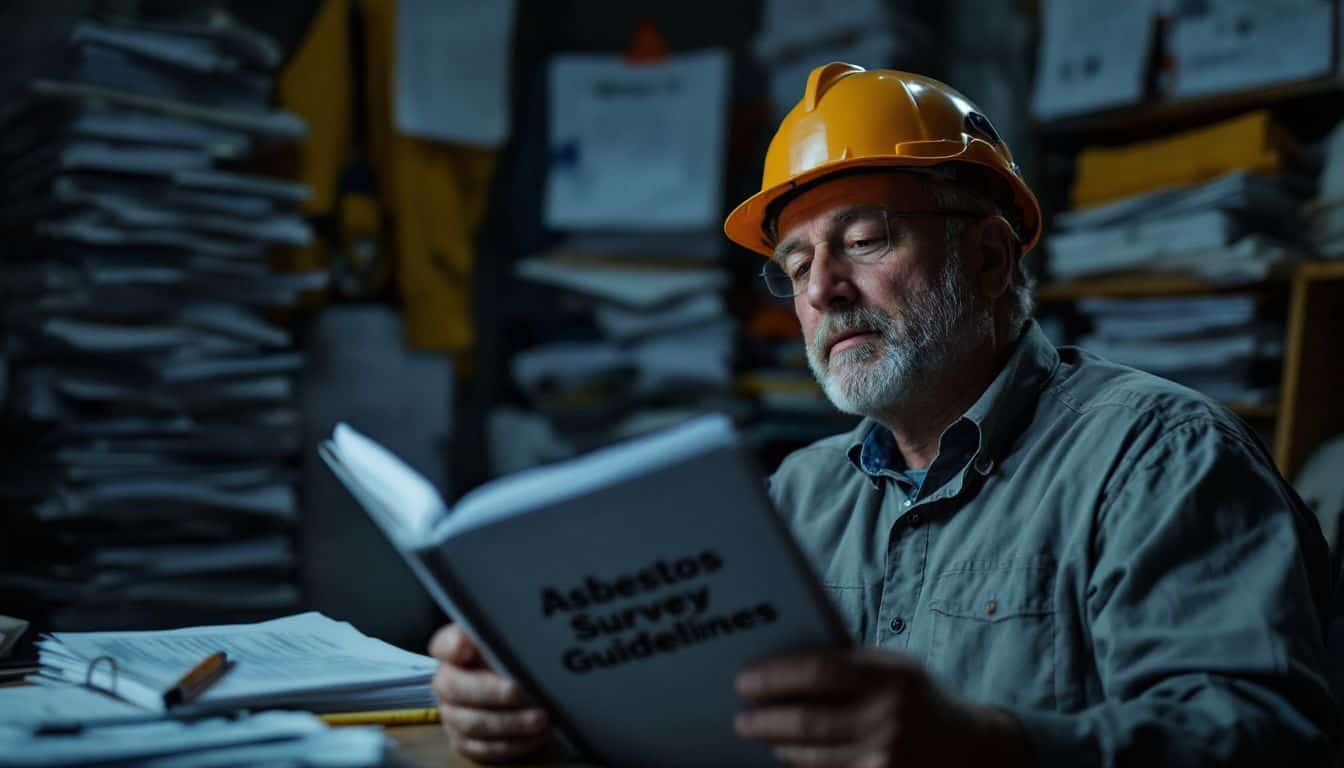
What Is the Purpose of an Asbestos Register?
If you manage, own, or occupy a non-domestic building constructed before 2000, you have a legal duty to know whether asbestos is present — and if it is, to record it. That record is your asbestos register. Understanding what is the purpose of an asbestos register isn’t just a compliance exercise; it’s the foundation of every safe decision made in your building from the moment it’s created.
Without one, contractors work blind. Maintenance staff disturb materials they don’t know are hazardous. And you, as the dutyholder, are exposed to serious legal risk.
This post explains exactly what an asbestos register is, what it must contain, who’s responsible for it, and how to make sure yours is doing the job it’s legally required to do.
What Is an Asbestos Register?
An asbestos register is a formal document — or set of documents — that records the location, type, and condition of all known or presumed asbestos-containing materials (ACMs) within a building. It’s produced following an asbestos survey and must be kept up to date throughout the life of the building.
Think of it as the definitive record of asbestos risk in your property. It doesn’t just list where asbestos was found — it also records the condition of each material, the risk it poses, and any actions taken or recommended.
The register is not a one-time document. It’s a living record that must be reviewed, updated, and made accessible to anyone who needs it — particularly contractors and maintenance workers before they begin any work.
The Core Purpose of an Asbestos Register
The primary purpose of an asbestos register is to protect people. But it serves several interconnected functions that are equally important from a legal, operational, and safety perspective.
Protecting Workers and Contractors
Asbestos fibres are invisible to the naked eye. A contractor drilling into a ceiling tile, a plumber cutting through pipe lagging, or an electrician disturbing a textured coating could be exposed to potentially lethal fibres without any warning — unless they’ve been told in advance what’s there.
The register gives every person working in your building the information they need before they start. Under the Control of Asbestos Regulations, you are legally required to share this information with anyone who might disturb ACMs. The register is how you fulfil that duty in practice.
Meeting Your Legal Obligations as a Dutyholder
The Control of Asbestos Regulations place a clear duty to manage asbestos on anyone who owns, occupies, or has responsibility for a non-domestic premises. This duty explicitly requires you to create and maintain an asbestos register as part of a wider asbestos management plan.
Failure to maintain a register — or failure to act on the information it contains — is a breach of your legal obligations. The HSE takes enforcement seriously, and the consequences range from improvement notices and prohibition notices through to prosecution and unlimited fines.
Informing the Asbestos Management Plan
The register doesn’t stand alone — it feeds directly into your asbestos management plan, which sets out how identified ACMs will be managed, monitored, and, where necessary, removed. Without an accurate register, your management plan is built on incomplete information, which makes it ineffective and potentially unlawful.
The two documents work together: the register tells you what’s there and where; the management plan tells you what you’re going to do about it.
Enabling Safe Planning for Future Works
Whenever refurbishment, renovation, or demolition work is planned, the asbestos register is the starting point. It tells your project team, principal contractor, and any specialist subcontractors what ACMs are present in the affected area — before a single tool is lifted.
Disturbing asbestos during unplanned works is one of the most common causes of exposure incidents in the UK. A well-maintained register prevents this by ensuring that anyone planning works in your building can identify and manage the risk before it becomes a problem.
What Must an Asbestos Register Contain?
A compliant asbestos register isn’t simply a list of rooms where asbestos was found. It needs to contain enough detail to be genuinely useful — and to meet the requirements set out in HSG264, the HSE’s survey guide that defines the standard for asbestos surveying in the UK.
A properly compiled register will typically include:
- The location of each ACM, referenced to annotated floor plans
- The type of asbestos identified (e.g. chrysotile, amosite, crocidolite) or noted as presumed where sampling wasn’t carried out
- The product or material type (e.g. ceiling tiles, pipe lagging, textured coating, insulation board)
- The condition of each ACM at the time of survey
- A material assessment score indicating the likelihood of fibre release
- A priority assessment score factoring in occupancy, use of the area, and maintenance activity
- Photographs of each ACM in situ
- Any recommendations made by the surveyor
- Details of any samples taken and laboratory analysis results
- Dates of survey and any subsequent re-inspections
If your existing register doesn’t contain all of this, it may not be fully compliant — and it may not be giving you the protection it should.
How Is an Asbestos Register Created?
An asbestos register is produced following a professional asbestos survey carried out by a qualified, UKAS-accredited surveying organisation. The type of survey required depends on the circumstances of your building and any planned works.
Management Surveys
For buildings in normal occupancy and use, a management survey is the standard starting point. The surveyor inspects all accessible areas of the building, takes samples where ACMs are suspected, and produces a report that forms the basis of your asbestos register.
If your building was constructed before 2000 and you don’t yet have a current, documented management survey, this is where you need to begin. Presuming asbestos is absent without evidence is not a legally acceptable position.
Refurbishment and Demolition Surveys
Before any structural or intrusive works take place, a demolition survey is required. This is a more invasive process that accesses areas not covered by a standard management survey — behind walls, within structural elements, above suspended ceilings — to ensure every ACM in the affected zone is identified before work begins.
This survey must be completed, and any asbestos managed or removed, before contractors start. There are no exceptions to this requirement.
Re-inspection Surveys
Once your register is in place, it must be kept current. A re-inspection survey, typically carried out annually, checks whether known ACMs have deteriorated, been disturbed, or need to be reclassified. This is an ongoing legal obligation, not an optional extra.
Regular re-inspections are what turn a static document into a genuinely effective management tool. Without them, your register quickly becomes out of date — and an out-of-date register can be just as dangerous as no register at all.
Who Is Responsible for the Asbestos Register?
The legal responsibility sits with the dutyholder — the person or organisation that owns, occupies, or manages a non-domestic premises. In practice, this could be a building owner, a facilities manager, a managing agent, or a tenant with responsibility for maintenance under the terms of their lease.
If you’re unsure whether the duty applies to you, the HSE’s guidance is clear: if you have any degree of control over the maintenance or repair of a non-domestic building, you are likely to be a dutyholder. That means the register is your responsibility.
The dutyholder is also responsible for ensuring the register is:
- Accessible to anyone who needs it — particularly contractors before they begin work
- Updated whenever new information becomes available
- Reviewed following any incident or change to the building that might affect ACMs
- Included in any contractor briefing or permit-to-work process
What Happens If You Don’t Have an Asbestos Register?
Operating a non-domestic building without an asbestos register — when one is required — is a breach of the Control of Asbestos Regulations. The consequences are not theoretical.
HSE inspectors have the authority to issue improvement notices requiring you to remedy the situation within a set timeframe, prohibition notices stopping work immediately, and to pursue prosecution in serious cases.
Beyond the regulatory penalties, the personal and financial cost of an asbestos exposure incident — to workers, to your organisation, and to you as an individual — can be severe and long-lasting.
If you’re in any doubt about whether your building requires a register, the answer is almost certainly yes. Any non-domestic building built before 2000 should be treated as potentially containing asbestos until surveyed and confirmed otherwise.
Asbestos Testing: When You Need More Information
In some situations, you may want to test a specific material before commissioning a full survey — for example, if you’ve discovered a suspect material during routine maintenance and need to know whether it contains asbestos before deciding on next steps.
Professional asbestos testing involves taking a sample of the material and having it analysed by an accredited laboratory. This gives you a definitive answer about whether asbestos is present and, if so, which type.
For lower-risk situations where you want to test a specific material yourself, an asbestos testing kit is available directly from Supernova Asbestos Surveys through our website. The kit allows you to collect a sample safely, which is then sent to an accredited laboratory for analysis.
A single test result doesn’t replace a full survey, however. If asbestos is confirmed, you’ll still need a professional survey to locate all ACMs in the building and produce a compliant register. For a fuller overview of your options, visit our asbestos testing information page.
What to Do If Asbestos Is Found
Finding asbestos in your building doesn’t automatically mean it needs to be removed. In many cases, ACMs that are in good condition and are unlikely to be disturbed can be safely managed in place — provided they’re properly recorded in your register and monitored through regular re-inspections.
Your options when ACMs are identified include:
- Manage in place: Monitor the ACM through regular re-inspections, ensure it’s labelled where appropriate, and include it in contractor briefings before any work in the area.
- Encapsulation: Apply a specialist sealant to stabilise the material and prevent fibre release. This is appropriate for some materials in accessible locations where condition is borderline.
- Removal: Where ACMs are in poor condition, are likely to be disturbed, or where the area is due for refurbishment, asbestos removal is often the safest long-term solution.
Certain categories of asbestos work can only be carried out by a licensed contractor — and all removal must follow the correct procedures under the Control of Asbestos Regulations. Your surveyor should advise on the most appropriate course of action for each ACM identified.
Whatever decision is made, it must be documented in your asbestos management plan and reflected in your register.
Keeping Your Asbestos Register Up to Date
A register that was accurate three years ago may not be accurate today. Buildings change — maintenance is carried out, materials deteriorate, refurbishments happen. Every change that affects a known ACM must be reflected in your register.
You should update your register whenever:
- A re-inspection survey identifies a change in the condition of an ACM
- An ACM is removed, encapsulated, or otherwise managed
- New ACMs are discovered during works or inspections
- Refurbishment or building works affect any area recorded in the register
- There has been any incident — accidental damage, flooding, fire — that may have affected known ACMs
The register should also be reviewed whenever a new contractor is appointed, to ensure they’re working from current information rather than an outdated version of the document.
Asbestos Surveys Across the UK
Whether you’re managing a commercial property in the capital or a portfolio of sites across the north of England, the legal obligations around asbestos registers apply equally. Supernova Asbestos Surveys operates nationwide, with specialist teams covering all regions.
If you’re based in the capital and need to commission a survey, our asbestos survey London service covers all property types across Greater London. For clients in the north west, our asbestos survey Manchester team provides the same UKAS-accredited standard of service.
Wherever you are in the UK, the starting point is the same: a professional survey, a compliant register, and a clear management plan.
Frequently Asked Questions
What is the purpose of an asbestos register?
An asbestos register records the location, type, and condition of all known or presumed asbestos-containing materials in a building. Its primary purpose is to protect workers and contractors by ensuring they have the information they need before carrying out any work that could disturb ACMs. It also fulfils a legal requirement under the Control of Asbestos Regulations for dutyholders of non-domestic premises.
Is an asbestos register a legal requirement?
Yes. The Control of Asbestos Regulations require dutyholders of non-domestic premises to manage asbestos, which includes maintaining an asbestos register as part of a wider asbestos management plan. This applies to any non-domestic building that may contain asbestos — broadly, any building constructed before 2000. Failure to comply can result in enforcement action by the HSE, including prosecution.
Who is responsible for maintaining an asbestos register?
The dutyholder is responsible. This is the person or organisation that owns, occupies, or has control over the maintenance or repair of a non-domestic building. In practice, this may be a building owner, facilities manager, managing agent, or tenant — depending on the terms of any lease or management agreement. If you have any degree of control over the building’s maintenance, the duty is likely to apply to you.
How often should an asbestos register be updated?
The register should be updated whenever there is a change that affects any recorded ACM — including deterioration, removal, encapsulation, or disturbance during works. An annual re-inspection survey is the standard mechanism for reviewing the condition of known ACMs and ensuring the register remains current. An out-of-date register offers little protection and may not meet your legal obligations.
Does an asbestos register mean asbestos has to be removed?
Not necessarily. Many ACMs can be safely managed in place, provided they are in good condition and are unlikely to be disturbed. The register records what is present; your asbestos management plan sets out how each material will be managed. Removal is one option, but encapsulation or ongoing monitoring may be equally appropriate depending on the material, its condition, and the way the building is used.
Get Your Asbestos Register in Order
Supernova Asbestos Surveys has completed over 50,000 surveys across the UK. Our UKAS-accredited surveyors produce fully compliant asbestos registers that meet the requirements of HSG264 and the Control of Asbestos Regulations — giving you the documentation you need to protect your people, meet your legal obligations, and manage your building with confidence.
To book a survey or discuss your requirements, call us on 020 4586 0680 or visit asbestos-surveys.org.uk.