What Happens After Asbestos Clearance: Handling, Disposal and Your Legal Duties
Finding asbestos during a survey doesn’t have to derail a project — but asbestos clearance demands an immediate, structured response. How you handle asbestos from the moment it’s identified will determine whether it remains a manageable issue or escalates into a serious health and legal problem.
Here’s exactly what needs to happen after asbestos is discovered: your immediate steps, legal obligations, the difference between management and removal, and how to keep a property safe long-term.
Your Immediate Priorities When Asbestos Is Found
The instinct to investigate, poke, or clean up suspected asbestos-containing materials (ACMs) is understandable — but it’s the wrong move. Undisturbed ACMs in good condition pose a relatively low risk. The moment they’re disturbed, microscopic fibres become airborne, and that’s when exposure becomes dangerous.
Stop Work and Restrict Access
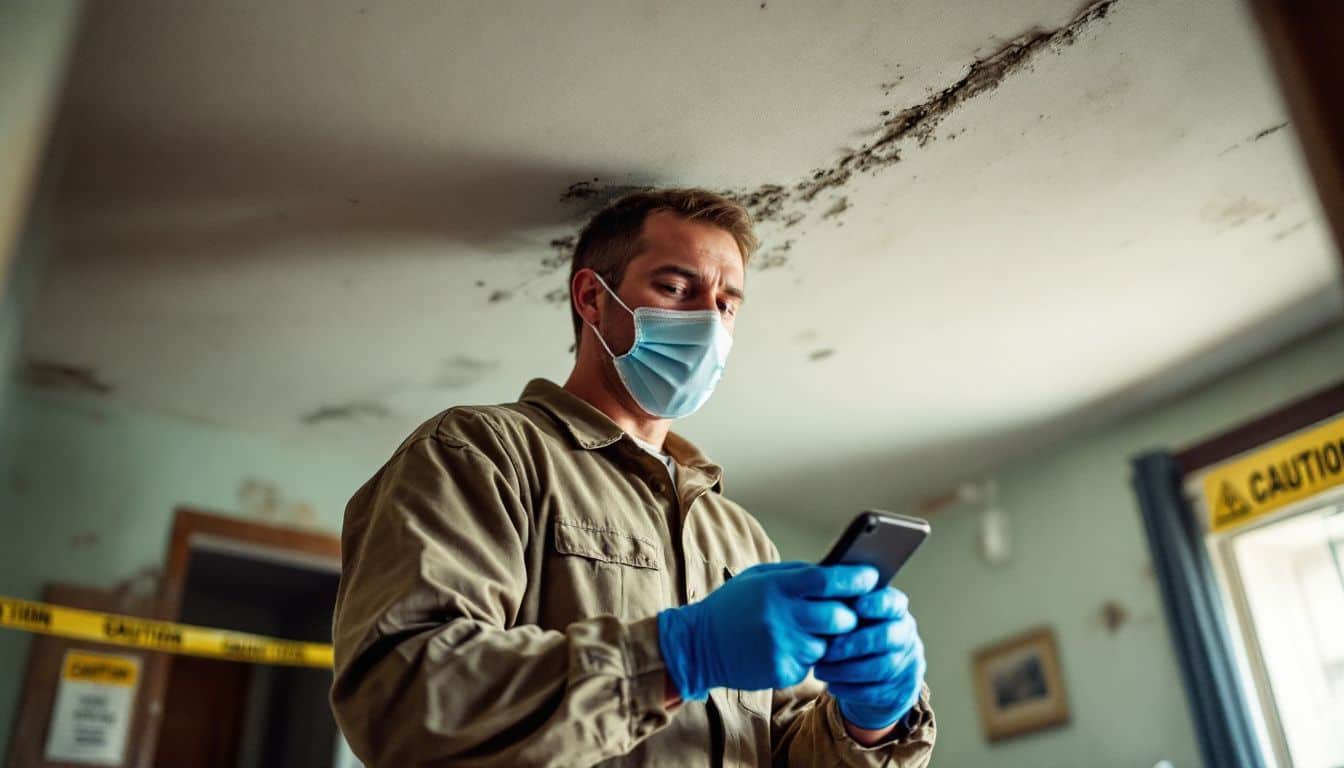
If asbestos is identified or suspected during any survey or building work, all activity in that area must stop immediately. Clear the space, restrict access, and prevent anyone from re-entering until a licensed professional has assessed the situation.
Where possible, seal the area using polythene sheeting and display clear signage warning of the potential hazard. Do not use standard ventilation or air conditioning — this can spread fibres to other areas of the building.
Do Not Attempt to Sample or Test It Yourself
DIY testing might seem like a quick fix, but collecting a sample incorrectly can release the very fibres you’re trying to identify. A poorly taken sample can also return inaccurate results, giving a false sense of security.
Professional asbestos surveyors collect samples using controlled techniques, appropriate PPE, and HEPA-filtered equipment. Samples are then sent to a UKAS-accredited laboratory for accurate analysis. If you need testing carried out, Supernova Asbestos Surveys offers professional asbestos testing and sample analysis — including postal asbestos testing kit options for situations where a full survey isn’t immediately possible.
Contact a Licensed Asbestos Specialist
Once the area is secured, your next call should be to a licensed asbestos contractor. Not every situation requires removal — but every situation requires professional assessment.
A qualified surveyor will confirm whether ACMs are present, identify the type of asbestos, assess the condition, and advise on the right course of action for safe asbestos clearance.
Understanding Your Legal Responsibilities
Asbestos management in the UK is governed by the Control of Asbestos Regulations. These regulations apply to non-domestic premises and place a clear duty on those responsible for managing buildings — known as the “duty to manage” — to identify ACMs, assess the risk they pose, and put a management plan in place.
Who Has the Duty to Manage?
The duty to manage falls on the person or organisation responsible for maintaining or repairing a non-domestic building. This typically means landlords, building owners, facilities managers, and employers.
If you’re a homeowner carrying out renovation work, similar obligations apply under the Construction (Design and Management) Regulations when contractors are involved. Failing to comply can result in enforcement action by the Health and Safety Executive (HSE), substantial fines, or — in serious cases — prosecution.
Licensed Work, Notifiable Non-Licensed Work, and Non-Licensed Work
Not all asbestos work requires a full licence, but understanding the distinctions matters:
- Licensed work — Required for higher-risk ACMs, including sprayed coatings, lagging, insulating board, and loose-fill insulation. Only contractors holding an HSE asbestos licence can carry out this work.
- Notifiable non-licensed work (NNLW) — Certain lower-risk tasks can be carried out without a full licence but must be notified to the HSE in advance. Workers must also undergo medical surveillance.
- Non-licensed work — The lowest-risk category, covering tasks like minor repairs to textured coatings in good condition. Still requires proper controls and PPE.
Your surveyor will advise which category applies to the materials found on your site. When in doubt, treat the work as licensable until confirmed otherwise.
Asbestos Clearance: Removal vs Encapsulation
Discovering asbestos doesn’t automatically mean it has to come out. In many cases, leaving ACMs in place and managing them is the safer, more practical option — particularly when materials are in good condition and are unlikely to be disturbed.
When Removal Is the Right Choice
Licensed asbestos removal is usually recommended when:
- The ACM is in poor condition — damaged, friable, or deteriorating
- Refurbishment or demolition work is planned that would disturb the material
- The material is in a location where ongoing disturbance is unavoidable
- A survey has identified it as a high-risk item requiring action
A refurbishment survey and a demolition survey are specifically designed to identify all ACMs before intrusive work begins. Both are legal requirements before major refurbishment or full demolition.
When Encapsulation Is Appropriate
Encapsulation involves applying a specialist sealant or physical covering to an ACM to prevent fibre release. It’s a viable option for non-friable materials — such as asbestos cement sheets or floor tiles in good condition — that are unlikely to release fibres under normal conditions.
Encapsulation is not a permanent solution in all circumstances. It requires ongoing monitoring and regular re-inspection to ensure the seal remains intact. If the condition of the encapsulated material deteriorates, the approach may need to be revisited.
Waste Disposal: What the Law Requires
Asbestos clearance doesn’t end when the material leaves the building. Asbestos waste is classified as hazardous waste under UK environmental law — it cannot simply be bagged up and put in a skip.
Specific requirements apply:
- All asbestos waste must be double-bagged in clearly labelled, UN-approved polythene sacks or sealed rigid containers
- A consignment note (waste transfer note for hazardous waste) must accompany the waste from site to disposal facility
- Asbestos waste can only be disposed of at a licensed waste management site permitted to accept hazardous materials
- In England, consignment notes must be submitted to the Environment Agency; in Scotland, to SEPA; in Wales, to Natural Resources Wales
Licensed contractors manage this documentation as part of the removal process. Never accept a quote from a contractor who doesn’t include proper waste disposal as part of their service.
The Role of Professional Asbestos Surveys
A professional asbestos survey is the foundation of safe asbestos clearance and ongoing management. There are three main types, each serving a different purpose.
Management Survey
An asbestos management survey is carried out in occupied premises during normal use. It locates ACMs that could be disturbed during routine maintenance and day-to-day activities, assessing their condition and risk.
This is the starting point for most commercial properties and the basis for any asbestos management plan. Without one, you have no reliable picture of what’s in your building or where the risks lie.
Refurbishment Survey
A refurbishment survey is required before any intrusive work begins — from a simple kitchen refit to a full structural overhaul. It involves more invasive inspection techniques to identify all ACMs in the areas affected by the planned work. The area being surveyed must be vacated during the process.
Demolition Survey
A demolition survey is the most comprehensive type, required before any structure is demolished. It must cover the entire building and identify every ACM present, regardless of condition or location. All identified materials must be removed by licensed contractors before demolition proceeds.
The Asbestos Management Plan
For any building where ACMs are identified and left in situ, a written asbestos management plan is a legal requirement under the Control of Asbestos Regulations and HSE guidance (HSG264). This document should include:
- The location, type, and condition of all identified ACMs
- A risk assessment for each material
- Actions required, with timescales
- Details of any encapsulation or remediation work carried out
- A schedule for regular re-inspection
- Named responsibility for ongoing management
The plan must be kept up to date and made available to anyone who may work on the building — including contractors, maintenance staff, and emergency services. A management plan that sits in a drawer and never gets updated is not fulfilling its legal purpose.
Long-Term Monitoring and Re-Inspection
Once an asbestos management plan is in place, it doesn’t become a static document. ACMs need to be re-inspected at regular intervals — typically every 12 months, though higher-risk materials may require more frequent checks.
What a Re-Inspection Survey Involves
A re-inspection survey assesses whether the condition of known ACMs has changed since the last inspection. Has the material deteriorated? Has it been damaged? Is encapsulation still effective?
The findings update the asbestos register and inform any changes to the management plan. Re-inspection surveys also account for changes to the building — new occupants, layout changes, or maintenance work that may have affected ACMs.
Keeping the Asbestos Register Up to Date
The asbestos register is the live record of all ACMs in a building. It must be updated after every re-inspection, after any remediation work, and whenever new information comes to light.
It should be readily accessible to contractors before they start any work on the premises. A building manager who cannot produce an up-to-date asbestos register when a contractor requests one is not meeting their duty to manage — and is exposing workers to unnecessary risk.
What to Do If Asbestos Is Found Unexpectedly Mid-Project
Unexpected asbestos discoveries mid-project are more common than many people expect — particularly in buildings constructed before the year 2000. If a management survey was carried out before work began, the surveyor’s findings should already have flagged any ACMs. This is precisely why pre-work surveys are a legal requirement, not an optional extra.
If asbestos is found unexpectedly, the steps are clear:
- Stop all work in the affected area immediately
- Restrict access and seal the area where possible
- Contact a licensed asbestos contractor for assessmentDo not resume work until the area has been assessed, treated, and — where required — cleared by an independent analyst
- Document everything: when it was found, by whom, and what action was taken
Resuming work without proper asbestos clearance is not just a regulatory breach — it puts workers and building occupants at genuine risk of exposure.
Using a Testing Kit for Preliminary Checks
In some situations — particularly where a full professional survey isn’t immediately available — a postal asbestos testing kit can provide a useful first step. These kits allow a sample to be collected and sent to an accredited laboratory for analysis.
However, they are not a substitute for a professional survey. A kit can confirm whether asbestos is present in a specific sample, but it won’t tell you the full extent of ACMs across a building, assess condition, or produce a management plan. Use them as a preliminary tool, not a complete solution.
Frequently Asked Questions
Is asbestos always dangerous?
Asbestos-containing materials that are in good condition and left undisturbed pose a low risk. The danger arises when fibres are released into the air and inhaled. Asbestos-related diseases — including mesothelioma, asbestosis, and lung cancer — develop after repeated or significant exposure to airborne fibres, often with a latency period of decades before symptoms appear.
Can I remove asbestos myself?
For licensable work — which covers the most hazardous ACMs — only HSE-licensed contractors are permitted to carry out removal. For non-licensed work, a competent individual with the right training, PPE, and controls can carry out minor tasks, but this is a narrow category. In practice, the safest and most legally defensible position is to use a professional contractor for any asbestos removal work.
Will asbestos affect my property value?
The presence of asbestos doesn’t automatically devalue a property, but undisclosed asbestos or poorly managed ACMs can complicate sales and create legal liability. A properly maintained asbestos register, a current management plan, and documented surveys demonstrate responsible management — which can reassure buyers and lenders rather than deter them.
What is asbestos clearance and when is it required?
Asbestos clearance refers to the process of confirming that an area is safe to reoccupy or resume work in following asbestos removal. After licensed removal work, an independent analyst must carry out a clearance inspection — including a thorough visual check and, where appropriate, air testing — before the area can be signed off as safe. Clearance is a legal requirement following licensed asbestos removal work.
How often does an asbestos register need to be updated?
The asbestos register should be updated after every re-inspection survey, after any remediation or removal work, and whenever new ACMs are discovered. Most duty holders carry out formal re-inspections annually, though higher-risk materials may require more frequent review. The register must be accessible to any contractor working on the premises.
Arrange a Survey With Supernova Asbestos Surveys
Supernova Asbestos Surveys carries out management surveys, refurbishment surveys, demolition surveys, re-inspection surveys, and asbestos testing across the UK. With over 50,000 surveys completed nationwide, our surveyors give you accurate, actionable information to keep your property compliant and your people safe.
Whether you’re dealing with an unexpected asbestos discovery, planning a refurbishment, or need to get your asbestos management plan in order, we can help. Call us on 020 4586 0680 or visit asbestos-surveys.org.uk to arrange a survey.