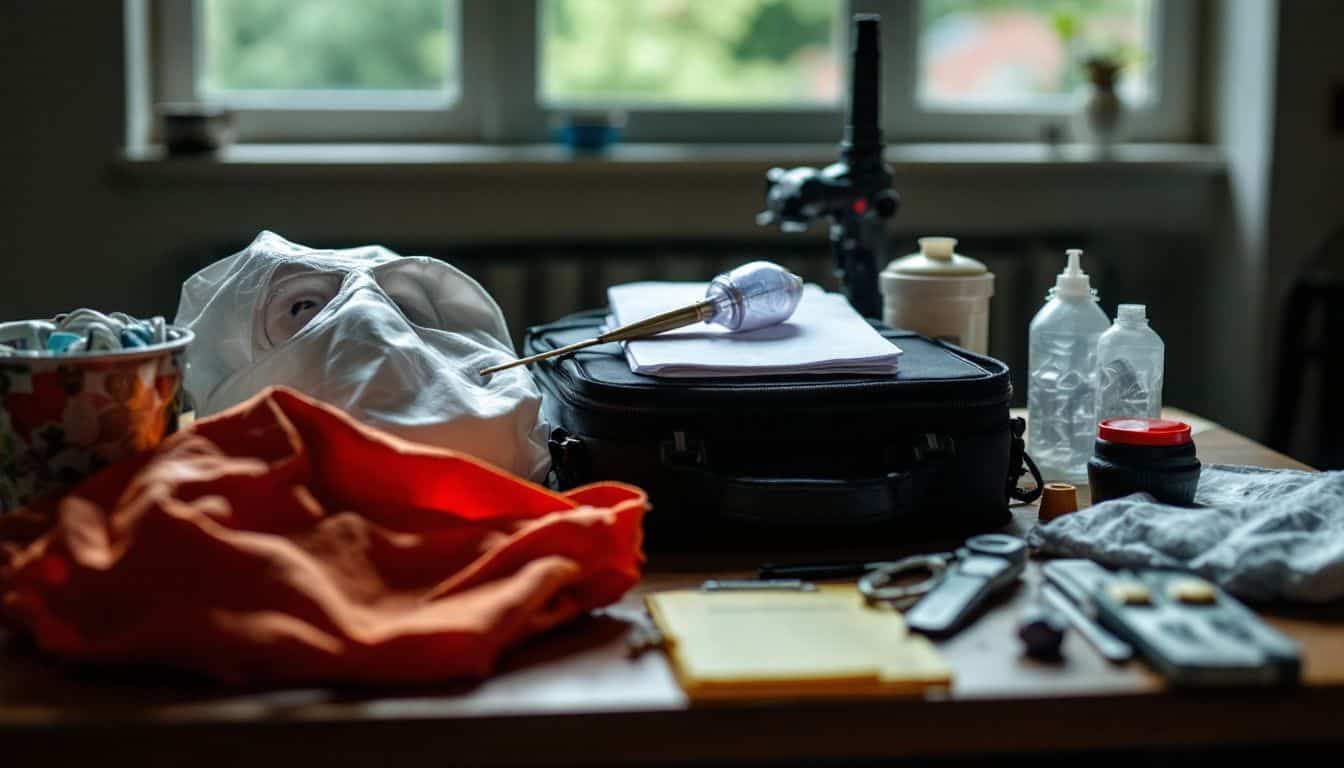
What an Asbestos Core Sampling Kit Actually Contains — And Why Every Tool Matters
Asbestos surveys cannot be carried out with a clipboard and good intentions. Behind every compliant, legally defensible survey is a carefully assembled set of tools — and at the centre of that toolkit sits the asbestos core sampling kit. Understanding what goes into that kit, and why each component is there, helps you ask the right questions when commissioning a survey and ensures the work is done to the standard the law demands.
This post covers the full range of equipment used by professional asbestos surveyors — from personal protective equipment through to advanced detection technology and waste disposal — and explains the role each piece plays in keeping people safe and surveys compliant.
Personal Protective Equipment: The Non-Negotiable Starting Point
Before a surveyor takes a single sample, they must be properly protected. Asbestos fibres are invisible to the naked eye and cause fatal diseases — mesothelioma, asbestosis, and lung cancer — often decades after exposure. PPE is the first line of defence, and it is never optional.
A correctly equipped asbestos surveyor will wear:
- Half-face P3 respirator — filters airborne asbestos fibres to the highest protection level required for surveying work, and must be individually fit-tested
- Disposable coveralls (Type 5/6) — prevent fibres settling on clothing and being carried out of the survey area
- Nitrile gloves — protect skin from direct contact with asbestos-containing materials (ACMs)
- Protective overshoes or dedicated footwear — reduce the risk of fibres being tracked through a building
- Safety goggles — essential when working in ceiling voids, loft spaces, or anywhere debris may fall
- Hard hat — required in older buildings or anywhere structural integrity may be a concern
Under the Control of Asbestos Regulations, duty holders and contractors must ensure appropriate protective measures are in place whenever work involves potential asbestos disturbance. PPE is a regulatory requirement, not a precaution left to the surveyor’s discretion.
The Asbestos Core Sampling Kit: What It Contains and How It’s Used
The asbestos core sampling kit is the centrepiece of any survey. It contains the instruments used to extract material samples from suspect ACMs for laboratory analysis. The technique matters as much as the tools — poor sampling practice can release fibres unnecessarily and produce unreliable results.
Cutting and Extraction Tools
A standard asbestos core sampling kit will include:
- Stanley knives and scalpels — for cutting or scraping small sections from suspect materials such as floor tiles, ceiling tiles, and pipe lagging
- Chisels and screwdrivers — for accessing materials in confined or awkward spaces
- Core borers — used to extract intact plugs of material, particularly useful for composite boards, textured coatings such as Artex, and cement products where a clean cross-section is needed
- Pliers and pry bars — for lifting flooring materials or accessing areas behind fixtures
Core borers deserve particular attention. When a surveyor needs to assess a layered or composite material — a floor screed, a ceiling board, or a sprayed coating — a core borer extracts a clean cylindrical plug that preserves the material’s structure. This allows the laboratory to analyse each layer individually and identify asbestos in materials where surface sampling alone might miss it.
Sample Containment and Suppression
Once a sample is taken, it must be secured immediately to prevent fibre release during handling and transport. Every asbestos core sampling kit should include:
- Airtight, sealable sample bags — double-sealed to prevent fibre escape
- Water spray or damp cloths — applied before and after sampling to suppress fibre release at the point of disturbance
- Pre-labelled sample containers — clearly marked with location, material type, date, and condition before being sent to a UKAS-accredited laboratory
The handling of samples is tightly governed by HSE guidance, including HSG264. Any surveyor who cuts corners at this stage risks regulatory non-compliance and genuine harm to building occupants.
Fibre Suppression and Decontamination Materials
Alongside the core sampling tools, surveyors carry materials to manage the immediate environment during sampling:
- Plastic sheeting — laid beneath sample points to catch debris
- Adhesive tape — for sealing sheeting and sample bags
- Wet wipes and decontamination cloths — for cleaning tools and surfaces after sampling
These items are not optional extras. They are part of the surveyor’s duty to leave the sampling area in a safe condition and prevent secondary contamination.
Air Monitoring Equipment
During and after sampling — particularly during demolition survey work — air monitoring is essential to confirm that fibre levels remain within safe limits.
Personal and Static Air Sampling Pumps
Air sampling pumps draw air through membrane filters at a controlled flow rate. The filters are then analysed at a UKAS-accredited laboratory using phase contrast microscopy (PCM) to count airborne fibres.
These pumps must be calibrated before every use using a traceable calibration device — inaccurate calibration produces unreliable data, which can create either a false sense of security or unnecessary alarm.
Real-Time Particle Monitors
Some surveyors also use real-time monitors that provide instant feedback on airborne particle levels. They do not distinguish asbestos fibres from other particulates, but they are useful for identifying when disturbance is occurring and when conditions warrant stopping work.
They function as an early warning system alongside formal air sampling — not a replacement for it.
Advanced Detection Equipment
Professional surveyors — particularly those conducting refurbishment or demolition surveys — may deploy more sophisticated technology to locate ACMs that are not immediately visible.
HEPA Vacuums
High-Efficiency Particulate Air (HEPA) vacuums are designed specifically for asbestos work. Standard domestic or industrial vacuums will simply exhaust fibres back into the air — making the situation significantly worse.
HEPA filters capture particles down to 0.3 microns, making them essential for cleaning up during and after sampling. They are used throughout the survey process: clearing debris from sample points, cleaning access routes, and managing any minor disturbance of suspect materials.
Infrared Thermal Imaging Cameras
Infrared cameras detect heat differentials in building structures. They do not directly identify asbestos, but they reveal voids, cavities, and anomalies behind walls and ceilings that may indicate hidden insulation or lagging — both historically associated with ACMs.
Using thermal imaging allows surveyors to identify areas warranting further investigation without unnecessary destructive access. This is particularly valuable in occupied buildings where minimising disruption is a priority.
Portable X-Ray Fluorescence (XRF) Analysers
XRF analysers emit X-rays that cause materials to fluoresce, revealing their elemental composition. On-site, they can indicate whether a material contains asbestos-associated compounds, helping surveyors prioritise sampling locations.
XRF is not a substitute for laboratory analysis — a sample must still be taken and confirmed by a UKAS-accredited laboratory. But it reduces guesswork and can significantly speed up the survey process in large or complex buildings.
Documentation and Reporting Tools
An asbestos survey is only as useful as the report it produces. Comprehensive documentation is a legal requirement under the Control of Asbestos Regulations, and the tools used to capture information directly affect report quality.
Digital Cameras and Video Equipment
Every ACM identified during a survey should be photographed in context — showing its location, extent, and condition. High-resolution digital cameras allow surveyors to produce clear evidence that supports risk assessment decisions.
In complex buildings with extensive roof voids, basements, or service tunnels, video walkthroughs provide a more complete record than static images alone.
Measurement and Access Tools
- Laser distance measurers — for accurately mapping the location of ACMs within floor plans
- Tape measures — for areas where laser tools cannot be used effectively
- Inspection mirrors and torches — for seeing into confined spaces, behind ducts, and under raised floors without requiring full access
- Borescopes — for inspecting cavities and voids through small access points
Survey Data Management Software
Professional surveyors use dedicated survey software to log findings in real time, link photographs to specific locations, assign risk ratings, and generate compliant asbestos registers. This data forms the basis of the asbestos management plan that duty holders are legally required to maintain under the Control of Asbestos Regulations.
Disorganised or incomplete records are one of the most common compliance failures identified during HSE inspections. The right software makes this failure entirely avoidable.
Tools Specific to Different Survey Types
The equipment deployed depends on the type of survey commissioned. Not all asbestos surveys require the same level of intrusion or the same toolkit.
Management Surveys
A management survey is designed to locate ACMs in a building during normal occupation, focusing on materials that could be disturbed during routine maintenance. The level of intrusion is deliberately limited.
Surveyors typically use:
- PPE (respirators, coveralls, gloves)
- Standard asbestos core sampling kit (knives, corers, sealable bags)
- Inspection mirrors and torches for limited-access areas
- Digital camera and measurement tools
- Survey software for real-time data capture
Refurbishment and Demolition Surveys
These surveys are far more intrusive. Before any refurbishment or demolition work begins, all ACMs must be located — including those hidden behind linings, within voids, and embedded in structural elements. A demolition survey must be completed in full before any structural work commences, and the equipment required reflects that higher level of risk.
Additional equipment includes:
- Core borers and heavy-duty sampling tools for penetrating composite materials
- Containment systems — plastic sheeting and negative pressure enclosures to isolate the work area
- HEPA vacuums for managing fibre release during intrusive access
- Air monitoring pumps to confirm fibre levels remain controlled throughout
- Waste disposal containers — double-lined, correctly labelled bags for ACM waste
- Thermal imaging cameras to identify potential hidden ACMs before destructive access
Refurbishment and demolition surveys must only be carried out by surveyors with the appropriate qualifications and experience. The consequences of missed ACMs during major works are severe — both for health and for legal liability.
Equipment Maintenance and Calibration
All survey equipment must be properly maintained to be reliable. This is a regulatory expectation, not simply good practice.
- Air sampling pumps must be calibrated before every use using a traceable calibration device
- XRF analysers require regular factory servicing and on-site verification checks
- HEPA vacuums must have filters checked and replaced in line with manufacturers’ guidance
- Respirators must be fit-tested for each individual user and inspected before every use
- Core borers and cutting tools must be cleaned and decontaminated between uses to prevent cross-contamination between sample sites
Equipment that has not been properly calibrated or maintained can produce inaccurate results. In asbestos surveying, inaccurate results can have life-threatening consequences.
When commissioning a survey, it is entirely reasonable to ask your surveyor about their equipment maintenance and calibration procedures. A professional surveyor will welcome the question.
Asbestos Waste Disposal: The Final Step
Every sample taken during a survey generates asbestos waste. That waste must be handled and disposed of in strict accordance with the Control of Asbestos Regulations and relevant waste management legislation.
Proper waste disposal requires:
- Double-lined, sealable waste bags — clearly labelled with the asbestos waste hazard symbol
- Rigid waste containers — for sharps, broken materials, and items that could puncture standard bags
- Hazardous waste consignment notes — required for the legal transfer of asbestos waste to a licensed disposal facility
- Decontamination of all tools and equipment — before they leave the survey area
Asbestos waste cannot be placed in general waste streams. Any surveyor who disposes of ACM samples or contaminated materials incorrectly is breaking the law — and creating a hazard for anyone who subsequently handles that waste.
Where Surveys Are Conducted Across the UK
The equipment described above is deployed by professional surveyors across all building types — commercial, residential, industrial, and public sector — throughout the country. Whether you require an asbestos survey in London, an asbestos survey in Manchester, or an asbestos survey in Birmingham, the same rigorous standards apply.
Buildings vary enormously in age, construction type, and condition — but the regulatory requirements do not. Every survey, regardless of location, must be conducted by a competent surveyor using appropriate equipment and producing a report that meets the requirements of HSG264.
What to Ask Before Commissioning a Survey
Knowing what equipment a professional surveyor uses puts you in a much stronger position when selecting a provider. Before committing, ask the following:
- Are your surveyors BOHS P402 qualified or equivalent?
- Do you use a UKAS-accredited laboratory for sample analysis?
- How is your air monitoring equipment calibrated, and how frequently?
- What containment measures do you use during sampling?
- How is asbestos waste from sampling disposed of?
- What does your survey report include, and how is it structured?
A surveyor who cannot answer these questions clearly and confidently is not a surveyor you should trust with a legally required asbestos assessment.
Frequently Asked Questions
What is an asbestos core sampling kit and what does it contain?
An asbestos core sampling kit is the set of tools used by a qualified surveyor to extract material samples from suspected asbestos-containing materials (ACMs) for laboratory analysis. A standard kit includes core borers, Stanley knives, scalpels, chisels, sealable sample bags, water spray for fibre suppression, and pre-labelled sample containers. The core borer is particularly important — it extracts a clean cylindrical plug from layered or composite materials, allowing each layer to be analysed individually at a UKAS-accredited laboratory.
Why does the type of equipment used in an asbestos survey matter?
The equipment used directly affects both the safety of the survey and the reliability of the results. Poorly maintained air sampling pumps produce inaccurate fibre counts. Inadequate containment during sampling can release fibres into occupied areas. Samples that are not correctly sealed and labelled may be rejected by the laboratory or produce unreliable findings. Under HSG264 and the Control of Asbestos Regulations, surveys must be conducted to a defined standard — and the equipment used is central to meeting that standard.
Do different types of asbestos survey require different equipment?
Yes. A management survey — designed for occupied buildings during normal use — requires a standard asbestos core sampling kit, PPE, inspection tools, and survey software. A refurbishment or demolition survey is far more intrusive and requires additional equipment including heavy-duty core borers, negative pressure enclosures, HEPA vacuums, continuous air monitoring pumps, and thermal imaging cameras. The level of equipment reflects the level of risk involved in each survey type.
Can a surveyor use a standard vacuum cleaner during an asbestos survey?
No. Standard domestic or industrial vacuum cleaners must never be used during asbestos surveying or sampling work. They do not filter fine asbestos fibres and will exhaust them back into the air, significantly worsening contamination. Only HEPA-filtered vacuums — designed specifically to capture particles down to 0.3 microns — are suitable for use in areas where asbestos disturbance may have occurred.
How should asbestos samples be disposed of after a survey?
Asbestos samples and contaminated materials generated during a survey are classified as hazardous waste. They must be placed in double-lined, clearly labelled sealable bags and transferred to a licensed disposal facility using the correct hazardous waste consignment documentation. Asbestos waste cannot be placed in general waste streams. Any surveyor who does not follow correct waste disposal procedures is in breach of both asbestos and waste management regulations.
Commission Your Survey with Supernova Asbestos Surveys
Supernova Asbestos Surveys has completed over 50,000 surveys across the UK, working with commercial landlords, housing associations, local authorities, contractors, and private clients. Our surveyors are fully qualified, our laboratories are UKAS-accredited, and every survey is conducted using properly maintained, calibrated equipment — including a fully stocked asbestos core sampling kit for every site visit.
If you need a management survey, a refurbishment survey, or a demolition survey, we can advise on the right approach for your building and deliver a report that meets the full requirements of HSG264 and the Control of Asbestos Regulations.
Call us on 020 4586 0680 or visit asbestos-surveys.org.uk to get a quote or speak to one of our surveyors today.