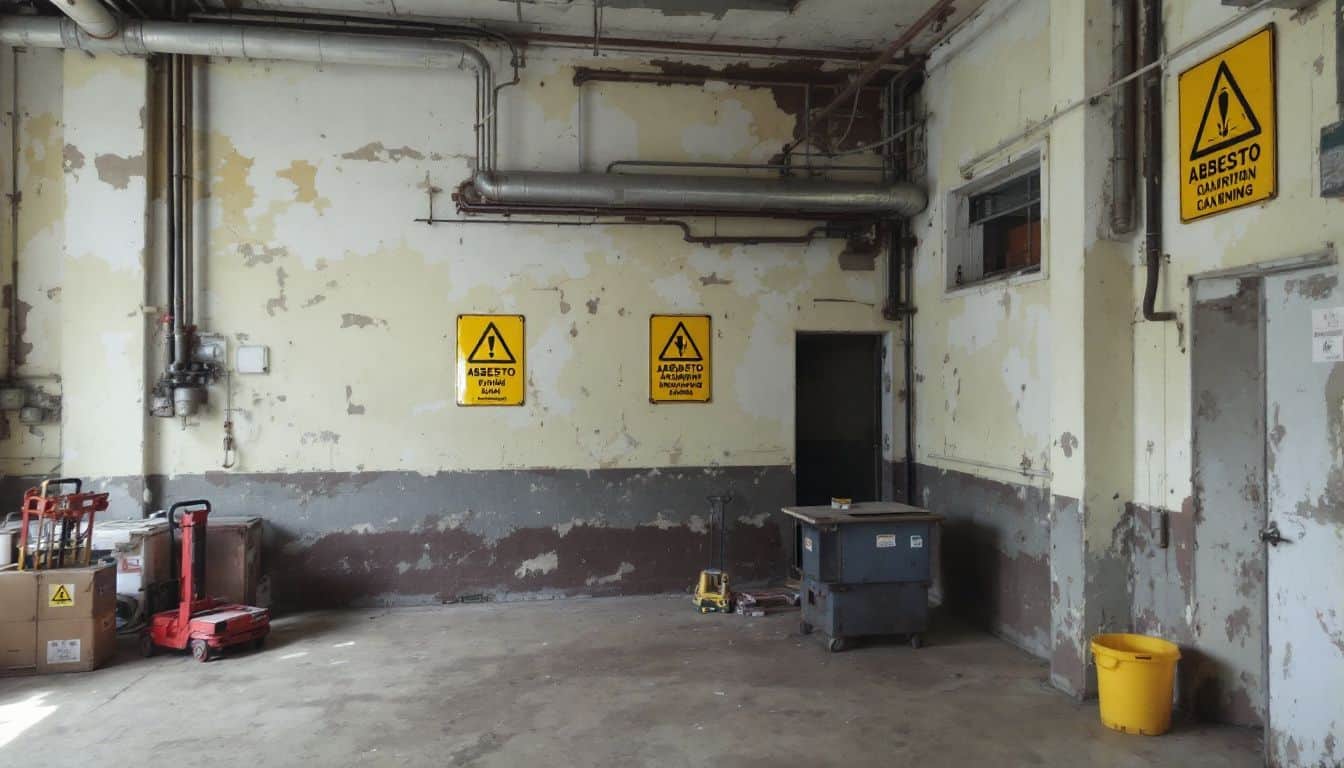
Asbestos Exposure Assessments: What Every Duty Holder Needs to Know
Getting asbestos exposure assessments wrong isn’t just a paperwork failure — it’s a direct risk to the health of every person who sets foot in your building. Miss a material, underestimate a risk, or appoint an unqualified surveyor, and you’re not just exposed to HSE enforcement action. You’re leaving workers and contractors vulnerable to one of the most serious occupational health hazards in the UK.
If your building was constructed or refurbished before 2000, asbestos-containing materials (ACMs) may well be present. Understanding how to carry out accurate, legally compliant asbestos exposure assessments is a core duty for anyone responsible for managing non-domestic premises.
Why Asbestos Exposure Assessments Matter
Asbestos remains the single largest cause of work-related deaths in the UK. The fibres released when ACMs are disturbed cause mesothelioma, asbestos-related lung cancer, and asbestosis — diseases that can take decades to develop and are irreversible once they do.
An enormous proportion of the UK’s commercial and public building stock falls within the pre-2000 bracket. Offices, schools, hospitals, warehouses, factories, retail units — all of them could contain ACMs. Without thorough asbestos exposure assessments, workers and contractors may be disturbing asbestos without any awareness of the risk.
The consequences aren’t just health-related. Duty holders who fail to comply with the Control of Asbestos Regulations face improvement notices, prohibition notices, unlimited fines, and in serious cases, prosecution.
Your Legal Duties Under the Control of Asbestos Regulations
The Control of Asbestos Regulations place a clear legal duty on those who manage non-domestic premises. This is commonly referred to as the “duty to manage” asbestos, and it applies to employers, building owners, and anyone with control over a workplace.
The duty to manage requires you to:
- Identify whether ACMs are present, or could be present, in your premises
- Assess the condition and risk level of any ACMs found
- Produce and maintain a written asbestos register
- Create and act upon an asbestos management plan
- Share information about ACM locations and conditions with anyone who might disturb them
- Review and monitor the plan at regular intervals
This is not optional guidance — it’s enforceable law. HSG264, the HSE’s guidance document on asbestos surveying, sets out the standards that surveys and exposure assessments must meet. Familiarity with that guidance is essential for any duty holder.
Where Asbestos Is Commonly Found in Commercial Buildings
Asbestos was incorporated into dozens of different building products because of its fire resistance, insulating properties, and low cost. It was used extensively throughout UK construction for much of the twentieth century.
Common locations for ACMs in commercial and public buildings include:
- Ceiling tiles and suspended ceiling systems
- Insulation lagging around pipes, boilers, and ductwork
- Sprayed coatings on structural steelwork or concrete, used for fire protection
- Roof sheets and rainwater goods made from asbestos cement
- Floor tiles and vinyl floor coverings, including adhesive beneath
- Textured wall and ceiling coatings, including products like Artex
- Partition walls and door panels
- Electrical panels and consumer units
- Soffits, fascias, and external cladding panels
Asbestos cannot be reliably identified by sight. It was mixed into products and often looks indistinguishable from non-asbestos materials. Only laboratory analysis of a physical sample can confirm its presence with certainty — which is why asbestos testing by a qualified professional is the only reliable route to an accurate assessment.
Choosing the Right Type of Survey for Your Asbestos Exposure Assessment
One of the most common mistakes duty holders make is commissioning the wrong type of survey. Different surveys serve different purposes, and using the wrong one leaves dangerous gaps in your asbestos exposure assessment.
Management Survey
A management survey is the standard survey required for occupied, working premises. It locates and assesses the condition of ACMs that could be disturbed during normal building occupation — routine maintenance, minor works, and day-to-day activities.
This type of survey is not fully intrusive. It won’t access areas requiring significant structural disruption to inspect. It forms the foundation of your asbestos register and management plan.
Refurbishment Survey
A refurbishment survey is required before any work that could disturb the fabric of a building. It is fully intrusive — floors are lifted, walls are opened, voids are accessed. The purpose is to locate every ACM in the area to be worked on before a single contractor starts.
Even if a management survey already exists, a refurbishment survey is still required for any areas affected by planned works. Carrying out refurbishment without one is both illegal and dangerous.
Demolition Survey
A demolition survey is required before full or partial demolition of a structure. Like the refurbishment survey, it is fully intrusive and must locate all ACMs throughout the entire building or affected section. No demolition contractor should break ground without one.
Re-Inspection Survey
Where ACMs are being managed in place rather than removed, they must be inspected at regular intervals to check their condition hasn’t deteriorated. A re-inspection survey updates your existing asbestos register and management plan, and is an essential part of ongoing asbestos exposure assessments.
Step-by-Step: What Makes an Asbestos Exposure Assessment Accurate
1. Plan the Survey Before Anyone Sets Foot on Site
Provide your surveyor with accurate, complete information about the building before the survey begins. Share any existing asbestos records, building drawings, construction dates, and a full list of areas to be covered — including those that are difficult to access.
Don’t assume previous surveys are complete or current. Buildings change over time, and surveys carried out many years ago may not meet the standards required today.
2. Appoint a Competent, Qualified Surveyor
This is the single most important factor in the accuracy of any asbestos exposure assessment. Anyone conducting an asbestos survey must be sufficiently trained and competent to do so.
For most commercial premises, you should use a surveyor who holds — or works for a company that holds — UKAS accreditation for asbestos surveying. Check that your surveyor:
- Holds a recognised qualification, such as the British Occupational Hygiene Society’s P402 certificate or equivalent
- Works for a company with appropriate accreditation and insurance
- Has direct experience with your building type
- Can clearly explain their sampling strategy and the limitations of the survey
At Supernova Asbestos Surveys, all our surveyors are fully qualified and we carry nationwide coverage across England, Scotland, and Wales. If you’re based in the capital and need an asbestos survey in London, we have local teams ready to mobilise quickly.
3. Ensure Full Access on the Day
A survey is only as accurate as the access it’s given. Locked plant rooms, inaccessible roof voids, sealed ceiling spaces, and restricted areas are among the most common causes of incomplete asbestos exposure assessments.
Arrange for a facilities representative to accompany the surveyor. Ensure keys are available, plant rooms are unlocked, and any areas requiring permits to work are properly arranged in advance.
If some areas genuinely cannot be accessed, they must be clearly documented in the report as presumed to contain asbestos until proven otherwise. Leaving these as unknowns is not an acceptable outcome.
4. Insist on Representative Sampling
Where materials are suspected to contain asbestos, samples must be taken and submitted for laboratory analysis. Visual identification alone does not meet the required standard under HSG264.
Samples should be taken from a representative spread of locations across the building — not just the most accessible points. All samples should be analysed by a UKAS-accredited laboratory. You can arrange sample analysis directly through Supernova if you have a suspect material that needs testing quickly.
If you want to test a specific material before commissioning a full survey, our asbestos testing kit is a straightforward way to get a preliminary result quickly and cost-effectively.
5. Review the Survey Report Thoroughly
When you receive the completed report, don’t simply file it away. Review it carefully and confirm it includes:
- A full list of all areas inspected and any that were inaccessible
- Details of every ACM or presumed ACM, including location, type, extent, and condition
- A risk assessment for each material using a recognised scoring methodology
- Clear photographs of each material and its location
- Laboratory analysis certificates for all samples taken
- Recommendations for management, remediation, or removal
If anything is unclear or missing, go back to the surveyor before accepting the report. An incomplete survey report is an incomplete asbestos exposure assessment.
Creating and Maintaining Your Asbestos Register
Your asbestos register is a live document, not a one-time exercise. It must be kept up to date and made available to anyone who could disturb ACMs in your building — maintenance teams, contractors, and emergency services.
Your register must include:
- The location of every ACM or presumed ACM identified
- A description of each material and its extent
- The condition of each material and any changes observed over time
- The risk score assigned to each material
- Details of any actions taken — sealing, encapsulation, or removal — and when
- Records of re-inspection visits and their findings
Any time work is carried out that affects an ACM — including its removal — the register must be updated immediately. If a refurbishment survey reveals materials not previously identified, they must be added without delay.
Safety Precautions During Asbestos Exposure Assessments
Even a survey — which is not a removal exercise — requires appropriate safety precautions when samples are taken from suspect materials.
Personal Protective Equipment
Surveyors taking samples from ACMs must wear appropriate PPE as a minimum:
- FFP3 disposable respirator, face-fit tested
- Disposable Type 5 coveralls
- Nitrile gloves
Samples must be taken carefully to minimise fibre release, dampened where appropriate, sealed immediately, and correctly labelled for the laboratory.
Notifiable Non-Licensed Work
Some asbestos-related activities — including certain sampling work on specific material types — may constitute notifiable non-licensed work (NNLW). This requires prior notification to the relevant enforcing authority, health records for workers, and additional controls. A competent surveyor will know exactly when NNLW protocols apply.
Asbestos Awareness Training for Your Team
Anyone who could come into contact with asbestos in your building — maintenance staff, cleaning teams, facilities managers — must have appropriate asbestos awareness training. This is a legal requirement under the Control of Asbestos Regulations, not an optional extra.
Awareness training doesn’t turn staff into surveyors. It teaches them to recognise situations where they might be disturbing ACMs, stop work immediately, and follow the correct reporting process.
Annual refresher training is widely recommended as best practice to ensure knowledge stays current. Training records should be kept and made available on request.
What to Do If Asbestos Is Disturbed Unexpectedly
Despite the best planning, unexpected discoveries happen — particularly during maintenance or renovation work in older buildings. If ACMs are disturbed without prior assessment, you must act immediately.
- Stop all work in the affected area immediately
- Clear and secure the area — prevent access until it has been properly assessed
- Contact a licensed asbestos contractor for an emergency assessment
- Report to the HSE under RIDDOR if there has been a significant release of fibres or if workers have been exposed
- Do not re-enter the area until it has been declared safe by a competent person
- Update your asbestos register to record the discovery and the actions taken
Speed matters in these situations. The longer an area remains uncontrolled after a disturbance, the greater the risk of fibres spreading through ventilation systems and into adjacent spaces.
Using Asbestos Testing to Fill Gaps in Your Assessment
There are situations where a full survey isn’t immediately practical — perhaps a single suspect material has been identified during routine maintenance, or you’re trying to establish whether a specific area requires further investigation before scheduling works.
In these cases, targeted asbestos testing can provide fast, reliable answers without waiting for a full survey to be scheduled and completed. A sample taken from the suspect material and submitted to a UKAS-accredited laboratory will give you a confirmed result, usually within a few working days.
This approach works best as a supplement to — not a replacement for — a properly scoped asbestos exposure assessment. If testing confirms the presence of asbestos, the next step is always to commission the appropriate survey type for the works or occupation scenario involved.
How Often Should Asbestos Exposure Assessments Be Reviewed?
There is no single prescribed interval that applies universally — the frequency of review depends on the condition of the ACMs present, the nature of activities in the building, and any changes to the structure or its use.
As a general principle:
- ACMs in poor condition or in high-traffic areas should be re-inspected more frequently — typically every six to twelve months
- ACMs in good condition in low-disturbance areas may be reviewed annually or less frequently
- Any significant change to the building — new tenants, change of use, refurbishment, or emergency works — should trigger an immediate review
- Following any incident where ACMs may have been disturbed, an unscheduled re-inspection is mandatory
Your asbestos management plan should specify the review schedule for each material and be updated whenever circumstances change. Treating the plan as a static document is one of the most common compliance failures seen during HSE inspections.
Common Mistakes That Undermine Asbestos Exposure Assessments
After more than 50,000 surveys completed across the UK, the Supernova team has seen the same avoidable errors appear time and again. The most damaging include:
- Relying on outdated surveys — a survey from ten or fifteen years ago is unlikely to reflect the current state of your building
- Failing to commission a refurbishment survey before works begin, relying instead on an existing management survey
- Not sharing the asbestos register with contractors before they start work
- Presuming materials are safe because they appear undamaged — condition can change rapidly
- Appointing unaccredited surveyors on cost grounds — a cheap survey that misses ACMs is far more expensive in the long run
- Filing the survey report without acting on its recommendations — identification without management action does not fulfil your legal duty
Each of these failures has the potential to result in HSE enforcement action, civil liability, or — most seriously — preventable harm to the people in your building.
Get Accurate Asbestos Exposure Assessments from Supernova
Supernova Asbestos Surveys has completed over 50,000 surveys across the UK, working with property managers, facilities teams, local authorities, schools, and private landlords. Our surveyors are fully qualified, our laboratories are UKAS-accredited, and our reports are built to meet the standards set out in HSG264 and the Control of Asbestos Regulations.
Whether you need a management survey for an occupied building, a refurbishment survey ahead of planned works, or a re-inspection to update an existing register, we can mobilise quickly across England, Scotland, and Wales.
Call us on 020 4586 0680 or visit asbestos-surveys.org.uk to discuss your requirements and get a quote.
Frequently Asked Questions
What is an asbestos exposure assessment and who needs one?
An asbestos exposure assessment is the process of identifying whether asbestos-containing materials are present in a building, assessing their condition and risk level, and determining what action is needed to protect anyone who works in or visits the premises. Under the Control of Asbestos Regulations, the duty to manage asbestos applies to anyone who has responsibility for maintaining or repairing non-domestic premises — including employers, building owners, and facilities managers.
How is an asbestos exposure assessment different from an asbestos survey?
An asbestos survey is the physical inspection carried out by a qualified surveyor to locate and sample suspect materials. The asbestos exposure assessment is the broader process that includes the survey, laboratory analysis of samples, risk scoring of identified materials, and the production of a management plan. The survey is the data-gathering stage; the assessment is what you do with that data to manage risk.
Can I carry out an asbestos exposure assessment myself?
For most commercial premises, no. The Control of Asbestos Regulations and HSG264 require that surveys are carried out by competent, suitably trained individuals. For larger or more complex buildings, UKAS-accredited surveyors should be used. Attempting to carry out your own assessment without the necessary qualifications, sampling equipment, and access to a UKAS-accredited laboratory will not meet the required legal standard and could leave you exposed to enforcement action.
How long does an asbestos exposure assessment take?
The time required depends on the size and complexity of the building, the type of survey needed, and the number of suspect materials identified. A management survey of a small commercial unit might be completed in a few hours. A fully intrusive refurbishment or demolition survey of a large industrial or public building could take several days. Laboratory analysis of samples typically adds a further few working days before the final report is issued.
What happens if asbestos is found during an assessment?
Finding asbestos does not automatically mean it needs to be removed. Many ACMs can be safely managed in place, provided they are in good condition, are not being disturbed, and are monitored regularly through re-inspection surveys. Where materials are in poor condition, damaged, or in locations where disturbance is unavoidable, remediation or removal by a licensed contractor will be recommended. Your surveyor’s report will set out the appropriate management action for each material identified.