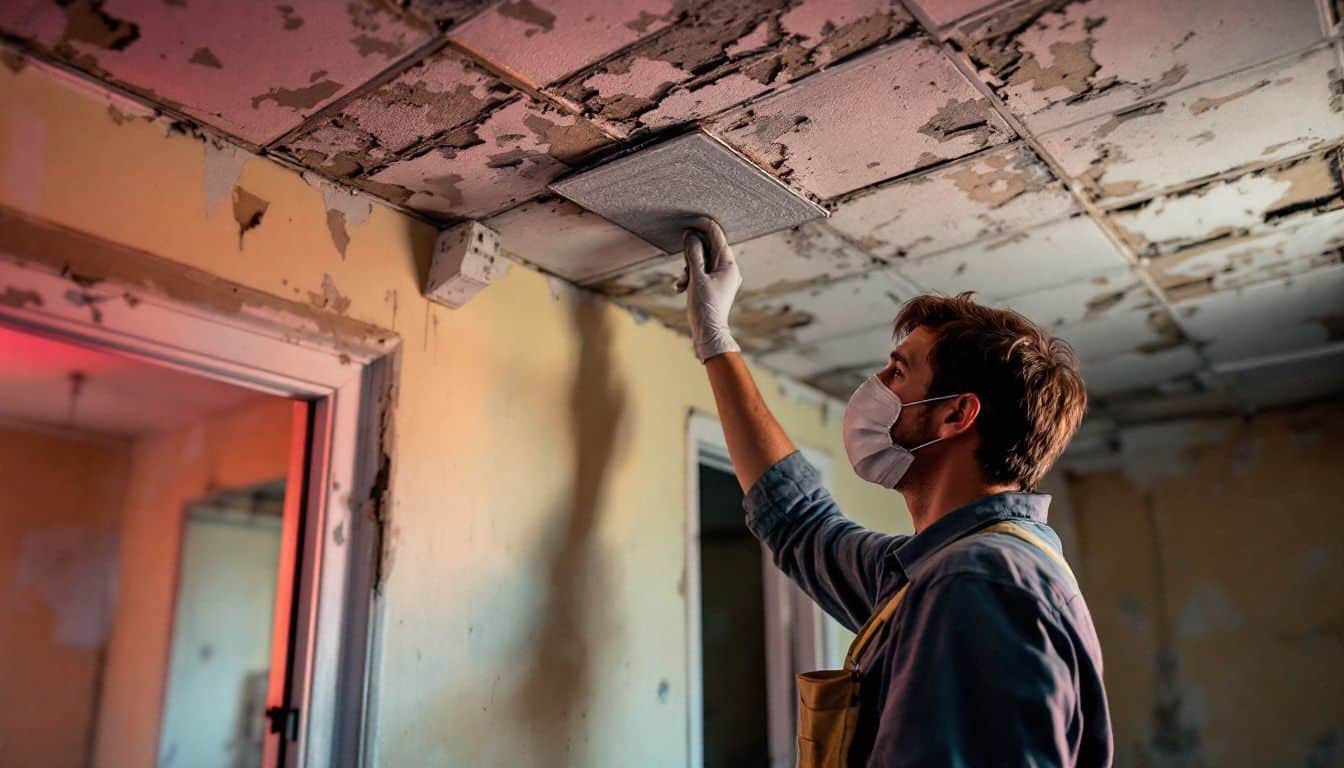
Buildings Built or Refurbished Up to What Year Could Contain Asbestos?
Any building constructed, extended, or significantly refurbished up to and including 1999 could contain asbestos. That is the definitive answer — and it applies to far more buildings than most property managers and owners realise.
The UK banned the importation and use of all forms of asbestos in 1999. Any building work completed before that point may have involved asbestos-containing materials (ACMs). If you own, manage, or are responsible for a pre-2000 building, this is not a theoretical risk — it is a practical and legal reality that demands action.
The mistake many people make is assuming age alone determines risk. A 1970s factory is an obvious candidate — but so is a 1990s office block. Asbestos use continued right up to the ban, and materials installed in the late 1980s and early 1990s are just as likely to contain it as those from earlier decades.
Why the Year 2000 Is the Critical Threshold
Asbestos was one of the most widely used construction materials throughout the 20th century. It was cheap, highly resistant to fire, and an excellent thermal insulator — properties that made it attractive to builders, architects, and developers across every sector of the industry.
The UK progressively restricted different types of asbestos throughout the latter half of the century. Crocidolite (blue asbestos) and amosite (brown asbestos) were banned earlier than chrysotile (white asbestos). But chrysotile continued to be used legally in the UK until the complete ban came into force in 1999.
That is why 2000 is the practical threshold. Any building where work was completed before that ban could legally contain any of the three main asbestos types. Buildings from the 1980s and 1990s deserve particular attention — many people assume asbestos is only a concern in Victorian terraces or post-war industrial units.
In reality, schools, hospitals, office blocks, and retail premises built or refurbished in the decade before the ban routinely incorporated ACMs in insulation, textured coatings, and floor finishes. The assumption that a relatively modern building is automatically safe is one of the most dangerous misconceptions in property management.
Where Asbestos Hides in Pre-2000 Buildings
One of the most important things to understand about asbestos is that it is rarely obvious. It was incorporated into dozens of different building materials, and it does not look dangerous. You cannot identify ACMs by sight alone — laboratory analysis is required to confirm the presence and type of asbestos.
Common locations in pre-2000 buildings include:
- Ceiling tiles and textured coatings — Artex and similar spray-applied coatings used before 1999 frequently contained chrysotile asbestos
- Pipe and boiler lagging — Particularly prevalent in older heating systems and plant rooms
- Insulation boards — Used extensively around service ducts, in partition walls, and behind soffits
- Floor tiles and adhesives — Vinyl floor tiles from the mid-to-late 20th century often contained asbestos, as did the black adhesive used to fix them
- Roof materials — Corrugated asbestos cement sheets were widely used on industrial, agricultural, and commercial buildings
- Sprayed coatings — Applied to structural steelwork for fire protection purposes
- Electrical panels and switchgear — Asbestos was used as a heat-resistant lining in older installations
- Fire doors — Some older fire doors contain asbestos within their core construction
- Guttering, soffits, and fascias — Asbestos cement was commonly used in external components
- Decorative plaster and internal coatings — Applied in both domestic and commercial settings throughout the 20th century
The breadth of this list is precisely why a thorough, methodical survey by a qualified professional is essential. There is no shortcut to identifying what is and is not present in a building.
Your Legal Obligations as a Dutyholder
If your building was constructed or refurbished before 2000 and is used for non-domestic purposes, the Control of Asbestos Regulations places a clear legal duty on you. This is known as the duty to manage asbestos, and it applies to anyone with responsibility for the maintenance or repair of non-domestic premises — landlords, facilities managers, employers, managing agents, and freeholders alike.
Meeting that duty is not a one-off exercise. It involves a series of ongoing obligations:
- Identifying whether ACMs are present, or are likely to be present, in your building
- Assessing the condition and risk of any ACMs found
- Producing and maintaining an up-to-date asbestos register
- Creating a written asbestos management plan
- Sharing that information with contractors, maintenance staff, and anyone else who may disturb the materials
- Monitoring the condition of ACMs on a regular basis
The Health and Safety Executive (HSE) has the power to issue improvement notices, prohibition notices, and prosecute dutyholders who fail to comply. Penalties include substantial fines and, in serious cases, custodial sentences. This is not a compliance grey area.
Before any refurbishment or demolition work begins, the law requires a more detailed survey — regardless of whether a management survey has already been completed.
Which Type of Asbestos Survey Do You Need?
Not all asbestos surveys are the same. The type required depends on what is happening with your building and what stage of its lifecycle it is at. HSG264, the HSE’s guidance on asbestos surveys, sets out the framework that all competent surveyors work to.
Management Survey
A management survey is the standard survey required for any non-domestic building that may contain asbestos. It is designed to locate ACMs that could be disturbed during normal occupation — routine maintenance, minor repairs, or day-to-day use of the building.
The surveyor will inspect accessible areas, take samples where materials are suspected to contain asbestos, and provide you with an asbestos register and risk assessment. This forms the backbone of your ongoing asbestos management obligations. Management surveys involve minimal disruption, and the building can typically remain in use throughout.
Refurbishment Survey
If you are planning any refurbishment work — even something as straightforward as knocking through a wall or replacing a ceiling — you need a refurbishment survey before work begins. This is a legal requirement under the Control of Asbestos Regulations, not a recommendation.
Refurbishment surveys are more intrusive. Surveyors access areas that may be disturbed during the works, including voids, ceiling spaces, and behind fixtures. Destructive techniques may be used to expose materials that cannot be reached otherwise. The survey must cover all areas affected by the planned works.
Demolition Survey
Before any demolition project, a full demolition survey is required. This is the most thorough type — the entire building is inspected and all ACMs must be identified and removed before demolition can proceed. There are no exceptions to this requirement.
Re-Inspection Survey
Having a survey done once is not the end of your obligation. ACMs that are managed in place must be periodically re-inspected to check their condition has not deteriorated. A re-inspection survey keeps your asbestos register current and ensures your management plan reflects the actual state of materials in the building.
As a general guide, annual re-inspections are standard practice for most managed materials. Higher-risk items may require more frequent checks, and your asbestos management plan should specify re-inspection intervals for each identified ACM.
How Asbestos Testing Works in Older Buildings
Professional asbestos testing follows a clear, structured process. Here is what to expect when you commission a survey through a qualified company.
Pre-Survey Planning
Before the surveyor arrives, they will review any existing building information — plans, previous surveys, maintenance records. This helps identify high-risk areas and ensures the survey is scoped correctly for the building type and its age.
Physical Inspection
The surveyor carries out a systematic inspection of the building, assessing materials that may contain asbestos. They note the location, condition, and extent of any suspect materials — building up a detailed picture of what is present and where.
Sample Collection
Where a material is suspected to contain asbestos, a small sample is taken. This is done carefully, using appropriate PPE and control measures to avoid releasing fibres into the air. Disturbed areas are sealed and made safe before the surveyor moves on.
Laboratory Analysis
Samples are sent to a UKAS-accredited laboratory for sample analysis. The lab identifies whether asbestos is present and, if so, which type — chrysotile (white), amosite (brown), or crocidolite (blue). All three types are hazardous; crocidolite and amosite are generally considered the most dangerous.
Reporting
You receive a full written report detailing every suspect material inspected, the sample results, a risk assessment for each ACM, and recommendations for management or removal. This report forms your asbestos register and is the document you need to demonstrate legal compliance.
What Happens When Asbestos Is Found?
Finding asbestos does not automatically mean the building is unsafe or that you need to evacuate. Many ACMs, when in good condition and not at risk of disturbance, can be safely managed in place. The key is knowing what is there and keeping it monitored.
If asbestos is found, you should:
- Follow the recommendations in your survey report without delay
- Update your asbestos register immediately
- Ensure all contractors working in the building are informed before any works begin
- Arrange re-inspection of ACMs at the intervals specified in your management plan
- If materials are damaged or deteriorating, arrange for a licensed contractor to carry out remediation or removal
If ACMs need to be removed, the most hazardous materials — such as pipe lagging, sprayed coatings, and insulation board — must be handled by a licensed asbestos contractor. Other lower-risk materials may be managed by a contractor trained to work with asbestos, but professional advice should always be sought before any decision is made.
Supernova Asbestos Surveys provides asbestos removal services alongside our surveying work, so you do not have to coordinate multiple contractors if remediation is required.
Can You Test for Asbestos Yourself?
If you have noticed a suspicious material in a pre-2000 building and want an initial answer, it is possible to collect a sample yourself using an asbestos testing kit. This allows you to send the sample to an accredited laboratory for analysis — a cost-effective first step for homeowners or those managing smaller properties.
However, a DIY testing kit is not a substitute for a professional survey. It can tell you whether a specific material contains asbestos — it cannot give you a comprehensive picture of your building, a risk assessment, or a legally compliant asbestos register.
For full compliance with the Control of Asbestos Regulations, a professional survey carried out by a qualified surveyor is required. A testing kit is a useful tool in the right circumstances, but it should never be treated as the end point of your obligations.
Choosing the Right Asbestos Surveyor
Asbestos surveys must be carried out by competent, qualified surveyors. The quality of the survey determines the quality of the data you are managing your building on — a vague or incomplete report is a compliance risk in itself.
When selecting a provider, look for:
- BOHS P402 qualification — the industry benchmark for asbestos surveyors in the UK
- UKAS-accredited laboratory — for reliable, legally defensible sample analysis
- UKAS accreditation for the survey company — under ISO 17020
- Clear, detailed reports — with full risk assessments and actionable recommendations
- National coverage — and relevant experience with building types similar to yours
At Supernova Asbestos Surveys, our surveyors are fully qualified, our laboratory partners are UKAS-accredited, and we have completed over 50,000 surveys across the UK. We work with commercial landlords, facilities managers, housing associations, local authorities, and private property owners — across every building type and sector.
Whether you need a management survey for a pre-2000 office, a refurbishment survey ahead of renovation works, or a full demolition survey before a site is cleared, we have the expertise and capacity to deliver — quickly, accurately, and in full compliance with HSE guidance.
Call us on 020 4586 0680 or visit asbestos-surveys.org.uk to book your survey or request a quote. Do not leave a pre-2000 building unassessed — the legal and health risks are not worth it.
Frequently Asked Questions
Buildings built or refurbished up to what year could contain asbestos?
Any building constructed, extended, or significantly refurbished up to and including 1999 could contain asbestos. The UK banned all forms of asbestos in 1999, so any building work completed before that date may have incorporated asbestos-containing materials (ACMs). This applies to buildings from all eras of the 20th century — not just older Victorian or post-war structures.
Is asbestos only found in very old buildings?
No. While asbestos use was highest in the mid-20th century, it continued legally in the UK right up to the 1999 ban. Buildings constructed or refurbished in the 1980s and 1990s can contain just as many ACMs as those from earlier decades. Chrysotile (white asbestos) was still being used in construction materials until the ban came into force.
Do I need an asbestos survey if my building was built in the 1990s?
Yes. If your non-domestic building was built or refurbished before 2000, the Control of Asbestos Regulations requires you to manage the risk of asbestos. That starts with identifying whether ACMs are present through a professional management survey. A 1995 office block is subject to exactly the same legal obligations as a 1965 factory.
What types of asbestos were used in UK buildings?
Three main types were used: chrysotile (white asbestos), amosite (brown asbestos), and crocidolite (blue asbestos). Crocidolite and amosite were restricted earlier than chrysotile, but all three can be found in pre-2000 buildings. All three types are hazardous to health when fibres are released into the air, and all require professional identification and management.
Can I test for asbestos myself rather than commissioning a professional survey?
You can use a DIY asbestos testing kit to collect a sample from a suspect material and have it analysed by an accredited laboratory. This can be a useful first step for homeowners or smaller properties. However, it does not replace a professional survey — it cannot produce a risk assessment, an asbestos register, or demonstrate compliance with the Control of Asbestos Regulations. For legal compliance, a qualified surveyor is required.