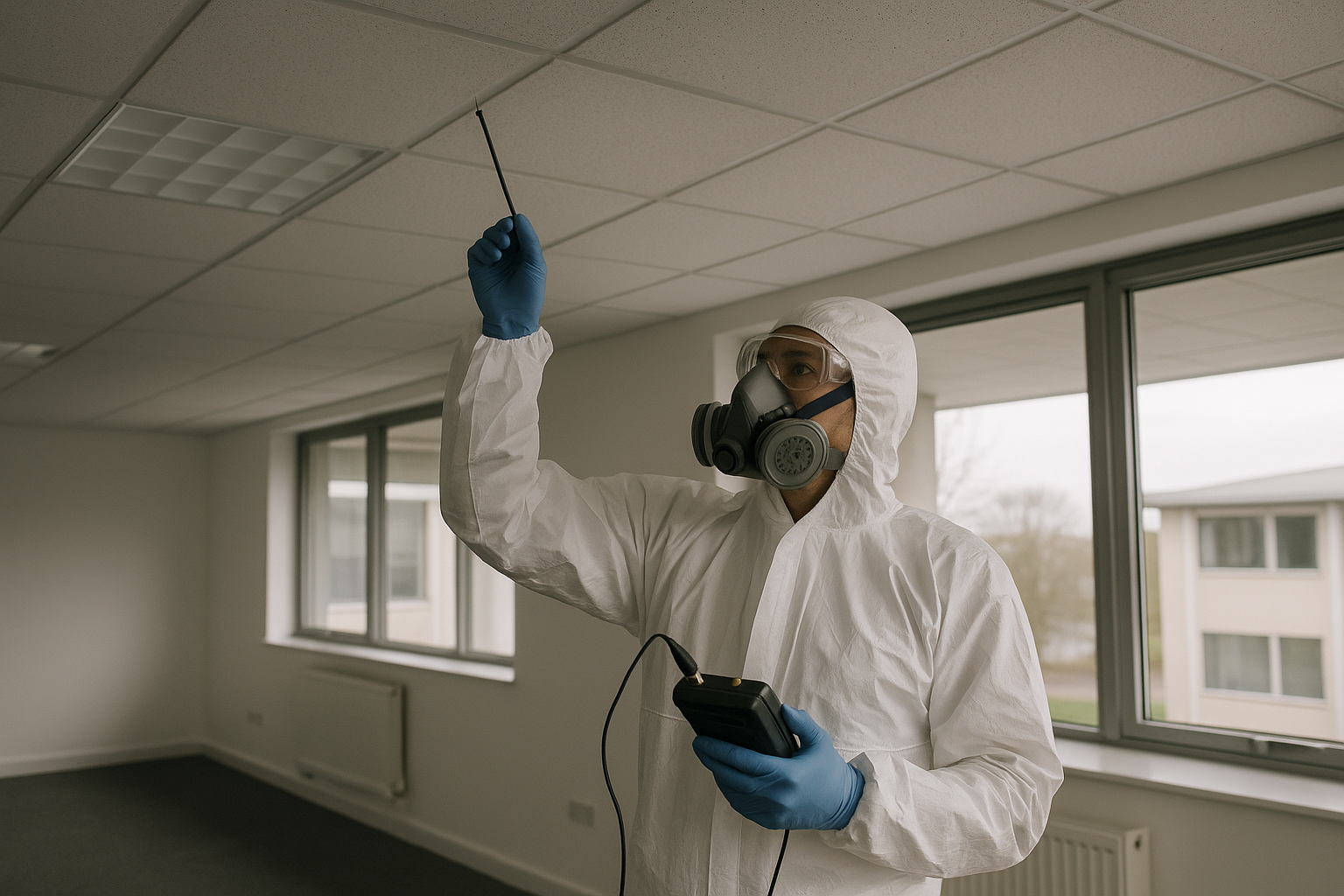
How Often Should You Survey for Asbestos? Understanding Asbestos Survey Frequency
Leave asbestos unchecked for too long and a manageable situation can become a serious compliance and health risk. Asbestos survey frequency matters because asbestos-containing materials do not stay in the same condition forever — the right inspection schedule helps dutyholders keep people safe, maintain accurate records, and avoid costly mistakes before maintenance or refurbishment work begins.
For property managers, landlords, facilities teams, and other dutyholders, there is no single timetable that suits every building. The Control of Asbestos Regulations require asbestos in non-domestic premises to be identified and managed properly, while HSE guidance and HSG264 set the standard for suitable surveying and ongoing review.
Why Asbestos Survey Frequency Matters
The biggest mistake dutyholders make is treating asbestos management as a one-off exercise. A survey gives you a snapshot at a point in time, but the building keeps changing — through wear, maintenance, occupancy, vibration, leaks, and accidental damage.
That is why asbestos survey frequency should be based on risk rather than convenience. If asbestos-containing materials are present, you need a clear plan for checking their condition, updating the asbestos register, and making sure anyone who may disturb the fabric of the building has the right information before they start work.
Getting the schedule right helps you to:
- Protect occupants, contractors, and maintenance staff from accidental exposure
- Support compliance with the Control of Asbestos Regulations
- Keep the asbestos register accurate and usable
- Reduce the risk of accidental disturbance during routine works
- Decide when monitoring is enough and when remedial action is needed
Who Needs to Think About Asbestos Survey Frequency?
If you are responsible for maintenance or repair in a non-domestic building, this applies to you. That includes landlords, managing agents, employers, facilities managers, schools, healthcare providers, housing associations, and local authorities.
The duty also extends to common parts of domestic buildings — corridors, stairwells, risers, plant rooms, service cupboards, and roof spaces in blocks of flats. Privately owned homes are treated differently, but asbestos risk still needs managing before renovation or any intrusive work begins.
What Dutyholders Are Expected to Do
Under the Control of Asbestos Regulations, dutyholders should:
- Find out whether asbestos-containing materials are present
- Assess the risk from those materials
- Create and maintain an asbestos register
- Put an asbestos management plan in place
- Review that plan regularly
- Share relevant asbestos information with anyone liable to disturb materials
If any of those steps are missing, your asbestos arrangements are not robust enough. Reviewing your asbestos survey frequency is a practical way to tighten control and close gaps before they become problems.
Understanding the Survey Types Before Setting a Schedule
You cannot decide how often surveys are needed unless you understand which type of survey is required in the first place. Different situations call for different survey types, and using the wrong one can leave significant gaps in your asbestos information.
Management Survey
A management survey is the standard survey for normal occupation and routine use of a building. It identifies asbestos-containing materials that could be disturbed during everyday occupancy, simple maintenance, or minor works.
For most dutyholders, this is the starting point. If a building was constructed or refurbished before 2000 and no suitable survey exists, arranging a management survey should be the first priority.
Refurbishment Survey
A refurbishment survey is required before any work that will disturb the building fabric. That includes opening ceilings, removing partitions, replacing bathrooms, upgrading services, rewiring, changing heating systems, or carrying out structural alterations.
This survey is intrusive and targeted to the area affected by the planned works. A management survey does not replace it — these are two distinct requirements with different scopes.
Demolition Survey
A demolition survey is needed before a building, or part of it, is demolished. It is fully intrusive and designed to identify all reasonably accessible asbestos-containing materials so they can be dealt with before any destructive work begins.
There is no shortcut here. If demolition is planned, you need the correct survey in place before work starts — no exceptions.
Re-Inspection Survey
Once asbestos-containing materials have been identified, they need monitoring. A re-inspection survey checks known or presumed asbestos-containing materials at defined intervals to confirm whether their condition has changed and whether the asbestos register and management plan remain accurate.
This is where most questions about asbestos survey frequency arise. The answer depends on risk, not a fixed calendar date.
Recommended Asbestos Survey Frequency for Re-Inspections
For known asbestos-containing materials in non-domestic premises, annual re-inspection is widely treated as the baseline expectation. HSE guidance supports regular review, and a 12-month interval is a sensible minimum starting point for most buildings.
But annual review is not a universal rule that suits every site. Some materials need checking more often — particularly where condition is deteriorating or the risk of disturbance is higher than average.
When Annual Re-Inspection May Be Appropriate
A yearly review may be suitable where asbestos-containing materials are:
- In good, stable condition with no visible surface damage
- Sealed or encapsulated and unlikely to be disturbed
- Located in low-traffic, low-access areas
- Protected from impact, vibration, or routine maintenance activity
- Consistently recorded as low-risk across previous inspections
Even then, the register should remain under active management. If anything changes between scheduled inspections, do not wait for the next annual review — act immediately.
When to Increase Asbestos Survey Frequency
More frequent checks — every six months or quarterly — should be considered where:
- Materials are damaged, worn, or visibly deteriorating
- There is evidence of previous disturbance or interference
- Asbestos-containing materials sit in busy circulation areas
- Maintenance work takes place regularly in the vicinity
- The building is heavily used or frequently altered
- Risk assessment scores are elevated or worsening
- Water ingress, vibration, or impact could affect material condition
In these cases, asbestos survey frequency should be tightened without delay. A calendar-based annual visit may not be sufficient to keep the risk under control.
When a New Survey Is Needed Instead of a Re-Inspection
A re-inspection only covers known or presumed asbestos-containing materials already recorded on the register. You need a new survey — not just a re-inspection — when:
- No suitable survey currently exists
- The existing report is incomplete, unreliable, or out of date
- Areas were previously inaccessible and remain unsurveyed
- The building use has changed significantly
- Refurbishment or demolition is planned
If you inherit an old asbestos report during a property purchase or management handover, have it reviewed by a competent professional. An outdated report can be more dangerous than no report at all if people rely on it without checking whether it still reflects the building’s current state.
Key Factors That Affect Asbestos Survey Frequency
The right schedule depends on what is in the building, where it is located, what condition it is in, and how likely it is to be disturbed. These are the main factors that should shape your inspection programme.
Age and Construction of the Building
Any building constructed or substantially refurbished before 2000 should be treated as potentially containing asbestos unless a suitable survey proves otherwise. Older properties often contain a wider range of asbestos-containing materials — from insulation boards and textured coatings to floor tiles, pipe lagging, soffits, cement sheets, and service riser materials.
The more likely asbestos is to be present, the more important it is to have a current survey and a realistic re-inspection plan in place.
Condition of Asbestos-Containing Materials
This is often the most important factor in deciding asbestos survey frequency. A sealed asbestos cement panel in a locked plant area presents a very different level of risk from damaged insulation board in a busy corridor or service room.
If the material is friable, broken, or showing signs of surface damage, the interval between inspections should be shorter. You may also need to consider repair, encapsulation, or asbestos removal rather than relying on monitoring alone.
Location and Accessibility
Materials hidden above ceilings or locked away in low-access areas may remain stable for long periods. Materials in classrooms, offices, communal areas, loading bays, boiler rooms, or service routes are far more likely to be knocked, drilled, or disturbed.
Think about who passes through the space and what kind of work happens there. High-access areas almost always justify closer monitoring and a shorter inspection interval.
Use of the Building
A warehouse, school, retail unit, office, hospital, and residential block all create different patterns of wear and risk. If the building is busy, regularly altered, or subject to frequent contractor visits, the chance of accidental disturbance rises considerably.
Whenever building use changes, review your asbestos arrangements. A new use can change the appropriate level of asbestos survey frequency even if the materials themselves have not visibly changed.
Planned Maintenance or Refurbishment
Routine jobs can disturb asbestos just as easily as major projects. Installing cables, replacing lights, repairing leaks, opening inspection hatches, fitting ventilation, or upgrading pipework can all create risk if asbestos is present nearby.
Before any intrusive work starts, check the asbestos register and decide whether further surveying is needed. If the work affects the building fabric, arrange the correct survey first rather than relying on assumptions.
Previous Inspection Findings
Trend matters. If several inspections show stable condition, your current interval may be appropriate. If condition scores worsen over time, shorten the interval and consider whether monitoring alone is still the right approach.
Do not ignore small changes. Minor damage can become significant if left until the next planned review, and a pattern of gradual deterioration is a clear signal to act sooner rather than later.
Asbestos Testing and Sample Analysis: Where They Fit In
Surveying and testing work together, but they are not the same thing. A survey identifies suspected asbestos-containing materials and assesses their condition and risk. Testing confirms whether a sampled material actually contains asbestos fibres.
If you need professional identification of suspect materials, arrange asbestos testing as part of the appropriate service for your situation. Samples should always be analysed by a competent laboratory rather than judged by appearance alone — asbestos cannot be reliably identified by eye.
For individual suspect items, Supernova offers sample analysis if you already have a suitable sample ready for laboratory assessment. If you need equipment to collect and submit a material safely, an asbestos testing kit is available to order directly.
Practical point: do not attempt to take your own sample from damaged, friable, or high-risk materials. In those cases, bring in a qualified surveyor so the material can be assessed with the right controls in place. You can find out more about professional asbestos testing services and what they involve before booking.
When Monitoring Is Not Enough: Repair, Encapsulation, or Removal
Re-inspections and monitoring are appropriate for stable, low-risk materials. But if condition is declining, disturbance is likely, or the material poses an unacceptable ongoing risk, monitoring alone is not the right response.
In those situations, the options are repair, encapsulation, or removal. Removal eliminates the risk entirely and removes the need for ongoing monitoring of that material. It is not always necessary — but where condition is poor or work is planned that will disturb the material, it is often the most practical long-term solution.
Any removal work involving licensed asbestos materials must be carried out by a licensed contractor. Your asbestos surveyor can advise on the appropriate approach based on the material type, condition, and location.
Keeping Your Asbestos Register and Management Plan Up to Date
The asbestos register is only useful if it is current. Every re-inspection, new survey, and remedial action should be reflected in the register promptly. An outdated register gives contractors and maintenance staff false confidence — which is arguably worse than having no register at all.
Your asbestos management plan should be reviewed alongside the register. If the building changes, if new asbestos-containing materials are found, or if the condition of existing materials deteriorates, the plan needs updating to reflect the current situation.
Dutyholders should treat the register and management plan as live documents, not archived reports. They should be readily accessible to contractors, facilities staff, and anyone else who may need to consult them before working on the building.
Practical Steps for Reviewing Your Current Asbestos Survey Frequency
If you are not sure whether your current inspection schedule is appropriate, work through these questions:
- Do you have a current survey? If not, arrange one before anything else.
- When was the last re-inspection? If it was more than 12 months ago, it is overdue for most buildings.
- Has anything changed since the last inspection? New works, damage, water ingress, or changed building use all warrant an earlier review.
- What condition are the materials in? Deteriorating or damaged materials need more frequent monitoring — and possibly remedial action.
- Is refurbishment or demolition planned? If so, you need the appropriate survey before work begins, regardless of when the last management survey was carried out.
- Are contractors working in the building? Make sure they have access to the asbestos register and understand what materials are present in their work area.
If any of these questions highlight a gap, address it now rather than waiting for the next scheduled review.
Frequently Asked Questions
How often should asbestos be re-inspected in a non-domestic building?
Annual re-inspection is widely accepted as the minimum baseline for most non-domestic buildings with known or presumed asbestos-containing materials. However, the appropriate asbestos survey frequency depends on the condition of the materials, how likely they are to be disturbed, and the findings of previous inspections. Higher-risk situations may require checks every six months or more frequently.
Does a management survey need to be repeated every year?
A management survey is not typically repeated annually. It establishes what asbestos-containing materials are present and forms the basis of the asbestos register. What should happen annually — as a minimum — is a re-inspection of those known materials to check their condition. A new management survey is needed if the original is out of date, incomplete, or if previously inaccessible areas have not been covered.
Do I need a new survey before refurbishment work even if I already have a management survey?
Yes. A management survey is not sufficient for refurbishment or demolition work. You need a refurbishment survey before any work that will disturb the building fabric, even if a management survey is already in place. The two surveys have different scopes — a management survey is not intrusive enough to meet the requirements that apply before structural or fabric works begin.
What triggers an increase in asbestos survey frequency?
Several factors should prompt more frequent inspections: visible deterioration of asbestos-containing materials, evidence of disturbance or damage, increased maintenance activity near asbestos locations, water ingress or vibration affecting the materials, or worsening condition scores across successive re-inspections. If any of these apply, do not wait for the next scheduled annual visit — arrange an earlier inspection.
Can I take my own asbestos sample to check whether a material contains asbestos?
Sampling kits are available for use on intact, stable materials where self-sampling is appropriate. However, you should not attempt to sample damaged, friable, or high-risk materials yourself. In those cases, a qualified surveyor should carry out the assessment with the correct controls in place. All samples should be submitted for laboratory analysis rather than assessed by appearance alone.
Talk to Supernova About the Right Survey Schedule for Your Building
Supernova Asbestos Surveys has completed over 50,000 surveys across the UK. Whether you need an initial management survey, a re-inspection of existing materials, a refurbishment or demolition survey, or professional asbestos testing, our qualified surveyors can advise on the right approach for your building and help you put a compliant, risk-based inspection programme in place.
Call us on 020 4586 0680 or visit asbestos-surveys.org.uk to book a survey or speak to a member of our team.