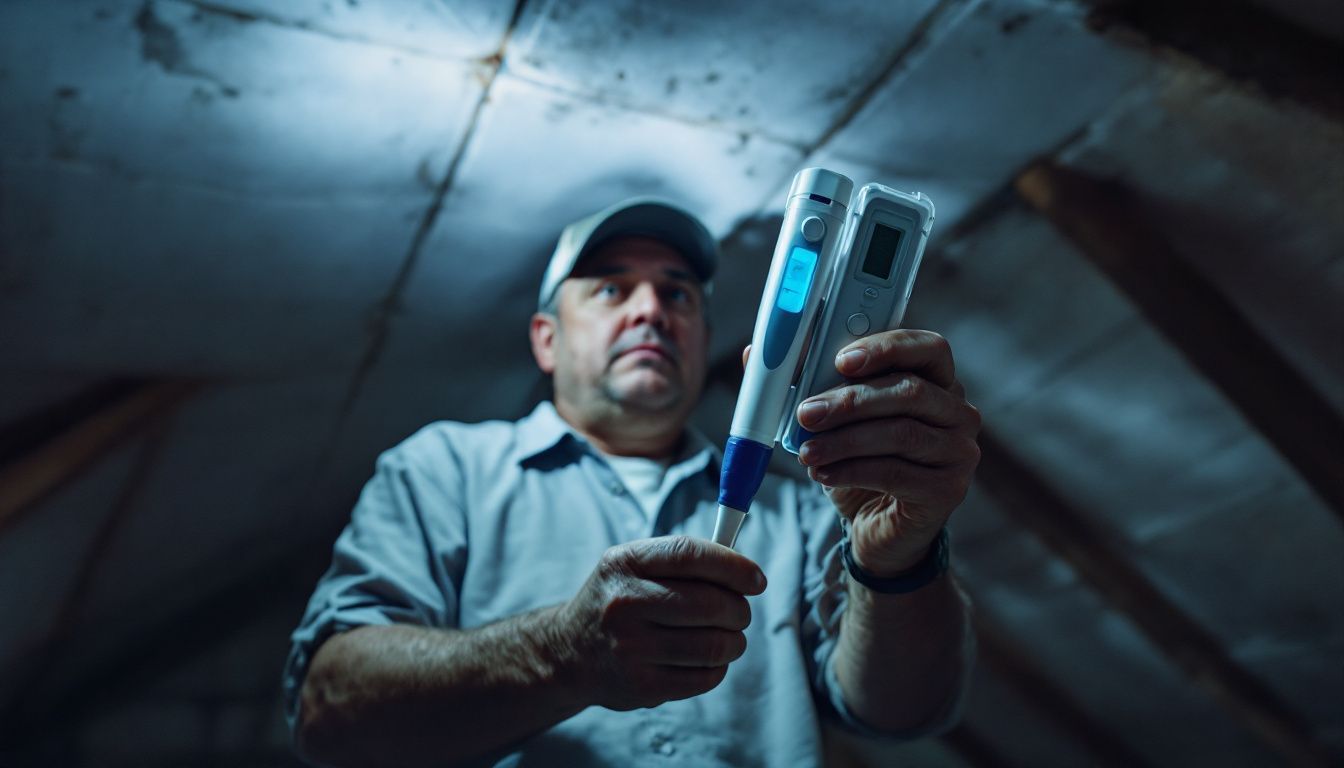
Asbestos Found During Testing? Here’s Exactly What to Do Next
Finding asbestos during testing can stop a project dead in its tracks — but the material itself isn’t the immediate danger. Disturbing it is. Understanding what should be done if asbestos is found during testing is the difference between a controlled, compliant response and a situation that spirals into serious health risk and legal liability.
The steps you take in the hours immediately following a positive result matter enormously. This post walks you through every stage — from the moment asbestos is confirmed through to clearance, safe disposal, and keeping your records straight.
Stop All Work in the Affected Area Immediately
The very first action is non-negotiable: stop all work. No exceptions. Whether you’re mid-renovation, carrying out routine maintenance, or fitting out a commercial space — down tools now.
Asbestos fibres are microscopic. Once airborne, they’re invisible and can travel significant distances. Continuing to work risks spreading contamination well beyond the original location and dramatically increases exposure risk for everyone on site.
Do not attempt to clean up, bag, or move any asbestos-containing materials (ACMs) yourself. Even well-intentioned tidying can cause serious harm by releasing fibres that would otherwise remain safely bound within the material.
Seal Off the Area and Restrict Access
Once work has stopped, restrict access to the affected area immediately. If you have the means, use heavy-duty polythene sheeting to seal doorways, vents, and openings. The goal is to prevent fibres — if any have been disturbed — from migrating into adjacent spaces.
Put up clear warning signs. Anyone entering the building or working nearby needs to know the area is off-limits. That includes tradespeople, cleaners, delivery drivers, and other occupants.
Turn off any air handling or ventilation systems serving the affected area. Forced air movement can carry fibres through ductwork into other parts of the building — a risk that’s easy to overlook but potentially very serious.
Notify the Right People Without Delay
Depending on your role and the setting, there are several parties you may need to contact straight away. Acting quickly here protects both people and your legal position.
- Your employer or building owner — they have legal duties under the Control of Asbestos Regulations and must be informed without delay
- The principal contractor — on construction or refurbishment sites, they must be notified and may have notification obligations to the Health and Safety Executive (HSE)
- Workers and other site occupants — anyone who may have been in the vicinity needs to know what’s happened
- The HSE — where significant disturbance has already occurred or where licensed work is now required, notification may be a legal requirement
If you are the building owner or dutyholder, this discovery also needs to be recorded and your asbestos management plan updated accordingly. Don’t put this off — the obligation is immediate.
Check Your Asbestos Management Plan
If the building is a non-domestic property built before 2000, there should be an asbestos management plan in place. This is a legal requirement under the Control of Asbestos Regulations for dutyholders — typically the building owner, landlord, or facilities manager.
Pull that document out and review it. It should tell you:
- Whether ACMs were already known to exist in the building
- Where they’re located and what condition they were recorded in
- What actions were previously recommended
- Who your nominated asbestos contractor is
If the newly discovered material wasn’t already on the register, the plan needs to be updated. If no plan exists — which is itself a legal failing — you need to commission a management survey as a matter of urgency.
Get an Accredited Asbestos Surveyor Involved
Once the area is secured and key parties notified, you need professional eyes on the situation. An accredited asbestos surveyor will assess the extent of the find, confirm the type and condition of the material, and advise on the appropriate next steps.
There are different types of surveys for different situations, and understanding which applies to your circumstances is critical. Getting the wrong type of survey — or skipping one entirely — can leave you legally exposed and practically no better off.
Management Survey
A management survey is used to locate and assess ACMs in a building that’s in normal use. It’s appropriate if asbestos has been found incidentally and the building will continue to be occupied, allowing the material to be monitored and managed in place rather than immediately removed.
Refurbishment or Demolition Survey
A refurbishment survey is required before any intrusive work begins. It’s a more thorough, destructive survey that identifies all ACMs that could be disturbed during works. If asbestos was discovered mid-refurbishment and this survey hadn’t been carried out beforehand, it needs to happen before any further work proceeds.
A demolition survey is legally required before any structure is demolished. It ensures all ACMs are identified and managed or removed before demolition begins — no exceptions.
Re-Inspection Survey
A re-inspection survey is used to monitor the condition of known ACMs over time, updating the asbestos register and flagging any deterioration that requires action. These are typically carried out annually and are an essential part of ongoing asbestos management.
Understand Your Legal Obligations
Asbestos management in the UK is governed by the Control of Asbestos Regulations, supported by HSE guidance including HSG264. These set out clear duties for building owners, employers, and contractors. Getting this wrong isn’t just dangerous — it carries significant legal consequences, including unlimited fines and potential prosecution.
The Duty to Manage
Dutyholders of non-domestic properties have a legal duty to manage asbestos. This means knowing what’s in the building, assessing the risk, putting a management plan in place, and acting on it.
The discovery of previously unknown ACMs triggers an obligation to update your register and reassess your management approach without delay. This isn’t optional — it’s a legal requirement under the Control of Asbestos Regulations.
Licensed vs Non-Licensed Work
Not all asbestos work requires a licensed contractor — but much of it does. Whether licensed contractors are required depends on the type of asbestos material, its condition, and the nature of the work being carried out.
- Any work with high-risk materials such as sprayed asbestos coatings, asbestos insulation, or asbestos insulating board (AIB) requires an HSE-licensed contractor
- Some lower-risk work may be carried out by non-licensed contractors, but must still follow strict control measures
- Notifiable non-licensed work (NNLW) has its own requirements, including medical surveillance and record-keeping
When in doubt, treat it as licensable. The consequences of getting this wrong are too serious to risk.
Choosing a Licensed Asbestos Removal Contractor
If asbestos removal is required, you must use a contractor licensed by the HSE. Using an unlicensed contractor for licensable work is a criminal offence — for the contractor and potentially for the client commissioning the work.
When selecting a contractor, check:
- They hold a current HSE asbestos licence — verifiable on the HSE website
- They have relevant experience with your type of building and material
- They carry appropriate insurance
- They will provide a written method statement and risk assessment before work begins
- They will arrange independent clearance testing on completion
Be wary of unusually low quotes. Asbestos removal carried out properly is not cheap, and corners cut during removal can have devastating consequences for both health and legal compliance.
Encapsulation vs Removal: What’s the Right Option?
Removal isn’t always the answer. In some cases, encapsulation — sealing the ACM with a specialist coating to prevent fibre release — is a safer and more practical solution, particularly where the material is in good condition and unlikely to be disturbed.
Your surveyor and contractor will advise on which approach is appropriate based on:
- The type and condition of the material
- Whether the area is likely to be disturbed in future
- The long-term use of the building
- Cost and disruption considerations
If the building is due for demolition or significant refurbishment, full removal is almost always the right approach. For a stable material in a managed building, a monitored encapsulation programme may be entirely appropriate and fully compliant.
Protecting People During and After the Process
Personal Protective Equipment
Anyone working in or near areas where asbestos has been disturbed must use appropriate PPE. For licensed asbestos work, this typically includes a suitable respiratory protective device (RPE) — at minimum an FFP3 disposable mask or half-face respirator with a P3 filter — along with disposable coveralls (Type 5/6), gloves, and boot covers.
PPE is the last line of defence, not the first. Proper containment and controlled working methods must come first, with PPE providing additional protection on top of those measures.
Health Monitoring
If workers have been exposed to asbestos fibres, health monitoring should be arranged through an occupational health provider. This includes baseline lung function testing and may involve chest X-rays depending on the level of exposure.
Employers have a duty to provide health surveillance for workers engaged in notifiable non-licensed work and licensed asbestos work. Records must be kept for 40 years — this is a legal requirement, not a recommendation.
Asbestos Awareness Training
All workers who could encounter asbestos during their normal duties — including maintenance staff, electricians, plumbers, and builders — must have asbestos awareness training. This doesn’t qualify them to work with asbestos, but it ensures they can recognise potential ACMs and know to stop work rather than disturb them unknowingly.
Post-Removal: Clearance Testing and Verification
Once asbestos has been removed, the area must not simply be signed off by the removal contractor and reopened. An independent inspection and air clearance test — sometimes called a four-stage clearance — must be carried out by a separate, accredited analyst.
This process involves a thorough visual inspection of the enclosure followed by air sampling. Only when fibre levels fall below the clearance indicator can the area be declared safe for reoccupation.
The clearance certificate issued at this stage is an important document. Keep it on file as part of your asbestos records — you may need it for future surveys, property transactions, or regulatory inspections.
Safe Disposal of Asbestos Waste
Asbestos waste is classified as hazardous waste and must be disposed of in strict accordance with the law. Cutting corners here carries severe penalties and puts others at risk.
Correct disposal means:
- Double-bagging in clearly labelled, UN-approved asbestos waste sacks
- Completing a hazardous waste consignment note that tracks the waste from site to a licensed disposal facility
- Using only a licensed waste carrier and a permitted disposal site
Never allow waste to be taken away without proper documentation. The paper trail is your protection as much as it is a legal obligation. Fly-tipping or illegal disposal of asbestos waste carries severe penalties for everyone involved in the chain.
Update Your Asbestos Register After Works Are Complete
Once removal or encapsulation is complete, update your asbestos register and management plan to reflect the current situation. If ACMs have been fully removed and independently verified as clear, they can be removed from the register.
If encapsulation has been used, the material remains on the register with updated condition notes, and a programme of periodic re-inspection needs to be scheduled. This is where a re-inspection survey becomes an ongoing part of your compliance programme rather than a one-off exercise.
A well-maintained asbestos register isn’t just a legal document — it’s a practical tool that protects future occupants, contractors, and anyone else who works in or around the building.
What Should Be Done If Asbestos Is Found During Testing: A Quick Reference Checklist
If you need a rapid reference to share with your team or post on site, here’s the process in order:
- Stop all work immediately in the affected area
- Seal off the area and restrict access — use signage and physical barriers
- Turn off ventilation systems serving the affected zone
- Notify your employer, building owner, principal contractor, and the HSE where required
- Review your existing asbestos management plan and register
- Commission the appropriate type of survey from an accredited surveyor
- Understand whether licensed or non-licensed work applies to your situation
- Appoint an HSE-licensed removal contractor if removal is required
- Arrange independent four-stage clearance testing before reoccupation
- Dispose of all asbestos waste correctly with full documentation
- Update your asbestos register and management plan
- Schedule ongoing re-inspection if any ACMs remain in situ
Supernova Surveys Covers the Whole of the UK
Whether you need a survey following an unexpected asbestos find or you’re looking to get your compliance programme in order from scratch, Supernova Asbestos Surveys operates nationwide. Our UKAS-accredited surveyors carry out thousands of surveys every year across every property type — commercial, industrial, residential, and public sector.
If you’re based in the capital, our asbestos survey London service covers all London boroughs. For the north-west, our asbestos survey Manchester team is on hand. And for the Midlands, our asbestos survey Birmingham service is available across the region and surrounding areas.
Call us on 020 4586 0680 or visit asbestos-surveys.org.uk to book a survey, get a quote, or speak to one of our team about the right course of action for your situation.
Frequently Asked Questions
What should I do immediately if asbestos is found during testing?
Stop all work in the affected area straight away and restrict access. Seal off the space using polythene sheeting if possible, turn off any ventilation systems serving the area, and put up clear warning signs. Notify your employer, building owner, and principal contractor without delay. Do not attempt to move, clean up, or bag any asbestos-containing materials yourself.
Do I have to remove asbestos if it’s found during a survey?
Not necessarily. Removal is not always the safest or most practical option. If the material is in good condition and unlikely to be disturbed, encapsulation — sealing it with a specialist coating — may be the appropriate course of action. Your accredited surveyor will assess the type, condition, and location of the material and recommend the most suitable approach based on HSE guidance.
Who is legally responsible when asbestos is found in a non-domestic building?
The dutyholder — typically the building owner, landlord, or facilities manager — holds legal responsibility under the Control of Asbestos Regulations. They are required to manage asbestos in the building, maintain an up-to-date asbestos register, and act on any newly discovered ACMs without delay. Failure to do so can result in enforcement action, unlimited fines, or prosecution.
Does all asbestos removal require a licensed contractor?
Not all asbestos work requires an HSE-licensed contractor, but the higher-risk materials — including sprayed coatings, asbestos insulation, and asbestos insulating board (AIB) — do. Some lower-risk work falls under the category of notifiable non-licensed work (NNLW), which has its own requirements. If you’re unsure, treat the work as licensable until a qualified professional advises otherwise.
What happens after asbestos is removed — can the area be used straight away?
No. Before the area can be reoccupied, an independent four-stage clearance must be carried out by a separate accredited analyst — not the removal contractor. This involves a visual inspection of the enclosure and air sampling to confirm fibre levels are below the clearance indicator. Only once a clearance certificate has been issued is the area safe to reopen. Keep this certificate as part of your permanent asbestos records.