Asbestos is still one of the most serious hidden risks in the UK built environment. It sits above ceilings, inside risers, behind panels, under floor finishes and around plant, often unnoticed until a contractor drills, cuts or strips out the wrong material and releases fibres into the air.
That is why asbestos remains a live issue for landlords, facilities teams, contractors and property managers. You cannot rely on sight, smell or guesswork. If asbestos is disturbed, exposure can happen without any obvious warning, and the health consequences may not appear for many years.
Why asbestos exposure is dangerous
The main danger from asbestos comes from breathing in microscopic fibres. Once airborne, these fibres can travel deep into the lungs and stay there for a long time.
Unlike a slip hazard or an electrical fault, asbestos does not usually cause an immediate visible injury. Someone can disturb asbestos during maintenance today, feel completely fine, and still face serious health effects later on.
How fibres enter the body
Inhalation is the key route of exposure in buildings and construction work. Fibres can be released when asbestos-containing materials are drilled, cut, broken, sanded, scraped, stripped or removed without proper controls.
Swallowing fibres is also possible, but from a practical property management point of view, airborne asbestos is the issue that causes the greatest concern. If dust is generated from suspect materials, treat it as a potential exposure event until proven otherwise.
Why disturbed asbestos is the real problem
Not every asbestos-containing material presents the same immediate level of risk. Materials in good condition and left undisturbed can often be managed safely in place under the Control of Asbestos Regulations, supported by HSE guidance and the surveying principles set out in HSG264.
The risk rises when asbestos is damaged, deteriorating or likely to be disturbed during repair, maintenance, refurbishment or demolition. Softer and more friable materials usually release fibres more easily, but any asbestos-containing material can become hazardous if handled incorrectly.
What health risks are associated with asbestos?
The health risks linked to asbestos are the reason the material is so tightly controlled in the UK. These diseases are serious, often life-limiting, and closely tied to exposure that could have been prevented with proper identification and control.
For dutyholders, the practical lesson is simple: prevention matters more than reaction. Once asbestos fibres have been inhaled, there is no way to reverse that exposure.
Mesothelioma
Mesothelioma is a cancer affecting the lining of the lungs and, less commonly, the lining of the abdomen. It is strongly associated with asbestos exposure.
From a building management perspective, this is one of the clearest reasons never to treat disturbed asbestos casually. If suspect materials are uncovered, stop work immediately, isolate the area and get competent advice before anything else happens.
Asbestos-related lung cancer
Lung cancer can also be caused by asbestos exposure. The risk is particularly serious where exposure has been repeated, significant or poorly controlled.
That is why survey information must be reviewed before work starts. If a contractor is relying on assumptions instead of confirmed asbestos data, the risk control has already failed.
Asbestosis
Asbestosis is a chronic lung disease caused by inhaling asbestos fibres. It leads to scarring of lung tissue, which can affect breathing and quality of life.
It is more commonly linked to heavier or prolonged exposure, but that does not make smaller incidents acceptable. No one should treat brief, uncontrolled asbestos disturbance as harmless.
Pleural thickening and other pleural disease
Asbestos can also cause pleural thickening and other conditions affecting the lining around the lungs. These may reduce lung function and can indicate previous exposure.
For employers and dutyholders, that reinforces the need to keep exposure as low as reasonably practicable. The best control is always to prevent disturbance in the first place.
How much asbestos exposure is risky?
There is no sensible reason to gamble with asbestos. The level of risk depends on several factors, including the type of material, its condition, how much dust is released, how long people are exposed and how often that happens.
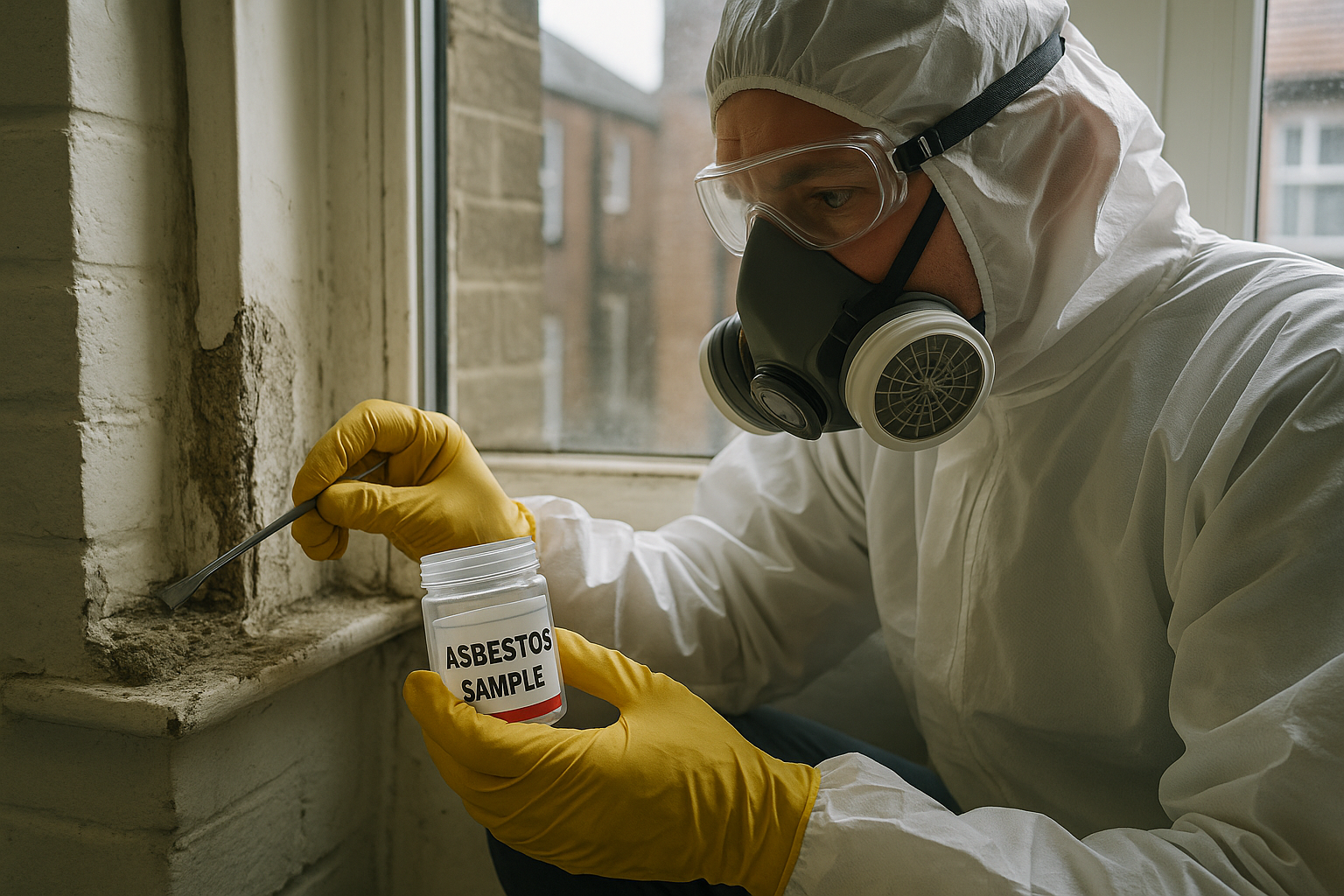
In practical terms, even small jobs can create a serious problem if the material contains asbestos and the work is uncontrolled. One hole drilled into the wrong board or one section of damaged lagging can trigger a major incident.
Factors that affect asbestos risk
- Material type: pipe lagging, sprayed coatings and asbestos insulation board are generally higher risk than bonded cement products
- Condition: cracked, damaged or crumbling asbestos is more likely to release fibres
- Activity: drilling, sanding, chasing, cutting, stripping and demolition increase fibre release
- Location: confined or poorly ventilated spaces can worsen exposure potential
- Duration: repeated exposure over time increases overall risk
- Control measures: poor planning, lack of isolation and untrained handling make asbestos incidents more likely
If you do not know what a material is, do not guess. Arrange inspection and sampling before intrusive work begins.
Where asbestos is commonly found in buildings
Asbestos was used in a huge range of products because it offered heat resistance, insulation, durability and fire protection. That is why it still turns up in offices, schools, warehouses, retail units, factories, communal areas and older homes.
In premises built before 2000, asbestos may be present in both obvious and hidden locations. Appearance alone is never enough to confirm whether a material does or does not contain asbestos.
Common asbestos-containing materials
- Pipe lagging
- Boiler insulation
- Sprayed coatings
- Asbestos insulation board
- Cement sheets and roof panels
- Corrugated garage and warehouse roofs
- Ceiling tiles
- Floor tiles
- Bitumen adhesives
- Textured coatings
- Fire doors and fire protection panels
- Gaskets, seals and rope products
- Electrical backing boards and flash guards
- Older toilet cisterns, flues and external products made from asbestos cement
Typical locations in older properties
- Plant rooms
- Service risers
- Ceiling voids
- Wall partitions
- Lift shafts
- Roof spaces
- Basements
- Pipe boxing
- Behind old fuse boards
- Around boilers and calorifiers
- Under vinyl floor finishes
- Garages, outbuildings and industrial roofs
If there is uncertainty, the next step is proper sampling. Laboratory confirmation is the only reliable way to establish whether a suspect material contains asbestos.
Who is most at risk from asbestos exposure?
Asbestos exposure is often associated with historic industry, but the modern risk is much broader. Many incidents now happen during everyday maintenance, fit-out, repair and refurbishment work in occupied buildings.
Anyone working on older premises should assume asbestos may be present unless reliable records prove otherwise. That applies just as much to a short maintenance visit as it does to a major project.
Trades and roles with regular asbestos exposure risk
- Electricians
- Plumbers
- Joiners
- Heating and ventilation engineers
- Roofers
- Decorators
- Telecoms installers
- Maintenance staff
- General builders
- Demolition workers
- Facilities managers
- Property managers and landlords overseeing works
Occupants can also be affected if asbestos is disturbed in live areas. That is why communication, access control and review of survey information are essential before even minor works start.
What to do if you suspect asbestos
When suspect asbestos is found, speed matters, but guessing does not help. The safest response is to stop activity and move into a controlled decision-making process.
- Stop work immediately. Do not drill, cut, scrape, break or move the material.
- Keep people away. Restrict access so nobody disturbs the area further.
- Do not clean it up yourself. Sweeping or using a standard vacuum can spread asbestos fibres.
- Check existing records. Review the asbestos register and any survey information already held for the site.
- Arrange professional assessment. If the material is not identified, or if there is doubt, get it inspected and sampled properly.
If you need confirmation before maintenance or building work proceeds, professional asbestos testing can identify suspect materials and provide clear reporting on what to do next.
Managing asbestos safely in place
Not all asbestos has to be removed. In many properties, asbestos-containing materials in good condition can remain where they are if the risk is assessed properly and managed under the Control of Asbestos Regulations.
This is where practical management matters more than alarm. The key is knowing what asbestos is present, where it is, what condition it is in and who might disturb it.
What good asbestos management looks like
- An asbestos survey with the correct scope
- An up-to-date asbestos register
- Regular reinspection of known or presumed asbestos-containing materials
- A management plan for monitoring and control
- Clear communication to contractors and maintenance teams
- Permit-to-work or access controls where needed
- Prompt review when the building use or planned works change
For occupied buildings, a properly scoped management survey helps locate, as far as reasonably practicable, the asbestos that could be disturbed during normal occupation and foreseeable maintenance.
HSG264 remains the recognised guidance for asbestos surveying. It helps dutyholders understand survey scope, limitations and why the right survey type must match the work being planned.
When asbestos removal may be necessary
There are times when leaving asbestos in place is no longer suitable. Removal may be needed where asbestos is damaged, deteriorating, difficult to manage or likely to be disturbed during planned works.
Refurbishment and demolition are common triggers. If walls, ceilings, service runs, plant areas or structural elements are going to be opened up, a standard management survey is not enough on its own.
Situations where stronger action is often needed
- The asbestos is damaged or shedding debris
- The area is accessed regularly by contractors
- Future works will disturb the material
- The asbestos is in a vulnerable location
- It cannot be monitored safely in place
- The planned use of the space has changed
Where removal is the right option, professional asbestos removal should be planned on the basis of survey findings, material type, condition and the work area involved.
Legal duties around asbestos in the UK
The legal framework for asbestos is clear. Under the Control of Asbestos Regulations, dutyholders for non-domestic premises must take reasonable steps to find out whether asbestos is present, presume materials contain asbestos unless there is strong evidence otherwise, assess the risk, keep records and provide information to anyone liable to disturb it.
That duty is not just a paper exercise. It affects maintenance planning, contractor briefing, record keeping, access control and incident prevention across the life of the building.
Practical duties for property managers and dutyholders
- Identify whether asbestos is present
- Keep an accurate record of its location and condition
- Assess the risk from known or presumed asbestos
- Prepare and implement a management plan
- Share asbestos information with contractors before work starts
- Review survey information when refurbishment or demolition is planned
- Update records when materials are removed, repaired or reinspected
If you manage multiple sites, consistency is essential. Having an asbestos survey on file is not enough if contractors cannot access the information or if the survey scope does not match the work.
Why surveys matter before maintenance, refurbishment or demolition
A lot of accidental asbestos exposure happens because work starts without the right survey information. Verbal reassurance, old assumptions and incomplete records are common causes of avoidable incidents.
The survey type must match the task. If the planned work is intrusive, the survey must be intrusive too.
Management surveys
A management survey is used to locate, as far as reasonably practicable, the presence and extent of asbestos-containing materials that could be damaged or disturbed during normal occupation, including foreseeable maintenance. It supports day-to-day asbestos management in occupied buildings.
Refurbishment and demolition surveys
Where intrusive work is planned, a more intrusive survey is required to locate asbestos in the areas affected. Before strip-out or structural work, a suitable demolition survey or refurbishment-focused intrusive survey is critical so hidden asbestos is identified before work begins.
If there is any doubt about a specific material, additional sampling through independent asbestos testing can help confirm what is present and inform the next step.
Practical steps to reduce asbestos risk on site
Good asbestos control is built around planning, communication and discipline. Most exposure incidents are preventable when the right checks happen before tools come out.
Before work starts
- Check whether the building is likely to contain asbestos
- Review the asbestos register and relevant survey reports
- Confirm the survey scope matches the planned work
- Brief contractors on known and presumed asbestos locations
- Stop the job if records are missing, unclear or out of date
During the work
- Keep to the agreed work area and method
- Do not make unplanned openings into walls, ceilings or risers
- Report suspect materials immediately
- Restrict access if an unexpected asbestos issue is found
- Escalate quickly to a competent surveyor or asbestos specialist
After any asbestos-related change
- Update the asbestos register
- Keep removal or repair records with the survey file
- Share revised information with facilities teams and contractors
- Reinspect remaining asbestos-containing materials as required
These steps are straightforward, but they only work if someone owns the process. In most organisations, that means the dutyholder, property manager or facilities lead must make asbestos information easy to find and impossible to ignore.
Asbestos surveys for different locations
Asbestos risk exists nationwide, but local support makes a difference when you need fast access, clear reporting and practical advice for a live property issue. Whether you manage a single building or a portfolio, local survey coverage helps keep projects moving safely.
Supernova provides support across major UK locations, including asbestos survey London, asbestos survey Manchester and asbestos survey Birmingham.
If your team is planning maintenance, fit-out, refurbishment or demolition, getting the right asbestos survey in place before work starts is one of the simplest ways to avoid delays, exposure incidents and legal problems.
Frequently Asked Questions
Is asbestos always dangerous if it is present in a building?
No. Asbestos is most dangerous when fibres are released and inhaled. Materials in good condition that are sealed, recorded and unlikely to be disturbed can often be managed safely in place under the Control of Asbestos Regulations.
What should I do if a contractor accidentally disturbs asbestos?
Stop work immediately, keep people out of the area, avoid further disturbance and seek competent advice. Check the asbestos register and arrange urgent assessment if the material has not already been identified.
Do I need an asbestos survey before refurbishment works?
Yes, if the building could contain asbestos and the work is intrusive. A management survey is not enough for refurbishment or demolition work in affected areas, because hidden asbestos may not be identified without an intrusive survey.
Can asbestos be identified just by looking at it?
No. Many materials that contain asbestos look similar to non-asbestos products. The only reliable way to confirm whether a suspect material contains asbestos is through inspection and sampling by a competent professional.
Who is responsible for managing asbestos in non-domestic premises?
The dutyholder is responsible under the Control of Asbestos Regulations. In practice, that may be the building owner, landlord, managing agent or another party with responsibility for maintenance and repair.
Need expert help with asbestos?
If you need clear advice on asbestos, surveys, sampling or next steps before work starts, Supernova Asbestos Surveys can help. We carry out management surveys, refurbishment and demolition surveys, asbestos testing and support for removal planning across the UK.
Call 020 4586 0680 or visit asbestos-surveys.org.uk to book a survey or speak to Supernova about your property.