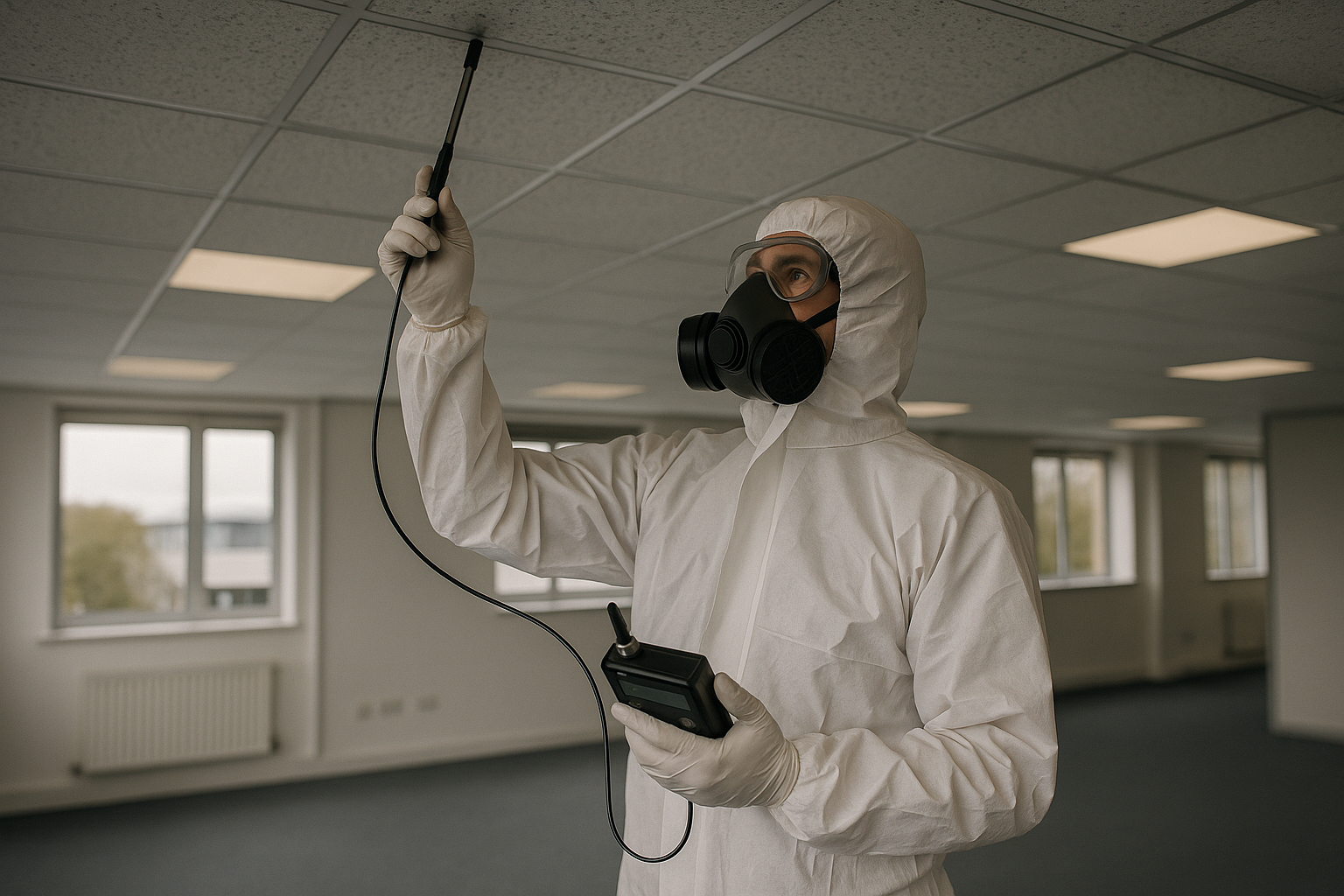
Deadlines have a habit of tightening the moment asbestos becomes part of the job. If you are trying to let a unit, exchange on a purchase, schedule contractors or start strip-out works, one question usually comes first: how long does an asbestos survey take?
The short answer is that it depends on the survey type, the size of the property, access arrangements and whether samples need laboratory analysis. A small, straightforward site may take a couple of hours on site. A larger or more intrusive instruction can take a full day, several days, or be phased across a wider estate.
What matters most is not guessing, but understanding what drives the timeline. Once the survey is properly scoped under the Control of Asbestos Regulations, in line with HSG264 and relevant HSE guidance, timescales become much easier to plan around.
How long does an asbestos survey take in practice?
For most properties, there are really two separate timings to think about:
- How long the surveyor will be on site
- How long it takes to receive the final report and any sample results
Those are not the same thing. A surveyor may complete the inspection in a morning, but if samples are taken, the final report will usually follow after laboratory analysis and technical review.
As a general guide, on-site durations often look like this:
- Small flat, office or retail unit: 1 to 3 hours
- Medium-sized commercial premises: half a day to a full day
- Large office, school, warehouse or industrial site: 1 to 3 days
- Complex, multi-building or restricted-access sites: staged visits may be needed
If you are asking how long does an asbestos survey take, the practical answer is that the survey itself is only one part of the process. Booking lead time, access preparation, sampling, lab turnaround and report issue all affect the real programme.
Survey type is the biggest factor in how long does an asbestos survey take
The type of survey has the biggest impact on timescale. Different surveys exist for different legal and practical reasons, and choosing the wrong one often causes more delay than the survey itself.
Management survey
A management survey is the standard survey for occupied non-domestic premises where asbestos needs to be managed during normal use, routine maintenance and minor works.
Because it is usually the least intrusive option, it is often the quickest. The surveyor inspects accessible areas, identifies suspect materials, takes samples where needed and records condition.
Typical on-site timings:
- Small property: 1 to 3 hours
- Medium property: half a day
- Larger site: a full day or more
If your building is occupied and you need to meet the duty to manage, this is often the starting point.
Refurbishment survey
A refurbishment survey is required before refurbishment, structural alteration or intrusive upgrade works. It is designed to find asbestos that may be hidden behind finishes, within voids, under floors or inside service runs.
This survey takes longer because it is intrusive by design. Areas often need to be vacant, isolated or made safe before inspection can start.
Typical on-site timings:
- Single room or small unit: several hours
- Floor-by-floor project area: a full day
- Large or complex works area: multiple days
If building work is planned, do not rely on an old management survey. That is one of the quickest ways to lose time later.
Demolition survey
A demolition survey is needed before demolition of a building or part of a building. It is the most intrusive and thorough survey type because it aims to identify all asbestos-containing materials, so they can be removed or managed before demolition starts.
It often takes the longest on site. Access planning, isolation of services, safe entry arrangements and destructive inspection all add time.
Typical on-site timings:
- Small structure: half a day to a day
- Larger premises: 1 to 3 days
- Large industrial or multi-structure sites: several days or phased visits
If demolition is in the programme, book early. Last-minute instructions are a common reason projects stall.
Re-inspection survey
A re-inspection survey is used to revisit known or presumed asbestos-containing materials and check whether their condition has changed.
These are usually quicker because the surveyor is updating an existing asbestos register rather than starting from scratch. The focus is on condition, accessibility, risk of disturbance and whether management recommendations still stand.
Typical on-site timings:
- Small property with limited ACMs: under 2 hours
- Medium commercial building: a few hours
- Large site with extensive ACMs: half a day or more
For duty holders, regular re-inspection helps keep records current and defensible.
What affects how long does an asbestos survey take?
Even with the right survey type, site conditions can change the timeline significantly. Two buildings of similar size can take very different amounts of time to survey.
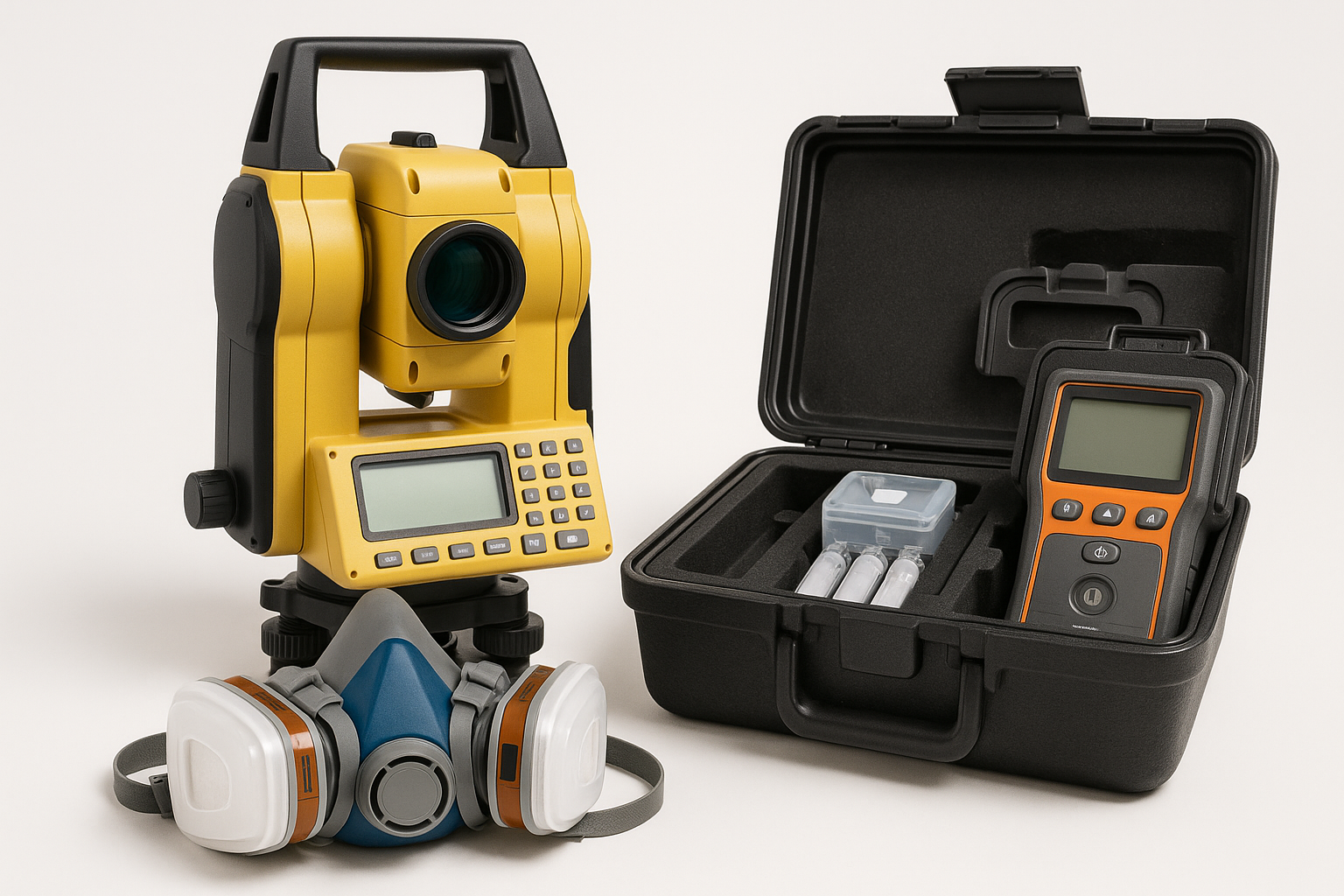
Size and layout of the building
More floor area usually means more rooms, more finishes, more service areas and more access points. A compact office suite is one thing. A site with basements, roof voids, risers, plant rooms, stores and external outbuildings is another.
Layout matters as much as size. A fragmented property with multiple locked areas can take longer than a larger site with straightforward access.
Age and history of the property
Older buildings, or buildings refurbished during periods when asbestos-containing materials were widely used, often need more careful inspection. Later alterations can introduce asbestos into an otherwise older structure, so assumptions are risky.
Common suspect materials include:
- Asbestos insulating board
- Pipe insulation and lagging
- Cement sheets and flues
- Floor tiles and bitumen adhesive
- Textured coatings
- Ceiling tiles, panels and partition boards
Access arrangements
Access is one of the biggest causes of delay. Locked rooms, absent keyholders, missing permits, restricted tenant access or unsafe roof spaces can all slow the survey or force a return visit.
Before the survey date, make sure:
- Keys and fobs are available
- Tenants or staff have been notified
- Plant rooms and risers can be opened
- Permits are arranged where needed
- Fragile or hazardous areas are flagged in advance
Condition of the site
Cluttered, poorly maintained or damaged premises take longer to inspect safely. Stored items may block access to walls, floors, service ducts or ceilings. Water damage, debris and unsafe surfaces can also restrict what can be inspected on the day.
If you want the survey completed efficiently, basic housekeeping makes a difference.
Number of samples required
Not every suspect material needs the same number of samples. Homogeneous materials may need fewer samples, while varied materials across a large site may need more extensive sampling.
More samples usually mean:
- More time on site
- More lab work
- Longer report preparation
If you only need to identify a single suspect material, standalone asbestos testing may be enough. If you already have a sample and simply need laboratory confirmation, sample analysis can be a practical option. That said, neither replaces a compliant survey where one is legally required.
Whether the building is occupied
Occupied sites can often be surveyed, especially for management surveys, but the process may be slower. Surveyors may need to work around trading hours, meetings, residents, safeguarding controls or operational restrictions.
If possible, book outside peak hours or during a planned access window. That can make a noticeable difference to how long the job takes.
What happens during an asbestos survey?
Understanding the process helps answer how long does an asbestos survey take more realistically. A proper survey is not a quick walkaround. It is a structured inspection that supports legal compliance, safe maintenance and informed project planning.
- Scope confirmation
The surveyor confirms why the survey is needed, what areas are included and whether there are known asbestos records, plans or previous reports. - Systematic inspection
Accessible areas are inspected methodically. This may include ceilings, wall linings, floor finishes, service voids, plant rooms, lofts, risers, toilets, kitchens and external structures. - Sampling
Where suspect materials are found, samples may be taken in a controlled way to minimise fibre release and leave the area safe. - Assessment and recording
The surveyor records location, extent, product type, condition and accessibility. Photographs and notes support the asbestos register and report. - Laboratory analysis
Samples are analysed by an accredited laboratory to confirm whether asbestos is present and, if so, what type. - Report preparation
The final report brings together findings, material assessments and recommendations for management or further action.
If you need separate, targeted testing outside a full survey, this alternative asbestos testing service can also be useful for specific suspect materials.
How long does it take to get the report after the survey?
For many clients, this is the real issue. They are not only asking how long does an asbestos survey take on site, but how quickly they can get usable paperwork.
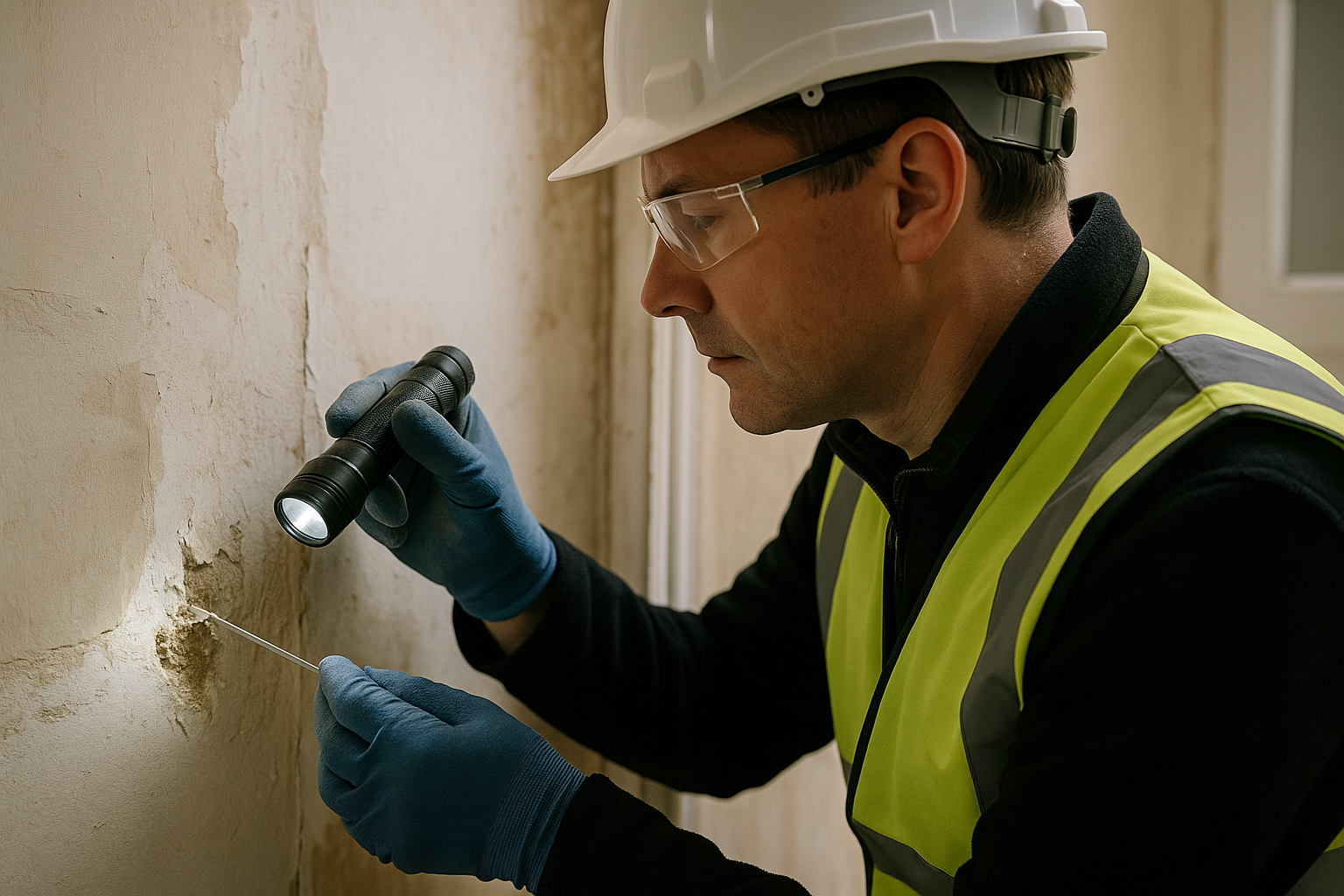
Report timing depends on whether samples were taken and how many. If no samples are needed, a report may sometimes be issued within a working day or two, depending on the size and complexity of the survey.
Where samples are taken, the final report usually follows after analysis is complete. Standard bulk sample turnaround is commonly a few working days, although faster options may be available where urgency is genuine.
Practical points to remember:
- Urgent lab requests may cost more
- Large numbers of samples can lengthen turnaround
- Complex sites take longer to draft and quality-check
- Incomplete access may delay report finalisation or require caveats
If speed matters, say so when booking. It is much easier to plan for an urgent turnaround than to request one after the survey is finished.
How to avoid delays and keep the survey moving
If you need the survey completed quickly, preparation is everything. Most avoidable delays happen before the surveyor even arrives.
1. Choose the correct survey from the start
If the property is occupied and you need to manage asbestos during normal use, a management survey is usually appropriate. If refurbishment or demolition is planned, you will need the right intrusive survey instead.
Getting this wrong often means paying twice and losing time.
2. Share the scope clearly
Tell the surveyor:
- Why the survey is needed
- What work is planned
- Which areas are included
- Whether the site is occupied
- Whether there are any known asbestos records
A clear brief helps the surveyor plan access, equipment and likely time on site.
3. Prepare access in advance
Have keys, permits and contacts ready. Notify tenants, reception teams, building managers and contractors. If there are restricted areas, say so early.
For larger sites, a site escort can save a great deal of time.
4. Make the area accessible
Clear obvious obstructions where possible. Stored items do not need to be removed from the whole building, but blocked risers, plant rooms and wall linings can prevent proper inspection.
If access is impossible, the report may need to record limitations.
5. Build survey time into project planning
Do not leave asbestos surveys until contractors are due on site. If refurbishment or demolition is planned, survey lead time should be built into the programme at an early stage.
This is especially relevant for multi-site portfolios and vacant commercial buildings where access arrangements can take time.
Typical examples by property type
While every instruction is different, these examples help show how long the process can take in real terms.
Small office or shop unit
A management survey may take 1 to 3 hours on site. If only a handful of samples are needed and access is straightforward, the report may follow quickly once results are back.
Occupied block with communal areas
A management survey can often be completed within half a day to a day, depending on the number of communal spaces, service cupboards and ancillary areas. Tenant coordination may affect timing.
School, warehouse or larger commercial building
These often take a full day or more, particularly where there are plant rooms, ceiling voids, outbuildings or multiple access-controlled zones.
Refurbishment project across several floors
A refurbishment survey may need a full day or multiple days, especially if intrusive inspection is required across partition walls, floor finishes and service routes.
Demolition of an industrial site
A demolition survey may be phased over several days, particularly where structures vary in age, condition and construction type.
Location can affect booking speed, not just survey duration
When clients ask how long does an asbestos survey take, they often mean from first enquiry to final report, not just the inspection itself. Availability can vary by location, building type and urgency.
If your property is in the capital, booking an asbestos survey London service with local coverage can help reduce waiting time. The same applies if you need an asbestos survey Manchester appointment or an asbestos survey Birmingham visit for a regional site.
For portfolio managers, using a provider with nationwide reach can make scheduling more consistent across multiple buildings.
When should you book an asbestos survey?
As early as possible. That is the practical answer.
You should arrange a survey when:
- You are responsible for managing asbestos in a non-domestic property
- You are planning refurbishment or strip-out works
- You are preparing for demolition
- You are buying an older commercial or mixed-use property and want clarity before committing
- You need to update an existing asbestos register through re-inspection
Leaving it too late creates pressure on everyone involved. It can also increase costs if urgent attendance or fast-track analysis is needed.
Frequently Asked Questions
How long does an asbestos survey take for a small property?
For a small flat, shop or office, a management survey often takes around 1 to 3 hours on site. The final report may take longer if samples need laboratory analysis.
Can an asbestos survey be done in an occupied building?
Yes, many management surveys are carried out in occupied buildings. Access, tenant coordination and operational restrictions can slow the process, so planning ahead helps.
How long does it take to get asbestos sample results?
Sample result turnaround depends on the laboratory workload and the service requested. Standard analysis usually takes a few working days, with faster options sometimes available if arranged in advance.
What is the difference between the survey time and the report time?
The survey time is how long the surveyor spends inspecting the property on site. Report time includes sample analysis, technical review and preparation of the final asbestos report.
Will the wrong survey type cause delays?
Yes. If a management survey is arranged when refurbishment or demolition is planned, you may still need a more intrusive survey before work can start. That can delay the project and add unnecessary cost.
If you need a fast, properly scoped answer on how long does an asbestos survey take, Supernova Asbestos Surveys can help. We carry out management, refurbishment, demolition, re-inspection and testing services nationwide. Call 020 4586 0680 or visit asbestos-surveys.org.uk to arrange your survey.