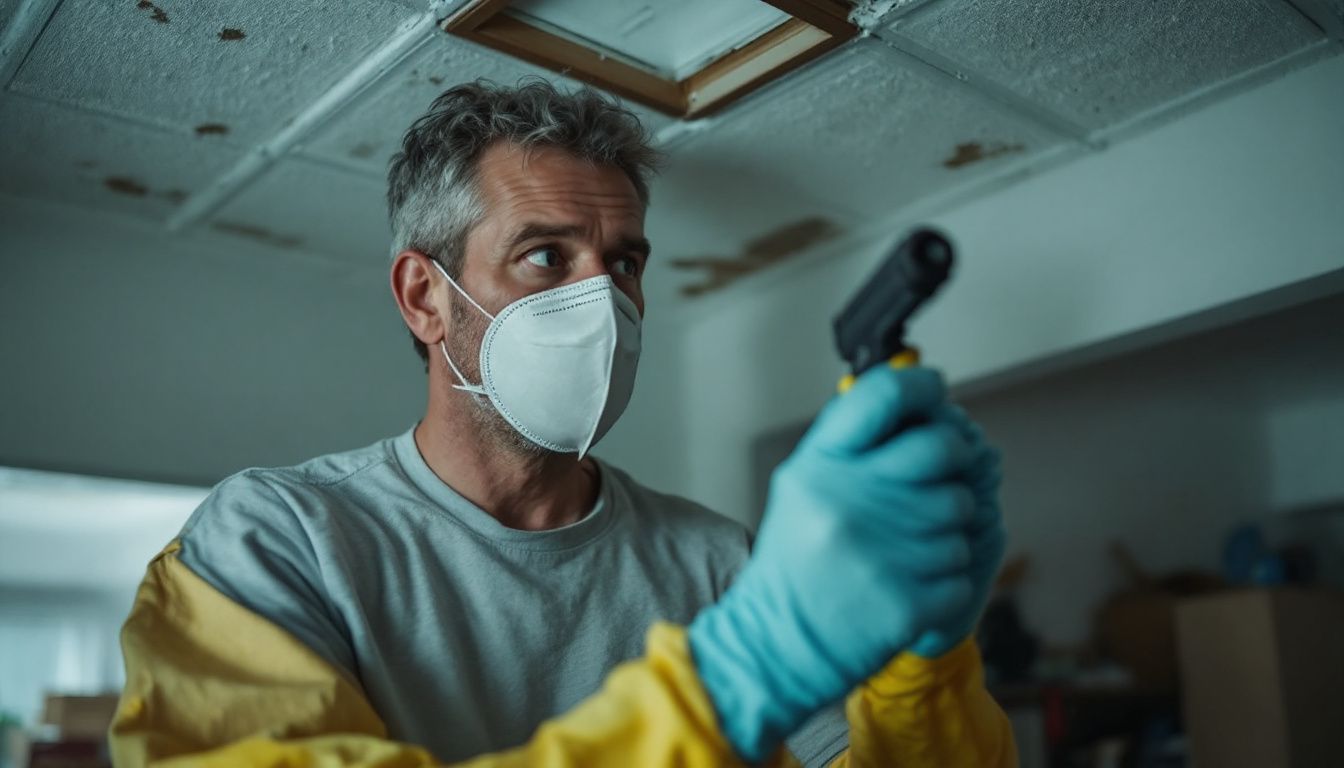
Can You Test for Asbestos Yourself? What You Need to Know Before You Touch Anything
You’ve found something suspicious — a textured ceiling coating, some pipe lagging, or a floor tile that looks like it could be from the wrong era — and now you’re asking: can you test for asbestos yourself? It’s one of the most common questions we hear at Supernova Asbestos Surveys, and the honest answer sits somewhere between “technically yes” and “almost certainly not in the way you’re imagining.”
What matters is understanding what DIY testing can actually tell you, where it falls dangerously short, and when you have no choice but to bring in a professional. Get this wrong and you risk your health, your legal standing, and the safety of everyone in the building.
Why Asbestos Is Still a Live Issue in UK Buildings
Asbestos was banned from use in the UK at the end of 1999. That sounds like distant history, but it means any building constructed or refurbished before that date could still contain asbestos-containing materials (ACMs). That covers an enormous proportion of the UK’s housing stock, commercial premises, schools, hospitals, and public buildings.
ACMs aren’t always obvious. They were used in ceiling tiles, floor tiles, pipe lagging, roof felt, textured coatings like Artex, and even some window putties. You won’t identify asbestos by looking at a material — and you certainly won’t do it safely by prodding around without proper knowledge and equipment.
Asbestos-related diseases continue to claim lives in the UK every year, predominantly among tradespeople who unknowingly disturb hidden ACMs during routine maintenance and refurbishment work. This is not a historical problem. It is happening right now.
Can You Test for Asbestos Yourself? The Honest Answer
In a domestic setting, homeowners are not legally prohibited from taking a sample themselves. That’s the technical answer. But the absence of a legal ban doesn’t mean it’s safe, advisable, or particularly useful without the right approach.
For non-domestic properties — offices, schools, warehouses, blocks of flats — the position is far clearer. Only trained, competent professionals should be carrying out asbestos surveys and sampling. Attempting it yourself risks breaching the Control of Asbestos Regulations, and that’s a serious matter with real legal consequences.
Even in a domestic context, the risks of improper sampling are significant enough that professional asbestos testing is always the recommended route. The fact that you can do something doesn’t mean you should.
The Legal Position for Non-Domestic Properties
If you own or manage a commercial property, you have a legal duty under the Control of Asbestos Regulations. This isn’t optional, and it isn’t satisfied by a DIY sampling exercise.
Your legal obligations include:
- Identifying whether ACMs are present in your premises
- Maintaining an up-to-date asbestos register
- Producing and implementing an asbestos management plan
- Ensuring anyone likely to disturb ACMs knows where they are
Sending an untrained member of staff to take samples, or relying entirely on a postal DIY kit, does not fulfil your duty of care. It could expose you to enforcement action from the Health and Safety Executive (HSE).
Asbestos surveys for commercial properties must be carried out by competent surveyors with appropriate training, equipment, and accreditation. That requirement comes directly from HSE guidance, including HSG264, which sets out the standards for asbestos surveying in non-domestic premises.
Why Improper Sampling Is Genuinely Dangerous
Asbestos is only hazardous when fibres become airborne. An intact, undisturbed ACM in good condition may pose minimal risk. But the moment you start prodding, cutting, or scraping a material that contains asbestos, you risk releasing microscopic fibres into the air.
Those fibres, once inhaled, can lodge permanently in lung tissue. The diseases they cause — mesothelioma, asbestosis, asbestos-related lung cancer — have latency periods of 20 to 40 years. By the time symptoms appear, the damage has long been done.
An untrained person taking a sample without the correct personal protective equipment (PPE), without wetting the material properly to suppress fibre release, and without correctly sealing and disposing of the sample, could expose themselves and anyone nearby to a genuine health risk. This isn’t scaremongering — it’s the straightforward reality of how asbestos fibres behave.
What Professional Samplers Do Differently
A trained asbestos surveyor doesn’t simply take a sample and post it off. The process is methodical, and every step exists for a reason:
- Assess the condition and accessibility of suspect materials before sampling
- Use appropriate PPE — disposable coveralls, gloves, and respiratory protection
- Wet the material before sampling to minimise fibre release
- Seal the area and clean up using specialist methods
- Package samples correctly for transport to an accredited laboratory
- Repair or seal any disturbance caused to the sampled material
Skip any of those steps — as an untrained person almost certainly would — and the risk increases significantly. Each stage is designed to protect both the person sampling and anyone else in the building.
DIY Asbestos Testing Kits: What They Can and Can’t Do
DIY asbestos testing kits are available to purchase in the UK, including directly from Supernova via our asbestos testing kit page. Used correctly, they can provide a useful first indication — particularly for homeowners who want to know whether a specific material contains asbestos before deciding on next steps.
But their limitations need to be understood clearly before you rely on one.
What a DIY Kit Provides
- A sample bag and instructions for collecting a small amount of suspect material
- Analysis by a UKAS-accredited laboratory
- A result confirming whether asbestos fibres were detected in that specific sample
What a DIY Kit Doesn’t Provide
- A full assessment of all ACMs in the property
- Professional judgement on the condition, risk rating, or management priority of materials
- An asbestos register or management plan
- Legal compliance for non-domestic properties
- Guidance on what to do with a positive result
- Any guarantee that the sampling process was carried out safely
A positive result from a DIY kit tells you that asbestos is present. It doesn’t tell you how much, what type, what condition it’s in, or what risk it poses. That’s where professional asbestos testing and assessment becomes essential.
The Risk of False Negatives
One underappreciated risk with DIY sampling is the false negative — where a sample returns a negative result, but asbestos is still present elsewhere in the material or building. Asbestos isn’t always evenly distributed throughout a material.
A professional surveyor knows where to sample and how many samples to take to build a reliable picture. An untrained person may sample the wrong area entirely and walk away with misplaced reassurance — which is arguably more dangerous than a positive result.
Why UKAS-Accredited Laboratory Analysis Matters
Whether a sample comes from a DIY kit or a professional survey, it should always be analysed by a UKAS-accredited laboratory. UKAS — the United Kingdom Accreditation Service — is the national accreditation body. Accreditation to ISO/IEC 17025 confirms that a laboratory operates to rigorous, independently verified quality standards.
At Supernova Asbestos Surveys, all samples we collect are sent to UKAS-accredited labs as standard. When you use our testing kit, your sample goes to the same calibre of laboratory. The analysis you receive is reliable — the critical variable is always whether the sampling itself was carried out correctly.
When You Definitely Need a Professional Survey
There are situations where professional asbestos testing and surveying isn’t just advisable — it’s essential. If any of the following apply to you, a DIY approach is not sufficient:
- Before any refurbishment or demolition work on a building that may contain asbestos
- When managing a non-domestic property — offices, schools, retail units, industrial premises, or HMOs
- When buying or selling a commercial property, as lenders and solicitors increasingly require asbestos surveys as part of due diligence
- When a previous asbestos register is out of date and needs re-inspection
- When asbestos has been disturbed or damaged and you need an accurate condition assessment
- When planning invasive maintenance work such as running new cables, installing equipment, or replacing services
Types of Professional Asbestos Survey
Not all surveys are the same. The type you need depends on your specific situation, the type of property, and what you’re planning to do with it.
Management Survey
The standard survey for occupied, non-domestic premises. A management survey identifies ACMs that could be disturbed during normal occupation and routine maintenance. It forms the foundation of your asbestos management plan and register, and it’s the starting point for meeting your legal duty.
This survey is non-intrusive and designed to be carried out while a building is in use. It’s the most common type of survey and the one most dutyholders will need first.
Refurbishment and Demolition Survey
Required before any work that will disturb the building fabric. A demolition survey is more intrusive than a management survey because it needs to locate all ACMs in areas where work will take place — including within building elements that would normally remain undisturbed.
There is no DIY substitute, and the law is unambiguous on this point. This applies whether you’re a developer, a facilities manager, or a homeowner planning a significant renovation.
Re-Inspection Survey
Once an asbestos management plan is in place, ACMs must be periodically re-inspected to monitor their condition. A re-inspection survey keeps your register current and your legal duty fulfilled.
The frequency of re-inspections depends on the condition and risk rating of the materials involved — a surveyor will advise on the appropriate interval. Leaving this too long can mean your register no longer reflects the actual condition of ACMs in the building.
What to Do Right Now If You Suspect Asbestos
If you’ve found a material you suspect might contain asbestos, the immediate advice is straightforward:
- Don’t disturb it. Leave it alone. If it’s in good condition and isn’t going to be disturbed, it may be safest to manage it in place rather than attempt removal.
- Don’t attempt to sample it yourself unless you have carefully assessed the risks, have the right PPE, and are genuinely confident in doing so safely — and even then, consider whether a professional survey is the more appropriate route.
- Get it assessed by a professional who can give you an accurate picture of what’s present, its condition, and what your options are.
If you’re based in or around the capital, our team provides asbestos survey London services covering the full range of survey types. We also cover major cities across the country — including asbestos survey Manchester and asbestos survey Birmingham — with qualified surveyors operating nationwide.
The Bottom Line on DIY Asbestos Testing
Non-professionals can technically take an asbestos sample in a domestic setting — but doing so safely requires knowledge, the right equipment, and a clear understanding of the risks involved. For commercial properties, professional surveys are a legal requirement, not a preference.
DIY testing kits have their place as a low-cost starting point for homeowners dealing with a single suspect material. They don’t replace professional surveying, they don’t satisfy legal duties, and they don’t give you the full picture you need to manage asbestos properly.
If you’re unsure, the safest and most sensible step is always to call a professional. The cost of a survey is negligible compared to the cost — financial, legal, and human — of getting it wrong.
Supernova Asbestos Surveys has completed over 50,000 surveys across the UK. Whether you need a management survey, a pre-demolition survey, or simply want to know what’s in a specific material, our team can help. Call us on 020 4586 0680 or visit asbestos-surveys.org.uk to find out more.
Frequently Asked Questions
Can you test for asbestos yourself at home?
In a domestic setting, there is no legal prohibition on homeowners taking a sample themselves. However, it must be done with the correct PPE, using proper wetting techniques to suppress fibre release, and with samples sent to a UKAS-accredited laboratory. A DIY testing kit can provide a basic result for a single material, but it won’t give you a full picture of what’s in your property or what condition ACMs are in. Professional testing is always the safer and more reliable option.
Is DIY asbestos testing legal for commercial properties?
No. For non-domestic premises, the Control of Asbestos Regulations require that surveys and sampling are carried out by trained, competent professionals. Relying on DIY testing does not fulfil your legal duty as a dutyholder and could expose you to enforcement action from the HSE.
What’s the difference between a DIY asbestos test and a professional survey?
A DIY kit tells you whether asbestos fibres were detected in one specific sample from one specific location. A professional survey assesses the whole building, identifies all suspect materials, evaluates their condition and risk, and produces an asbestos register and management plan. The two are not comparable in terms of scope, reliability, or legal standing.
What should I do if a DIY asbestos test comes back positive?
A positive result means asbestos fibres were detected in the sample. Do not disturb the material further. Contact a professional asbestos surveyor to assess the material’s condition, determine what type of asbestos is present, and advise on whether it needs to be managed in place, encapsulated, or removed. A positive DIY result is the beginning of the process, not the end of it.
How much does professional asbestos testing cost?
The cost varies depending on the size and type of property, the number of suspect materials, and the type of survey required. A management survey for a small commercial premises is typically far less expensive than people expect — and far less costly than the legal, financial, and health consequences of leaving asbestos unmanaged. Contact Supernova Asbestos Surveys on 020 4586 0680 for a quote tailored to your property.