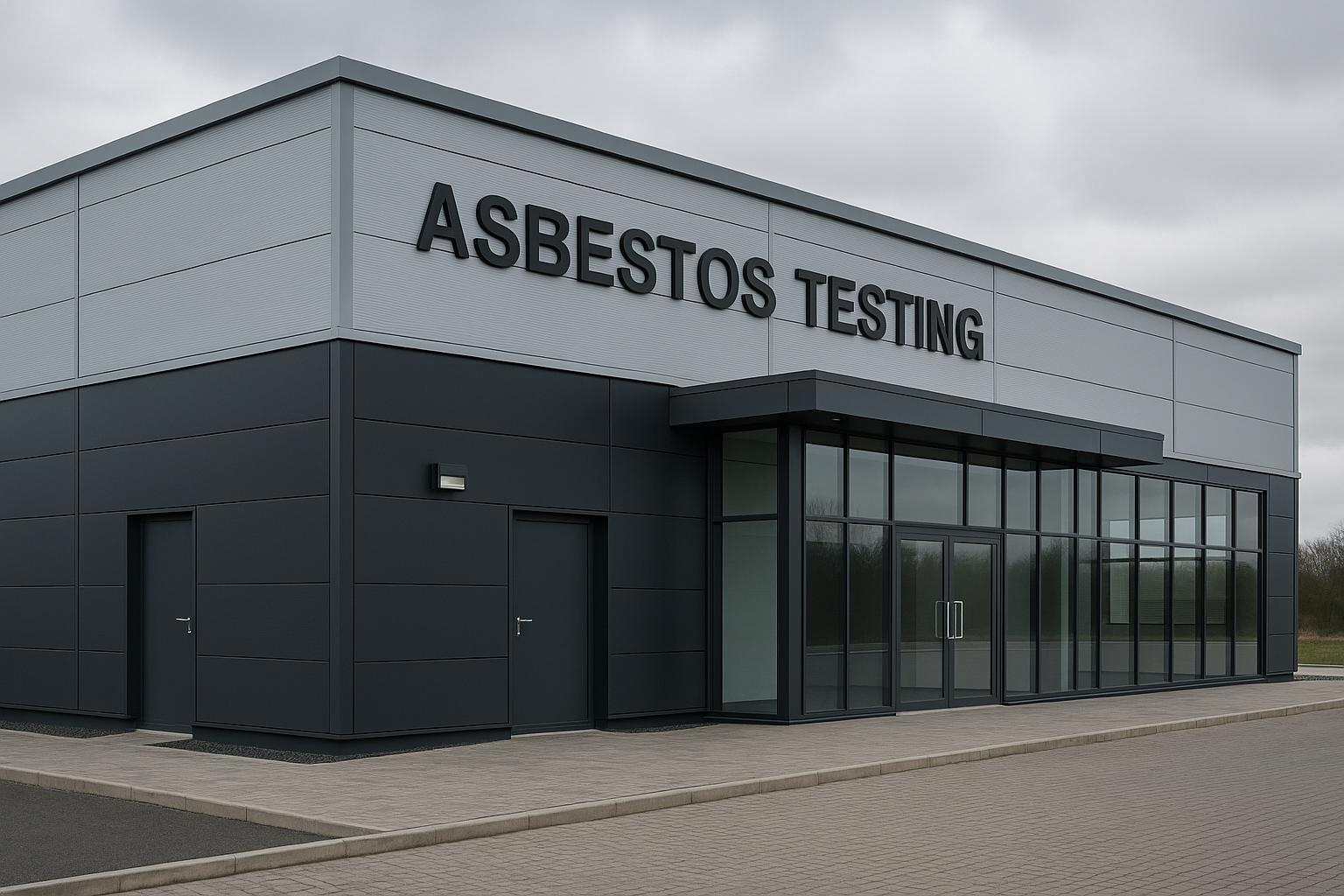
One drilled panel, one lifted floor tile or one cracked soffit can turn a routine job into a health risk and a compliance problem. Asbestos testing removes the guesswork, giving you clear evidence before maintenance, refurbishment or occupation decisions are made.
If your building was constructed before 2000, suspect materials should never be judged by appearance alone. Products that look ordinary can still contain asbestos, and the only reliable way to confirm that is proper sampling and laboratory analysis carried out in line with HSE guidance, the Control of Asbestos Regulations and the survey principles set out in HSG264.
At Supernova Asbestos Surveys, we help homeowners, landlords, contractors and dutyholders choose the right route. That might mean a single postal sample, a site visit, a full survey, or advice on whether the material should be left alone and managed safely.
Why asbestos testing matters in real buildings
Most asbestos problems do not start with major demolition. They start with everyday work such as replacing lights, drilling textured coatings, lifting old vinyl tiles, opening service risers or repairing garage roofs.
Without asbestos testing, every one of those jobs carries uncertainty. You do not know whether the material can stay in place, needs to be recorded and monitored, or should be dealt with before work continues.
Health risk comes first
When asbestos-containing materials are damaged or disturbed, fibres can be released into the air. Those fibres are invisible, can remain airborne, and may stay in the lungs for many years once inhaled.
That is why damaged insulation board, lagging, sprayed coatings and other friable materials should never be treated casually. A visual check is not enough, and neither is relying on memory, old drawings or what a previous contractor thought was there.
Legal compliance follows closely behind
In non-domestic premises, the duty to manage asbestos sits under the Control of Asbestos Regulations. If you are responsible for repair or maintenance, you may need evidence that suspect materials have been properly identified and assessed before work starts.
For occupied buildings, a single isolated sample is often not enough. Where accessible asbestos-containing materials need to be located, assessed and recorded across the premises, a management survey is usually the more appropriate option.
Testing supports practical decisions
A positive result does not automatically mean immediate removal. Some materials can remain in place if they are in good condition, protected from disturbance and recorded properly.
Equally, some products should not be left where planned works will affect them. Good asbestos testing helps you decide whether to monitor, encapsulate, restrict access or arrange asbestos removal.
What asbestos testing actually involves
Asbestos testing is not one single process. The right approach depends on the material, the building, the planned works and whether you need a one-off answer or a wider picture of the property.
Bulk sampling of suspect materials
This is the most common form of asbestos testing. A small piece of a suspect material is taken and sent to a laboratory for identification.
Typical materials sampled include:
- Textured coatings
- Ceiling tiles
- Floor tiles and bitumen adhesive
- Asbestos insulation board
- Pipe lagging
- Cement roof sheets and wall panels
- Soffits, gutters and downpipes
- Vinyl flooring and backing
- Boiler and plant room insulation products
The laboratory confirms whether asbestos is present and, where possible, identifies the fibre type. That result then informs the next step.
Survey-led asbestos testing
When there are several suspect materials, poor records or planned building works, survey-led testing is usually the better option. It combines inspection, targeted sampling and reporting, rather than leaving you with isolated results and unanswered questions.
If you need professional attendance rather than a postal service, our main asbestos testing service is designed for exactly that situation.
Air testing is different
People often use the term asbestos testing to describe everything from material sampling to air monitoring. They are not the same thing.
Bulk sampling identifies whether a solid material contains asbestos. Air testing measures airborne fibre levels in a space and is used in specialist situations such as reassurance testing, leak monitoring, personal monitoring or clearance procedures after licensed work.
If you need post-removal reassurance or formal clearance arrangements, that has to follow the correct HSE process. A DIY sample submission will not provide that.
How many samples are needed?
This is one of the most common questions around asbestos testing, and the honest answer is that it depends on the material, its spread, its consistency and the purpose of the inspection. HSG264 sets out the principles surveyors use when deciding sampling strategy.
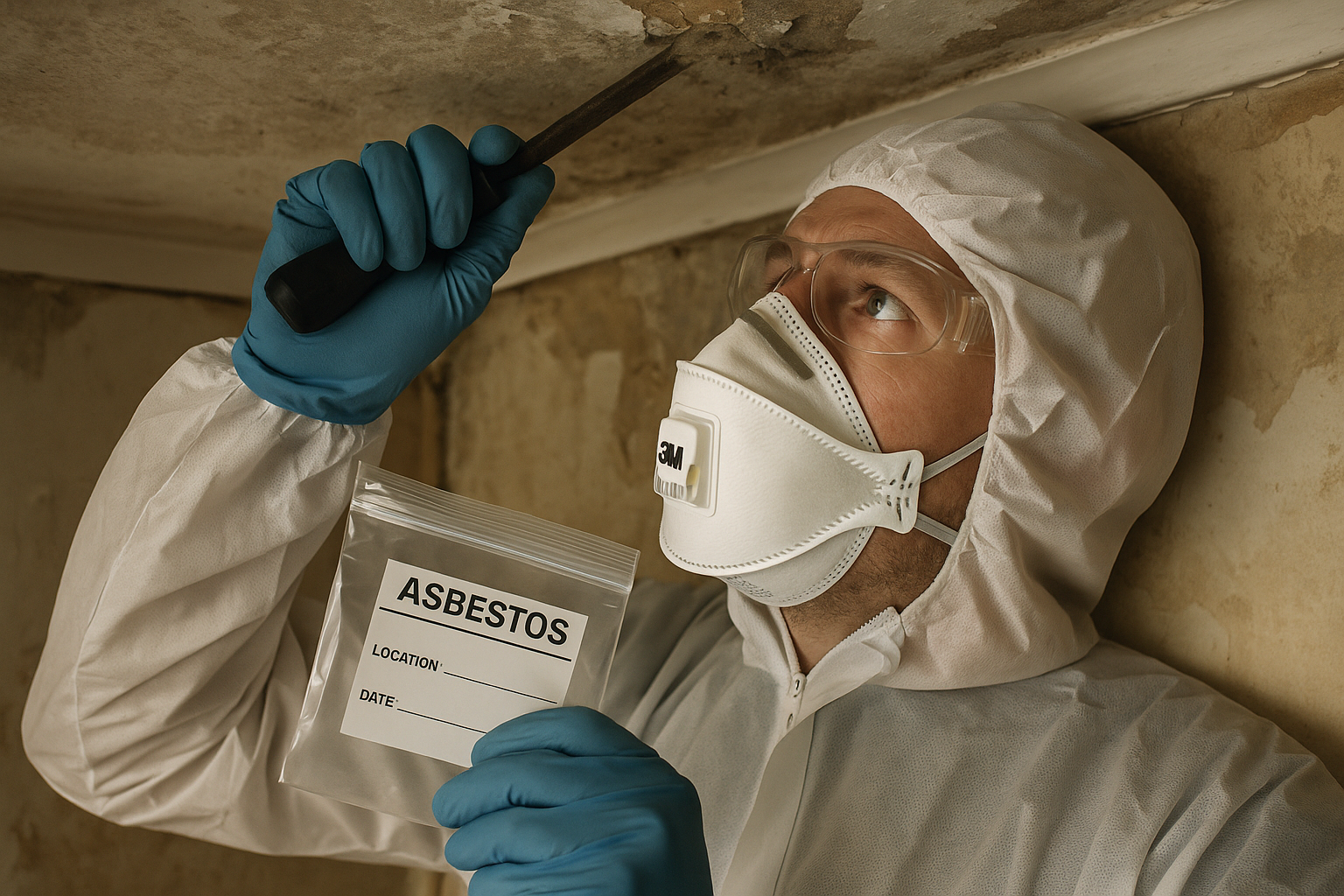
The aim is to obtain representative information from homogeneous materials while avoiding unnecessary disturbance. That balance matters, because too few samples can create false confidence, while unnecessary sampling can increase risk and cost.
Factors that affect sample numbers
The right number of samples depends on:
- The type of material
- How consistent it appears across the property
- The size of the area
- The condition of the material
- How accessible it is
- Whether the material varies between rooms, elevations or phases of construction
- The reason testing is being carried out
One garage ceiling made from a clearly uniform sheet material may need only limited sampling. A large office with multiple ceiling voids, risers, plant rooms and phased refurbishments may require far more.
A practical rule of thumb
If you have several suspect materials, assume each one may need separate consideration. Textured coating in one room is not automatically the same as textured coating elsewhere, and floor tiles in a corridor may differ from those in a kitchen, basement or plant room.
Trying to reduce sample numbers too aggressively can leave gaps in the evidence. Good asbestos testing is based on representative information, not the lowest possible sample count.
When materials are presumed rather than sampled
Sometimes the safest option is to presume a material contains asbestos instead of sampling it. That may be appropriate where disturbance would create greater risk, access is restricted, or the material will be managed as asbestos regardless of the exact result.
Presumption is not a shortcut around compliance. It still needs to be recorded properly and reflected in the asbestos management arrangements for the building.
Asbestos testing kit options for simple cases
There are situations where a full site visit is not necessary. A homeowner checking one accessible panel in a garage or outbuilding may choose an asbestos testing kit for a straightforward sample submission.
That can be practical, but only in the right circumstances. A kit is not a substitute for a survey, and it is not suitable for every material.
When a testing kit may be suitable
- You are dealing with a single or very limited number of suspect materials
- The material is accessible and in reasonable condition
- The setting is domestic or otherwise limited in scope
- You only need laboratory confirmation of that specific item
- You can follow instructions carefully and stop if the material appears higher risk than expected
When a testing kit is not the right choice
- The material is friable, damaged or debris is already present
- You suspect pipe lagging, loose insulation, sprayed coating or insulation board in poor condition
- The building is non-domestic and requires formal compliance evidence
- There are multiple suspect materials across the property
- Refurbishment or demolition is planned
- Access is awkward, high-level or unsafe
In those cases, professional attendance is more appropriate than relying on a mailed kit. If you need a simple postal option for a low-risk scenario, our testing kit can be useful, but the decision to use one should always be made sensibly.
2. Asbestos Testing Kit – PPE and RPE Included
If someone is collecting a sample themselves, protection matters. A better-quality kit should include or clearly specify suitable personal protective equipment and respiratory protective equipment, along with instructions on how to reduce disturbance.
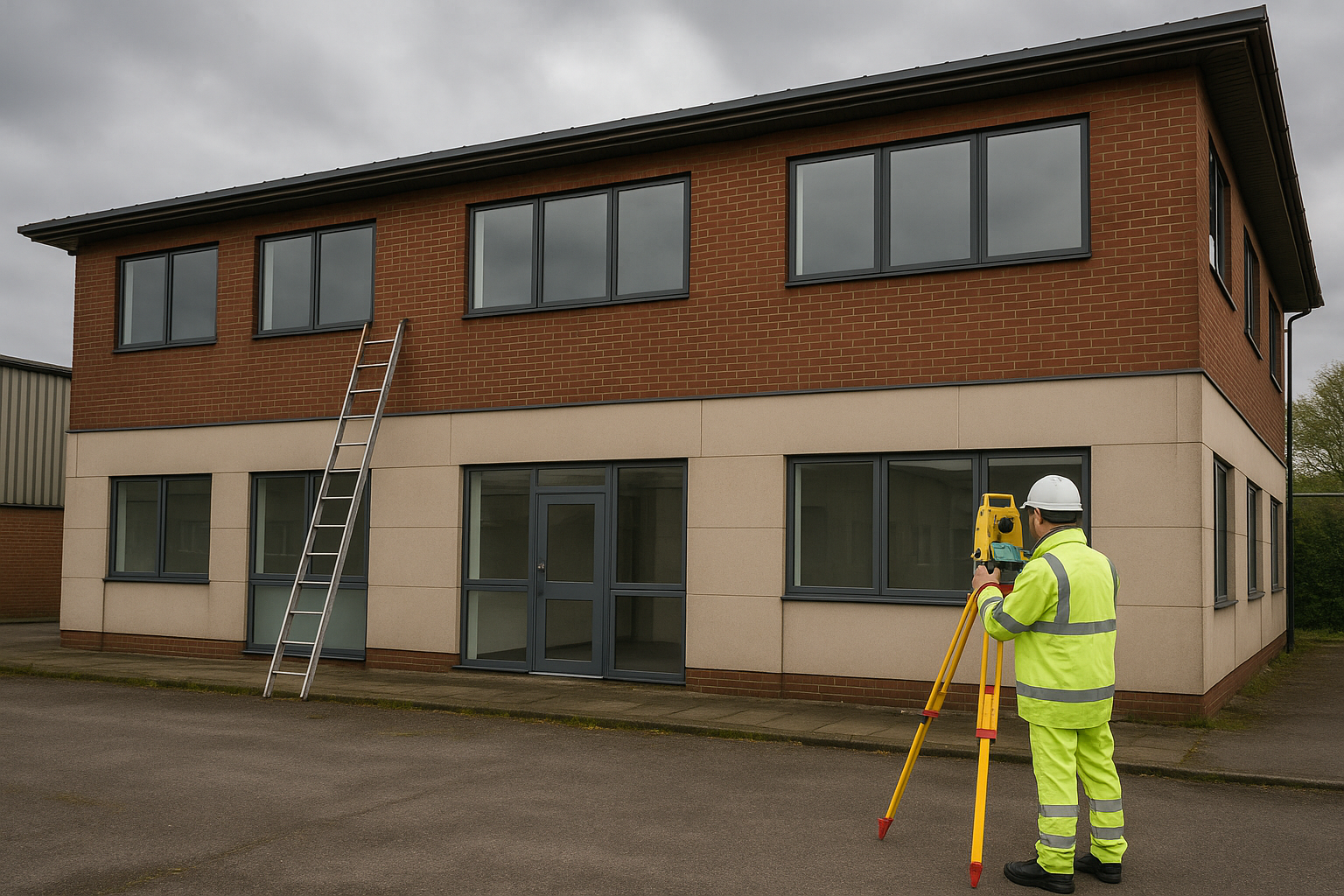
PPE and RPE do not remove the hazard, and they do not make every material safe to sample. They are simply part of a basic control approach for lower-risk, limited domestic sampling.
What PPE and RPE usually means
For low-risk sample collection, people usually mean items such as disposable gloves, a suitable mask for the task, protective overalls where provided, and secure packaging for the sample itself. The purpose is to reduce the chance of inhaling fibres and to avoid spreading contamination onto clothes, skin or nearby surfaces.
Even then, the approach only suits limited scenarios. If the material starts to crumble easily, if debris is released, or if you discover a more hazardous product than expected, stop immediately and get professional advice.
Practical advice before opening the kit
- Read the instructions fully before starting.
- Prepare the area so you are not searching for tools halfway through.
- Keep other people away from the sample point.
- Lay protective sheeting beneath the area where appropriate.
- Dampen the material if the instructions advise it.
- Take the smallest representative sample needed.
- Seal and label the sample straight away.
- Clean the immediate area as instructed.
3. Asbestos Testing Kit – Additional Tests
Some situations call for more than one sample or more than one type of analysis. This is where people often ask about additional tests when ordering an asbestos testing kit or arranging postal sample submission.
Additional tests are useful when you have several suspect materials, when one room contains different finishes, or when you want separate confirmation for distinct products rather than assuming they are all the same.
When additional tests make sense
- You have textured coating in several rooms that may have been applied at different times
- You have both floor tiles and adhesive to check
- You want to test separate garage components such as roof sheets, soffits and rainwater goods
- You are dealing with materials from different extensions or phases of construction
- You need clearer evidence before arranging maintenance works
Ordering too few tests can leave you with an incomplete picture. Ordering the right number gives you a more reliable basis for decision-making.
If you already have safely collected samples and only need the laboratory element, our sample analysis option can be a practical route.
Popular essentials for safer sample collection
Some of the most useful items are simple ones that help keep the task controlled and organised. Popular essentials are not luxury extras. They are basic controls that reduce unnecessary disturbance and help avoid sample mix-ups.
- Strong disposable gloves
- Seal-able sample bags or pots
- A fine water spray to dampen the sample point where appropriate
- Polythene sheeting beneath the area
- Disposable wipes
- A marker pen for clear labelling
- Written instructions you have read before starting
These essentials matter because most mistakes happen when people improvise. If you are collecting a sample yourself, keep the process simple, controlled and limited.
Item added to your cart: what you should check before you buy
Seeing item added to your cart on a product page is easy. Knowing whether you are buying the right service is the more important step.
Before you order any asbestos testing product, stop and ask what decision the result needs to support. That one question usually tells you whether you need a postal kit, laboratory-only analysis, a surveyor visit or a wider survey.
Check these points before ordering
- Are you testing one material or several?
- Is the material low risk and in good condition?
- Is the property domestic or non-domestic?
- Do you need a single answer or a full record of asbestos-containing materials?
- Are refurbishment works planned?
- Can the material be accessed safely without creating damage?
If you are unsure, ask before purchasing. It is far better to confirm the correct route than to buy a kit that does not meet your actual needs.
Description and additional information: what a test result tells you
The simplest description of asbestos testing is this: a representative sample of a suspect material is taken and analysed by a competent laboratory to confirm whether asbestos is present. That answer is valuable, but it has limits.
A test result for one material does not create an asbestos register, does not assess every room in the property, and does not replace a survey where the building needs wider inspection.
Additional information that buyers often miss
When reading product pages, the section labelled additional information often contains the details that matter most. These are the practical points people should understand before relying on a test result.
- A single sample only applies to the material tested
- Different-looking materials may need separate samples
- Similar-looking materials in different areas may still be different products
- Testing confirms presence or absence of asbestos in that sample, not the overall condition of all asbestos in the building
- Testing does not replace a refurbishment or demolition survey where intrusive works are planned
For example, if a homeowner wants to check one garage roof sheet before arranging repairs, a single test may be enough. If a managing agent needs to understand accessible asbestos-containing materials across an occupied block, isolated testing will not be sufficient.
That is why the first question should not be “how cheap is the test?” but “what decision do I need this result to support?”
Reviews: what to look for when choosing an asbestos testing service
Reviews can be useful, but only if you read them with the right priorities. The most helpful reviews are not the ones that simply say a service was quick. They are the ones that show the provider gave clear advice, accurate reporting and sensible next steps.
Look for reviews that mention
- Clear communication before sampling
- Straightforward instructions for postal submissions
- Reports that are easy to understand
- Advice on what to do after a positive result
- Professional handling of survey work in occupied premises
Be cautious of choosing purely on price. Cheap testing that leaves you unsure what to do next often costs more in delays, repeat visits and contractor downtime.
Help and Information for property owners, landlords and dutyholders
The right help depends on what you are trying to achieve. A homeowner checking one suspect panel needs different advice from a facilities manager planning maintenance across a commercial estate.
Use this simple approach to choose the right route.
If you need to check one suspect material
A limited postal option may be suitable if the material is low risk, accessible and in good condition. If you already have the sample and only need the laboratory result, laboratory-only analysis may be enough.
If you need evidence for an occupied non-domestic building
You will usually need more than one isolated test. Survey-led inspection and sampling are often required so that accessible asbestos-containing materials can be identified, assessed and recorded properly.
If you are planning refurbishment works
Do not rely on ad hoc testing alone. Planned intrusive works usually require a more targeted inspection strategy so hidden materials can be identified before contractors disturb them.
If the material appears damaged or friable
Do not sample it yourself. Stop work, limit access and get professional advice immediately.
Useful Resources for making the right decision
Useful resources are only useful if they help you act. The best starting point is always the actual task in front of you: maintenance, repair, purchase, occupation or refurbishment.
These practical resources can help you decide the next step:
- HSE guidance on identifying and managing asbestos in buildings
- HSG264 principles on survey planning, sampling and assessment
- Your asbestos register and management plan, if one already exists
- Previous survey reports for the property
- Planned works information from contractors or project managers
If records are missing, out of date or clearly incomplete, treat that as a warning sign rather than a minor admin issue.
What about claims like “the USA’s best rated on Trustpilot”?
You may see product pages using phrases such as the USA’s best rated on Trustpilot. That kind of wording is marketing, not a substitute for deciding whether the service fits your property, your material and your legal duties.
For UK buildings, what matters is whether the work is suitable, the advice is competent, and the testing route matches HSE expectations and the Control of Asbestos Regulations. Focus on service quality, reporting clarity and whether the provider can support you if the result is positive.
Choosing between postal testing and a surveyor visit
There is no single answer that fits every property. The right option depends on risk, scale and what you need the result to achieve.
Postal testing is usually best when
- You have one or two low-risk suspect materials
- The materials are accessible and in good condition
- The setting is domestic
- You only need confirmation on those specific items
A surveyor visit is usually best when
- You have several suspect materials
- The building is non-domestic
- There are gaps in existing asbestos records
- Contractors need reliable information before work starts
- The material may be higher risk or difficult to access
If you are weighing up the options, our local teams can help whether you need an asbestos testing service, a survey, or advice on the safest next step.
Location matters when you need fast asbestos testing support
Speed matters when works are waiting, but speed should not come at the expense of accuracy. If you need local support, Supernova can assist across major regions including asbestos survey London, asbestos survey Manchester and asbestos survey Birmingham.
That means less delay when you need a site visit, practical advice on sampling strategy, or a survey arranged before maintenance and refurbishment works begin.
Practical next steps after asbestos testing
Once you receive the result, the next action depends on the material, its condition and the likelihood of disturbance. Do not stop at the lab report and assume the job is finished.
If the result is negative
Keep the report with your property records. If there are other suspect materials nearby, consider whether they also need to be assessed rather than assuming everything in the area is clear.
If the result is positive
- Do not disturb the material further
- Record its location
- Assess whether it can remain in place safely
- Inform anyone who may work on or near it
- Arrange professional advice if the material is damaged, likely to be disturbed or already affecting planned works
Positive results do not always mean urgent removal. In many cases, management is the right answer. In others, removal before work starts is the only sensible option.
Get the right asbestos testing support from Supernova
If you need clear, practical advice on asbestos testing, Supernova Asbestos Surveys can help. We carry out surveys, arrange testing, support postal submissions where suitable, and advise on the next step when results come back positive.
Whether you need a single sample checked, a survey for an occupied building, or guidance before maintenance or refurbishment works, contact Supernova Asbestos Surveys on 020 4586 0680 or visit asbestos-surveys.org.uk.
Frequently Asked Questions
How accurate is asbestos testing?
Asbestos testing is reliable when the sample is representative and analysed by a competent laboratory. The main limitation is not usually the lab process itself, but whether the correct material was sampled in the first place.
Can I use an asbestos testing kit for any material?
No. A kit may be suitable for limited, low-risk domestic scenarios where the material is accessible and in good condition. It is not appropriate for friable, damaged or higher-risk materials, or where formal compliance evidence is needed.
How many samples do I need?
That depends on the type of material, how consistent it is, the size of the area and why you need the testing. Similar-looking materials in different rooms or phases of construction may still need separate samples.
Does asbestos testing replace an asbestos survey?
No. Testing confirms whether a specific sample contains asbestos. A survey is broader and is used to locate, assess and record asbestos-containing materials across a property in line with the building’s use and planned works.
What should I do if a sample tests positive?
Do not disturb the material further. Record the location, consider who may be affected, and get professional advice on whether the material should be managed in place or removed before any work continues.