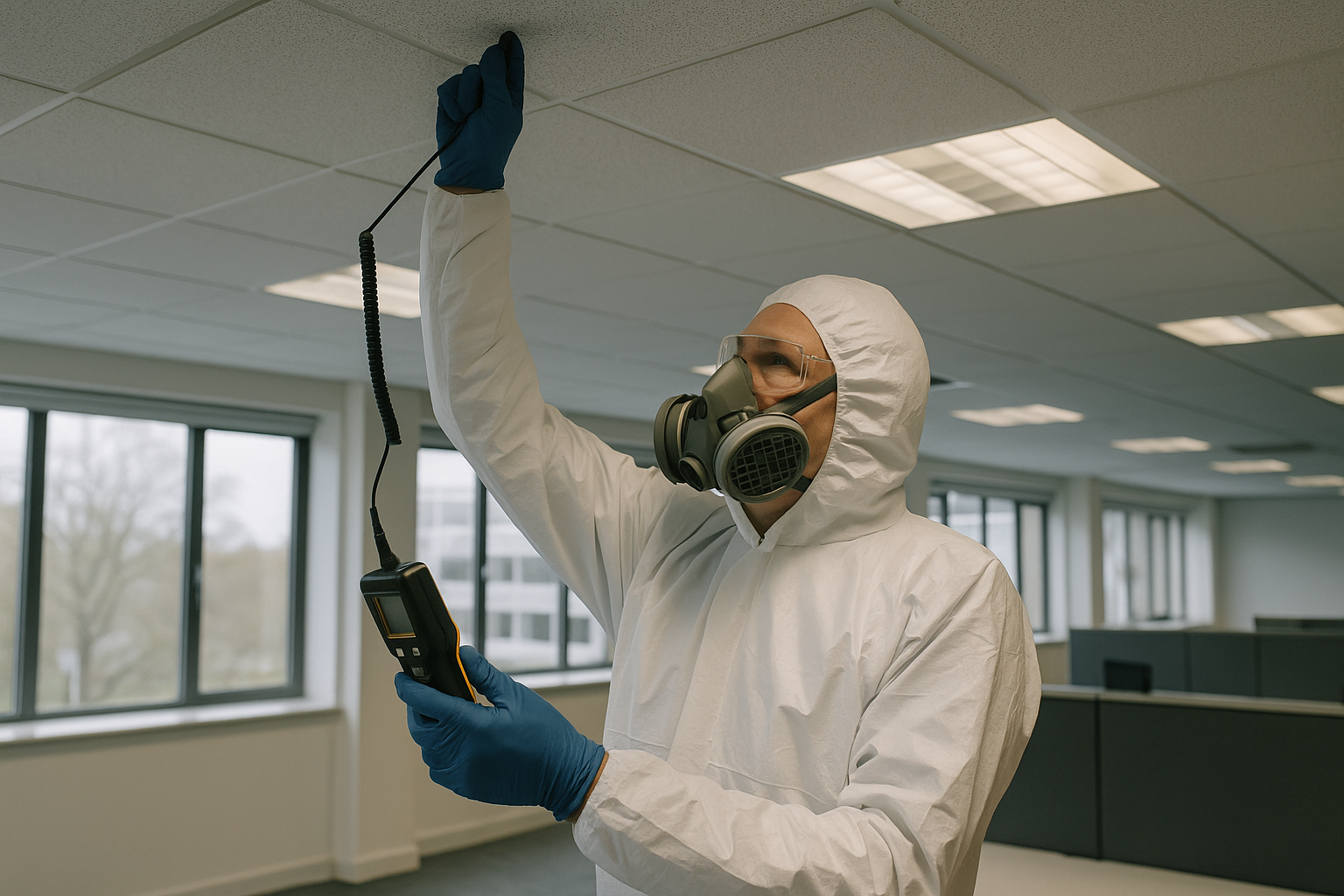
Plenty of people still talk as if asbestos disappeared the moment it was banned. It did not. White asbestos is still regularly found in older UK properties, and that misunderstanding is where expensive mistakes, unsafe work and legal problems begin.
If you manage a building, oversee maintenance or instruct contractors, the point is simple: banned does not mean removed. In premises built or refurbished before 2000, white asbestos may still be present in ceilings, floor finishes, cement products, insulation materials and service areas. If it is disturbed without the right information, fibres can be released and the consequences can be serious.
Overview: what white asbestos actually is
White asbestos is the common name for chrysotile. It is one of the six regulated asbestos minerals and the only one in the serpentine group.
Unlike amphibole asbestos fibres, which are generally straighter and more needle-like, chrysotile fibres are curly and flexible. That difference in shape has caused years of confusion, with some people wrongly assuming white asbestos is somehow safe enough to treat casually. It is not.
Under the Control of Asbestos Regulations, all asbestos types must be identified, assessed and managed properly. HSE guidance and HSG264 are clear on the practical position: the right response is not to debate whether one type sounds less severe than another, but to prevent exposure and control disturbance.
For dutyholders, landlords and property managers, the most useful takeaway is straightforward:
- White asbestos is still common in older buildings
- It can still cause serious disease when fibres are inhaled
- You cannot confirm its presence by eye alone
- Surveying and, where appropriate, sampling are the basis of safe decisions
What are the different types of asbestos?
Asbestos is not a single material. It is a family of naturally occurring fibrous silicate minerals that were widely used because they resist heat, friction, weathering and many chemicals.
The six recognised types are:
- Chrysotile – white asbestos
- Amosite – brown asbestos
- Crocidolite – blue asbestos
- Tremolite asbestos
- Anthophyllite asbestos
- Actinolite asbestos
These are usually divided into two mineral groups:
- Serpentine: chrysotile only
- Amphibole: amosite, crocidolite, tremolite, anthophyllite and actinolite
In practical surveying terms, this matters because fibre type can influence laboratory identification and risk discussions. It does not change the central rule on site: if a material may contain asbestos, it must be handled on the basis of evidence, not guesswork.
Serpentine asbestos vs amphibole asbestos
You will often see explanations that serpentine asbestos is curly while amphibole asbestos is straighter. Scientifically, that is correct. Operationally, it should never be used as a shortcut to lower standards.
Whether a material contains white asbestos, amosite, crocidolite, tremolite, anthophyllite or actinolite asbestos, the priority is the same: identify it correctly, assess its condition and stop uncontrolled fibre release.
Uses of asbestos and why white asbestos was used so widely
To understand why white asbestos is still found so often, it helps to look at the historic uses of asbestos. It was valued for a combination of heat resistance, tensile strength, insulating performance and durability. Manufacturers could mix it into a huge range of products, which is why surveyors still encounter it across domestic, commercial and public buildings.
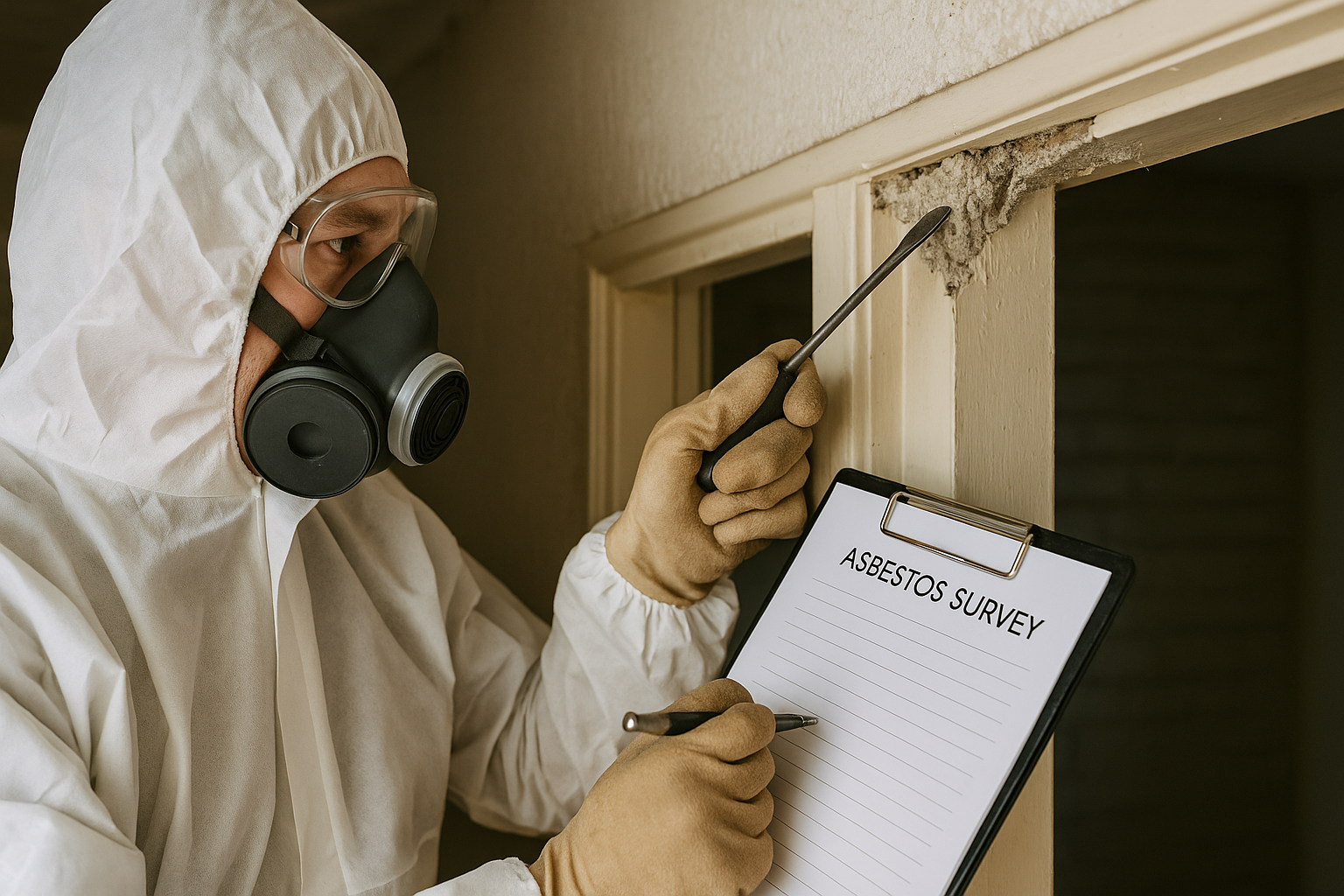
White asbestos was used more extensively than any other asbestos type. It was relatively easy to incorporate into cement, resins, bitumen, textiles and insulation products. It also performed well in products exposed to heat, friction and weather.
Common uses of asbestos in UK buildings
Historic uses of asbestos included:
- Asbestos cement roofing sheets and wall cladding
- Corrugated garage and outbuilding roofs
- Textured coatings on ceilings and walls
- Vinyl floor tiles
- Bitumen adhesives and mastics
- Ceiling tiles and suspended ceiling components
- Pipe insulation and boiler components
- Gaskets, rope seals and packing
- Service riser materials
- Asbestos insulating board in partitions, soffits, ducts and fire protection systems
- Older plant, machinery and friction materials
Not every asbestos-containing material carries the same level of risk. A cement sheet in good condition is generally lower risk than damaged insulating board or friable lagging. Even so, lower risk does not mean no risk, especially once work starts.
Applications in homes, workplaces and public buildings
In domestic settings, white asbestos may be found in garages, outbuildings, floor tiles, textured coatings, boxing around pipes, old fuse boards, warm air heating systems and some insulation products. DIY work is where many accidental disturbances happen.
In commercial buildings, it may appear in plant rooms, ceiling voids, service ducts, partition walls, roof sheets, fire doors, floor coverings and maintenance areas. The larger and older the building, the more likely it is that several asbestos products have accumulated through different phases of construction and refurbishment.
Schools, hospitals and local authority buildings also deserve special attention because many contain older materials and remain occupied. In these settings, safe management is about planning, record keeping and controlling work rather than assuming asbestos has already been removed.
Chemical properties and physical characteristics of white asbestos
People often ask what makes white asbestos different from other asbestos minerals. The answer sits in its mineral structure, fibre form and chemical behaviour.
Chrysotile is a hydrated magnesium silicate mineral. Its fibres form in rolled sheets, which is why they appear curly under microscopic examination rather than rigid and needle-like.
Chemical properties
The chemical properties of chrysotile helped make it commercially attractive. White asbestos offered:
- Resistance to heat
- Resistance to many chemicals
- Good tensile strength
- Flexibility within manufactured products
- Compatibility with cement, resins and binders
Those same useful industrial properties are exactly why white asbestos ended up in such a wide range of materials. From a health and safety perspective, however, the issue is not that chrysotile performed well in products. It is that when those products are damaged, drilled, cut, broken, sanded or deteriorated, respirable fibres can be released into the air.
Physical properties and fibre behaviour
White asbestos fibres are usually more flexible than amphibole fibres. That has often been cited in discussions about relative behaviour, but on site the practical concern is simpler: if fibres become airborne and are inhaled, exposure has occurred.
Bonded materials can remain stable for years if left undisturbed and kept in good condition. Once maintenance, refurbishment, weathering or accidental damage affects them, the risk profile changes. That is why condition, accessibility and likelihood of disturbance are central to any asbestos assessment.
Why fibre release matters more than theory
On a real property, chemical descriptions are less important than the conditions that lead to exposure. A bonded material in sound condition may present a lower immediate risk than a friable product that is breaking up, but once fibres are airborne, inhalation becomes the concern.
That is why competent surveying, material assessment and work planning matter more than broad claims about one asbestos type being easier to manage than another.
Amosite, actinolite asbestos and the other types people overlook
White asbestos gets most of the attention because it was used so widely, but it is not the only asbestos type surveyors need to consider. Older buildings can contain several fibre types, and mixed asbestos materials are not unusual.
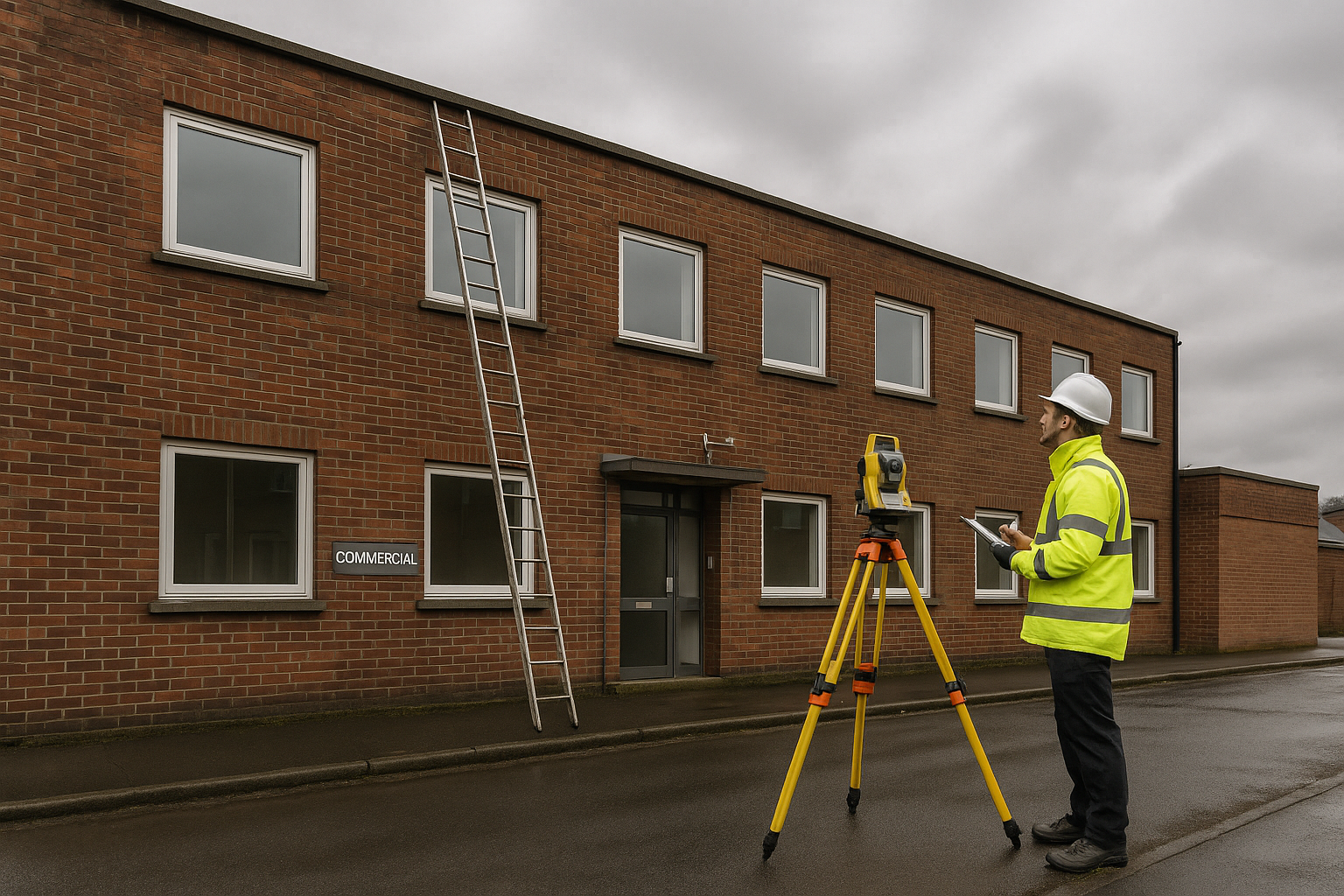
Amosite
Amosite, often called brown asbestos, belongs to the amphibole group. It was commonly used in products such as asbestos insulating board, ceiling tiles, thermal insulation and some cement materials.
In practical terms, amosite matters because it is often associated with higher-risk materials likely to be disturbed during maintenance or refurbishment. If you are dealing with partition walls, soffits, service risers, ceiling panels or fire protection boards in an older building, amosite may be part of the picture.
Actinolite asbestos
Actinolite asbestos is another amphibole mineral. It is less commonly encountered than chrysotile, amosite or crocidolite, but it still matters in surveys, sampling and risk assessment.
Actinolite asbestos was not as widely used in mainstream building products, yet it can appear in some insulation materials and as a contaminant in other mineral products. The fact that it is less common does not reduce the need for proper identification.
Tremolite asbestos
Tremolite asbestos was not used as widely in mainstream commercial building products as white asbestos, but it can still be found in some insulation materials, sealants and as a contaminant in other minerals and products.
Tremolite matters for two reasons. First, it is hazardous in its own right. Second, it reminds dutyholders that materials are not always compositionally neat. A product assumed to contain only chrysotile may include other fibre types, which is one reason laboratory analysis should never be skipped.
Anthophyllite asbestos
Anthophyllite asbestos is generally less common in UK premises than white asbestos, but it has historically appeared in some insulation products and composite materials and may also occur as a contaminant.
Because it is rarer, some people dismiss it as irrelevant. That is poor practice. Rare asbestos is still asbestos, and if it is present in a material that will be disturbed, the management response must be just as controlled.
Why mixed asbestos types matter
Surveyors and analysts do not work on the assumption that every product contains one tidy mineral type. Mixed fibre types, contamination and variations between products are all real possibilities.
That is why a proper survey should:
- Locate suspect materials
- Assess accessibility and condition
- Record extent and surface treatment
- Recommend sampling where appropriate
- Support a management or works decision with evidence
Where white asbestos is still found in older buildings
One of the biggest misconceptions is that asbestos only turns up in obvious industrial settings. In reality, white asbestos is still found in ordinary homes, offices, schools, shops, warehouses and mixed-use properties across the UK.
Typical locations in homes
In domestic properties, suspect materials may include:
- Garage roofs and wall panels
- Soffits and rainwater goods
- Textured coatings on ceilings and walls
- Old vinyl floor tiles and adhesives
- Boxing around pipes
- Warm air heating systems
- Fuse boards and backing panels
- Bath panels, toilet cistern surrounds and service cupboards
If you are planning DIY work in an older home, stop before drilling, sanding, cutting or stripping anything that could contain asbestos. A small job can create a large problem if the material is disturbed without checks.
Typical locations in workplaces
In commercial and public buildings, white asbestos may appear in:
- Plant rooms
- Ceiling voids
- Service risers and ducts
- Partition walls
- Roof sheets and cladding
- Fire doors and fire protection linings
- Floor coverings and bitumen products
- Boiler rooms and maintenance areas
The more complex the property, the more likely it is that asbestos materials are hidden behind later refurbishments. That is why records and surveys need to be kept current and accessible.
Children and sensitive environments
Buildings used by children deserve especially careful asbestos management. Schools, nurseries, sports facilities and community buildings often contain older materials while remaining in daily use.
Children are not expected to manage asbestos risk themselves, so the duty falls entirely on those who control the premises. Practical steps include keeping registers current, checking condition regularly, making sure contractors have the right information and preventing ad hoc disturbance during maintenance.
The same cautious approach applies in healthcare settings and supported living environments, where occupants may be more vulnerable and building disruption needs tighter control.
How to identify white asbestos safely
Many people search for visual clues to identify asbestos. That is understandable, but it has limits. You cannot reliably identify white asbestos, actinolite asbestos or any other asbestos type just by colour, age or texture.
Some materials look obviously suspicious. That does not make visual identification enough for a safe decision.
What you can look for
You can make an initial assessment of whether asbestos may be present by asking practical questions:
- Was the building constructed or refurbished before 2000?
- Are there old textured coatings, cement sheets, floor tiles or insulation boards?
- Are plant rooms, risers or service ducts still in original condition?
- Has the material been drilled, broken, weathered or damaged?
- Is there an existing asbestos register or survey report?
If the answer to several of these is yes, treat the material as suspect until proven otherwise.
What you should not do
Do not scrape, snap, sand or drill a suspect material to see what is inside. Do not rely on a contractor saying they have seen similar boards before.
Do not assume a white or grey appearance means it must be harmless. Those shortcuts are exactly how white asbestos exposure happens during maintenance and refurbishment.
Best practice for identification
The safest route is a competent asbestos survey carried out in line with HSG264. Depending on the property and planned activity, that may be a management survey or a more intrusive survey for major works.
Practical steps include:
- Check whether a current asbestos survey already exists
- Review the scope of planned works
- Match the survey type to the work
- Arrange sampling where materials need confirmation
- Make sure contractors see the findings before starting
If the building is occupied and being maintained, the survey should support day-to-day management. If the building fabric will be disturbed, the survey needs to reflect that level of intrusion.
Management duties, HSE guidance and why navigation menu pages are not the real issue
When people search online for asbestos information, they often land on official pages packed with headings such as navigation menu, services and information, government activity, search and contents. Those website elements appear prominently, but they are not what helps you manage risk in a real property.
The useful part sits beneath the page furniture. HSE guidance, the Control of Asbestos Regulations and HSG264 all point in the same direction: identify asbestos, assess the risk, keep records, share information and make sure work is planned so asbestos is not disturbed without controls.
What dutyholders need to do
If you control non-domestic premises, the duty to manage asbestos generally means you should:
- Find out whether asbestos is present, or presume it is if there is strong reason to suspect it
- Keep an up-to-date record of where it is and what condition it is in
- Assess the risk of exposure
- Prepare and implement a plan to manage that risk
- Provide information to anyone liable to disturb asbestos, including contractors and maintenance teams
- Review the plan and records regularly
This is not a paperwork exercise. It is about making sure no one cuts into a ceiling, opens a riser or strips out a floor without knowing what is there.
Services and information that actually matter on site
The most useful services and information are the ones that support a safe decision. That usually means a clear survey report, accurate sample analysis, a usable asbestos register and straightforward advice on what to do next.
If a material is in good condition and unlikely to be disturbed, management in situ may be the right option. If work is planned, or the material is damaged, the control measures need to change accordingly.
Choosing the right survey before work starts
Many asbestos problems start because the wrong survey was commissioned, or no survey was arranged at all. The correct survey depends on what you are doing with the building.
When a management survey is the right choice
A management survey is designed for the normal occupation and use of a building. It helps locate, as far as reasonably practicable, the presence and extent of asbestos-containing materials that could be damaged or disturbed during routine occupancy, maintenance or installation work.
If you are responsible for an occupied property, a suitable survey is often the starting point for compliance and practical control.
When intrusive work changes everything
If you are planning refurbishment, strip-out or demolition, a more intrusive survey is needed before the building fabric is disturbed. For major works, a demolition survey is essential so hidden asbestos can be identified before contractors begin opening up the structure.
This is where many costly delays happen. Works are scheduled, contractors arrive, suspect materials appear and the project stops because nobody confirmed the asbestos risk in advance.
Practical survey planning tips
- Define the scope of works clearly before booking a survey
- Tell the surveyor which areas will be accessed, altered or removed
- Do not rely on an old survey if the building has changed
- Make sure the report reaches designers, contractors and facilities teams
- Review recommendations before approving the work programme
A survey only helps if the findings are used. Reports left in a file while contractors work from assumptions create exactly the kind of avoidable risk the regulations are designed to prevent.
White asbestos in real property management decisions
For most property managers, the challenge is not memorising mineral groups. It is making sound decisions quickly when maintenance, tenant changes or planned works put pressure on the programme.
When white asbestos is suspected or confirmed, ask these questions first:
- What is the material?
- What condition is it in?
- Is it likely to be disturbed?
- Who needs to know about it?
- Does the planned work need a different survey or additional sampling?
That framework helps avoid two common errors: overreacting to stable materials that can be managed safely, and underreacting to damaged or hidden materials that will be disturbed during works.
Common mistakes to avoid
- Assuming white asbestos is low risk simply because it is chrysotile
- Relying on visual identification instead of survey evidence
- Sending contractors into ceiling voids or risers without asbestos information
- Using an old management survey to support intrusive refurbishment
- Failing to review asbestos records after repair, removal or new sampling
Good asbestos management is practical. It is about planning jobs properly, sharing the right information and stopping uncontrolled disturbance before it happens.
Regional support for surveys and sampling
Local access to competent surveyors makes a real difference when projects are moving quickly. If you manage property in the capital, arranging an asbestos survey London service before works begin can help avoid delay, rework and unsafe disturbance.
For sites in the North West, an asbestos survey Manchester inspection keeps maintenance and refurbishment plans grounded in evidence rather than assumptions.
For Midlands properties, booking an asbestos survey Birmingham appointment can provide the clarity needed before contractors open up walls, ceilings or service areas.
What to do if you think white asbestos has been disturbed
If you suspect white asbestos has been damaged, the priority is to stop the situation getting worse. Do not carry on working and do not let others walk through the area unnecessarily.
- Stop work immediately
- Keep people out of the affected area
- Avoid sweeping, vacuuming or dry cleaning debris
- Report the issue to the dutyholder, manager or responsible person
- Arrange competent advice, inspection and sampling if needed
Do not try to tidy up suspect debris with ordinary cleaning equipment. Disturbance can spread fibres further and make the incident harder to control.
Once the material has been assessed, the next steps may include sealing the area, arranging licensed work where required, updating the asbestos register and reviewing how the incident happened so it is not repeated.
Why the misconception about banned asbestos still causes problems
The original misconception is still common: if all forms of asbestos are banned, surely they are no longer present. That is not how the built environment works.
Buildings last for decades. Materials installed long before the ban often remain in place, especially where they were hidden, left undisturbed or considered manageable at the time. White asbestos is therefore still part of everyday risk management in older properties across the UK.
The practical lesson is not to panic and not to assume. It is to verify. If you know what is present, where it is, what condition it is in and how planned work affects it, you can make sensible, compliant decisions.
Frequently Asked Questions
Is white asbestos still legal in UK buildings?
White asbestos is banned from new use, but existing asbestos-containing materials can still remain in older buildings. If present, they must be managed properly in line with the Control of Asbestos Regulations, HSE guidance and HSG264.
Is white asbestos less dangerous than brown or blue asbestos?
White asbestos is chrysotile, and while it differs mineralogically from amphibole asbestos types such as amosite and crocidolite, it is still hazardous. The safe approach is not to rank materials casually but to identify them properly and prevent fibre release.
Can I identify white asbestos by colour?
No. You cannot reliably identify white asbestos by colour alone. Many non-asbestos materials look similar, and some asbestos-containing materials do not appear obviously white. Surveying and, where appropriate, laboratory analysis are the correct methods.
When do I need an asbestos survey?
You may need an asbestos survey if you manage an older non-domestic building, plan maintenance, start refurbishment or prepare for demolition. The right survey type depends on whether the building is occupied and how intrusive the planned work will be.
What should I do before contractors start work in an older building?
Check whether a current asbestos survey and register exist, confirm they match the planned works, and make sure contractors see the findings before starting. If the information is missing or out of date, arrange the right survey first.
If you need clear advice on white asbestos, asbestos sampling or the right survey for your property, speak to Supernova Asbestos Surveys. We carry out management, refurbishment and demolition surveys nationwide. Call 020 4586 0680 or visit asbestos-surveys.org.uk to book your survey.