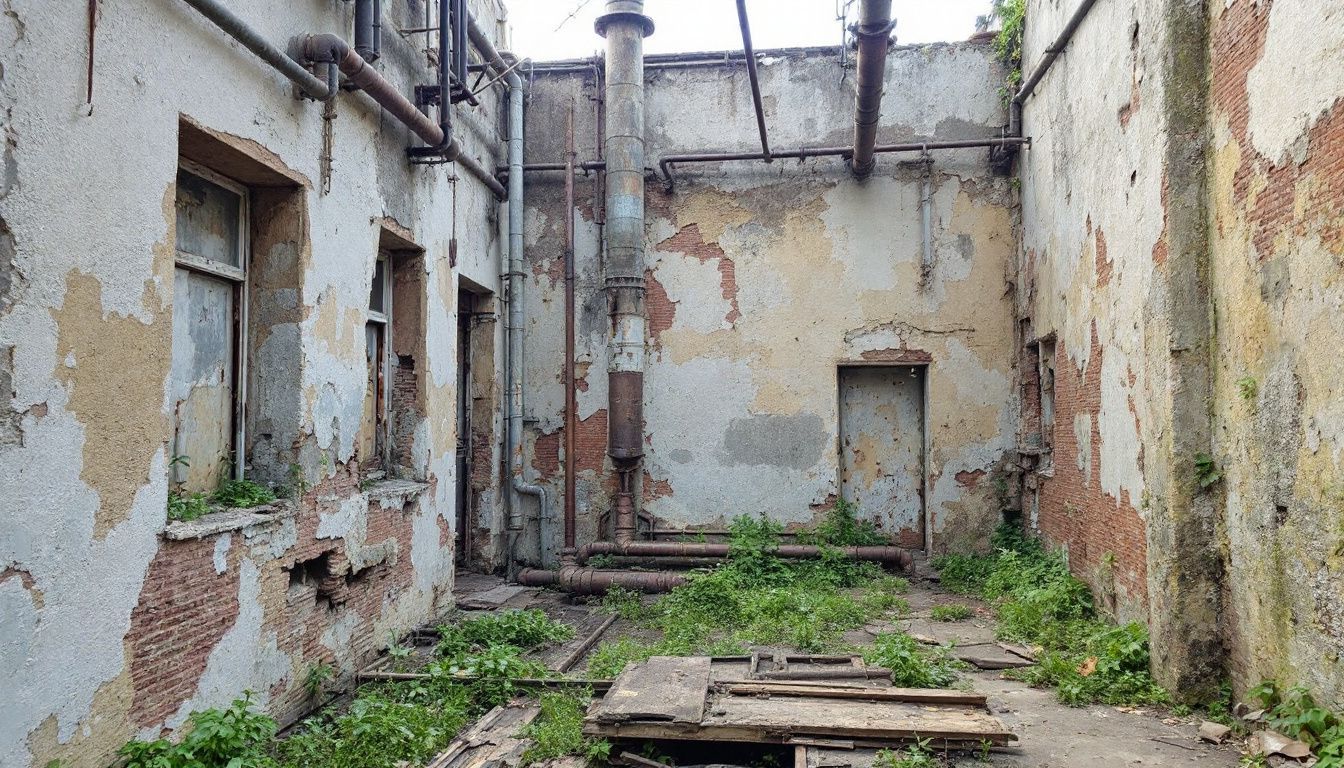
How Can Asbestos Be Correctly Identified? The Answer Isn’t What Most People Think
One of the most dangerous assumptions in property management is deceptively simple: “I’d know if there was asbestos — I’d be able to see it.” Understanding how can asbestos be correctly identified is not just a technical question; it is a matter of life and death. Asbestos fibres are microscopic, and no amount of visual inspection will confirm whether a material contains them. This misconception has persisted for decades, and it continues to put property owners, landlords, tradespeople, and building occupants at serious risk.
Why You Cannot Identify Asbestos by Sight
Asbestos is a naturally occurring silicate mineral. When it is woven into building materials — which it was, extensively, throughout most of the 20th century — it becomes virtually indistinguishable from the surrounding material to the naked eye. The individual fibres are far too small to see without specialist equipment.
What you can see is the material that contains them: lagging on pipework, floor tiles, textured coatings, ceiling boards, roof panels. But seeing those materials tells you nothing about whether asbestos is actually present within them.
Two pieces of pipe insulation can look completely identical. One might be asbestos-containing. The other might be modern mineral wool. Without laboratory analysis, there is no way to tell them apart.
What About Colour or Texture?
Some people have heard that different types of asbestos — white (chrysotile), brown (amosite), and blue (crocidolite) — can be identified by colour. In practice, this is completely misleading.
By the time asbestos has been processed and incorporated into a building product, the original colour of the raw fibre is irrelevant. Asbestos cement looks like cement. Asbestos insulating board looks like insulating board.
Even experienced surveyors do not identify asbestos by eye. They identify suspected asbestos-containing materials (ACMs) based on the age, location, and type of material — then confirm through laboratory analysis. The visual assessment is only the starting point, never the conclusion.
How Can Asbestos Be Correctly Identified? The Professional Process
When a qualified asbestos surveyor visits a property, they are not simply walking around looking for suspicious materials. Their work involves a structured, methodical process that combines specialist knowledge, physical inspection, and laboratory science.
Step 1 — The Survey
Surveyors are trained to know where ACMs were commonly used in different building types and construction periods. They inspect accessible areas systematically, looking for materials that — based on age, location, and type — are suspected to contain asbestos.
There are several types of survey, each suited to different circumstances:
- Management survey: The standard survey for occupied premises. It locates ACMs that could be disturbed during normal occupation and routine maintenance, and is required for non-domestic buildings under the duty to manage.
- Refurbishment survey: Required before any significant refurbishment work. More intrusive than a management survey, it accesses areas that would be disturbed by the planned works.
- Demolition survey: The most thorough survey type, required before a building is demolished. It must cover all areas of the structure, including those that are difficult to access.
- Re-inspection survey: Used to monitor the condition of known ACMs over time. Because materials deteriorate, regular re-inspection is a legal requirement for non-domestic premises.
Step 2 — Sample Collection
Once suspected materials are identified, samples are carefully collected and sent to a UKAS-accredited laboratory for analysis. This is the only reliable method for confirming whether asbestos is present — and, if so, which type.
If you are not yet planning any building work but want to know whether a specific material contains asbestos, professional asbestos testing is the appropriate route.
For homeowners and smaller properties, an asbestos testing kit allows you to collect a sample yourself and send it to an accredited laboratory — a straightforward and cost-effective option when a full survey is not yet required.
Step 3 — Laboratory Analysis
The laboratory uses techniques including polarised light microscopy to identify asbestos fibres within the sample. This process cannot be replicated at home or by eye.
The equipment, training, and accreditation required are highly specialist — and for good reason. Professional sample analysis by a UKAS-accredited laboratory is the definitive answer to whether asbestos is present. There is no shortcut to this step, and anyone offering one should be treated with extreme scepticism.
Step 4 — The Asbestos Register and Management Plan
For non-domestic premises, survey findings must be recorded in an asbestos register, which forms the basis of an asbestos management plan. This document details where ACMs are located, their condition, and how they should be managed going forward.
It must be kept up to date and made available to anyone who might disturb the materials — including contractors and maintenance workers. The register is a living document, not a one-off exercise.
Where Asbestos Is Most Commonly Found
Knowing the typical locations of ACMs helps surveyors prioritise their inspections — but it does not replace the need for testing. The following areas are among the most common locations in pre-2000 buildings:
- Plant rooms and boiler houses: Pipe lagging, boiler insulation, and thermal jackets are high-risk areas.
- Ceiling voids and roof spaces: Sprayed coatings and insulating boards are frequently found here.
- Floor coverings: Vinyl floor tiles and the bitumen adhesive used to fix them often contain asbestos.
- Electrical installations: Fuse boxes, consumer units, and cable insulation from older installations may contain asbestos materials.
- Exterior surfaces: Asbestos cement was used extensively for roof sheets, guttering, downpipes, and cladding panels.
- Decorative finishes: Textured coatings applied to ceilings and walls — including Artex — were commonly made with chrysotile asbestos.
This list is not exhaustive. The only way to be certain is professional survey and laboratory testing. If you want to investigate a specific material before committing to a full survey, a dedicated asbestos testing service can provide a reliable answer from a UKAS-accredited laboratory.
Common Misconceptions That Put People at Risk
Beyond the visual identification myth, several other widely held beliefs about asbestos cause real harm. Here are the most dangerous ones.
“It’s Only a Problem in Old Buildings”
Asbestos use in the UK was not banned outright until 1999. Any building constructed or significantly refurbished before the year 2000 could contain ACMs — including properties built in the 1980s and 1990s that many people regard as relatively modern.
The range of materials that may contain asbestos is broader than most people realise:
- Sprayed coatings on structural steelwork and ceilings
- Pipe and boiler lagging
- Asbestos insulating board (AIB) used in ceiling tiles, partition walls, and fire doors
- Textured decorative coatings such as Artex
- Vinyl floor tiles and the adhesive beneath them
- Roof sheets and guttering made from asbestos cement
- Electrical duct insulation and fuse boxes
- Soffit boards and exterior cladding panels
If your property was built before 2000, treat asbestos as a possibility until a professional survey confirms otherwise.
“It’s Only Dangerous if It’s Damaged”
This one contains a kernel of truth but is dangerously oversimplified. Asbestos in good condition and left completely undisturbed poses a lower immediate risk than asbestos that has been damaged or disturbed. However, “good condition” does not last forever.
Materials degrade over time. Pipe lagging becomes brittle. Floor tiles crack. Ceiling boards get damp. As materials deteriorate, they can release fibres without anyone touching them. This is precisely why regular re-inspection surveys exist — the condition of ACMs changes, and those changes need to be monitored.
More importantly, the assumption that something looks undamaged is itself a visual judgement — and as we have established, visual judgements about asbestos are unreliable.
“I’d Know if I’d Been Exposed”
Asbestos-related diseases have latency periods that can stretch to several decades. Mesothelioma, pleural thickening, asbestosis, and asbestos-related lung cancer often do not present symptoms until 20 to 40 years after exposure. By which point, the damage is done.
The fibres are inhaled, lodge in the lungs and pleural lining, and cause progressive, irreversible damage over time. The absence of immediate symptoms is not reassurance — it is one of the reasons asbestos remains so dangerous.
“I Can Remove a Small Amount Myself”
Under the Control of Asbestos Regulations, work with asbestos is strictly regulated. Licensed contractors are required for the most hazardous materials, including sprayed coatings, asbestos insulating board, and pipe lagging.
Other work may be carried out by trained but unlicensed contractors under specific conditions — but in all cases, the person doing the work must be competent, and the work must be properly planned and notified where required.
DIY asbestos removal is not a legal grey area. Disturbing asbestos without proper controls can release fibres that remain suspended in the air for hours, contaminating an entire space. If asbestos is confirmed in your property, speak to a professional about asbestos removal carried out safely and in compliance with the regulations.
Your Legal Obligations as a Dutyholder
If you own, occupy, manage, or have responsibilities for non-domestic premises, you have a legal duty to manage asbestos under the Control of Asbestos Regulations. This duty is not optional and is enforced by the Health and Safety Executive.
Your obligations include:
- Taking reasonable steps to find out whether ACMs are present in the premises
- Assessing the condition and risk of any ACMs found
- Creating and maintaining an asbestos management plan
- Ensuring anyone who might disturb ACMs is made aware of their location and condition
- Reviewing and monitoring the plan regularly
Failure to meet these obligations can result in improvement notices, prohibition notices, and prosecution. The HSE takes enforcement action against dutyholders who fail to manage asbestos properly, and the penalties reflect the seriousness of the risk.
For domestic properties, the legal duty to manage does not apply in the same way — but the health risks are identical. Homeowners planning renovation work have a particular responsibility to establish whether asbestos is present before any work begins. HSE guidance, including HSG264, provides detailed direction on survey standards and dutyholder responsibilities.
What to Do If You Suspect Asbestos
If you are in a building that predates 2000 and you are planning work that could disturb the fabric of the building — however minor it might seem — the right course of action is clear:
- Stop. Do not proceed with the work until you know what you are dealing with.
- Don’t disturb the material. Drilling, cutting, sanding, or scraping suspected ACMs can release fibres immediately.
- Contact a qualified asbestos surveyor. Have the material properly surveyed and sampled before any work proceeds.
- Act on the findings. If asbestos is confirmed, get professional advice on whether the material needs to be removed or can be safely managed in place.
If you are unsure about a specific material but are not yet planning works, a testing kit provides a practical first step — collect a sample yourself and have it analysed by a UKAS-accredited laboratory without the need for a full survey.
The key principle throughout is this: never assume. The only answer to how can asbestos be correctly identified is through professional survey, careful sample collection, and accredited laboratory analysis. Everything else is guesswork — and with asbestos, guesswork costs lives.
Frequently Asked Questions
Can you tell if a material contains asbestos just by looking at it?
No. Asbestos fibres are microscopic and cannot be seen with the naked eye. Even experienced asbestos surveyors cannot confirm the presence of asbestos through visual inspection alone. The only way to confirm whether a material contains asbestos is through laboratory analysis of a collected sample, carried out by a UKAS-accredited laboratory using specialist techniques such as polarised light microscopy.
How can asbestos be correctly identified in a property?
Correct identification involves a structured process: a qualified surveyor inspects the property and identifies suspected asbestos-containing materials (ACMs) based on their age, location, and type. Samples are then collected and sent to a UKAS-accredited laboratory for analysis. The results are recorded in an asbestos register, which forms the basis of an asbestos management plan for non-domestic premises.
Do I need a professional survey, or can I test a material myself?
For non-domestic premises, a professional survey carried out by a qualified surveyor is required under the Control of Asbestos Regulations. For homeowners or those wanting to test a specific material in a domestic property, an asbestos testing kit allows you to collect a sample yourself and have it analysed by an accredited laboratory. This is a cost-effective option when a full survey is not yet necessary, but it does not replace a professional survey where one is legally required.
Is asbestos only found in very old buildings?
No. Asbestos was used extensively in UK construction throughout most of the 20th century, and its use was not banned outright until 1999. Any building constructed or significantly refurbished before 2000 could contain asbestos-containing materials. This includes properties from the 1980s and 1990s that many people regard as relatively modern. If your building predates 2000, asbestos should be treated as a possibility until a professional survey confirms otherwise.
What happens if I disturb asbestos without knowing it’s there?
Disturbing asbestos-containing materials — through drilling, cutting, sanding, or scraping — can release microscopic fibres into the air. These fibres can remain suspended for hours and, if inhaled, can cause serious diseases including mesothelioma, asbestosis, and asbestos-related lung cancer. These conditions often do not present symptoms for 20 to 40 years after exposure. If you suspect you may have disturbed asbestos, stop work immediately, vacate the area, and seek professional advice.
Get Professional Help From Supernova Asbestos Surveys
With over 50,000 surveys completed nationwide, Supernova Asbestos Surveys has the expertise to identify, assess, and help you manage asbestos safely and in full compliance with UK regulations. Whether you need a management survey for an occupied building, a refurbishment or demolition survey before works begin, or simply want to test a specific material, our team of qualified surveyors is ready to help.
Call us on 020 4586 0680 or visit asbestos-surveys.org.uk to find out more about our services or to book a survey today.