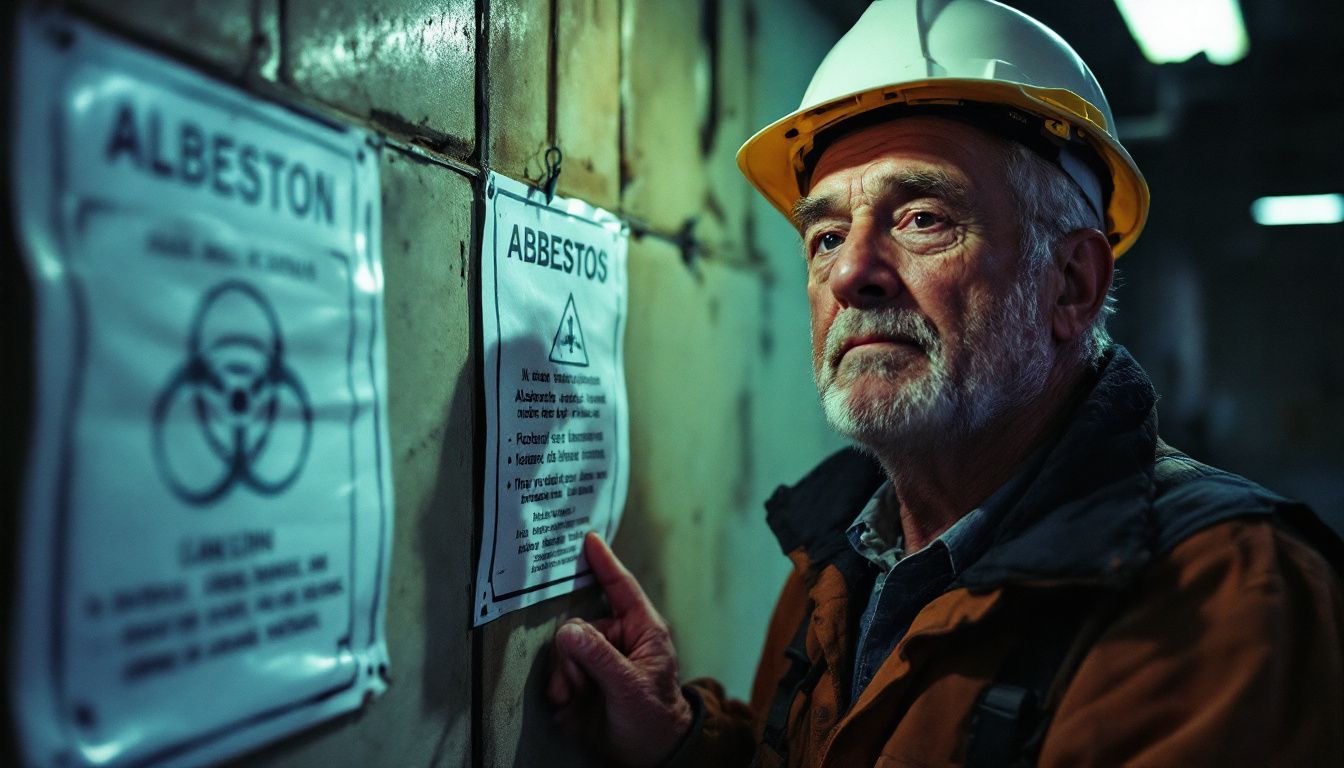
Why the Importance of Asbestos Awareness Cannot Be Overstated
Asbestos remains the single largest cause of work-related deaths in the UK. Thousands of people die every year from diseases caused by past exposure — and the vast majority of those deaths were entirely preventable.
The importance of asbestos awareness is not a theoretical concern or a box-ticking exercise. It is a live, ongoing issue that affects tradespeople, building managers, landlords, and anyone who works in or around older properties.
Buildings constructed or refurbished before 2000 may contain asbestos-containing materials (ACMs). That covers an enormous proportion of the UK’s built environment — schools, hospitals, offices, factories, and homes. The people who work in those buildings every day are potentially at risk, often without realising it.
What Asbestos Awareness Actually Means in Practice
Asbestos awareness is not simply knowing that asbestos exists. Most people in the UK have heard of asbestos. The problem is that general familiarity rarely translates into practical, usable knowledge.
Real asbestos awareness means understanding:
- Which types of asbestos exist — crocidolite (blue), amosite (brown), and chrysotile (white) — and where each is typically found
- What ACMs look like and which building materials commonly contain them
- How asbestos fibres are released and why disturbing ACMs is so dangerous
- What the legal framework requires of workers and employers
- When to stop work, who to report to, and how to get professional help
Without this level of understanding, workers are vulnerable. An electrician who doesn’t recognise textured coating as a potential ACM may sand it down without a second thought. A plumber who doesn’t know that pipe lagging can contain asbestos may cut straight through it.
These are the moments where exposure happens — not in dramatic incidents, but in routine, everyday tasks.
Where Asbestos Is Commonly Found in UK Buildings
One of the most practical aspects of asbestos awareness is knowing where ACMs are most likely to be present. Asbestos was used extensively in construction materials throughout the twentieth century because of its fire resistance, durability, and insulating properties. It wasn’t fully banned in the UK until 1999.
Common locations for ACMs include:
- Textured coatings such as Artex on ceilings and walls
- Ceiling tiles and suspended ceiling systems
- Pipe lagging and boiler insulation
- Insulating boards used in fire doors, partition walls, and ceiling panels
- Floor tiles and the adhesive used to fix them
- Roofing felt and corrugated roofing sheets
- Sprayed coatings on structural steelwork
- Guttering, downpipes, and rainwater goods made from asbestos cement
The presence of asbestos in a material is not visible to the naked eye. That is precisely why professional asbestos testing is required to confirm whether a material contains asbestos — and why awareness training must include guidance on not assuming a material is safe simply because it looks undamaged or in good condition.
The Health Risks: Why Awareness Is a Matter of Life and Death
Understanding the health consequences of asbestos exposure is central to the importance of asbestos awareness. The diseases caused by asbestos are serious, incurable, and often fatal.
Mesothelioma
Mesothelioma is a cancer of the lining of the lungs, chest wall, or abdomen. It is almost exclusively caused by asbestos exposure. The latency period — the time between exposure and diagnosis — can be anywhere from twenty to fifty years, which is why people are still dying today from exposures that occurred decades ago.
Asbestos-Related Lung Cancer
Asbestos exposure significantly increases the risk of lung cancer, particularly in people who also smoke. The risk is not limited to those who worked directly with asbestos — secondary exposure through contaminated clothing or environments has also been linked to lung cancer diagnoses.
Asbestosis
Asbestosis is a chronic scarring of the lung tissue caused by prolonged inhalation of asbestos fibres. It causes progressive breathlessness and has no cure. It is typically associated with heavy occupational exposure over extended periods.
Pleural Disease
Pleural plaques and pleural thickening are non-cancerous conditions that affect the lining of the lungs. They are markers of asbestos exposure and can cause significant breathing difficulties over time.
All of these conditions share a critical characteristic: by the time symptoms appear, the damage is already done. This is why prevention — rooted in genuine asbestos awareness — is the only effective strategy.
Who Needs Asbestos Awareness Training?
The importance of asbestos awareness extends to a far wider group of people than many employers appreciate. Under the Control of Asbestos Regulations, any worker whose activities could reasonably result in them disturbing ACMs must receive appropriate asbestos awareness training.
This includes, but is not limited to:
- Electricians and electrical engineers
- Plumbers and heating engineers
- Carpenters and joiners
- Plasterers and drylining contractors
- Painters and decorators
- Roofers and roofing contractors
- Gas engineers
- Demolition workers
- Facilities managers and maintenance staff
- Building surveyors and architects
- Fire and security system installers
- Construction site managers and supervisors
Self-employed workers are not exempt. If you operate independently in any of these roles, the legal duty to ensure you have appropriate training falls on you personally.
Awareness training is not the same as a licence to work with asbestos. Training equips workers to recognise potential ACMs, work cautiously around them, and know when to stop and seek professional advice. It does not qualify anyone to carry out surveys, collect samples, or make formal assessments about whether a material contains asbestos.
What Good Asbestos Awareness Training Covers
Effective asbestos awareness training goes well beyond telling workers that asbestos is dangerous. It provides a practical framework for decision-making in real working environments.
Core topics should include:
- Types of asbestos and their locations — understanding the differences between blue, brown, and white asbestos and where each is typically found in buildings
- Health risks and disease mechanisms — a clear explanation of how fibre inhalation causes disease and why the latency period makes prevention so critical
- The legal framework — the duty to manage, the distinction between non-licensable work, Notifiable Non-Licensed Work (NNLW), and licensable work requiring an HSE licence
- Risk assessment — how to assess whether a material is likely to contain asbestos and what action to take when uncertain
- Safe working practices — when to stop work, who to report to, and how to avoid inadvertently releasing fibres
- Personal protective equipment (PPE) and respiratory protective equipment (RPE) — what is required and how to use it correctly
- Emergency procedures — what to do if asbestos is disturbed unexpectedly
- Waste disposal — the correct procedures for handling and disposing of asbestos waste under UK environmental law
The HSE’s Approved Code of Practice L143 provides detailed guidance on managing and working with asbestos. Reputable training providers align their content with L143 to ensure workers receive accurate, current information.
The Legal Obligations on Employers and Duty Holders
The importance of asbestos awareness is reinforced by a clear and enforceable legal framework. The Control of Asbestos Regulations places specific duties on employers, and non-compliance carries serious consequences.
What Employers Must Do
- Identify whether workers are liable to disturb ACMs during their normal duties
- Ensure those workers receive appropriate asbestos awareness training before commencing that work
- Provide refresher training at suitable intervals
- Keep records of all training completed
- Carry out suitable risk assessments before any work that may disturb asbestos
- Ensure licensable asbestos work is carried out only by HSE-licensed contractors
- Notify the relevant enforcing authority before any Notifiable Non-Licensed Work begins
The Duty to Manage Asbestos
Separate from the obligations on employers, the duty to manage asbestos applies to those responsible for non-domestic premises. This includes building owners, landlords, and facilities managers.
Duty holders must have an up-to-date asbestos management survey in place and a written asbestos management plan that is actively followed — not simply filed away and forgotten.
An management survey identifies the location, condition, and extent of ACMs within a building so that appropriate management decisions can be made. It is the foundation of any effective asbestos management programme.
Consequences of Non-Compliance
The HSE takes enforcement of asbestos regulations seriously. Employers who fail to provide adequate training, maintain proper records, or manage ACMs appropriately face prosecution, unlimited fines, and — in serious cases — custodial sentences for individuals.
Beyond legal penalties, the human cost is severe. Workers harmed by asbestos exposure today may not develop symptoms for decades. When they do, tracing liability is entirely possible — and employers have faced significant civil claims as a result.
The Real-World Impact of Asbestos Awareness on Workplace Safety
Does asbestos awareness training actually change behaviour? The evidence strongly suggests it does — and in ways that have a direct, measurable impact on safety outcomes.
Fewer Accidental Disturbances
Workers who understand what asbestos looks like, where it is typically found, and what to do when they are unsure are far less likely to inadvertently drill into a ceiling tile, cut through pipe lagging, or sand down a textured coating without first checking the asbestos register.
A single uncontrolled disturbance can release millions of fibres into the air. In an enclosed space without proper controls, the exposure risk to the worker — and anyone else present — is severe.
Better Reporting and Communication
Trained workers are more likely to report suspected ACMs through the correct channels rather than carrying on with the job and hoping for the best. This leads to better information flowing to site managers and duty holders, more accurate asbestos registers, and fewer situations where risks are quietly ignored.
When asbestos is found unexpectedly, trained workers follow the correct emergency procedures — stopping work, cordoning off the area, and arranging a professional assessment — rather than sweeping up contaminated material and disposing of it incorrectly.
Greater Worker Confidence
Many tradespeople, particularly those who are self-employed or work across multiple sites, describe feeling uncertain about what to do when they encounter suspect materials. Awareness training replaces that uncertainty with a clear decision-making framework.
This is especially valuable for sole traders and small businesses where there is no dedicated health and safety manager to turn to.
A Stronger Safety Culture
Asbestos awareness training contributes to a broader culture of health and safety competence. Workers who have received quality training are more likely to challenge unsafe practices and act as informal advocates for good practice among their colleagues.
Toolbox talks and team briefings that incorporate asbestos awareness keep the risks front of mind, rather than treating training as a one-off tick-box exercise.
The Types of Asbestos Surveys That Support Awareness
Awareness training and professional surveying serve different but complementary purposes. Training equips workers to recognise risk and respond appropriately. Surveys provide the formal, documented evidence base that duty holders need to manage ACMs safely and legally.
There are two primary survey types under HSG264:
Management Surveys
A management survey is the standard survey required to manage ACMs during the normal occupation and use of a building. It locates ACMs that could be disturbed by everyday maintenance or minor works, assesses their condition, and informs the asbestos management plan. If you manage a non-domestic property, this is the survey you need as a baseline.
Refurbishment and Demolition Surveys
A refurbishment and demolition survey is required before any major works that will disturb the building fabric. It is more intrusive than a management survey and is designed to locate all ACMs in the areas affected by the planned works — including those that are hidden or inaccessible during normal use.
If you are planning renovation works or a full demolition, this survey must be completed before work begins. Proceeding without one is a serious legal breach and puts workers at significant risk.
Asbestos Awareness Across the UK: Regional Considerations
The importance of asbestos awareness applies equally across the whole of the UK, but the practical picture varies depending on the age and type of building stock in different regions.
In major cities, older commercial and industrial buildings are particularly likely to contain ACMs. If you need an asbestos survey London properties require, the density of pre-2000 commercial stock means demand for professional surveying services is consistently high.
In the North West, industrial heritage means many properties have significant asbestos legacy issues. Anyone arranging an asbestos survey Manchester based businesses and property managers need should expect surveyors experienced in older industrial and commercial building types.
The Midlands similarly has a substantial stock of older manufacturing and commercial premises. An asbestos survey Birmingham duty holders commission should be carried out by qualified surveyors with BOHS P402 certification or equivalent, ensuring results are legally defensible.
Wherever you are in the UK, the legal obligations are identical. The Control of Asbestos Regulations applies nationwide, and the HSE enforces compliance across all regions.
How to Take Action: Practical Steps for Employers and Duty Holders
Understanding the importance of asbestos awareness is one thing. Translating it into action is another. Here is a straightforward framework for getting it right.
- Audit your workforce. Identify every role in your organisation that could result in the disturbance of ACMs. This includes maintenance staff, contractors, and any self-employed individuals working under your direction.
- Ensure training is in place. Every worker identified in step one should have current, documented asbestos awareness training. Check that training records are up to date and that refresher training is scheduled at appropriate intervals.
- Commission the right survey. If you manage a non-domestic building and do not have a current asbestos management survey, commission one immediately. If refurbishment or demolition is planned, a refurbishment and demolition survey is required before works begin.
- Maintain your asbestos register. The register should be accessible to anyone working in the building. Workers and contractors should be shown relevant entries before they begin any work that could disturb the building fabric.
- Use accredited professionals. Surveys should be carried out by surveyors holding BOHS P402 qualification or equivalent. For asbestos testing, use a UKAS-accredited laboratory to ensure results are reliable and legally valid.
- Review and update regularly. An asbestos management plan is a living document. It should be reviewed whenever the condition of ACMs changes, when building works are planned, or when there is a change in the use of the premises.
Frequently Asked Questions
What is the importance of asbestos awareness for tradespeople?
Tradespeople are among the groups most at risk of asbestos exposure because their work routinely involves disturbing building materials. Asbestos awareness training gives them the knowledge to recognise potential ACMs, understand the health risks, and know when to stop work and seek professional advice. Without it, workers may inadvertently disturb asbestos during everyday tasks such as drilling, cutting, or sanding — leading to fibre release and potential long-term health consequences.
Is asbestos awareness training a legal requirement in the UK?
Yes. Under the Control of Asbestos Regulations, employers must ensure that any worker liable to disturb ACMs receives appropriate asbestos awareness training. This applies to both directly employed staff and contractors working under an employer’s direction. Self-employed workers have a personal duty to ensure they have received appropriate training before undertaking work that could disturb asbestos.
How often does asbestos awareness training need to be refreshed?
The Control of Asbestos Regulations requires that training is provided at suitable intervals. While the regulations do not specify a fixed period, HSE guidance and industry best practice generally recommend annual refresher training. Employers should document all training and ensure records are kept up to date.
What is the difference between asbestos awareness training and a licence to work with asbestos?
Asbestos awareness training equips workers to recognise potential ACMs and respond appropriately — including knowing when to stop work and seek professional help. It does not qualify workers to carry out surveys, collect samples, or undertake licensable asbestos removal work. Work that involves significant disturbance of ACMs must be carried out by contractors holding a current HSE licence.
What should I do if asbestos is discovered unexpectedly during building work?
Stop work immediately and do not disturb the material further. Cordon off the area to prevent others from entering. Contact a qualified asbestos surveyor to assess the material and advise on next steps. Do not attempt to clean up or dispose of potentially contaminated material yourself — incorrect disposal of asbestos waste is a criminal offence under UK environmental law.
At Supernova Asbestos Surveys, we have completed over 50,000 surveys nationwide and understand exactly what employers, duty holders, and property managers need to stay compliant and keep people safe. Whether you need a management survey, a refurbishment and demolition survey, or professional asbestos testing, our BOHS-qualified surveyors are ready to help.
Call us on 020 4586 0680 or visit asbestos-surveys.org.uk to discuss your requirements and book a survey.