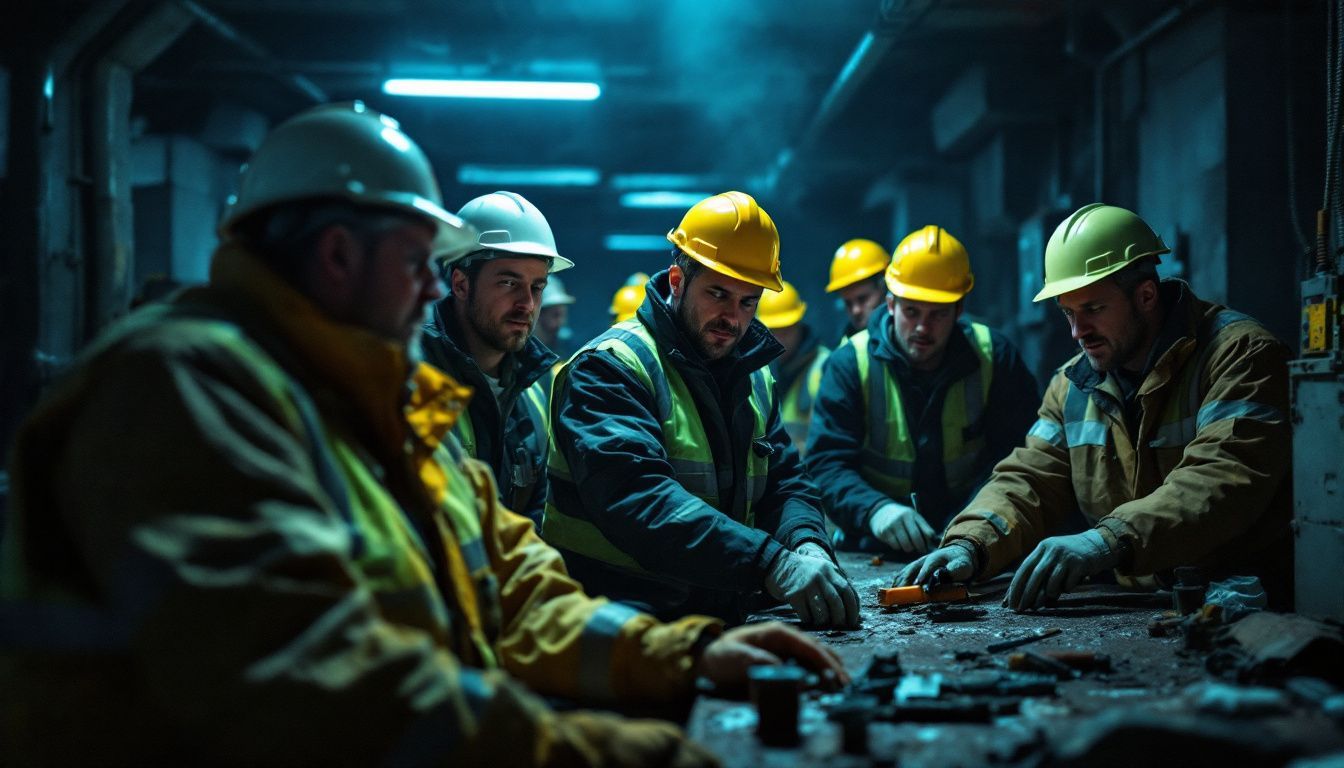
Training for Asbestos Removal: What UK Workers and Employers Must Know
Asbestos remains the single biggest cause of work-related deaths in the UK. Any building constructed before 2000 is likely to contain asbestos-containing materials (ACMs), and disturbing them without proper knowledge puts lives at serious risk. Training for asbestos removal is not a box-ticking exercise — it is the legal and practical foundation that separates safe, compliant work from a potential fatality.
Whether you are a property manager, a contractor, or an employer with maintenance staff, understanding what training is required — and why — is non-negotiable.
Why Training for Asbestos Removal Is a Legal Requirement
The Health Risks Cannot Be Overstated
When asbestos-containing materials are disturbed, microscopic fibres become airborne and can be inhaled deep into the lungs. The diseases that follow — mesothelioma, asbestosis, lung cancer, and pleural thickening — have long latency periods, with symptoms often not appearing for decades after exposure.
By the time a diagnosis is made, the damage is irreversible. Tradespeople, construction workers, property managers, and maintenance staff are among those most regularly at risk. Without training, many workers will not even recognise the materials they are disturbing as hazardous.
Your Legal Obligations Under the Control of Asbestos Regulations
The Control of Asbestos Regulations require duty holders and employers to ensure that anyone liable to disturb asbestos receives appropriate training before they do so. This is not optional — it is a legal obligation enforced by the Health and Safety Executive (HSE).
Failure to comply can result in substantial fines, prosecution, and enforcement notices. The reputational damage to a business can be equally severe and long-lasting. The HSE’s Approved Code of Practice L143 provides detailed practical direction on how to comply, and any reputable training programme should be built around it.
The Three Tiers of Asbestos Training in the UK
Not all asbestos training is the same. The level required depends entirely on the nature of the work and how likely a person is to encounter asbestos. The HSE recognises three distinct categories, and selecting the wrong tier — or skipping training altogether — exposes both workers and employers to serious risk.
Tier 1: Asbestos Awareness Training
This is the baseline level, designed for workers who might inadvertently encounter asbestos during routine tasks — electricians, plumbers, joiners, painters, and general maintenance staff working in pre-2000 buildings.
Awareness training covers:
- What asbestos is, where it is commonly found, and what it looks like
- The health risks associated with disturbing ACMs
- How to avoid disturbing asbestos during everyday work
- What to do if you suspect you have encountered asbestos
- Emergency procedures if accidental disturbance occurs
Critically, this training does not qualify workers to carry out asbestos work. It equips them to recognise the hazard and stop immediately, rather than unknowingly making a dangerous situation worse.
Tier 2: Non-Licensable Work Training
Some asbestos tasks can be carried out without a licence, provided they meet specific criteria set out in the Control of Asbestos Regulations — typically short-duration, low-sporadic-exposure activities. Examples include drilling into textured coatings, removing a small number of asbestos cement sheets, or cutting through certain insulating boards.
Non-licensable work training goes significantly further than awareness. It covers:
- Conducting a suitable and sufficient risk assessment before work begins
- Safe working methods to minimise fibre release
- Selection and correct use of respiratory protective equipment (RPE)
- Decontamination procedures for tools, clothing, and work areas
- Correct disposal of asbestos waste to licensed facilities
- Legal duties and documentation requirements
Some non-licensable work is notifiable to the HSE — referred to as NNLW (notifiable non-licensed work). Workers and employers carrying out this type of work have additional obligations, including health surveillance and detailed record-keeping.
Tier 3: Licensed Work Training
The highest tier of training is required for licensed asbestos removal — work involving higher-risk materials such as sprayed coatings, lagging, and asbestos insulating board (AIB). This work can only be carried out by contractors holding an HSE-issued licence.
Licensed work training is intensive and hands-on. It covers:
- In-depth identification of all ACM types and their associated risk levels
- Detailed safe systems of work and method statement preparation
- Use of full breathing apparatus and disposable coveralls
- Erecting and using negative pressure enclosures
- Air monitoring and clearance testing procedures
- Decontamination unit operation and personal decontamination
- Waste handling, packaging, labelling, and disposal to licensed sites
- Emergency procedures and incident reporting
Workers must demonstrate both theoretical knowledge and practical competence. Employers are legally required to maintain detailed training records for all licensed workers, and these must be available for inspection by the HSE at any time.
Key Skills Developed Through Asbestos Removal Training
Identifying Asbestos-Containing Materials
One of the most valuable skills any trained worker gains is knowing where asbestos might be present. ACMs were used in an enormous range of construction products — floor tiles, ceiling tiles, pipe lagging, rope seals, textured decorative coatings, roofing sheets, and more.
Training teaches workers that asbestos cannot always be identified by sight alone. Suspected materials must be treated as containing asbestos until sample analysis confirms otherwise. This single principle prevents a significant proportion of accidental exposures on site.
Conducting a Risk Assessment
Before any work involving potential ACMs begins, a risk assessment must be completed. Training teaches workers and supervisors how to assess the condition of materials, the likelihood of fibre release, the duration and frequency of exposure, and what controls are needed to reduce risk to the lowest reasonably practicable level.
A risk assessment is not a formality — it determines the safe system of work that follows. Getting it wrong at this stage creates risks that no amount of PPE can fully compensate for.
Correct Use of PPE and RPE
Respiratory protective equipment is only effective when worn and fitted correctly. Training covers:
- Selecting the right class of respirator for the specific task
- Face-fit testing — a legal requirement for tight-fitting respirators
- Donning and doffing procedures to avoid self-contamination
- Maintenance, inspection, and storage of RPE
- Correct use of disposable coveralls, gloves, and overshoes
Poorly fitted or improperly used RPE provides false reassurance. Face-fit testing is not optional — it is a fundamental requirement that ensures the protection actually works in practice.
Decontamination Procedures
Asbestos fibres cling to clothing, hair, tools, and surfaces. Decontamination training ensures workers know how to clean themselves and their equipment without spreading contamination beyond the work area.
For licensed removals, this involves the use of a three-stage decontamination unit with a dirty end, shower, and clean end. Workers who skip or rush this process risk carrying fibres into clean areas, vehicles, and even their own homes.
Waste Handling and Disposal
Asbestos waste is classified as hazardous waste in the UK. It must be double-bagged in UN-approved red and clear polythene sacks, correctly labelled, and transported to a licensed hazardous waste disposal facility.
Training makes absolutely clear that improper disposal is a criminal offence — not an administrative oversight. Workers who understand this are far less likely to take shortcuts that could result in prosecution.
Certification, Records, and Refresher Training
Training Certificates and Record-Keeping
Upon completing any asbestos training course, workers receive a certificate confirming the level of training and the date of completion. Employers must retain these records and make them available for HSE inspection.
Certificates demonstrate due diligence and are essential evidence if a workplace incident ever leads to an investigation. Employers without adequate records face enforcement action regardless of whether the training actually took place.
Annual Refresher Training
The HSE requires asbestos awareness training to be refreshed at least annually. Regulations, guidance, and best practice evolve — and complacency in a high-hazard environment has real consequences.
Refresher training can be delivered in person or via accredited e-learning platforms, making it practical for organisations with large or dispersed workforces. The format matters less than the quality and relevance of the content.
When Additional Refresher Training Is Needed
Annual refreshers are the minimum. Additional training should be arranged when:
- Work methods or equipment change significantly
- A worker moves into a new role with greater asbestos exposure
- An incident or near-miss reveals a gap in knowledge or competence
- New types of ACMs are identified on a site
- A significant period has elapsed since the last training without active asbestos work
Choosing the Right Asbestos Training Provider
Not all training providers are equal. When selecting a provider for training for asbestos removal, look for the following:
- Relevant experience — trainers should have real-world asbestos surveying or removal backgrounds, not just a theoretical grounding
- HSE-aligned content — courses should reflect current HSE guidance and the Approved Code of Practice L143
- Accreditation — look for providers accredited by recognised bodies such as UKATA (UK Asbestos Training Association) or IATP
- Practical elements — particularly for non-licensable and licensed work training, hands-on practice is essential
- Clear certification — certificates should state the training level, completion date, and provider details
Avoid providers who offer asbestos training as an afterthought alongside unrelated health and safety courses. Asbestos is a specialist field, and the quality of training should reflect that.
How Training Fits Into a Broader Asbestos Management Strategy
Training for asbestos removal is essential — but it sits within a wider asbestos management framework. Before workers can be trained to handle or avoid ACMs, those materials need to be identified, assessed, and recorded in an asbestos register.
Duty holders in non-domestic premises have a legal obligation to manage asbestos on their premises. This begins with a management survey to locate and assess ACMs throughout the building, followed by an asbestos management plan that records the location, condition, and risk rating of each material.
That register must be kept current. Regular re-inspection survey visits allow duty holders to monitor whether known ACMs have deteriorated and update the register accordingly.
If refurbishment or demolition work is planned, a demolition survey is required before work begins — regardless of whether an existing management survey is already in place. The two serve different purposes, and one cannot substitute for the other.
Where ACMs are identified that cannot be safely managed in situ, professional asbestos removal by a licensed contractor is the appropriate course of action. Training alone does not make unlicensed workers qualified to remove high-risk materials.
Practical Steps for Employers and Duty Holders
If you are responsible for a building or a workforce that may encounter asbestos, here is what you need to be doing:
- Commission a management survey if you do not have an up-to-date asbestos register for your premises
- Share the asbestos register with all contractors before they begin any work on site
- Identify which tier of training each worker or contractor requires based on their likely exposure
- Use only accredited training providers with demonstrable asbestos-specific expertise
- Retain all training certificates and set calendar reminders for annual refresher dates
- Review training records whenever roles, methods, or site conditions change
- Do not allow work to begin on any pre-2000 building without first confirming the asbestos status of the area
These steps are not bureaucratic formalities. They are the practical measures that protect workers’ health, protect your business from liability, and ensure you are meeting your obligations under the Control of Asbestos Regulations.
Asbestos Surveys Across the UK
Supernova Asbestos Surveys operates nationwide, providing fast, thorough, and fully accredited asbestos surveying services to property managers, local authorities, housing associations, and contractors of all sizes.
If your premises are in the capital, our asbestos survey London service covers all boroughs with rapid turnaround times. In the North West, our asbestos survey Manchester team is available for urgent and planned survey work alike. And across the Midlands, our asbestos survey Birmingham service delivers the same high standard of reporting and compliance support.
With over 50,000 surveys completed, we understand what duty holders and contractors need — accurate data, clear reports, and advice you can act on.
Frequently Asked Questions
Who legally needs training for asbestos removal in the UK?
Under the Control of Asbestos Regulations, any worker who is liable to disturb asbestos-containing materials must receive appropriate training before doing so. This includes not just removal operatives, but also maintenance staff, electricians, plumbers, and anyone else who works in pre-2000 buildings. The level of training required — awareness, non-licensable, or licensed — depends on the nature and extent of their likely contact with ACMs.
What is the difference between licensable and non-licensable asbestos work?
Licensable work involves higher-risk materials — such as sprayed coatings, pipe lagging, and asbestos insulating board — where fibre release potential is significant. This work can only be carried out by contractors holding an HSE-issued asbestos licence. Non-licensable work covers lower-risk tasks meeting specific criteria in the regulations, such as limited work with asbestos cement or textured coatings. Even non-licensable work requires appropriate training and, in some cases, notification to the HSE.
How often does asbestos awareness training need to be renewed?
The HSE requires asbestos awareness training to be refreshed at least once every 12 months. Additional refresher training should be provided whenever there is a significant change in working methods, when a worker takes on a new role with greater asbestos exposure, or when an incident reveals a gap in knowledge or understanding.
Can asbestos training be completed online?
Asbestos awareness training can be completed via accredited e-learning platforms, which is a practical solution for large or geographically dispersed workforces. However, non-licensable and licensed work training must include significant practical, hands-on elements — online delivery alone is not sufficient for these higher tiers. Always ensure the provider is accredited by a recognised body such as UKATA or IATP.
What happens if an employer fails to provide asbestos training?
Failure to provide appropriate asbestos training is a breach of the Control of Asbestos Regulations and can result in HSE enforcement notices, substantial fines, and in serious cases, criminal prosecution. If a worker is harmed as a result of inadequate training, the employer’s liability is significant. Maintaining proper training records is equally important — an employer cannot rely on training having taken place if they cannot produce documentation to prove it.
Get Expert Asbestos Support From Supernova
Training for asbestos removal is one piece of a larger compliance picture. Supernova Asbestos Surveys can help you identify what is in your building, assess the risk, and ensure you have the information your workers and contractors need before they set foot on site.
Call us on 020 4586 0680 or visit asbestos-surveys.org.uk to book a survey, request a quote, or speak to one of our qualified surveyors about your specific situation.