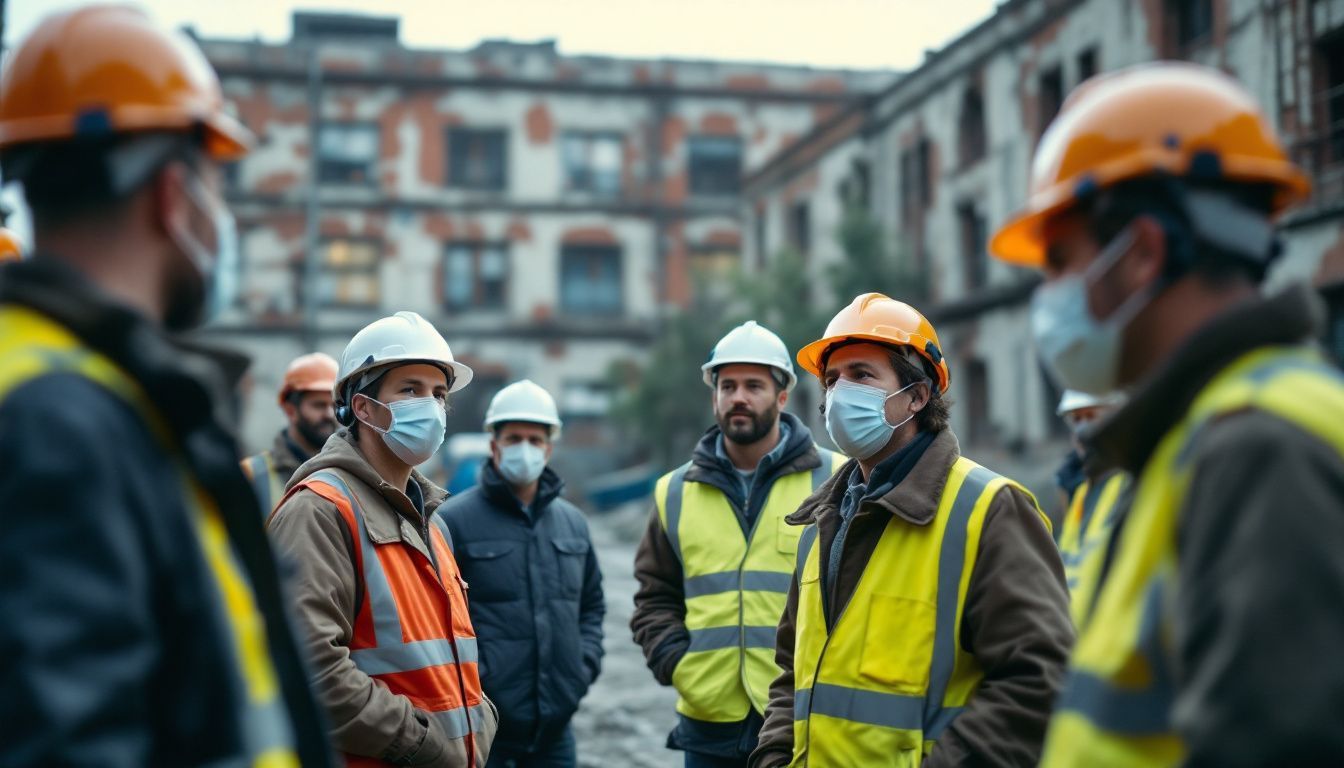
Why Asbestos Awareness Training Is the Foundation of Safe Handling in the UK
Asbestos remains the single largest cause of work-related deaths in the UK. It sits inside hundreds of thousands of buildings constructed before 2000, and the workers and managers who enter those buildings every day face a real, ongoing risk. Understanding how asbestos awareness training can improve regulations, guidelines, and the handling of asbestos in the UK is not a box-ticking exercise — it is the difference between a workforce that manages risk effectively and one that stumbles into it unknowingly.
Done properly, training changes how workers think, act, and respond when asbestos-containing materials (ACMs) are encountered. Here is what good training actually achieves, and why it matters for anyone with duties under UK asbestos law.
The Legal Baseline: What UK Regulations Require
The Control of Asbestos Regulations set out clear, enforceable duties for employers, building owners, and those in control of premises. Breaches can result in prosecution, unlimited fines, and imprisonment — these are not optional guidelines.
Under these regulations, employers must ensure that any worker liable to disturb asbestos during their work receives appropriate training before they start. This applies across a wide range of trades, not just specialist asbestos contractors.
HSG264 — the HSE’s guidance on asbestos surveying — reinforces the importance of competence and knowledge at every level of the workforce. Training is not a recommendation; it is a legal obligation with real consequences for those who ignore it.
Who Needs Asbestos Awareness Training?
The HSE is explicit: awareness training is required for any worker whose job could foreseeably expose them to asbestos. That covers a much broader group than most people assume.
Workers who require training include:
- Electricians, plumbers, and gas engineers
- Carpenters and joiners
- Plasterers and dry-liners
- Roofers and demolition workers
- Painters and decorators
- HVAC and maintenance engineers
- Construction site managers and supervisors
- Facilities managers and building surveyors
A common misconception is that awareness training only applies to licensed asbestos operatives. In reality, the trades most likely to accidentally disturb ACMs are those doing routine building work — the electrician drilling through an old ceiling, the plumber cutting into pipe lagging.
Their exposure risk is not from deliberate asbestos work, but from accidental disturbance during everyday tasks — which is exactly where the greatest harm occurs.
What Asbestos Awareness Training Actually Covers
Effective training goes well beyond a basic introduction to health risks. It builds practical, applicable knowledge that workers can use on the job — not just recall in a quiz.
Understanding the Health Risks
Training begins with a clear explanation of what asbestos does to the body. Workers learn about mesothelioma, asbestosis, asbestos-related lung cancer, and pleural disease — and critically, why these conditions typically appear decades after exposure.
That time lag is one of the main reasons asbestos risks are underestimated. Training helps workers understand that exposure today can have devastating consequences 20 or 30 years from now, which changes how seriously they take precautions in the moment.
Identifying Where Asbestos Is Found
One of the most valuable elements of awareness training is teaching workers to recognise where ACMs are commonly found. This includes:
- Sprayed coatings on structural steelwork and ceilings
- Insulation boards used in fire protection and partitioning
- Pipe lagging and thermal insulation
- Roof sheeting, guttering, and rainwater pipes
- Textured coatings such as Artex
- Floor tiles and associated adhesives
- Cement products including soffits and external panels
Workers who can identify likely ACMs are far less likely to disturb them unknowingly. That is exactly where the greatest risk lies — not in deliberate asbestos work, but in accidental disturbance during everyday tasks.
Understanding the Duty to Manage
For those in management or supervisory roles, training covers the duty to manage asbestos — the legal obligation on those responsible for non-domestic premises to assess and manage ACM risk. Workers in these roles learn how asbestos management plans work, why they exist, and how to consult them before any work begins.
If a building has not been assessed recently, a professional management survey is the correct starting point. Training helps managers understand when and why that step is required — and what the legal consequences are for failing to take it.
Legal Responsibilities and Licensing
Training makes clear which types of asbestos work require a licence from the HSE, which require notification only, and which non-licensed work still carries specific legal requirements. This prevents the common and costly error of workers carrying out licensable work without understanding the rules that apply.
How Asbestos Awareness Training Improves Regulations, Guidelines, and Handling of Asbestos in the UK
One of the most direct ways asbestos awareness training improves how regulations and guidelines are followed in practice is by improving the quality of risk assessments — a legal requirement before any work that may disturb ACMs.
Workers who understand asbestos know what to look for before they start a job. They consult existing asbestos registers, ask the right questions, and flag potential ACMs before they are disturbed. This is the behaviour that prevents accidental exposure — not after the fact, but at the point where it matters most.
The Stop-and-Check Approach
A key practical outcome of good training is that workers develop the instinct to stop work when they encounter an unexpected material they suspect could be asbestos. This stop-and-check approach is straightforward — but it only becomes reliable behaviour when workers genuinely understand why it matters.
Without training, the temptation to carry on — to avoid delays, to avoid appearing overly cautious — is real. With it, workers understand that stopping is the correct professional response, not an overreaction. That shift in behaviour is a direct improvement in how asbestos handling guidelines are followed on site.
Proper Use of PPE and Protective Measures
Awareness training covers the fundamental protective measures workers should apply when they encounter or suspect ACMs. Workers learn:
- Why standard dust masks offer no meaningful protection against asbestos fibres — and which respiratory protective equipment (RPE) is appropriate
- The correct fit-testing requirements for RPE
- The use of disposable protective overalls and correct disposal procedures
- Why disturbing suspected ACMs without proper controls is never acceptable
- Basic decontamination procedures
Workers who understand the limitations of inadequate PPE are far more likely to apply appropriate protection and escalate concerns when necessary.
Emergency Preparedness: What to Do When ACMs Are Accidentally Disturbed
Asbestos awareness training includes clear guidance on the correct response if ACMs are accidentally disturbed. The response in the first few minutes can significantly affect the scale of exposure — for the individual and for everyone else in the area.
Trained workers know to:
- Stop work immediately and leave the affected area
- Prevent others from entering the zone
- Notify their supervisor or the person responsible for managing asbestos
- Not attempt to clean up or contain the material themselves without proper equipment and training
- Arrange for the area to be assessed before work resumes
This is not overcaution — it is the correct legal and practical response. It requires workers to have internalised these procedures before an incident occurs, which is precisely what good training achieves.
If an incident raises questions about whether a material contains asbestos, professional asbestos testing is the appropriate next step — not guesswork. Having a confirmed answer protects workers, employers, and the integrity of any subsequent remediation work.
Choosing the Right Training: Standards and Providers
The quality of asbestos awareness training varies considerably. To be meaningful — and to stand up to scrutiny from the HSE — training should be delivered by a competent provider with demonstrable knowledge of both the practical and regulatory aspects of asbestos management.
Reputable training providers include those accredited through UKATA (UK Asbestos Training Association) and BOHS (British Occupational Hygiene Society). Employers should look for trainers with real-world industry experience, not just theoretical knowledge.
Online vs. Face-to-Face Training
Asbestos awareness training can be delivered online or in person. Online courses are widely accepted for awareness-level training and offer practical advantages for large workforces or remote workers. The format matters less than the content and the competence of the provider.
Whatever format is used, training should be tailored to the specific work activities and environments of the workforce. Generic training that fails to reflect the actual risks workers face is of limited practical value.
Keeping Training Records
Employers must maintain records of asbestos awareness training. In the event of an HSE inspection or an asbestos-related incident, training records are a key element of demonstrating compliance. Records should include the date of training, the provider, and the specific content covered.
Refresher Training
Asbestos awareness training is not a one-time event. Regulations and best practice guidance evolve, and workers’ knowledge can fade over time. Annual refresher training is widely recommended — and in roles where workers regularly operate in older buildings or high-risk environments, it is a practical necessity, not an optional extra.
The Wider Impact: How Training Raises Industry Standards
Individual training has a collective effect. As more workers, supervisors, and managers develop a genuine understanding of asbestos risks and legal duties, overall industry standards improve.
Better-trained workforces ask better questions before starting jobs. They push back on instructions that compromise safety. They identify gaps in asbestos management plans and escalate them appropriately.
Awareness training also builds a culture where asbestos is taken seriously as an ongoing risk, not just a legacy issue from the past. That shift in culture is ultimately what reduces harm — not just compliance with the letter of the law, but a genuine commitment to working safely.
This matters particularly in high-activity urban areas. Teams working across older commercial and residential stock benefit significantly from structured training, especially when combined with a professional asbestos survey in London, an asbestos survey in Manchester, or an asbestos survey in Birmingham to establish a clear picture of what is present in a building before work begins.
What Training Does Not Replace: Professional Surveys and Assessments
Asbestos awareness training prepares workers to recognise risk and respond appropriately. It does not qualify them to survey, sample, or remove asbestos. That distinction matters enormously.
Before any refurbishment work in a building that may contain asbestos, a professional refurbishment survey must be completed before intrusive work begins. Where full demolition is planned, a demolition survey is required to identify all ACMs before the structure is taken down.
For occupied buildings where no immediate works are planned, a management survey establishes what ACMs are present and how they should be managed on an ongoing basis. Where a survey already exists, a re-inspection survey ensures the register remains current and reflects any changes in the condition of ACMs.
These surveys must be carried out by a competent, accredited surveyor — not by a trained worker acting on their own judgement. Training and professional surveying are complementary, not interchangeable.
When Sampling and Testing Is Required
Where the presence of asbestos in a specific material is uncertain, asbestos testing by an accredited laboratory provides a definitive answer. This is the only reliable way to confirm whether a material contains asbestos — visual identification alone is not sufficient, even for experienced workers.
Testing should always be carried out by a competent professional. Trained workers should never attempt to collect samples themselves, as this can disturb ACMs and create the very exposure risk the training is designed to prevent.
Putting It All Together: Training as Part of a Broader Asbestos Management Strategy
Asbestos awareness training works best when it is one element of a structured approach to asbestos management — not a standalone exercise that sits in isolation from everything else.
A sound asbestos management strategy combines:
- Professional surveys to establish what ACMs are present and where
- A current, accessible asbestos register that all relevant workers can consult
- A written asbestos management plan that sets out how identified ACMs will be managed
- Awareness training for all workers liable to encounter ACMs
- Refresher training at appropriate intervals
- Clear procedures for reporting, emergency response, and escalation
- Regular re-inspection of known ACMs to monitor condition
When these elements work together, the risk of accidental exposure drops significantly. Workers know what is present, where it is, what to do if they encounter it, and who to contact. That is the practical outcome that asbestos awareness training, properly implemented, is designed to achieve.
Employers and dutyholder who treat training as a genuine investment — rather than a compliance formality — create workplaces where asbestos risk is genuinely managed, not just documented. That is the standard the Control of Asbestos Regulations demands, and it is the standard that protects workers’ lives.
Frequently Asked Questions
Who is legally required to have asbestos awareness training in the UK?
Under the Control of Asbestos Regulations, any worker whose job could foreseeably lead them to disturb asbestos must receive appropriate awareness training. This includes a wide range of trades such as electricians, plumbers, carpenters, roofers, painters, HVAC engineers, and facilities managers — not just specialist asbestos contractors.
How does asbestos awareness training improve compliance with UK regulations?
Training gives workers and managers a practical understanding of their legal duties, how to identify potential ACMs, how to carry out proper risk assessments, and how to respond correctly if asbestos is encountered or disturbed. This directly improves the quality and consistency of regulatory compliance on site, reducing the risk of accidental exposure and enforcement action.
How often should asbestos awareness training be refreshed?
Annual refresher training is widely recommended across the industry. Regulations and HSE guidance can evolve, and workers’ knowledge can diminish over time. For those who regularly work in older buildings or higher-risk environments, annual refresher training is a practical necessity rather than an optional extra.
Can asbestos awareness training replace a professional asbestos survey?
No. Awareness training prepares workers to recognise risk and respond appropriately — it does not qualify them to survey, sample, or assess asbestos. A professional management survey, refurbishment survey, or demolition survey carried out by an accredited surveyor is always required before work that may disturb ACMs.
What should a worker do if they accidentally disturb a material they think contains asbestos?
The correct response is to stop work immediately, leave the area, prevent others from entering, and notify the responsible person. The area should not be disturbed further until it has been professionally assessed. If confirmation of whether the material contains asbestos is needed, professional asbestos testing by an accredited laboratory is the appropriate next step.
Speak to Supernova Asbestos Surveys
Supernova Asbestos Surveys has completed over 50,000 surveys nationwide, working with property managers, employers, contractors, and building owners across the UK. Whether you need a management survey, a refurbishment or demolition survey, a re-inspection, or professional asbestos testing, our accredited surveyors provide fast, accurate, and fully compliant results.
Call us on 020 4586 0680 or visit asbestos-surveys.org.uk to find out how we can support your asbestos management obligations.