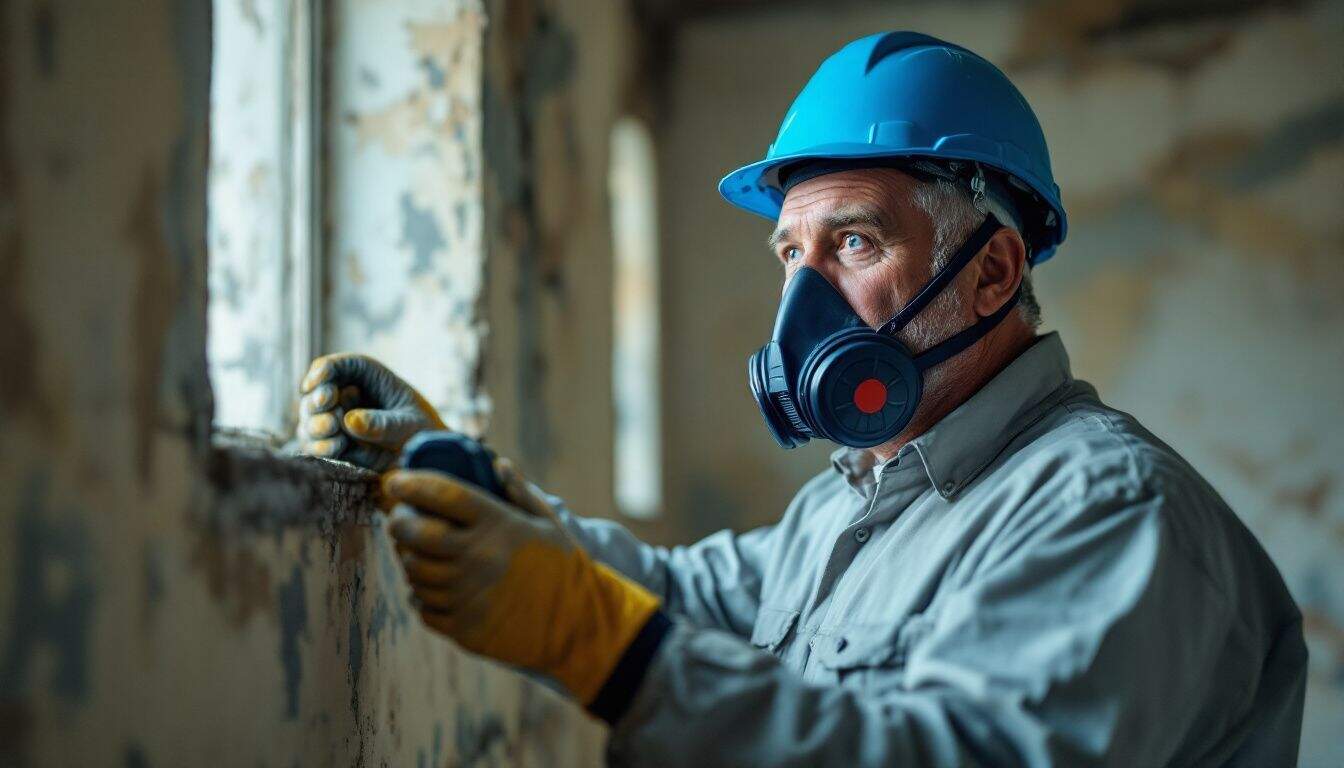
Why the Importance of Asbestos Awareness Remains One of the UK’s Most Pressing Workplace Issues
Asbestos rarely makes the headlines these days — but it continues to kill more people in the UK than any other single work-related cause. Millions of buildings still contain asbestos-containing materials (ACMs), and the workers most at risk are often those who have no idea they are working near them. Understanding the importance of asbestos awareness is not optional: for employers, it is a legal obligation, and for workers, it can genuinely be a matter of life and death.
The Scale of Asbestos in UK Buildings
Asbestos was used extensively in UK construction from the 1950s through to the late 1990s. It was cheap, fire-resistant, and an effective insulator — which made it enormously popular with builders and developers across every sector. By the time it was fully banned in 1999, it had been incorporated into a staggering number of buildings: homes, schools, hospitals, offices, factories, and public buildings of every description.
That legacy has not gone away. ACMs remain present in a vast proportion of the UK’s built environment, particularly in anything constructed before 2000. Common locations include:
- Ceiling tiles and textured coatings, including Artex
- Pipe lagging and boiler insulation
- Insulation boards used in partition walls and around fireplaces
- Roof and floor tiles
- Soffit boards and guttering
- Spray-applied fire protection on structural steelwork
- Toilet cisterns and window panels in certain older buildings
Undisturbed asbestos in good condition generally poses a low risk. The danger arises when materials are disturbed — during maintenance, renovation, or demolition — and fibres become airborne. Without proper asbestos awareness, workers can disturb ACMs without realising it, with potentially fatal consequences.
The Human Cost: Why This Still Matters Today
The UK has one of the highest rates of asbestos-related disease in the world — a direct consequence of heavy industrial use throughout the twentieth century. Mesothelioma, a cancer of the lining of the lungs and abdomen caused almost exclusively by asbestos exposure, continues to claim thousands of lives every year in Britain alone. Asbestosis, asbestos-related lung cancer, and pleural thickening add considerably to that burden.
These are not quick illnesses. Asbestos-related diseases typically have latency periods of 20 to 50 years, meaning someone exposed in the 1980s may only now be receiving a diagnosis. That latency period is precisely why complacency is so dangerous — workers being exposed today will not necessarily see the consequences for decades, but those consequences can be devastating and irreversible.
This is the human reality behind the importance of asbestos awareness: the harm is invisible until it is too late.
Who Is Most at Risk?
The occupations most exposed to asbestos risk are those involving regular work in and around older buildings. This is a broader group than many employers appreciate.
Tradespeople and Contractors
Electricians and plumbers drilling through walls or ceilings, joiners fitting new fixtures, painters disturbing old textured coatings, and HVAC engineers working around pipe insulation are all routinely at risk. Demolition and refurbishment contractors face some of the highest exposure levels of any occupational group.
Facilities Managers and Maintenance Staff
Caretakers, in-house maintenance teams, and facilities managers working in older buildings can be exposed during seemingly routine tasks — replacing a ceiling tile, drilling a fixing point, or clearing out a plant room. Without awareness of where ACMs are located, even minor jobs can become a serious health risk.
School and Public Building Staff
Many UK schools were built during the post-war construction boom and still contain asbestos. Something as routine as pinning a noticeboard to a wall can disturb ACMs if the right checks have not been made first. Teachers, caretakers, and school maintenance staff are all in this category — and so are the children and visitors who use those buildings every day.
The Legal Framework: What UK Law Actually Requires
The Control of Asbestos Regulations sets out clear legal duties for anyone who owns, manages, or works in non-domestic premises. These are not guidelines — they are enforceable obligations, and the Health and Safety Executive (HSE) takes breaches seriously.
The Duty to Manage
Duty holders — typically building owners or those responsible for premises maintenance — must identify whether ACMs are present, assess their condition, and put a management plan in place. That plan must be kept up to date and made accessible to anyone who might disturb the materials.
An asbestos management survey is the foundation of any compliant asbestos management programme, and it is often the first thing a regulator will ask to see following an incident.
Regulation 10: The Training Requirement
Regulation 10 of the Control of Asbestos Regulations specifically requires employers to provide adequate information, instruction, and training to employees who are liable to be exposed to asbestos — or who supervise or manage such employees. This is a legal obligation, not a recommendation.
Three Categories of Worker
The regulations distinguish between three categories of worker, each with different training requirements:
- Awareness training (Category A): For workers who could inadvertently disturb asbestos — tradespeople, maintenance staff, and others who work in and around buildings. This is the baseline level and the most widely required.
- Non-licensable and notifiable non-licensed work (NNLW): For workers carrying out lower-risk asbestos work that does not require a licence but must be notified to the enforcing authority. This requires more detailed training including risk assessment and safe working procedures.
- Licensed work: For contractors carrying out higher-risk work involving the most dangerous forms of asbestos. This requires an HSE licence and comprehensive training and supervision.
Most tradespeople require at minimum the awareness-level training. Employers who fail to provide it are in breach of the regulations and face enforcement action, including improvement notices, prohibition notices, and prosecution.
What Asbestos Awareness Training Actually Covers
Good asbestos awareness training is not a box-ticking exercise. It equips workers with practical knowledge they can apply on site every single day.
Understanding the Risks
Workers need to understand why asbestos is dangerous — not in abstract terms, but in a way that connects the material they might encounter on a Monday morning with the diseases it can cause decades later. That understanding is what drives genuine behavioural change.
Identifying Asbestos-Containing Materials
Training covers the types of ACMs commonly found in UK buildings — what they look like, where they are typically located, and which materials are most likely to contain asbestos in buildings of different ages and construction types. Workers learn to recognise the materials they should not disturb without checking first.
What to Do if You Suspect Asbestos
The single most important lesson in asbestos awareness training is also the simplest: stop work, move away from the area, and report it. Workers need to know the procedure for raising a concern, who to report to, and what happens next. This one behaviour, consistently applied, prevents the majority of accidental exposures.
Safe Working Principles
Training covers the basics of safe working — not disturbing materials unnecessarily, avoiding power tools near suspected ACMs, keeping the area clean, and understanding when work requires licensed contractors rather than general tradespeople.
Emergency Procedures
Workers should understand what to do if an accidental disturbance occurs: how to minimise the spread of fibres, how to decontaminate themselves and the immediate area, and when to notify the relevant authorities. Having this knowledge before an incident occurs — not during it — makes a significant difference to the outcome.
The Asbestos Register: Training Needs Infrastructure to Support It
Awareness training is essential, but it works best when it sits alongside proper asbestos management infrastructure. Before any maintenance, refurbishment, or construction work takes place in a pre-2000 building, the duty holder should provide workers with access to the asbestos register — the record of where ACMs are located and their current condition.
If no survey has been carried out or no register exists, that is a serious compliance gap. A management survey should be the first step, carried out by a qualified asbestos surveyor before any work proceeds.
Where refurbishment or significant alteration works are planned, a refurbishment survey is required — a management survey alone is not sufficient when materials will be disturbed. And where a building is to be demolished entirely, a demolition survey must be completed before work begins, without exception.
How Often Should Training Be Refreshed?
The HSE recommends that asbestos awareness training is refreshed annually. This is not just about keeping workers up to date — it is about reinforcing the message consistently. Many workers complete their initial training and then go years without thinking about it. Annual refreshers bring asbestos back into focus and ensure that good habits do not slip over time.
For employers, refresher training also demonstrates an ongoing commitment to compliance — something that carries real weight if the HSE investigates an incident or near miss. Records of training, including dates and content covered, should be kept and made available on request. This is a straightforward step that offers significant protection in the event of any regulatory scrutiny.
The Consequences of Getting It Wrong
Employers who fail to provide asbestos awareness training are not just risking their workers’ health. They are exposing their business to significant legal and financial liability.
The HSE can issue improvement notices requiring immediate corrective action, prohibition notices halting work entirely, and in serious cases refer matters for prosecution. Fines for asbestos-related offences can be substantial, and individuals — not just companies — can be prosecuted where negligence is established.
Beyond the regulatory consequences, there is civil liability to consider. Workers who develop asbestos-related diseases as a result of employer negligence can bring compensation claims, often many years after the exposure occurred. The financial and reputational costs can be severe and long-lasting.
Public Buildings, Schools, and the Wider Duty of Care
The obligation to manage asbestos safely extends well beyond commercial premises. Schools, hospitals, libraries, sports centres, and other public buildings all fall under the same regulatory framework — and many were built at a time when asbestos use was at its peak.
Local authorities and public bodies have a particular responsibility here. Maintenance staff working in these environments need proper training, and the buildings themselves need to be properly surveyed and managed. Failing to manage asbestos in a school or public building does not just put workers at risk — it puts the children, patients, and members of the public who use those buildings at risk too.
Whether you are managing a single commercial property or a large portfolio of public buildings, the principles are the same: survey first, maintain a register, train your people, and use the right type of survey for the work being carried out.
Asbestos Awareness Across the UK: A Nationwide Challenge
Asbestos is not a regional problem — it is a nationwide one. Pre-2000 buildings are found in every city, town, and village across Britain, and the duty to manage them applies equally regardless of location.
In major cities, the volume and variety of older building stock creates particular challenges. Dense urban environments often contain a mix of commercial, residential, and public buildings of varying ages, many of which have been refurbished multiple times without proper asbestos management in place. If you need an asbestos survey London properties require, working with an experienced surveyor who understands the complexity of urban building stock is essential.
The same applies in the north of England, where industrial heritage means a high proportion of pre-2000 commercial and manufacturing premises. An asbestos survey Manchester building owners commission should always be carried out by accredited surveyors familiar with the region’s construction history. Equally, for those managing properties in the Midlands, an asbestos survey Birmingham sites demand should be approached with the same rigour and professionalism.
Wherever your properties are located, the legal requirements are identical and the risks are real. Geography does not change the duty of care.
Building a Culture of Asbestos Awareness
Legislation sets the floor, not the ceiling. The most effective organisations go beyond the minimum legal requirements and build a genuine culture of asbestos awareness — one where workers feel confident raising concerns, where managers take those concerns seriously, and where the right procedures are followed as a matter of course rather than as a reaction to an incident.
That culture starts at the top. When senior managers and directors understand the importance of asbestos awareness and treat it as a genuine priority — not just a compliance checkbox — that attitude filters through to the workforce. Toolbox talks, visible signage, accessible asbestos registers, and regular refresher training all play a role in keeping awareness high.
It also requires investment in the right infrastructure. Surveys need to be carried out by accredited professionals. Registers need to be kept current. Training records need to be maintained. These are not burdensome requirements — they are the basic building blocks of a safe and compliant workplace.
Practical Steps for Employers and Duty Holders
If you are responsible for a building constructed before 2000, here is a straightforward checklist to ensure you are meeting your obligations:
- Commission a management survey if one has not already been carried out. This is the starting point for any asbestos management programme.
- Create and maintain an asbestos register based on the survey findings. Make it accessible to anyone who might carry out work in the building.
- Ensure all relevant workers receive awareness training — including contractors and visiting tradespeople, not just directly employed staff.
- Refresh training annually and keep records of who has been trained, when, and what was covered.
- Commission the right type of survey before any works — a refurbishment survey before alteration works, and a demolition survey before any structure is pulled down.
- Review your asbestos management plan regularly and update it whenever the condition of ACMs changes or new materials are identified.
- Use licensed contractors for any work involving higher-risk asbestos materials. Do not attempt to manage this in-house without the appropriate qualifications and licence.
None of these steps are complicated. What they require is commitment — and an understanding that the importance of asbestos awareness is not a historical concern but a live, ongoing obligation that affects workplaces across the UK every single day.
Frequently Asked Questions
Who needs asbestos awareness training in the UK?
Any worker who could inadvertently disturb asbestos-containing materials during their normal work activities requires awareness training as a minimum. This includes electricians, plumbers, joiners, painters, caretakers, facilities managers, and maintenance staff working in buildings constructed before 2000. Employers are legally required under the Control of Asbestos Regulations to provide this training — it applies to directly employed staff and, in practice, should extend to contractors and visiting tradespeople as well.
How often does asbestos awareness training need to be refreshed?
The HSE recommends that asbestos awareness training is refreshed on an annual basis. Annual refreshers ensure that knowledge stays current, good habits are reinforced, and workers remain alert to the risks they may encounter. Employers should keep records of all training completed, including dates and content, and make those records available if requested by the HSE or another enforcing authority.
What is the difference between a management survey, a refurbishment survey, and a demolition survey?
A management survey is carried out to locate ACMs in a building that is in normal use, so they can be managed safely over time. A refurbishment survey is required before any alteration, renovation, or refurbishment work that will disturb the building fabric — it is more intrusive than a management survey and must cover the areas affected by the planned works. A demolition survey is the most thorough of all and must be completed before any structure is demolished, covering the entire building to ensure all ACMs are identified and safely removed before demolition begins.
What should a worker do if they suspect they have disturbed asbestos?
The immediate steps are: stop work, leave the area, and prevent others from entering. Do not attempt to clean up any debris or dust. Report the incident to your supervisor or the duty holder as soon as possible. The area should be assessed by a qualified professional before any further work takes place. If there is any possibility of significant fibre release, the relevant enforcing authority may need to be notified. These procedures should be covered in asbestos awareness training before any worker enters a potentially affected environment.
Does asbestos awareness training apply to residential properties?
The duty to manage asbestos under the Control of Asbestos Regulations applies specifically to non-domestic premises. However, workers carrying out maintenance or refurbishment in domestic properties — including private homes — can still be exposed to asbestos, and the training requirement for those workers remains. If you are a landlord responsible for common areas of a residential building, you also have duties under the regulations. Any tradesperson working in a pre-2000 home should have awareness training so they can identify and avoid potential ACMs before disturbing them.
Talk to Supernova Asbestos Surveys
Supernova Asbestos Surveys has completed over 50,000 surveys nationwide, working with property managers, employers, local authorities, schools, and businesses of every size. Our accredited surveyors operate across the UK, providing management surveys, refurbishment surveys, demolition surveys, and asbestos consultancy services tailored to your specific needs.
If you need to commission a survey, update your asbestos register, or simply want expert advice on your obligations, get in touch with our team today.
Call us on 020 4586 0680 or visit asbestos-surveys.org.uk to find out how we can help.