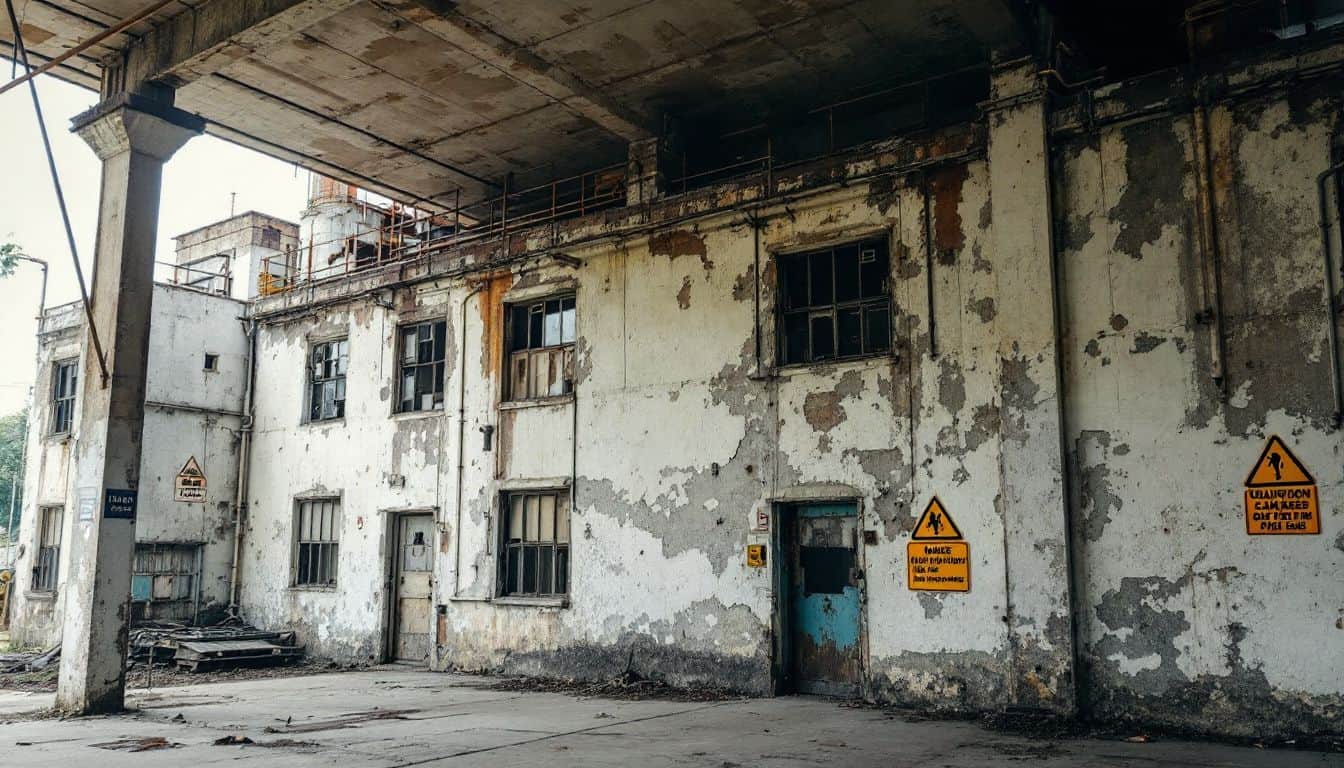
The Importance of Asbestos Awareness: Why It Matters for Everyone Who Enters a Building
Asbestos doesn’t announce itself. It hides in ceiling tiles, pipe lagging, floor adhesives, and roof panels — often in buildings that look completely ordinary. For anyone working in or managing older properties, understanding the importance of asbestos awareness isn’t a professional courtesy. It’s a legal requirement, and ignoring it can be fatal.
Asbestos-related disease remains one of the leading causes of occupational death in the UK. The fibres are invisible to the naked eye, the diseases they cause take decades to develop, and by the time symptoms appear, treatment options are severely limited. Awareness — real, practical, trained awareness — is the first line of defence.
The Legal Foundation: What the Control of Asbestos Regulations Require
The Control of Asbestos Regulations place a clear legal duty on employers to ensure that workers who are liable to disturb asbestos-containing materials (ACMs), or who supervise those who do, receive adequate information, instruction, and training. That duty applies regardless of whether the work is planned or incidental.
A surveyor entering a property to carry out a management survey must understand what they’re looking for, how to handle it safely, and what the regulations require them to do next. The same applies to those undertaking a refurbishment survey or a demolition survey — both of which involve more intrusive work and a significantly higher risk of accidental fibre release.
Dutyholders — typically building owners, landlords, and managing agents — also carry legal responsibility for ensuring asbestos is managed in their premises. That means commissioning appropriate surveys, keeping accurate records, and ensuring any contractors working on site are competent and properly trained.
Non-compliance isn’t a minor administrative issue. It can result in enforcement action, significant fines, and in the worst cases, prosecution.
What Training Does the Law Actually Require?
The regulations distinguish between different categories of asbestos work, and the training required reflects that distinction. For surveyors and others likely to encounter ACMs without directly working on them, asbestos awareness training is the baseline requirement.
This covers:
- What asbestos is, where it’s found, and why it’s dangerous
- How to recognise materials likely to contain asbestos
- The health risks associated with asbestos fibre inhalation
- What to do — and what not to do — if suspected ACMs are found
- How to report findings and maintain accurate records
For those carrying out licensed or non-licensed asbestos work, additional competency training is required. Surveyors conducting refurbishment and demolition surveys, in particular, need a thorough working knowledge of ACM types, sampling protocols, and survey methodology as set out in HSG264.
Why the Risk Is So Significant
Asbestos was used extensively in UK construction throughout the twentieth century. It was cheap, fire-resistant, and incredibly versatile. By the time it was fully banned in the UK, it had been incorporated into hundreds of different building products across virtually every type of property.
That legacy means a substantial proportion of UK buildings — particularly those constructed before 2000 — still contain asbestos in some form. Schools, hospitals, offices, industrial units, and residential properties are all affected.
When ACMs are in good condition and left undisturbed, they generally pose a low risk. The danger arises when materials are damaged, deteriorating, or disturbed during building work — releasing microscopic fibres into the air that, once inhaled, can lodge permanently in lung tissue.
The diseases caused by asbestos exposure include:
- Mesothelioma — an aggressive cancer of the lining of the lungs or abdomen, almost exclusively caused by asbestos exposure
- Asbestos-related lung cancer — with risk significantly increased in those who also smoke
- Asbestosis — a chronic scarring of the lung tissue that progressively impairs breathing
- Pleural disease — thickening or effusion of the pleural membrane surrounding the lungs
These diseases typically take decades to develop. By the time symptoms appear, treatment options are limited and the prognosis is often poor. That long latency period is precisely what makes asbestos so insidious — and why the importance of asbestos awareness cannot be overstated.
Workers can be exposed without knowing it, and the consequences only become apparent years later.
What Effective Asbestos Awareness Training Covers
Understanding Asbestos and Its Properties
Good training starts with the fundamentals. Asbestos is a naturally occurring fibrous mineral used in construction for its heat resistance, tensile strength, and insulating properties. There are several types, but the three most commonly encountered in UK buildings are:
- Chrysotile (white asbestos) — the most widely used, found in roofing sheets, floor tiles, and textured coatings
- Amosite (brown asbestos) — commonly found in insulating board and pipe insulation
- Crocidolite (blue asbestos) — considered the most hazardous, used in spray insulation and some insulating boards
All three types are dangerous. Training ensures surveyors and workers understand why, and don’t make the dangerous assumption that one type is somehow safe to handle without precautions.
Identifying Asbestos-Containing Materials
Visual identification of ACMs is one of the most practical skills a surveyor can develop — and one of the most difficult to acquire without proper guidance. Asbestos was incorporated into a vast range of building materials, and its presence isn’t always obvious.
Surveyors and trained workers need to be able to recognise the common locations and product types where ACMs are likely to be found, including:
- Asbestos insulating board (AIB) in ceiling tiles, partition walls, and fire doors
- Sprayed coatings on structural steelwork and ceilings
- Pipe lagging and boiler insulation
- Textured decorative coatings (such as Artex) on ceilings and walls
- Vinyl floor tiles and the adhesives beneath them
- Asbestos cement products in roofing sheets, guttering, and external cladding
- Rope seals and gaskets in heating and ventilation systems
Training teaches surveyors to approach a building systematically, record findings accurately, and understand that confirmation always requires sampling and laboratory analysis — not assumptions based on appearance alone.
Risk Assessment and Safe Handling Procedures
Identifying a suspected ACM is only the first step. Trained surveyors understand how to assess the condition of materials, estimate the likelihood of fibre release, and determine what action — if any — is needed immediately.
Key principles include:
- Not disturbing suspected ACMs unnecessarily during a survey
- Knowing when sampling is appropriate and how to carry it out safely
- Using appropriate personal protective equipment (PPE) correctly
- Following correct decontamination procedures after working in potentially contaminated areas
- Accurately recording all findings and communicating them clearly in survey reports
Emergency Procedures
Training also prepares surveyors and workers for what to do if something goes wrong — if ACMs are accidentally disturbed, if fibre release occurs, or if a previously unrecorded asbestos material is uncovered mid-survey.
Knowing how to respond quickly and correctly can be the difference between a contained incident and a serious exposure event that affects multiple people on site.
Who Needs Asbestos Awareness Training?
The short answer is: anyone who could encounter asbestos in the course of their work. The Control of Asbestos Regulations are clear that the duty to train applies broadly — across many industries, not just construction.
Asbestos Surveyors and Building Inspectors
This is the most obvious group — professionals who enter buildings specifically to locate and assess ACMs. For these individuals, asbestos awareness training is the absolute minimum. Many will also hold P402 qualifications or equivalent competency certifications recognised by the British Occupational Hygiene Society (BOHS).
The importance of asbestos awareness is perhaps most acute for this group, given that they encounter potential ACMs on every survey they carry out. Their training directly determines the quality and reliability of the survey report that dutyholders and contractors will rely on.
Construction and Demolition Workers
Tradespeople who work in or on existing buildings — electricians, plumbers, plasterers, joiners, and demolition operatives — are among those most frequently exposed to asbestos. They may encounter ACMs without any prior warning, particularly in older properties where no asbestos register exists.
Training ensures they can recognise the risk, stop work, and report what they’ve found rather than continuing to disturb potentially dangerous materials. This is especially critical in domestic properties, where there may be no formal asbestos management plan in place at all.
Property Management Professionals
Facilities managers, housing officers, estate agents, and commercial property managers all have a role in managing asbestos safely. As dutyholders, they need enough awareness to understand their legal obligations, commission appropriate surveys, maintain accurate asbestos registers, and brief contractors correctly before any work begins.
Maintenance and Facilities Staff
Any member of staff who carries out routine maintenance tasks — changing light fittings, drilling into walls, accessing ceiling voids — could inadvertently disturb ACMs. Awareness training gives them the knowledge to stop and seek guidance before a routine job becomes a hazardous incident.
Common Failures in Asbestos Survey Practice — and How Training Prevents Them
Poor asbestos surveying practice tends to follow recognisable patterns. Understanding these failure modes is useful both for those commissioning surveys and those carrying them out.
Incomplete or Inaccurate Identification
A surveyor who isn’t trained to recognise the full range of ACMs will miss materials. Those materials won’t appear in the survey report, won’t be included in the asbestos management plan, and contractors working on the building won’t know to avoid them. The result is uncontrolled disturbance and potential exposure.
Poor Sampling Technique
Taking bulk samples for laboratory analysis sounds straightforward, but doing it incorrectly can itself create a release of fibres. Training covers how to take samples safely, use appropriate PPE, and handle samples correctly to avoid contaminating the surrounding area.
If you need to confirm whether a material contains asbestos, professional asbestos testing by an accredited laboratory is the only reliable approach — visual identification alone is never sufficient.
Inadequate Record-Keeping
Survey reports that are vague, poorly structured, or don’t clearly communicate the location and condition of ACMs are of limited use to the dutyholder. Trained surveyors understand what a good asbestos register looks like and why accuracy matters — both for compliance and for the safety of everyone who works in the building.
Failure to Communicate Findings
A survey report that sits in a filing cabinet serves no one. Trained surveyors and the organisations that employ them understand the importance of ensuring findings are communicated to the right people — including contractors, maintenance staff, and anyone else who might work in affected areas.
The Different Types of Asbestos Survey — and Why Competence Matters for Each
Not all surveys are the same, and the level of training and competence required reflects the nature of the work being undertaken. HSG264 — the HSE’s definitive guidance on asbestos surveying — sets out the framework clearly.
Management Surveys
A management survey is designed to locate ACMs in a building that is in normal occupation and use. It’s the standard survey required for ongoing asbestos management and must be carried out by a competent surveyor who understands how to assess materials without causing unnecessary disturbance.
The findings feed directly into the building’s asbestos management plan — the document that dutyholders are legally required to produce and maintain.
Refurbishment and Demolition Surveys
These surveys are required before any refurbishment or demolition work takes place. They are more intrusive than management surveys — involving destructive inspection techniques to locate all ACMs in areas that will be disturbed — and carry a higher risk of fibre release if not conducted properly.
The competence required to carry out these surveys safely is considerably higher. A surveyor undertaking this work must understand not only how to identify ACMs, but how to manage the risks created by the survey process itself. Whether you need an asbestos survey in London, an asbestos survey in Manchester, or an asbestos survey in Birmingham, the same standard of competence applies regardless of location.
Asbestos Awareness Beyond the Survey: Ongoing Responsibilities
Asbestos awareness isn’t a one-time box to tick. Buildings change, materials deteriorate, and staff turn over. A robust approach to asbestos management requires ongoing awareness — not just at the point of the initial survey, but throughout the life of the building.
Dutyholders should ensure that:
- Asbestos registers are kept up to date and accessible to those who need them
- New staff and contractors are briefed before working in affected areas
- Any changes to the condition of known ACMs are recorded and acted upon
- Awareness training is refreshed regularly — not treated as a one-off exercise
- Any planned works trigger a review of the asbestos management plan before work begins
The importance of asbestos awareness extends well beyond the initial survey. It underpins every decision made about a building’s maintenance, refurbishment, and eventual demolition.
When to Commission Professional Asbestos Testing
There are situations where visual survey findings alone aren’t sufficient to make informed management decisions. If a material’s composition is uncertain, if a surveyor has identified a suspected ACM but cannot confirm its type, or if a building is being prepared for significant works, professional asbestos testing provides the definitive answer.
Bulk sampling, followed by analysis at an accredited laboratory using polarised light microscopy or electron microscopy, is the only way to confirm the presence and type of asbestos in a material. The results inform risk assessment, management decisions, and — where removal is necessary — the specification for remediation work.
Never rely on visual identification alone when the stakes are this high. A confirmed result from a UKAS-accredited laboratory removes uncertainty and ensures that management decisions are based on fact, not assumption.
Frequently Asked Questions
Who is legally required to have asbestos awareness training?
Under the Control of Asbestos Regulations, any worker who is liable to disturb asbestos-containing materials — or who supervises those who do — must receive adequate asbestos awareness training. This includes surveyors, construction and demolition workers, electricians, plumbers, maintenance staff, and facilities managers. The duty applies across many industries, not just construction.
What is the difference between a management survey and a refurbishment survey?
A management survey is carried out in occupied buildings to locate and assess ACMs for ongoing management purposes. A refurbishment survey is more intrusive and is required before any refurbishment work begins — it involves destructive inspection techniques to ensure all ACMs in the affected area are identified before work starts. Both must be carried out by a competent surveyor in line with HSG264.
Can you identify asbestos just by looking at it?
No. Visual identification can indicate that a material is likely to contain asbestos, but it cannot confirm it. The only reliable method of confirmation is bulk sampling followed by analysis at a UKAS-accredited laboratory. This is why professional asbestos testing is essential whenever there is genuine uncertainty about a material’s composition.
How often should asbestos awareness training be refreshed?
The Control of Asbestos Regulations don’t specify a fixed renewal period, but HSE guidance makes clear that training must remain current and relevant. Most organisations refresh awareness training annually or whenever there is a significant change in working practices, building use, or staff responsibilities. Treating training as a one-off exercise is not sufficient.
What should I do if I suspect I’ve disturbed asbestos?
Stop work immediately. Do not continue to disturb the material. Leave the area and prevent others from entering. Report the incident to your supervisor or the dutyholder, and arrange for the area to be assessed by a competent person before any further work takes place. If fibre release has occurred, specialist decontamination may be required before the area is safe to re-enter.
Speak to Supernova Asbestos Surveys
With over 50,000 surveys completed nationwide, Supernova Asbestos Surveys provides expert, accredited asbestos surveying services across the UK. Whether you need a management survey for an occupied building, a refurbishment or demolition survey ahead of planned works, or professional asbestos testing to confirm the composition of a suspected material, our qualified surveyors are ready to help.
Don’t leave asbestos management to chance. Call us on 020 4586 0680 or visit asbestos-surveys.org.uk to find out how we can support your legal obligations and keep your building safe.