What Construction Workers Need to Know About Asbestos Exposure and Health Screening
Construction work has a habit of uncovering what buildings have been quietly concealing for decades. When that hidden problem is asbestos, the risk is easy to underestimate — fibres are microscopic, symptoms can take years or even decades to appear, and many workers feel completely fine after an incident. That combination of invisibility and delayed consequence makes it one of the most serious occupational health hazards in the UK today.
Across the UK, asbestos remains a live issue in any building constructed before the year 2000. If work disturbs insulation, boards, coatings, floor finishes or cement products without proper controls in place, fibres can be released into the air. Once that happens, the right response is not guesswork — it is prompt reporting, appropriate medical advice, accurate records and tighter site controls to prevent it happening again.
Why Asbestos Exposure Still Matters in Construction
Asbestos was used widely in the building industry because it resisted heat, added structural strength and improved durability. That means it still turns up in ordinary places across commercial, industrial and public buildings — in risers, ceiling voids, service ducts, boiler rooms and floor build-ups.
The problem is not simply that asbestos exists in older buildings. The real danger comes when materials are drilled, cut, stripped out, broken or damaged during maintenance, refurbishment or demolition. A task that looks entirely routine can create significant exposure if the material has not been properly identified beforehand.
For property managers, the practical lesson is straightforward: never assume a building is free from asbestos. Before work starts, check the age of the property, review any existing asbestos information, and make sure the survey type matches the scope of the job being planned.
Which Workers Are Most Likely to Encounter Asbestos?
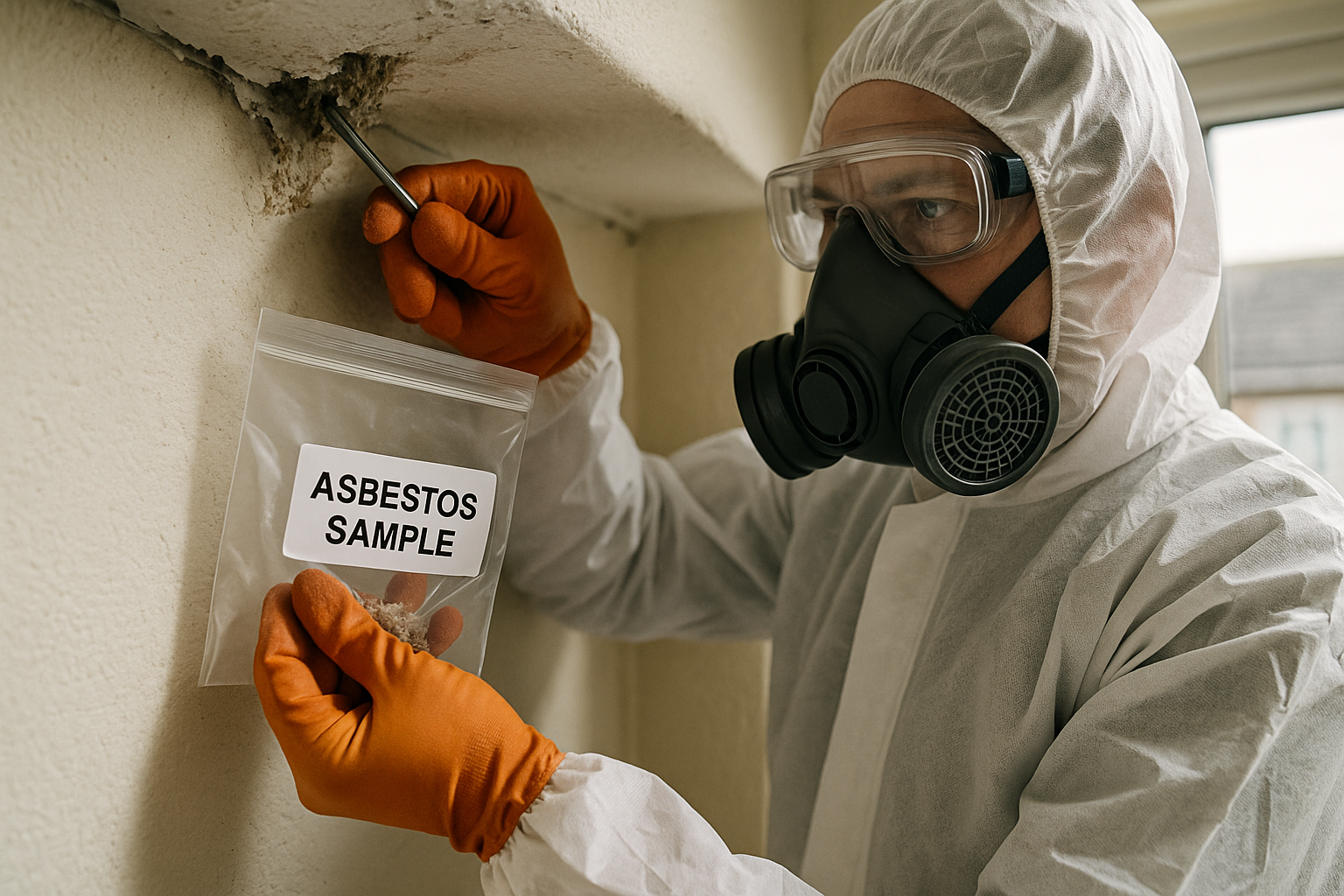
Licensed asbestos contractors are not the only people at risk. Many trades can disturb asbestos-containing materials during everyday work in older premises without realising it. Those most commonly at risk include:
- Demolition workers
- Refurbishment contractors
- Electricians
- Plumbers
- Heating and ventilation engineers
- Roofers
- Joiners and general builders
- Maintenance staff
- Facilities teams working in older buildings
If the building fabric is going to be disturbed in any way, asbestos should be part of the planning conversation before tools come out. This is not a box-ticking exercise — it is a genuine duty of care to everyone on site.
Where Asbestos Is Commonly Found on Site
One of the most common mistakes is assuming asbestos only appears in obvious pipe lagging or boiler insulation. In reality, it can be present in a wide range of materials, some more friable than others, but all requiring proper assessment before work begins.
Common locations and materials include:
- Pipe lagging and boiler insulation
- Sprayed coatings on structural steelwork and ceilings
- Asbestos insulation board in partitions, soffits and risers
- Textured coatings such as Artex
- Ceiling tiles and panels
- Floor tiles and bitumen adhesives
- Cement roof sheets, gutters and downpipes
- Fire doors, panels and linings
- Toilet cisterns and moulded products
- Wall panels, boxing and duct coverings
Some materials release fibres far more readily than others. Damaged lagging or asbestos insulation board typically presents a higher risk than intact asbestos cement, but both still fall within the duty to manage asbestos properly under the Control of Asbestos Regulations and relevant HSE guidance.
Health Effects Linked to Asbestos Exposure
Asbestos-related disease often develops after a significant delay — sometimes 20 to 40 years after exposure. A worker may feel completely well for many years following an incident. That delay creates false reassurance, particularly after a one-off event that seemed minor at the time. No symptoms today does not mean exposure can be ignored.
Main Asbestos-Related Conditions
Where there has been known or suspected contact with asbestos fibres, the following conditions are the primary concern for occupational health professionals:
- Asbestosis — scarring of lung tissue caused by the inhalation of asbestos fibres over time
- Mesothelioma — a cancer affecting the lining of the lungs or abdomen, strongly associated with asbestos exposure
- Asbestos-related lung cancer — cancer within the lung tissue, with smoking significantly increasing overall risk
- Pleural thickening and pleural plaques — changes to the lining of the lungs that can indicate past exposure, even if not immediately disabling
Symptoms that may justify medical attention include breathlessness, a persistent cough, chest discomfort, fatigue and unexplained weight loss. These symptoms do not automatically indicate asbestos disease, but they should never be dismissed where occupational exposure is part of someone’s history.
What Health Screening Is Recommended After Asbestos Exposure?
There is no single test that can instantly confirm whether asbestos exposure will cause disease in future. No routine blood test provides that answer. Medical follow-up is based on work history, current symptoms, clinical judgement and, where needed, further investigation. For workers with known or suspected exposure — particularly repeated or significant exposure — health screening may involve several steps.
1. Occupational History and Baseline Assessment
This is the starting point for any clinician or occupational health professional. They will want to know what work was carried out, where it happened, how often, what materials were disturbed and whether appropriate respiratory protective equipment was used correctly.
Useful details to have ready include:
- Trade and job role at the time of exposure
- Dates or periods of likely exposure
- Type of building and materials involved
- Whether the task involved drilling, cutting, stripping out or demolition
- Any previous asbestos incidents on site
- Smoking history
- Current respiratory symptoms
For employers, good records make a real difference. If a worker later needs medical assessment, clear exposure information helps clinicians make better, more informed decisions.
2. Lung Function Testing
Spirometry is commonly used to assess how well the lungs are functioning. It measures how much air a person can move and how quickly they can exhale. On its own, spirometry does not diagnose asbestos-related disease, but it can provide a useful baseline and help track changes over time — particularly where there is a relevant exposure history or symptoms are developing.
3. Chest Imaging
A doctor may decide that chest imaging is appropriate if symptoms, occupational history or previous findings justify it. A chest X-ray may help identify pleural changes, scarring or other abnormalities associated with past asbestos exposure. Where more detail is needed, a CT scan may be arranged — though this is usually a clinical decision based on the individual worker’s history rather than something offered routinely.
4. Medical Surveillance for Licensable Work
Where workers carry out licensable asbestos work, medical surveillance is a formal legal requirement under the Control of Asbestos Regulations. This must be carried out by a doctor appointed by the HSE. This is not optional, and employers involved in licensable work must make the appropriate arrangements, maintain health records for the required period and ensure workers are medically fit for that type of work.
When Should a Worker Seek Medical Advice?
If someone believes they may have been exposed to asbestos, the right next step depends on the level and nature of the incident. A one-off concern about a suspected material is different from repeated uncontrolled exposure during construction work, but both should be taken seriously rather than set aside.
A worker should speak to a GP or occupational health professional promptly if they:
- Know they disturbed asbestos without proper controls in place
- Have had repeated exposure in older buildings over a period of time
- Develop breathlessness, a persistent cough or chest discomfort
- Notice symptoms that do not improve over several weeks
- Previously worked in a high-risk trade and are now experiencing respiratory symptoms
When speaking to a GP, be direct. Explain that asbestos exposure may have occurred and provide a clear work history. That occupational context can affect referrals and the investigations that follow, and a clinician cannot make fully informed decisions without it.
What to Do Straight After a Suspected Asbestos Incident
The first few actions after a suspected asbestos incident matter significantly. They will not undo any exposure that has already occurred, but they can stop the situation from getting worse and create a proper record of what happened.
- Stop work immediately. Do not continue drilling, cutting or clearing up in the area.
- Keep others away. Limit access to the area until the material has been properly assessed.
- Do not dry sweep or use a standard vacuum. This can spread fibres further rather than containing them.
- Report the incident. Notify a supervisor or dutyholder and ensure it is properly recorded.
- Arrange assessment of the material. Sampling and analysis should be carried out safely by a competent person.
- Review who may have been exposed. Record names, tasks undertaken and likely duration of any exposure.
- Seek medical advice where appropriate. This is especially relevant after repeated, uncontrolled or significant disturbance.
For property managers, a calm, structured process beats panic every time. Secure the area, get competent advice, and avoid any rushed clean-up by untrained staff who may inadvertently make things worse.
Employer Responsibilities Under Asbestos Law
Medical follow-up is only one part of the picture. The primary legal duty is to prevent exposure to asbestos so far as is reasonably practicable, and to manage it properly where it is present. The Control of Asbestos Regulations place clear responsibilities on employers, dutyholders and those in control of non-domestic premises. Surveying work should also align with HSG264, which sets out the recognised approach to asbestos surveying in the UK.
Key employer and dutyholder duties include:
- Identifying whether asbestos is present in the premises
- Assessing the risk from any asbestos-containing materials found
- Keeping the asbestos register and management plan up to date
- Providing relevant information to anyone liable to disturb asbestos
- Using competent surveyors, analysts and contractors
- Providing appropriate training where required
- Arranging medical surveillance for licensable asbestos work
- Retaining health records for the required period
A poor or outdated survey leads directly to poor decisions on site. If the information on file is incomplete or based on the wrong survey type, contractors may walk into entirely avoidable asbestos risk.
Preventing Exposure Starts With the Right Asbestos Survey
Health screening matters after possible exposure, but prevention starts much earlier. Before anyone disturbs the building fabric, you need reliable information about the presence, type and condition of any asbestos-containing materials on site.
If a building is occupied and in normal use, the usual starting point is a management survey. This identifies materials that could be disturbed during normal occupation, routine maintenance or foreseeable minor works, and forms the basis of a workable asbestos management plan.
If the plan involves stripping out an area, altering the structure or taking a building down, a demolition survey is required before work begins. This type of survey is intrusive by design — hidden asbestos must be found before refurbishment or demolition can proceed safely.
Where asbestos has already been identified and recorded, regular review is a core part of responsible management. A re-inspection survey helps confirm whether known materials remain in good condition and whether the asbestos register still accurately reflects the situation on site.
Testing Suspected Materials Safely
Not every situation calls for a full survey straight away. Sometimes you simply need to confirm whether a specific material contains asbestos before deciding on next steps. In those cases, professional asbestos testing can provide the clarity needed to make an informed decision.
Sampling should always be approached carefully. The aim is to identify the material without creating unnecessary fibre release. If the product is damaged, friable, overhead, difficult to access or located in an occupied commercial building, professional attendance is usually the safest and most appropriate route.
For more straightforward situations where a sample can be taken safely and lawfully, a testing kit may be a practical option. Even then, caution is essential — DIY sampling is not suitable for every material or every property type, and professional judgement should always be sought where there is any doubt.
For clients who need a fast booking route for laboratory analysis, Supernova also provides a dedicated asbestos testing service page to help you choose the right option quickly and get results back without delay.
What Happens If Asbestos Is Found?
Finding asbestos does not automatically mean immediate removal or a site shutdown. The right response depends on the type of material, its current condition, its location and the realistic likelihood of disturbance during planned or routine work.
In many cases, asbestos-containing materials in good condition and in low-risk locations can be managed in place. This means keeping them monitored, ensuring they are clearly recorded in the asbestos register, and making sure anyone who could disturb them is properly informed before work begins.
Where materials are deteriorating, in a high-traffic area or likely to be disturbed by planned works, remediation or removal by a licensed contractor will usually be the appropriate course of action. The key is making that decision based on accurate survey data rather than assumption.
Supernova Asbestos Surveys: Nationwide Coverage, Expert Advice
Supernova Asbestos Surveys has completed over 50,000 surveys across the UK, working with property managers, employers, contractors and local authorities to manage asbestos safely and in line with legal requirements. Whether you need a survey, testing, re-inspection or advice on next steps after a suspected incident, our team is ready to help.
We provide asbestos surveys across the country, including asbestos survey London, asbestos survey Manchester and asbestos survey Birmingham — with qualified surveyors available at short notice across England, Scotland and Wales.
Call us on 020 4586 0680 or visit asbestos-surveys.org.uk to book a survey, arrange testing or speak to a member of our team about your specific situation.
Frequently Asked Questions
Is there a blood test that can detect asbestos exposure?
There is no routine blood test that can confirm whether asbestos fibres have been inhaled or predict whether disease will develop in future. Medical assessment after exposure is based on occupational history, current symptoms and clinical judgement. Where warranted, a doctor may arrange lung function tests or chest imaging to assess the situation more fully.
How long after asbestos exposure do symptoms appear?
Asbestos-related diseases typically have a long latency period — often between 20 and 40 years between exposure and the onset of symptoms. This is one of the reasons why exposure incidents should always be properly recorded and why workers should inform their GP of any relevant occupational history, even if they currently feel well.
Is medical surveillance a legal requirement for all asbestos workers?
Medical surveillance is a legal requirement specifically for workers who carry out licensable asbestos work, under the Control of Asbestos Regulations. It must be conducted by an HSE-appointed doctor. Workers who may encounter asbestos incidentally during other trades are not subject to the same formal requirement, but should still seek medical advice if they believe significant exposure has occurred.
What should I do if I accidentally disturb asbestos on a construction site?
Stop work immediately, keep others away from the area and do not attempt to clean up using a standard vacuum or dry sweeping. Report the incident to your supervisor, ensure it is formally recorded, and arrange for the material to be assessed by a competent person. Seek medical advice if the disturbance was significant or if you develop any respiratory symptoms in the days or weeks that follow.
How do I know if a building I am working in contains asbestos?
Any building constructed before the year 2000 may contain asbestos. Before starting work that could disturb the building fabric, you should check whether an asbestos survey has been carried out and review the asbestos register if one exists. If no survey information is available, a management survey or demolition survey — depending on the scope of work — should be arranged before work begins. Never assume a building is asbestos-free without documented evidence.