
One unsafe job in an older building can leave a worker with questions that do not go away for decades. If you are asking can you sue your employer for asbestos exposure, the answer in the UK is often yes, but success depends on what your employer did, what they should have done, and the evidence available.
For employers, contractors, site managers, and property managers, asbestos is not a paperwork issue. It is a legal, operational, and health risk that must be managed properly under the Control of Asbestos Regulations, supported by HSE guidance and recognised surveying standards such as HSG264.
Can You Sue Your Employer for Asbestos Exposure in the UK?
Yes. You can sue your employer for asbestos exposure if their negligence caused or materially contributed to your exposure and that exposure led to injury, illness, or another recognised loss.
Not every exposure automatically leads to compensation. A claim usually turns on whether your employer failed in their duty of care and whether that failure can be shown with clear evidence.
In practice, there are often two separate issues running side by side:
- Civil claims for compensation brought by the worker or their family
- Regulatory action by the HSE where health and safety duties have been breached
To bring a successful civil claim, you will usually need to show:
- Your employer owed you a duty of care
- They breached that duty
- You were exposed to asbestos because of that breach
- The exposure caused illness, injury, or a recognised loss
If the exposure happened years ago, that does not automatically stop a claim. Asbestos-related disease can develop long after the original work took place, which is why records and witness evidence matter so much.
When an Employer May Be Legally Responsible
Employers cannot simply say they did not know asbestos was present. In many non-domestic premises, especially older buildings, they are expected to take reasonable steps to find out.
Under the Control of Asbestos Regulations, duty holders and employers must identify asbestos risks, assess those risks, prevent exposure where possible, and reduce it so far as is reasonably practicable. If workers are sent into a building without proper checks, the employer may be exposed to both claims and enforcement action.
Common failings that lead to asbestos claims
These are the issues that often sit behind the question, can you sue your employer for asbestos exposure:
- No asbestos survey before intrusive work
- Using the wrong type of survey for the planned activity
- Ignoring an asbestos register or failing to share it with contractors
- Poor asbestos awareness training
- No clear method statement or risk assessment
- Allowing drilling, cutting, strip-out, or demolition to continue after suspect materials were found
- Using unsuitable contractors for work involving asbestos-containing materials
- Weak controls around PPE, access restriction, cleaning, and waste handling
- Failing to follow HSE guidance
Where managers knew, or should have known, that asbestos might be present and still allowed work to go ahead unchecked, that can form the basis of a strong negligence case.
Why Surveys Matter So Much in Asbestos Liability
One of the most common causes of workplace asbestos exposure is poor surveying. If the survey is missing, out of date, too limited, or simply the wrong type, workers can be put at risk very quickly.
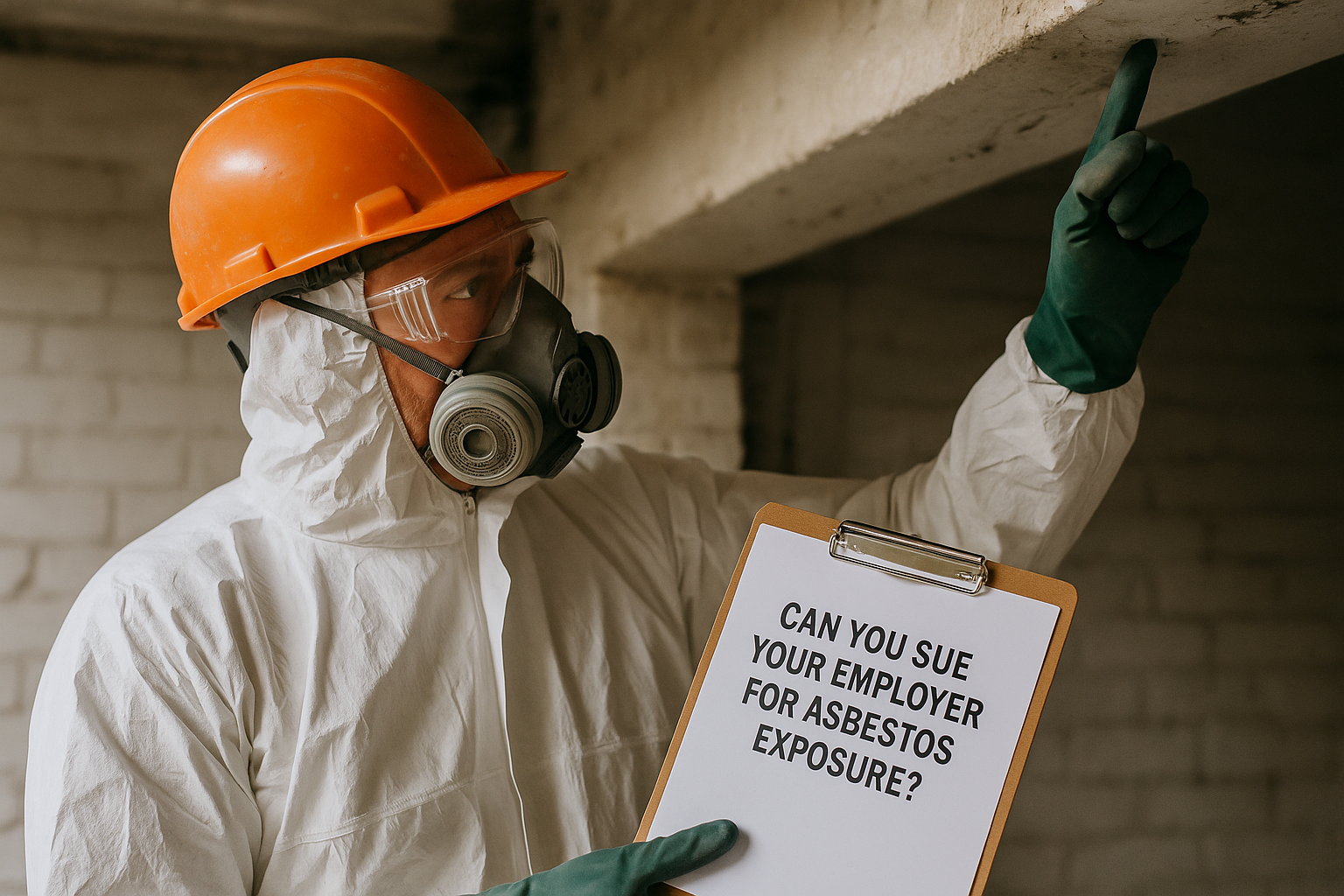
For routine occupation and normal maintenance, a management survey is used to locate, as far as reasonably practicable, the presence and extent of asbestos-containing materials that could be disturbed during everyday use of the building.
That is not the same as a pre-demolition or major strip-out inspection. Where a building is due to be heavily refurbished, stripped back, or knocked down, a demolition survey is typically required so hidden materials can be identified before they are disturbed.
Getting this wrong creates legal trouble. If an employer relied on a basic survey when intrusive works were planned, that can be powerful evidence that they failed to manage asbestos risk properly.
How HSG264 fits into disputes
HSG264 is the recognised guidance for asbestos surveying. It sets out how surveys should be planned, carried out, and reported so the findings are suitable for safe decision-making.
In legal disputes, investigators and solicitors often look closely at whether the survey work matched the purpose of the job. If it did not, the employer may struggle to defend their position.
What Counts as Asbestos Exposure at Work?
Asbestos exposure happens when fibres become airborne and are inhaled. This usually happens when asbestos-containing materials are damaged, cut, drilled, broken, sanded, stripped, or disturbed during maintenance, refurbishment, installation, or demolition.
Typical workplace scenarios include:
- Drilling into walls, soffits, ceilings, or service risers in older buildings
- Removing old panels, ceiling tiles, insulation, or textured coatings
- Working on pipe lagging, boiler insulation, or plant rooms
- Lifting floor tiles or disturbing adhesives and bitumen products
- Breaking asbestos cement sheets during roof or external works
- Carrying out demolition without proper asbestos identification first
The level of risk depends on the material involved, its condition, how friable it is, how long the exposure lasted, and what controls were in place. Materials such as lagging, sprayed coatings, and asbestos insulating board are generally more dangerous when disturbed because they can release fibres more readily.
Do You Need to Be Ill Before You Can Claim?
This is where many people get stuck. Asking can you sue your employer for asbestos exposure is not always the same as asking whether compensation is available straight away.
In many cases, compensation claims are strongest where there is a diagnosed asbestos-related condition. That might include mesothelioma, asbestosis, pleural thickening, or asbestos-related lung cancer.
Exposure alone should still be taken seriously. Even without a diagnosis, you should report the incident, preserve records, and get legal advice if you believe your employer failed in their duties.
Asbestos disease can take a very long time to appear. A well-documented exposure event today may become vital evidence many years later.
Conditions linked to asbestos exposure
- Mesothelioma – a cancer affecting the lining of the lungs or abdomen
- Asbestosis – scarring of the lungs caused by inhaling asbestos fibres
- Pleural thickening – thickening of the lung lining that can affect breathing
- Asbestos-related lung cancer – lung cancer linked to occupational exposure
If you have symptoms such as breathlessness, persistent cough, chest pain, or unexplained fatigue after known workplace exposure, seek medical advice promptly and explain your asbestos history clearly.
Evidence That Helps Prove an Asbestos Claim
Evidence can make or break a claim. Memories fade, companies merge, sites are redeveloped, and paperwork disappears. The earlier you gather information, the better.
Useful evidence includes:
- Employment records showing where and when you worked
- Site diaries, permits to work, risk assessments, and method statements
- Asbestos surveys, registers, and sampling reports
- Training records and toolbox talks
- Photographs of the area and materials involved
- Witness statements from colleagues, supervisors, or contractors
- Accident book entries and incident reports
- Occupational health records
- Medical records and specialist reports
For property managers and employers, the lesson is simple: poor record keeping increases legal risk. If you cannot show what checks were done, what information was shared, and how work was controlled, your defence becomes much weaker.
What to Do If You Think You Were Exposed
Do not brush off possible exposure because the task was short or the dust seemed minor. The right steps protect your health and preserve the facts.
- Stop work if suspect asbestos-containing material may still be present
- Report the incident immediately to your supervisor, employer, site manager, or duty holder
- Ask to see the asbestos survey, register, and any sampling results
- Write down the date, location, task, material disturbed, and names of anyone present
- Take photographs if it is safe and appropriate to do so
- Seek medical advice if you have symptoms or significant concern
- Take legal advice if you believe your employer failed to protect you
If you manage a site, act quickly. Isolate the area, prevent further access, arrange competent inspection or sampling, review the survey position, and do not restart work until the risk is properly assessed and controlled.
How Compensation Claims Usually Work
When people ask can you sue your employer for asbestos exposure, they usually want to know what the legal process actually looks like. Most claims come down to three issues: liability, causation, and loss.
Liability
This is about whether the employer breached their duty of care. Did they fail to identify asbestos, choose the right survey, share information, train staff, supervise work, or stop unsafe activity?
Causation
This is about linking the exposure to the illness or injury. Medical evidence is often essential, especially where a worker may have had exposure at more than one site or employer over a long career.
Loss
This covers the effect on the worker or family. It may include pain and suffering, lost earnings, care costs, treatment expenses, travel costs, and in fatal cases, claims by dependants or the estate.
Because asbestos disease can emerge long after the original exposure, claims are often document-heavy and fact-sensitive. Specialist legal advice is usually needed.
Can Family Members Claim?
Yes, in some circumstances. If a worker has died from an asbestos-related condition, dependants or the estate may be able to pursue a claim.
There are also cases involving secondary exposure, such as fibres carried home on contaminated clothing. These cases depend heavily on the facts, but they show why proper decontamination procedures and controlled work methods matter so much.
What the Law Expects from Employers and Duty Holders
The legal framework is clear. Employers and those responsible for non-domestic premises must take active steps to manage asbestos risk. That means more than having a file on a shelf.
Practical duties commonly include:
- Finding out whether asbestos-containing materials are present
- Assessing their condition and risk
- Keeping an asbestos register or management plan up to date
- Sharing asbestos information with anyone who may disturb the material
- Providing training, instruction, and supervision
- Planning work properly before maintenance, refurbishment, or demolition
- Using competent contractors
- Preventing exposure and controlling the work area
- Following HSE guidance and recognised survey standards such as HSG264
If you are responsible for a building portfolio, do not let work start on assumptions. Make sure the asbestos position is clear before anyone opens up the fabric of the building.
Practical Advice for Property Managers and Construction Employers
Legal claims often start with avoidable mistakes. A few disciplined steps can reduce the risk significantly.
Before any work starts
- Check the age and history of the building
- Confirm whether an asbestos survey exists and whether it is fit for purpose
- Review the asbestos register before issuing work instructions
- Make sure contractors have the relevant information in writing
- Stop intrusive work if the survey scope does not match the task
During the project
- Brief workers clearly on known or suspected asbestos risks
- Monitor work areas, especially where hidden voids or service routes are opened up
- Pause immediately if suspect materials are found
- Keep records of decisions, communications, and site controls
Across multiple sites
If you manage properties across different regions, consistency matters. Whether you need an asbestos survey London service for a city office, an asbestos survey Manchester appointment for an industrial unit, or an asbestos survey Birmingham inspection for a mixed-use site, the principle is the same: match the survey to the work and keep the records accessible.
Why Early Action Matters
If exposure has already happened, delay helps nobody. Workers need a clear record of the event, and employers need to show they responded properly once the issue came to light.
Early action can include:
- Securing the area
- Arranging competent assessment
- Reviewing whether the correct survey was in place
- Recording who may have been affected
- Notifying relevant internal teams
- Preserving documents and site evidence
From a legal point of view, a poor response after the event can be just as damaging as the original failure that caused the exposure.
Frequently Asked Questions
Can you sue your employer for asbestos exposure if it happened years ago?
Yes, potentially. Asbestos-related illnesses often develop long after exposure. A claim may still be possible years later, especially if there is medical evidence and records showing where and how the exposure happened.
Can you sue your employer for asbestos exposure without a diagnosis?
You should still take legal advice and preserve evidence, but compensation claims are usually stronger where there is a diagnosed asbestos-related condition. Exposure on its own should still be reported and documented carefully.
What if my employer says they did not know asbestos was there?
That does not automatically protect them. Employers and duty holders are expected to take reasonable steps to identify asbestos risks in older buildings and manage them properly under the Control of Asbestos Regulations.
What documents should I ask for after suspected exposure?
Ask for the asbestos survey, asbestos register, sampling results, risk assessments, method statements, training records, and any incident reports relating to the work area.
What should property managers do to avoid asbestos claims?
Use the correct survey for the planned work, keep asbestos records updated, share information with contractors, follow HSE guidance, and stop work immediately if suspect materials are found.
If you need expert help identifying asbestos risks before work starts, Supernova Asbestos Surveys can assist with surveying across commercial, industrial, and public sector properties nationwide. Call 020 4586 0680 or visit asbestos-surveys.org.uk to book the right survey and keep your project compliant.