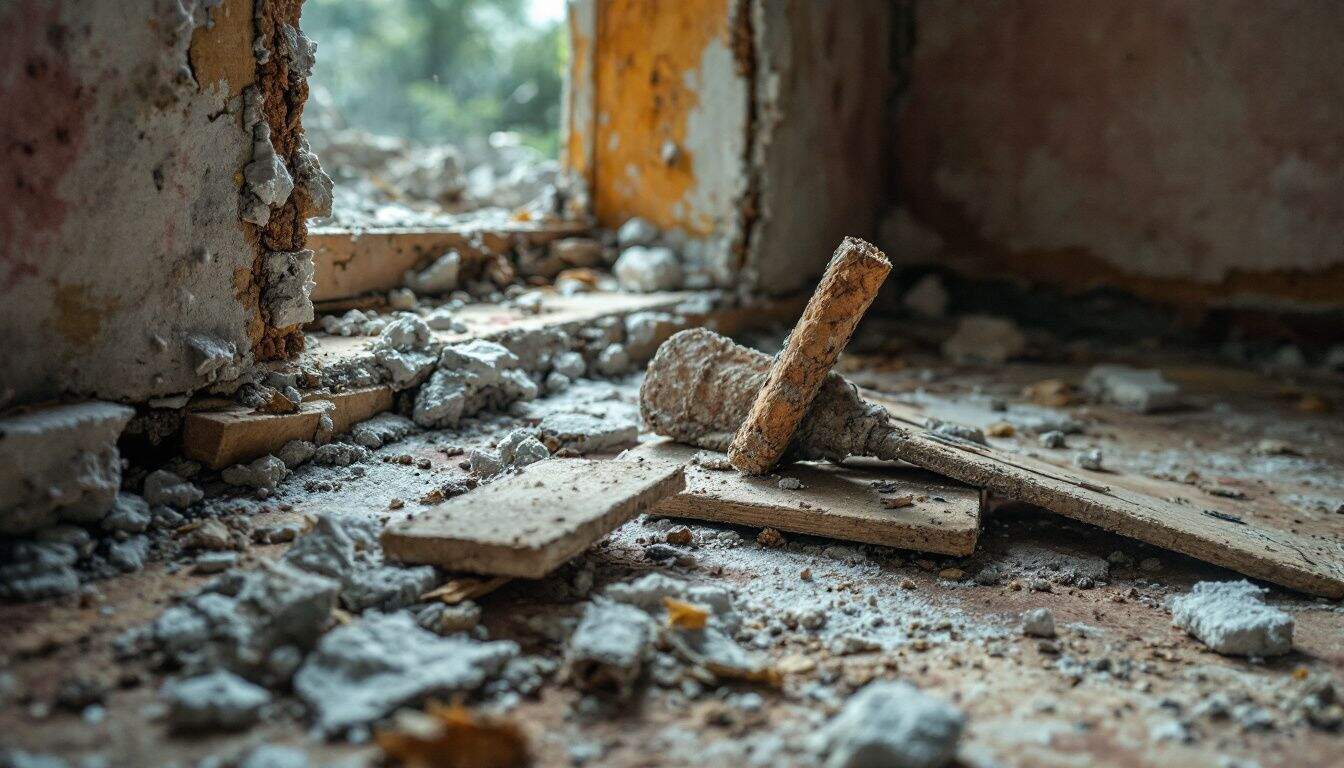
Asbestos Exposure in Construction: What the Law Requires and How Monitoring Works
Every day, construction workers across the UK disturb materials that could be silently releasing one of the most dangerous substances ever used in building. Understanding how asbestos exposure is monitored and regulated in the construction industry is not a box-ticking exercise — it is the difference between a workforce that goes home healthy and one that develops a fatal disease decades down the line.
Any building constructed before 2000 may contain asbestos-containing materials (ACMs). That covers an enormous proportion of the UK’s built environment, meaning roofers, electricians, demolition crews, plumbers, and plasterers are all at risk whenever they work on older stock without the right information in place.
Where Asbestos Hides on Construction Sites
Asbestos fibres are invisible to the naked eye. You cannot look at a material and know whether it contains asbestos — which is precisely why professional identification is a legal requirement, not a suggestion.
ACMs can appear throughout older buildings in locations that are not always obvious:
- Ceiling tiles and floor tiles
- Pipe lagging and thermal insulation boards
- Textured coatings such as Artex
- Roofing felt and corrugated cement sheets
- Fire doors and wall cavities
- Sprayed coatings on structural steelwork
- Old switchgear, gaskets, and heat-resistant panels
- Guttering, soffits, and rainwater goods
Trades at the highest risk include demolition workers, roofers, heating engineers, electricians, plasterers, joiners, and bricklayers. These workers regularly encounter materials likely to contain asbestos, and without proper survey data and controls, disturbing those materials can release dangerous quantities of fibres into the breathing zone.
The Legal Framework Governing Asbestos in Construction
The UK’s regulatory framework for asbestos is robust and enforceable. Employers and duty holders who ignore it face improvement notices, prohibition notices, and prosecution — and, most critically, preventable deaths among their workforce.
The Control of Asbestos Regulations
The Control of Asbestos Regulations form the primary legal framework for managing asbestos in non-domestic premises. Key duties under these regulations include:
- Duty to manage: Those in control of non-domestic premises must identify ACMs, assess their condition, and produce a written asbestos management plan
- Duty to inform: Any contractor, maintenance worker, or emergency responder who may disturb ACMs must be told about their location and condition before work begins
- Duty to maintain: The asbestos register must be kept current and reviewed regularly
- Licensing requirements: Higher-risk work — including removal of sprayed coatings, asbestos insulation, and asbestos insulation board — can only be carried out by HSE-licensed contractors
- Notification: Licensed asbestos work must be notified to the relevant enforcing authority before it starts
Supporting Legislation
The Control of Asbestos Regulations does not stand alone. Several other pieces of legislation interact with it directly:
- Health and Safety at Work etc. Act — places a general duty on employers to protect the health, safety, and welfare of their employees
- Control of Substances Hazardous to Health (COSHH) Regulations — require risk assessment and control measures for hazardous substances, including asbestos fibres
- Construction (Design and Management) Regulations — require principal designers and contractors to identify and manage asbestos risks throughout a project’s lifecycle
The Role of the HSE
The Health and Safety Executive is the primary enforcing authority for asbestos regulations in the UK. HSE inspectors conduct site visits, review documentation, and have the power to stop work immediately where they find inadequate controls.
The HSE also approves and maintains a register of licensed asbestos contractors, publishes technical guidance including HSG264, and sets the workplace exposure limit (WEL) for asbestos fibres. Compliance with HSE guidance is not optional — it is the baseline standard that every duty holder is expected to meet.
How Asbestos Exposure Is Monitored and Regulated in the Construction Industry: Surveys and Pre-Work Identification
Before any construction, refurbishment, or demolition work begins on a pre-2000 building, the presence of asbestos must be established. This is a legal requirement, not a precaution that can be skipped when time is tight or budgets are under pressure.
Management Surveys
A management survey is used to locate and assess ACMs in buildings that are occupied or in normal use. It forms the foundation of an asbestos register and management plan, identifying what materials are present, where they are, and what condition they are in.
Management surveys are not sufficient before intrusive or demolition work. For that, a more thorough approach is required.
Refurbishment and Demolition Surveys
A refurbishment survey is required before any intrusive work begins on a building. This type of survey involves destructive inspection to locate all ACMs that could be disturbed during the planned works, including materials hidden behind walls, above ceilings, or beneath floors.
Where a structure is being entirely taken down, a demolition survey is mandatory. Cutting corners here is where things go catastrophically wrong on construction sites — workers disturb materials they were not told about, fibres are released, and the consequences can take decades to surface.
Reviewing Existing Records
Before a survey begins, responsible parties should review all existing asbestos documentation — previous survey reports, asbestos registers, building plans, and maintenance records. Speaking to long-term employees or previous owners can surface useful information about past works or known ACMs, improving survey efficiency and reducing the risk of anything being missed.
Air Monitoring and Exposure Measurement
Identifying ACMs before work begins is the first line of defence. Monitoring airborne fibre concentrations during and after work is the second. Both are essential components of how asbestos exposure is monitored and regulated in the construction industry.
Personal and Static Air Monitoring
Air monitoring measures the concentration of asbestos fibres in the working environment. Samples are collected on filters using personal sampling pumps worn by workers, or via static monitoring equipment positioned around the site. These samples are then analysed by an accredited laboratory.
The results are compared against the workplace exposure limit set by the HSE. Where fibre concentrations approach or exceed the WEL, work must stop and control measures must be reviewed and improved before resuming. Monitoring is not a formality — it is an active feedback mechanism that tells you whether your controls are actually working.
Clearance Air Testing After Removal
Once asbestos removal work is complete, a clearance air test — commonly referred to as a four-stage clearance — must be carried out before the area is reoccupied. This process includes a thorough visual inspection of the work area, followed by air sampling to confirm that fibre concentrations have returned to background levels.
Clearance testing must be conducted by an independent analyst who is entirely separate from the contractor who carried out the removal. This independence is a regulatory requirement, not a preference.
Bulk Sample Analysis
Where there is uncertainty about whether a material contains asbestos, bulk samples can be taken and submitted to an accredited laboratory. Supernova offers professional asbestos testing services, as well as a convenient asbestos testing kit that allows samples to be collected on site and submitted for laboratory analysis.
The sample analysis service provides a straightforward, cost-effective way to confirm whether a material contains asbestos before any work begins — removing uncertainty and protecting workers from unnecessary risk.
Preventative Controls and Safe Working Practices
Monitoring tells you what is happening. Controls determine what happens next. Employers and principal contractors have a legal duty to put appropriate measures in place before, during, and after any work that may disturb ACMs.
Engineering Controls First
Personal protective equipment is the last line of defence, not the first. Before relying on PPE, employers must implement engineering controls to minimise fibre release at source:
- Enclosures and negative pressure units to contain fibres within the work area
- Wet suppression techniques to prevent fibres becoming airborne
- Local exhaust ventilation (LEV) systems
- Shadow vacuuming with H-class filtered equipment
Personal Protective Equipment
Where workers may be exposed to asbestos fibres, appropriate PPE is mandatory. This includes:
- Respiratory protective equipment (RPE) — the specification depends on fibre concentration and asbestos type
- Disposable coveralls (Category 3 Type 5) to prevent fibre contamination of clothing
- Gloves and boot covers
RPE must be correctly fitted and face-fit tested. An ill-fitting mask offers no meaningful protection — this is one of the most common failings found on construction sites during HSE inspections.
Controlled Work Areas
For licensed asbestos work, controlled areas must be established and maintained throughout the project. These include airlocks, decontamination units, and negative pressure enclosures to prevent the spread of fibres beyond the immediate work area.
Strict decontamination procedures apply to everyone entering and leaving the controlled zone. No exceptions.
Asbestos Waste Disposal
Asbestos waste is classified as hazardous waste. It must be double-bagged in clearly labelled asbestos waste bags, sealed, and disposed of at a licensed hazardous waste facility. Waste transfer records must be retained.
Fly-tipping asbestos waste is a serious criminal offence — and it still happens far too often on construction sites. Where asbestos removal is required, it must be carried out by appropriately licensed contractors working to a written plan of work, with all waste properly documented and disposed of in accordance with the regulations.
Training, Health Surveillance, and Worker Rights
Regulation and monitoring only work when the people on site understand what they are dealing with. Training is not optional — it is a legal requirement for anyone who may come into contact with asbestos during their work.
Levels of Asbestos Training
The level of training required depends on the nature of the work:
- Asbestos awareness training — required for all workers who could inadvertently disturb ACMs, including tradespeople and maintenance staff
- Non-licensed work training — for those carrying out non-licensed asbestos work such as small-scale removal of asbestos cement
- Licensed work training — for operatives employed by HSE-licensed contractors working on higher-risk materials
Training must be refreshed regularly and fully documented. Workers should also know the signs and symptoms of asbestos-related disease and be encouraged to report any concerns about ACMs they encounter during their work.
Health Surveillance
Workers who carry out licensed asbestos work are legally required to be enrolled in a programme of health surveillance. This involves regular medical examinations — including lung function tests and chest X-rays — conducted by an appointed doctor.
Health surveillance records must be retained for a minimum of 40 years. This reflects the long latency period of asbestos-related diseases, which can take between 15 and 60 years to manifest after initial exposure. Even after a worker leaves the industry, their records remain accessible to support any future health claim.
The Health Consequences of Inadequate Controls
Asbestos-related diseases remain the largest cause of work-related deaths in the UK. The conditions caused by asbestos exposure are serious, progressive, and in most cases fatal.
The four principal diseases linked to asbestos exposure are:
- Mesothelioma — a cancer of the lining of the lungs or abdomen, almost exclusively caused by asbestos exposure and with a very poor prognosis
- Asbestos-related lung cancer — risk is significantly increased by smoking in combination with asbestos exposure
- Asbestosis — a chronic scarring of lung tissue caused by heavy, prolonged exposure, leading to progressive breathlessness
- Pleural thickening — a diffuse thickening of the membrane surrounding the lungs that can restrict breathing and cause significant disability
None of these conditions are curable. Prevention through proper monitoring, regulation, and control is the only effective strategy. The regulatory framework exists because the alternative — allowing uncontrolled exposure — produces a steady, predictable toll of deaths that takes decades to appear but is entirely foreseeable.
Practical Steps for Construction Duty Holders
If you are responsible for a construction project involving a pre-2000 building, here is what you need to have in place before work begins:
- Commission the right type of survey — a management survey for occupied buildings, a refurbishment or demolition survey before intrusive work
- Share the asbestos register with all contractors, subcontractors, and trades before they set foot on site
- Ensure licensed work is carried out by licensed contractors — check the HSE’s licensed contractor register before appointing anyone
- Put air monitoring in place during any work that disturbs ACMs — and act on the results
- Arrange independent clearance testing before any area is reoccupied following removal works
- Verify training records for all workers who may encounter asbestos — awareness training is the minimum for any trade on an older building
- Document everything — plans of work, monitoring results, waste transfer notes, training records, and health surveillance must all be retained
For properties in the capital, an asbestos survey London from Supernova provides the professional identification and documentation you need to keep your project legally compliant and your workforce protected.
If you are unsure whether a suspect material contains asbestos, do not guess. Use a professional asbestos testing service or order a testing kit to get a confirmed answer before any work proceeds.
Frequently Asked Questions
Who is responsible for managing asbestos on a construction site?
Responsibility sits with the duty holder — typically the building owner or employer in control of the premises — as well as the principal contractor once a project is underway. Under the Construction (Design and Management) Regulations, the principal designer also has responsibilities to identify and manage asbestos risks during the planning phase. All parties have a legal duty to cooperate and share relevant information, including the asbestos register, with anyone who may be affected.
What is the difference between licensed and non-licensed asbestos work?
Licensed work involves higher-risk materials such as asbestos insulation, asbestos insulation board, and sprayed coatings. This work can only be carried out by HSE-licensed contractors and must be notified in advance to the enforcing authority. Non-licensed work covers lower-risk tasks — such as minor disturbance of asbestos cement — that can be carried out without a licence, provided proper controls are in place and workers have received appropriate training. Some non-licensed work still requires notification.
How often does air monitoring need to take place on a construction site?
There is no single fixed frequency — the requirement is that monitoring is sufficient to demonstrate that exposure is being controlled below the workplace exposure limit. For licensed asbestos work, monitoring is typically carried out throughout the project. The results must be recorded and reviewed. Where monitoring shows that controls are inadequate, work must stop until the situation is rectified.
What happens if asbestos is discovered unexpectedly during construction work?
Work must stop immediately in the affected area. The site should be made safe, the area cordoned off, and workers removed from the vicinity. A competent person must assess the situation before work resumes. If the material is suspected to contain asbestos, it should be tested before any further disturbance. A refurbishment or demolition survey may need to be extended to cover the affected area, and the asbestos register updated accordingly.
Is asbestos awareness training enough for construction workers?
Asbestos awareness training is the minimum requirement for any worker who could inadvertently disturb ACMs — which includes most tradespeople working on pre-2000 buildings. However, it is not sufficient for anyone actually carrying out asbestos work. Non-licensed work requires additional training specific to the tasks involved, and licensed work requires formal training provided through an HSE-approved scheme. The level of training must match the level of risk.
Speak to Supernova Asbestos Surveys
Supernova Asbestos Surveys has completed over 50,000 surveys across the UK, working with construction firms, property managers, local authorities, and private clients to ensure asbestos is properly identified, documented, and managed before it becomes a risk to health.
Whether you need a survey before a refurbishment project, laboratory analysis of a suspect material, or professional guidance on your legal obligations, our team is ready to help.
Call us on 020 4586 0680 or visit asbestos-surveys.org.uk to find out more about our services and book your survey today.