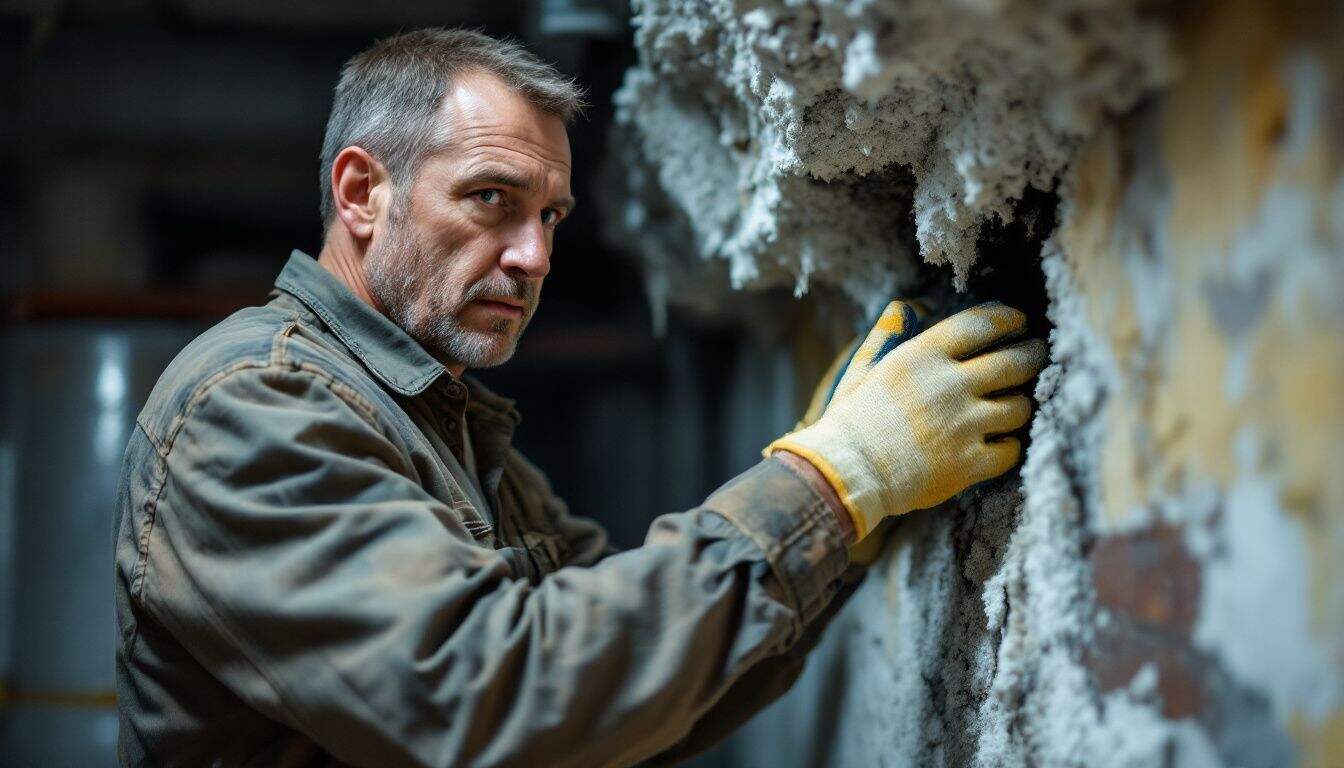
Higher Risk Asbestos Products Include These — And Construction Workers Face Them Every Day
Asbestos doesn’t discriminate — but it does concentrate. Certain trades within the construction industry face a disproportionately high risk of exposure, and a significant part of that risk comes down to the specific materials they encounter on site. Higher risk asbestos products include pipe lagging, asbestos insulation board, sprayed coatings, and asbestos cement — all built into UK structures on a vast scale before the full ban came into force in 1999.
If you work in construction, manage a site, or hold responsibility for workforce health and safety, understanding which products are most dangerous — and which trades encounter them most — is both a legal duty and a practical necessity.
Why Asbestos Risk in Construction Remains a Serious Concern
The UK has one of the highest rates of mesothelioma in the world. That’s a direct legacy of the country’s heavy reliance on asbestos throughout the twentieth century, when it was incorporated into hundreds of building products because it was cheap, durable, and fire-resistant.
Any building constructed or refurbished before 2000 may contain asbestos-containing materials (ACMs). When those materials are cut, drilled, stripped, or demolished, microscopic fibres are released into the air. Once inhaled, those fibres can remain in lung tissue for decades before disease develops.
The Control of Asbestos Regulations places a legal duty on employers and duty holders to manage this risk. But regulation alone doesn’t protect workers — awareness of which products pose the greatest danger does.
Higher Risk Asbestos Products Include These Common Building Materials
Not all ACMs carry the same level of risk. The danger posed by a given material depends on its fibre type, its friability (how easily it releases fibres), and how it’s likely to be disturbed during work. The following products are consistently identified as among the most hazardous in the UK built environment.
Sprayed Asbestos Coatings
Sprayed asbestos — also known as limpet or sprayed coating — was applied to structural steelwork and concrete for fire protection and thermal insulation. It typically contains amosite or crocidolite (brown or blue asbestos), both of which are considered more dangerous than chrysotile (white asbestos).
Sprayed coatings are highly friable. Even minor disturbance can release large quantities of fibres very rapidly. Any work near sprayed asbestos coatings requires licensed contractors and stringent controls — this is not a material that can be managed informally.
Asbestos Insulation Board (AIB)
Asbestos insulation board was one of the most widely used construction materials in the UK from the 1950s through to the 1980s. It was used in partition walls, ceiling tiles, soffits, fire doors, and service duct linings — essentially anywhere fire resistance and thermal performance were required.
AIB typically contains amosite and is classified as a high-risk material. It’s not as friable as sprayed coatings when intact, but drilling, cutting, or breaking AIB generates significant fibre release. Removal of AIB is licensable work under the Control of Asbestos Regulations.
Pipe Lagging and Thermal Insulation
Pipe lagging was used extensively on hot water pipes, steam pipes, boilers, and associated plant throughout industrial and commercial buildings. It was often composed almost entirely of asbestos — predominantly amosite — and is one of the most hazardous materials a construction worker can encounter.
Old, degraded lagging is particularly dangerous. Where the outer casing has been damaged or has deteriorated over time, fibres can be released simply by air movement, without any active disturbance. Any work involving pipe lagging in a pre-2000 building should be preceded by a professional management survey or refurbishment survey to establish exactly what’s present before anyone picks up a tool.
Asbestos Cement Products
Asbestos cement was produced in enormous quantities and used across a huge range of applications: corrugated roofing sheets, flat cladding panels, gutters, drainage pipes, flues, and water tanks. It typically contains chrysotile (white asbestos) at concentrations of around 10–15%.
In good condition, asbestos cement is considered lower risk than AIB or lagging. However, weathered, cracked, or damaged asbestos cement becomes significantly more hazardous as surface degradation releases fibres. Cutting or drilling asbestos cement — even briefly — generates fibre levels that require respiratory protection.
Textured Coatings Including Artex
Textured coatings were applied to ceilings and walls in millions of UK homes and commercial properties from the 1960s through to the 1980s. Many of these products contained chrysotile asbestos, typically at low concentrations — but even low concentrations can be hazardous when fibres become airborne during sanding or scraping.
Carpenters, decorators, and general builders frequently encounter textured coatings without recognising the risk. Even light mechanical sanding of an asbestos-containing textured coating in an enclosed room can generate significant fibre counts.
Floor Tiles and Adhesives
Thermoplastic and vinyl floor tiles manufactured before 2000 frequently contained chrysotile asbestos. The bitumen-based adhesives used to fix them could also contain asbestos. When tiles are lifted, broken, or — particularly — sanded or ground back, fibres can be released.
Floor screeds and some sheet vinyl products from this era may also contain asbestos. Flooring contractors working in older properties should always commission asbestos testing or a survey before beginning any removal work.
Gaskets, Rope Seals, and Millboard
Asbestos gaskets and rope seals were used in boilers, pressure vessels, flanged pipe joints, and industrial plant throughout the twentieth century. Asbestos millboard was used as a fire-resistant backing material in electrical installations and around heating appliances.
These materials are often overlooked because of their relatively small size, but they can contain high concentrations of asbestos and release fibres readily when disturbed during maintenance or replacement work.
Bitumen Roofing Felt and Bituminous Products
Some bitumen-based roofing felts, damp-proof courses, and waterproofing products manufactured before 2000 contained asbestos fibres. These are generally considered lower risk than the materials listed above, but should not be assumed to be safe without testing.
Which Construction Trades Are Most Exposed to Higher Risk Asbestos Products?
Understanding which products are dangerous is only half the picture. The other half is knowing which trades are most likely to encounter them — often without realising it.
Demolition Workers
Demolition is arguably the highest-risk trade of all. Bringing down a pre-2000 structure means disturbing potentially dozens of ACMs simultaneously — insulation, floor tiles, textured coatings, cement panels, roofing materials, and pipe lagging can all be present in a single building.
A thorough demolition survey is a legal requirement under the Control of Asbestos Regulations before any demolition or major refurbishment work begins. Without one, demolition crews are working blind — and potentially breaking the law.
Insulators and Laggers
Historically, laggers had some of the highest rates of asbestos-related disease of any trade. The insulation products they worked with were often made almost entirely of asbestos. Modern insulators are less likely to be installing asbestos products, but they regularly work in older buildings where existing pipe lagging and thermal insulation contains asbestos.
Removing or disturbing old insulation without adequate controls remains a significant risk. Any suspected lagging should be tested before work proceeds.
Plumbers and Pipefitters
Plumbers working on older properties frequently encounter asbestos cement pipes in drainage and soil systems. Asbestos was also commonly used in boiler flues, pipe lagging, and some jointing compounds. Cutting or breaking asbestos cement — even unintentionally — can release fibres.
Many plumbers have unknowingly disturbed ACMs during routine repairs. Pre-work asbestos checks are essential even for seemingly minor jobs in older buildings.
Roofers
Asbestos cement corrugated sheets, slates, and associated flashings were standard roofing products for decades. Many commercial and industrial buildings still have these roofs in place. Roofers drilling, cutting, or walking on fragile asbestos cement roofing face real fibre exposure risk, particularly where the material has weathered and degraded.
Electricians
Electricians are sometimes overlooked in discussions about asbestos risk, but they routinely work in ceiling voids, wall cavities, and service ducts — exactly the spaces where AIB, lagging, and sprayed coatings are commonly found. Drilling through AIB to route cables, or working in a ceiling void lined with asbestos, can result in significant fibre exposure.
Because electricians often work quickly in confined spaces without always having an asbestos survey to hand, the risk is frequently underestimated.
HVAC Engineers
Heating, ventilation, and air conditioning engineers work around ductwork, boiler plant, and pipework — all of which may be insulated with ACMs in older buildings. Boiler rooms in particular can contain multiple types of high-risk materials, including sprayed coatings, pipe lagging, and gaskets.
Any maintenance or replacement work on plant in an older building should be preceded by a check of the building’s asbestos register or, where none exists, a professional survey. A re-inspection survey can confirm whether previously identified ACMs have deteriorated since the last assessment.
Carpenters and Joiners
Carpenters working in older buildings frequently cut, sand, or drill into materials they may not immediately recognise as ACMs. Asbestos insulation board was used extensively in partition walls, ceiling tiles, soffits, and fire doors. Textured coatings on walls and ceilings were also commonly made with asbestos.
Even light sanding of an asbestos textured coating in an enclosed space can generate significant fibre counts. Carpenters and joiners need to be able to identify potential ACMs before touching them — and when in doubt, they must stop work and seek professional advice.
The Health Consequences of Exposure to Higher Risk Asbestos Products
There is no safe level of asbestos exposure. The diseases caused by asbestos are serious, frequently fatal, and have long latency periods — meaning symptoms may not appear until 20 to 50 years after exposure occurred.
Mesothelioma
Mesothelioma is a cancer of the lining of the lungs, abdomen, or heart, caused almost exclusively by asbestos exposure. It typically develops decades after first exposure, which is why the UK continues to see high rates of diagnosis today despite the ban on asbestos use. There is no cure, and prognosis remains poor.
Lung Cancer
Asbestos exposure significantly increases the risk of lung cancer, particularly in workers who also smoke. The combination of asbestos and tobacco dramatically multiplies risk. Lung cancer linked to occupational asbestos exposure is a prescribed industrial disease under UK law.
Asbestosis
Asbestosis is a chronic lung condition caused by the scarring of lung tissue from asbestos fibres. It causes progressive breathlessness, persistent cough, and reduced lung function. While not cancer, it significantly impacts quality of life and can be permanently disabling.
Pleural Disease
Pleural plaques and pleural thickening affect the lining of the lungs and are markers of past asbestos exposure. Their presence indicates significant historical exposure and warrants ongoing health monitoring, even where no other symptoms are present.
What the Law Requires When Workers May Encounter Higher Risk Asbestos Products
The Control of Asbestos Regulations and HSE guidance set out clear legal duties for employers and duty holders. These are not advisory — they are enforceable obligations.
- Duty to manage: Duty holders in non-domestic premises must identify ACMs, assess their condition, and put a management plan in place.
- Pre-work surveys: Before any refurbishment or demolition, a suitable survey must be completed to identify all ACMs that may be disturbed.
- Licensed work: Work on high-risk materials — including AIB, pipe lagging, and sprayed coatings — must be carried out by a licensed asbestos contractor.
- Notifiable non-licensed work (NNLW): Some lower-risk asbestos work is non-licensed but must still be notified to the relevant enforcing authority and carried out with appropriate controls.
- Training: Anyone liable to disturb ACMs must receive suitable asbestos awareness training. This applies to trades across the construction industry.
- Health surveillance: Workers engaged in licensed asbestos work must receive regular medical surveillance.
HSG264, the HSE’s guidance on asbestos surveys, provides detailed direction on when different survey types are required and what they must cover. Any employer or site manager working in pre-2000 buildings should be familiar with its requirements.
Practical Steps for Construction Employers and Site Managers
Knowing the risks is the starting point. Acting on them is what keeps workers safe and keeps your organisation on the right side of the law.
- Check the asbestos register before any work begins. If the building has one, review it. If it doesn’t, commission a survey before work starts.
- Commission the right type of survey. A management survey is appropriate for routine occupation and maintenance. A refurbishment or demolition survey is required where structural work or full demolition is planned.
- Never assume a material is safe because it looks intact. Many ACMs look like ordinary building materials. Visual identification is not reliable — only laboratory analysis confirms the presence of asbestos.
- Stop work if you suspect ACMs have been disturbed. Vacate the area, prevent others from entering, and seek professional advice before resuming.
- Ensure all workers have received appropriate asbestos awareness training. This is a legal requirement for anyone who may encounter ACMs in their work.
- Use licensed contractors for licensable work. This is not optional — using unlicensed contractors for licensed asbestos work exposes both the employer and the contractor to serious legal liability.
For sites across major UK cities, professional asbestos survey services are readily accessible. Whether you need an asbestos survey in London, an asbestos survey in Manchester, or an asbestos survey in Birmingham, qualified surveyors can be on site quickly to assess risk before work begins.
Identifying Suspect Materials on Site
One of the most practical challenges for construction workers is recognising materials that might contain asbestos. There is no reliable way to identify ACMs by sight alone — but there are characteristics that should prompt caution.
Materials that warrant suspicion include:
- Textured ceiling or wall coatings in properties built or refurbished before 1985
- Ceiling tiles with a fibrous appearance in older commercial or industrial buildings
- Corrugated or flat cement sheet roofing and cladding on pre-2000 buildings
- Lagged pipework in boiler rooms or plant rooms of older buildings
- Partition boards in older office fit-outs, particularly around fire doors
- Old floor tiles — particularly 9-inch square thermoplastic tiles — and their adhesive
- Insulation around older boilers, flues, and associated plant
When any of these materials are present and work is planned that could disturb them, asbestos testing of a sample by an accredited laboratory is the only way to confirm whether asbestos is present. Guesswork is not an acceptable approach when the consequences of getting it wrong can be fatal.
Frequently Asked Questions
Which asbestos products are considered the highest risk?
Higher risk asbestos products include sprayed asbestos coatings, asbestos insulation board (AIB), and pipe lagging. These materials typically contain amosite or crocidolite asbestos, are highly friable, and can release large quantities of fibres when disturbed. Work involving these materials is licensable under the Control of Asbestos Regulations and must be carried out by a licensed contractor.
Which construction trades face the greatest asbestos exposure risk?
Demolition workers, insulators, laggers, plumbers, electricians, roofers, HVAC engineers, and carpenters all face significant asbestos exposure risk in pre-2000 buildings. Demolition workers are particularly at risk because they may disturb multiple ACMs simultaneously. Electricians and carpenters are often underestimated as high-risk trades, despite regularly working in spaces where AIB and lagging are present.
Do I need a survey before starting refurbishment work in an older building?
Yes. Under the Control of Asbestos Regulations and HSE guidance (HSG264), a refurbishment and demolition survey is required before any work that will disturb the fabric of a pre-2000 building. A management survey alone is not sufficient for refurbishment or demolition purposes. The survey must be carried out before work begins — not during or after.
Can asbestos cement be left in place if it’s in good condition?
In some circumstances, yes. Asbestos cement in good condition and unlikely to be disturbed may be managed in place rather than removed, provided it is recorded in an asbestos register and its condition is monitored regularly. However, any deterioration, damage, or planned work that could disturb it changes the risk assessment significantly. Always seek professional advice before deciding to leave any ACM in place.
What should a worker do if they think they’ve disturbed asbestos?
Stop work immediately and leave the area. Prevent anyone else from entering. Do not attempt to clean up dust or debris yourself. Inform your supervisor and seek advice from a qualified asbestos professional before re-entering the area. If significant exposure may have occurred, report it to your employer so that health surveillance can be arranged. The HSE should be notified if a reportable incident has taken place.
Supernova Asbestos Surveys has completed over 50,000 surveys across the UK, working with construction firms, site managers, facilities teams, and property owners to identify and manage asbestos risk before it becomes a health crisis or a legal liability. Our UKAS-accredited surveyors operate nationwide and can mobilise quickly to support pre-work assessments, management surveys, refurbishment surveys, and demolition surveys.
Call us on 020 4586 0680 or visit asbestos-surveys.org.uk to arrange a survey or discuss your requirements with our team.