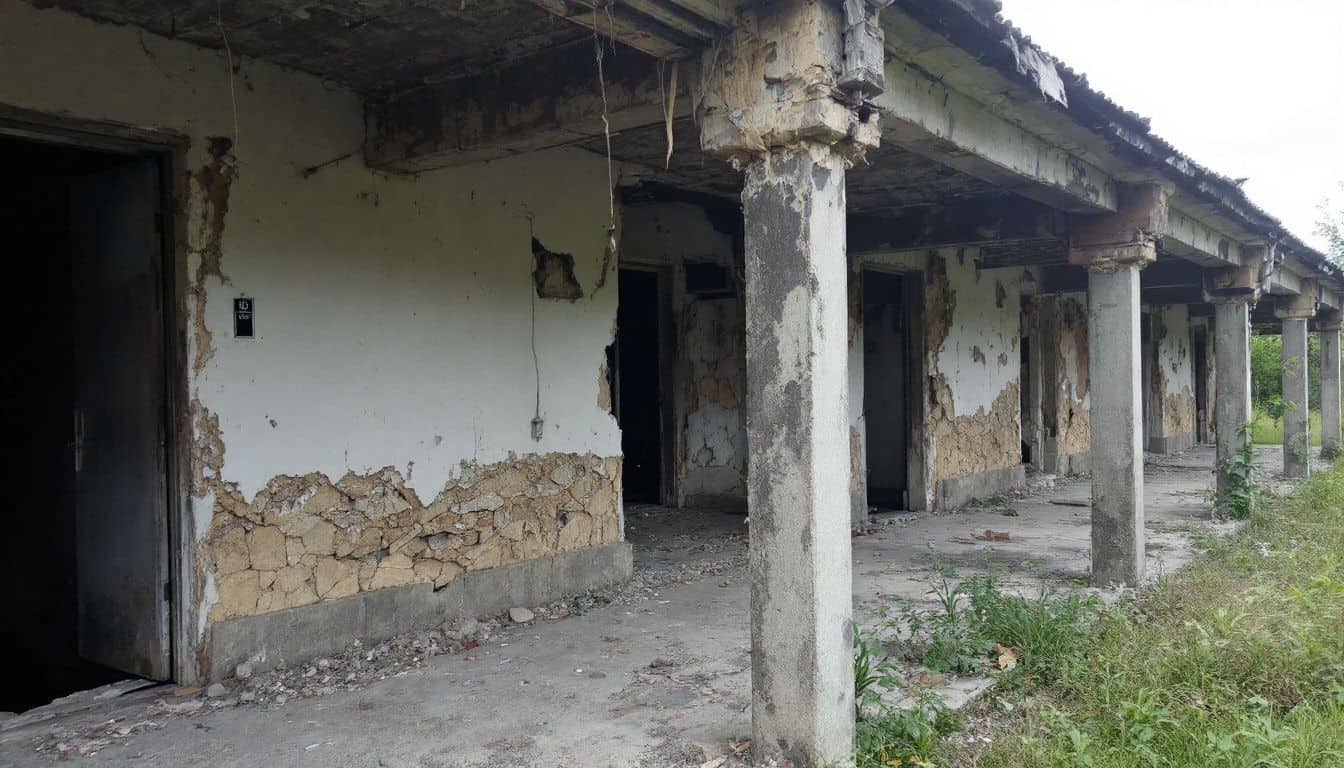
Asbestos in Construction: What Every Company Working on Pre-2000 Buildings Must Know
Asbestos remains the single largest cause of work-related deaths in Great Britain. It is present in millions of buildings across the country, and asbestos in construction is an ever-present hazard for any team working on pre-2000 stock. If your workers are drilling, cutting, or disturbing materials in older buildings, getting this right is not optional — it is a legal requirement, a moral obligation, and a practical necessity.
Why Asbestos in Construction Is Still a Live Danger
Asbestos was banned from new use in 1999, but that ban did nothing to remove the material already installed in buildings constructed before that date. Schools, hospitals, offices, retail units, and residential blocks across the UK still contain asbestos-containing materials (ACMs) — often in places that are not immediately obvious.
Asbestos-related diseases including mesothelioma, asbestosis, and lung cancer have a latency period of 20 to 50 years. Workers exposed today will not show symptoms for decades, which makes it dangerously easy to underestimate the risk in the moment.
Construction workers — electricians, plumbers, joiners, plasterers, roofers, general builders — are consistently in the highest-risk category because they are the ones physically disturbing materials. A few seconds of accidental exposure to loose fibres can have consequences that last a lifetime.
Your Legal Duties Under the Control of Asbestos Regulations
The Control of Asbestos Regulations place clear duties on employers operating in the construction sector. Before any work on a non-domestic building begins, you need to establish whether asbestos is present — not by relying on assumptions, verbal assurances, or documentation from previous occupants, but by commissioning a proper survey.
Key obligations for construction employers include:
- Providing asbestos awareness training to any worker who could encounter ACMs during their work
- Carrying out a suitable risk assessment before any work that may disturb asbestos
- Maintaining an asbestos register for managed premises
- Ensuring licensed contractors carry out any notifiable licensable work with asbestos
- Providing appropriate personal protective equipment (PPE) and ensuring it is used correctly
- Keeping records of training, health surveillance, and exposure incidents
Non-compliance is not just a regulatory risk — it is a criminal liability. HSE prosecutions in the construction sector are not uncommon, and consequences range from substantial fines to imprisonment for serious breaches.
Step 1: Commission the Right Asbestos Survey Before Work Starts
No responsible construction company should begin work on a pre-2000 building without first establishing the asbestos status of that building. The type of survey required depends on what you are planning to do.
Management Survey
A management survey is appropriate for buildings in normal occupation and ongoing use. It identifies ACMs that could be disturbed during routine maintenance and helps you manage them safely in place. If your teams are carrying out day-to-day maintenance on a site, this is the baseline survey you need.
Refurbishment Survey
If you are planning any intrusive work — even something as straightforward as knocking through a wall or lifting a floor — a refurbishment survey is required. This is a more invasive investigation that must be completed before the work begins, not during it.
Demolition Survey
For full or partial demolition, a demolition survey is mandatory. This is the most thorough survey type and must be completed before any demolition activity commences. There are no exceptions to this requirement under HSE guidance.
If you are unsure which survey applies to your project, speak to a qualified surveyor before work starts. Getting the survey type wrong can leave you legally exposed and your workers unprotected.
Step 2: Deliver Proper Asbestos Awareness Training
Knowing that asbestos exists is not enough. Your workers need to understand what it looks like, where it hides, and exactly what to do — and what not to do — if they encounter it.
Who Needs Training?
Any worker whose job could reasonably bring them into contact with ACMs needs awareness training. In construction, that is a very long list: electricians, plumbers, gas engineers, heating engineers, plasterers, roofers, joiners, general builders, and site managers all fall into this category.
What the Training Should Cover
- The three main types of asbestos — chrysotile (white), amosite (brown), and crocidolite (blue) — and where each is commonly found
- The health risks of asbestos exposure, including mesothelioma, asbestosis, and lung cancer
- How to identify common ACMs such as insulation boards, ceiling tiles, textured coatings (Artex), pipe lagging, and roofing felt
- How to read and use the asbestos register for a site
- What to do — and what not to do — if suspected asbestos is found
- The correct use of PPE
Asbestos awareness training does not licence workers to handle or remove asbestos. That requires separate specialist training and, in most cases, a licensed contractor.
How Often Should Training Be Refreshed?
Annual refresher training is considered best practice. You should also update training whenever work methods change, regulatory guidance is updated, new building types are introduced to your workload, or an incident or near-miss occurs on site.
Use a UKATA-accredited provider, keep records of completion, and do not treat this as a tick-box exercise. The quality of the training matters as much as the fact it was completed.
Step 3: Use Toolbox Talks to Keep Awareness Active on Site
Training courses are essential, but they are not enough on their own. Toolbox talks — short, practical briefings delivered on site — keep awareness active day to day and ensure workers are thinking about asbestos risks in the specific context of the job they are doing that day.
A good asbestos toolbox talk takes 10 to 15 minutes and covers:
- A reminder of which ACMs might be present on the specific site being worked on
- The stop-and-check procedure if something unexpected is found
- PPE requirements for the day’s tasks
- Who to report to if asbestos is suspected
Vary the content to avoid familiarity blindness. Workers who hear the same talk repeatedly stop listening. Use real examples, site-specific information, and brief case studies to keep it relevant and credible.
Step 4: Implement a Clear Stop-and-Report Procedure
Every worker on site should know exactly what to do the moment they suspect they have uncovered asbestos. This procedure needs to be simple, well-communicated, and consistently enforced — not buried in a site handbook nobody reads.
The procedure should follow these steps:
- Stop work immediately. Do not continue. Do not disturb the material further.
- Leave the area. Move away from the suspected ACM without spreading dust or debris.
- Prevent others from entering. Cordon off the area if possible.
- Report to the site manager or responsible person without delay.
- Do not return to the area until the material has been assessed by a competent person.
If asbestos is suspected but not confirmed, testing is the next step. Supernova offers professional sample analysis services, and if you need to collect a sample yourself, a testing kit is available through our website. For professional sample collection and laboratory analysis, contact us directly.
Step 5: Provide and Enforce the Right PPE
When work around suspected or confirmed asbestos cannot be avoided before a full assessment, appropriate PPE is non-negotiable. This applies to licensed removal work and to any scenario where incidental contact is possible.
Appropriate PPE for Asbestos Work Includes:
- Respiratory protective equipment (RPE) — at minimum, an FFP3-rated disposable mask; for higher-risk work, a half-face or full-face respirator with P3 filters. Fit-testing is required.
- Disposable coveralls — Type 5 as a minimum. These must be single-use.
- Disposable nitrile gloves
- Disposable boot covers or dedicated footwear
- Safety goggles where there is risk of eye contamination
Training on PPE must cover how to put on (don) and take off (doff) equipment correctly. Incorrect removal is a common cause of self-contamination. Reusing disposable PPE is prohibited.
Workers should also understand that power tools must never be used on suspected ACMs without proper controls in place, and dry sweeping of asbestos dust is strictly forbidden.
Step 6: Keep Your Asbestos Register Up to Date
If your company manages or occupies a non-domestic property, you have a duty to manage asbestos within it. That means maintaining an asbestos register — a documented record of where ACMs are located, their condition, and how they are being managed.
The register should be:
- Accessible to anyone who might need to work in the building
- Reviewed and updated following any works or inspections
- Accompanied by a management plan that sets out what action will be taken and when
ACMs that are left in place deteriorate over time. What was low-risk five years ago may not be today. Supernova’s re-inspection survey service ensures your asbestos register stays accurate and your management plan reflects the current condition of materials on site.
Step 7: Provide Health Surveillance for At-Risk Workers
Workers with significant, ongoing asbestos exposure — particularly those involved in licensed removal work — are entitled to health surveillance under the Control of Asbestos Regulations. This is not optional for employers whose workers fall into this category.
Health surveillance typically involves:
- A baseline medical examination before exposure work begins
- Regular lung function tests and chest assessments
- Records maintained by an appointed doctor
- Workers receiving access to their individual health records
Asbestos-related conditions are not reversible, but identifying them early can significantly improve quality of life and the options available to affected workers. Ensure that workers who are concerned about past exposure have clear access to occupational health advice and information about their legal rights.
Step 8: Maintain Records and Stay Compliant
Documentation is not bureaucracy for its own sake. It is your evidence of compliance if the HSE investigates, and it protects your business if a legal claim is made years down the line.
You should maintain records of:
- All asbestos surveys and the resulting reports
- Training completed by each employee, including dates and the provider used
- Risk assessments carried out before asbestos-related work
- Any incidents or near-misses involving suspected ACMs
- Health surveillance records for at-risk workers
- Details of licensed contractors used for removal work
Assign a named person within your organisation to monitor HSE guidance and ensure your procedures reflect current requirements. Regulations and approved codes of practice do change — staying current is part of your duty of care.
Common ACMs Found in Construction: Know What You Are Looking For
Part of effective asbestos management in construction is making sure your workers can recognise the materials most likely to contain asbestos. The following are among the most frequently encountered ACMs in pre-2000 buildings:
- Textured coatings — Artex and similar decorative finishes on ceilings and walls were widely used and frequently contain chrysotile
- Insulation boards — used in fire doors, ceiling tiles, partition walls, and around structural steelwork
- Pipe lagging — thermal insulation around boiler pipes and ductwork, often containing amosite or crocidolite
- Cement products — corrugated roofing sheets, guttering, and rainwater pipes made from asbestos cement
- Floor tiles and adhesives — vinyl floor tiles and the bitumen adhesive used to fix them can both contain asbestos
- Roofing felt — particularly in older domestic and commercial properties
- Sprayed coatings — used for fire protection and thermal insulation on structural steelwork and concrete
- Boiler and plant room insulation — lagging on plant, boilers, and associated pipework is frequently high-risk
Visual identification alone is never sufficient to confirm the presence of asbestos. If a material is suspected, it must be tested by a competent analyst before any work proceeds.
Asbestos in Construction Across the UK: Where Supernova Works
Asbestos in construction is a nationwide issue, and Supernova Asbestos Surveys operates across the length and breadth of Great Britain. Whether you are managing a refurbishment project in the capital or a demolition in the North West, qualified surveyors are available to support your project from survey through to clearance.
We regularly carry out surveys for construction companies, principal contractors, facilities managers, and property owners. If you are based in or around the capital, our team provides a full asbestos survey London service. For projects in the North West, our asbestos survey Manchester team is on hand. And for the Midlands, our asbestos survey Birmingham service covers the wider region.
With over 50,000 surveys completed nationwide, we understand the pressures construction companies face around programme, compliance, and cost. We work to your timeline and provide clear, actionable reports that your site teams can actually use.
Frequently Asked Questions
Does asbestos in construction only affect older buildings?
In practical terms, yes. Asbestos was banned from use in new construction in 1999, so buildings constructed after that date are extremely unlikely to contain ACMs. However, any building constructed or refurbished before 2000 should be treated as potentially containing asbestos until a survey confirms otherwise. This includes residential properties, commercial buildings, schools, hospitals, and industrial premises.
Do I need a survey even if I think the building has already been cleared?
Yes. Previous surveys or removal works do not guarantee that all ACMs have been identified or removed. Materials can be missed, records can be incomplete, and refurbishments carried out over decades may have introduced or disturbed materials in ways that are not documented. Always commission a fresh survey appropriate to the planned works rather than relying on historical records.
What is the difference between asbestos awareness training and a licence to work with asbestos?
Asbestos awareness training teaches workers to recognise potential ACMs and respond correctly if they encounter them. It does not permit workers to handle, disturb, or remove asbestos. Work that involves disturbing asbestos — particularly higher-risk activities — requires additional training, and notifiable licensable work must be carried out by an HSE-licensed contractor. If you are unsure whether your planned work requires a licence, seek specialist advice before proceeding.
How often should an asbestos register be updated?
An asbestos register should be reviewed and updated following any works that could have disturbed or altered ACMs, and as a minimum it should be subject to a formal re-inspection at regular intervals — typically every 12 months, or more frequently where conditions warrant it. The HSG264 guidance document published by the HSE provides detailed advice on managing asbestos in non-domestic premises, including the duty to re-inspect.
What should a construction company do if workers have already been exposed to suspected asbestos?
Stop work in the affected area immediately and prevent further access. Arrange for the suspected material to be sampled and tested by a competent analyst. Workers who may have been exposed should be informed, and the incident should be documented. Depending on the level of exposure, you may need to notify the HSE and arrange for health surveillance. Do not attempt to clean up disturbed asbestos material without specialist involvement.
Get Professional Support From Supernova Asbestos Surveys
Managing asbestos in construction correctly is not something to approach casually. The legal duties are significant, the health consequences of getting it wrong are irreversible, and the reputational damage from a serious incident can be lasting.
Supernova Asbestos Surveys has completed over 50,000 surveys across the UK and works with construction companies, principal contractors, and property managers to ensure full compliance at every stage of a project. From pre-works surveys to ongoing register management, our UKAS-accredited team delivers clear, reliable results.
Call us on 020 4586 0680 or visit asbestos-surveys.org.uk to discuss your project requirements and book a survey.