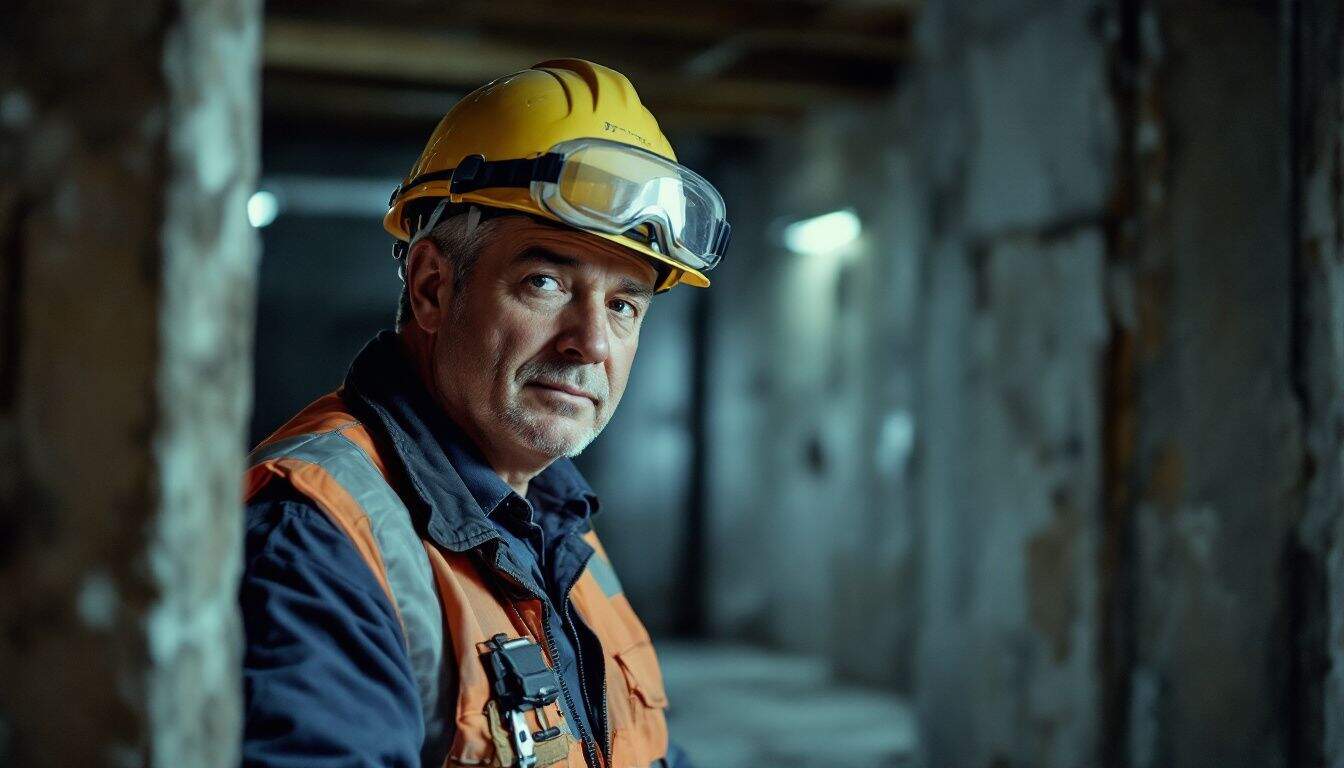
Asbestos in Construction: Health Risks, High-Risk Trades, and How to Stay Protected
Construction workers face a higher risk of asbestos exposure than almost any other workforce in the UK. That’s not scaremongering — it’s a straightforward consequence of decades of asbestos use in building materials, combined with the hands-on, disruptive nature of construction work itself.
If you work in construction, manage a site, or commission refurbishment or demolition work, understanding how asbestos exposure happens — and what it does to the body — isn’t optional. It’s essential.
Why Construction Is the UK’s Highest-Risk Sector for Asbestos
Asbestos was used extensively in UK building materials from the 1950s through to its full ban in 1999. That means any building constructed or refurbished before the year 2000 could contain asbestos-containing materials (ACMs).
In construction, workers regularly disturb these materials — cutting, drilling, sanding, demolishing — which is exactly when fibres become airborne and dangerous. Unlike a building manager who might occasionally encounter ACMs, construction workers face repeated, prolonged exposure across entire careers. That cumulative exposure is what drives the serious disease risk.
Common Sources of Asbestos on Construction Sites
Asbestos wasn’t used in just one or two products — it was embedded across a huge range of building materials. The following are among the most frequently encountered on UK construction sites:
- Asbestos cement sheets and pipes used in roofing, cladding, and guttering
- Textured coatings such as Artex on ceilings and walls
- Sprayed asbestos insulation on structural steelwork
- Pipe lagging and boiler insulation
- Floor tiles, adhesives, and vinyl floor coverings
- Ceiling tiles and partition boards
- Rope seals, gaskets, and fire-resistant boards around heating systems
None of these materials are dangerous simply by existing in a building. The risk comes when they’re disturbed — which is precisely what renovation, refurbishment, and demolition work involves.
How Construction Workers Are Exposed to Asbestos
Renovation and Refurbishment
Older buildings undergoing renovation are among the most hazardous environments for asbestos exposure. Stripping out old insulation, removing floor coverings, cutting through partition walls, or even simply drilling fixings into textured ceilings can release fibres if ACMs haven’t been identified and managed first.
A refurbishment survey should always be completed before any intrusive work begins on a pre-2000 building. Without one, workers are operating blind.
Demolition
Full or partial demolition of older structures carries an extremely high risk of asbestos fibre release. Demolition work is inherently aggressive — it disturbs materials at scale, often simultaneously, and across the entire fabric of a building.
A demolition survey is a legal requirement before any licensed demolition work proceeds. Skipping this step isn’t just a regulatory failure — it puts every worker on site at risk.
Inadequate Safety Measures
Many exposure incidents still happen not because asbestos was unknown to be present, but because safety procedures weren’t followed. Workers begin tasks without appropriate respiratory protective equipment (RPE), ACMs aren’t properly contained before work starts, or staff aren’t trained to recognise materials that might contain asbestos.
Under the Control of Asbestos Regulations, this is both a legal failure and a serious risk to life.
Which Construction Trades Face the Highest Risk
All construction workers on pre-2000 buildings can encounter asbestos, but certain trades have historically faced higher rates of exposure.
Roofers
Asbestos cement was one of the most widely used roofing and cladding materials in the UK. Roofers removing, cutting, or repairing older sheeting can release significant quantities of fibres. Even weathered asbestos cement, which may appear stable, can become friable when handled.
Plumbers and Heating Engineers
Pipe lagging, boiler insulation, and rope seals around older heating systems frequently contain asbestos. This work often takes place in confined spaces — loft voids, plant rooms, underfloor areas — where fibres can accumulate rapidly if disturbed.
Painters and Decorators
Textured decorative coatings like Artex — ubiquitous in UK homes and commercial buildings from the 1960s onwards — often contain chrysotile asbestos. Sanding, scraping, or drilling through these coatings without prior testing is one of the most common causes of accidental low-level asbestos exposure in the UK today.
Bricklayers and Masons
Asbestos was used in mortars, plasters, and rendering compounds. Cutting, chasing, or breaking into older masonry can disturb these materials without any obvious visual indication that asbestos is present.
Drywall and Partition Installers
Older partition boards, ceiling tiles, and insulation boards used in drylining systems can contain various asbestos types. Cutting or trimming these materials without proper controls releases fibres directly into the breathing zone.
Tile Setters and Flooring Contractors
Vinyl floor tiles and the adhesives used to fix them were commonly manufactured with asbestos content. Lifting, breaking, or grinding old floor tiles without an asbestos survey is a recognised exposure route.
The Health Conditions Caused by Asbestos Exposure
Asbestos fibres are microscopic, and once inhaled, they cannot be expelled by the body. They lodge in the lung tissue and the pleura — the lining surrounding the lungs — where they cause damage over time. The diseases that result are serious, progressive, and often fatal.
Mesothelioma
Mesothelioma is a cancer of the pleura or peritoneum caused almost exclusively by asbestos exposure. It has a long latency period — symptoms can take 20 to 50 years to appear after initial exposure, which means workers exposed decades ago are still being diagnosed today.
There is no cure. Treatment focuses on extending life and managing symptoms. Mesothelioma is the UK’s most well-documented asbestos-related disease and continues to cause a significant number of deaths annually in this country.
Asbestos-Related Lung Cancer
Asbestos exposure significantly increases the risk of lung cancer. This risk is compounded dramatically in workers who also smoke. The link between occupational asbestos exposure and lung cancer is well established, even though it can be difficult to attribute clinically in individual cases.
Asbestosis
Asbestosis is a chronic, progressive scarring of the lung tissue caused by the inhalation of asbestos fibres over time. It reduces lung capacity, causes breathlessness, and significantly impairs quality of life. There is no treatment that reverses the scarring.
Pleural Thickening and Pleural Plaques
Diffuse pleural thickening causes the lung lining to stiffen and thicken, restricting breathing. It is a marker of significant past asbestos exposure.
Pleural plaques are areas of calcified thickening on the pleura — while not themselves cancerous, their presence is evidence of asbestos exposure and is associated with increased disease risk.
Other Respiratory Conditions
Asbestos exposure has also been linked to conditions affecting the airways more broadly, including increased susceptibility to respiratory infections and reduced lung function over time. Workers with pre-existing respiratory conditions face compounded risks.
The Latency Problem: Why Asbestos Is Still Killing People Now
One of the most dangerous aspects of asbestos-related disease is the delay between exposure and diagnosis. A worker heavily exposed in the 1980s may only now be developing symptoms. This latency period — which can span decades — means the consequences of today’s inadequate safety practices won’t become fully apparent for years.
It also means that current construction workers, if not properly protected, are unknowingly banking a future health risk. Getting asbestos management right now isn’t just about regulatory compliance — it’s about preventing deaths that would otherwise occur 20 or 30 years from now.
Legal Responsibilities Under the Control of Asbestos Regulations
The Control of Asbestos Regulations place clear duties on employers and those who commission construction work. Key requirements include:
- Completing a suitable and sufficient asbestos survey before any refurbishment or demolition work on pre-2000 buildings
- Providing adequate information, instruction, and training to workers who may encounter asbestos
- Ensuring that any licensed asbestos removal is carried out by a licensed contractor notified to the HSE
- Providing appropriate RPE and protective clothing for all work involving ACMs
- Maintaining records of all asbestos work and any identified materials
Failure to comply isn’t just a regulatory matter — it exposes employers to prosecution, civil claims, and the very real risk of having caused life-limiting disease in workers under their care.
Protective Measures: What Proper Asbestos Safety Looks Like in Practice
Before Work Starts
Commission a refurbishment or demolition survey from a UKAS-accredited surveying company before any intrusive work begins on a pre-2000 building. This survey will identify the location, extent, and condition of ACMs in the areas to be worked on, and inform a safe method of work.
Don’t rely on a management survey for this purpose. Management surveys are designed to manage asbestos in an occupied building — they are not intrusive enough to clear areas for refurbishment work.
During Work
- Use correctly specified RPE — typically a minimum of FFP3 for non-licensed asbestos work, with higher specification for licensed work
- Wear disposable coveralls and change and bag them on site before leaving the work area
- Use wet methods and HEPA-filtered vacuums to suppress and capture fibres
- Establish controlled work areas with appropriate containment to prevent fibre spread
- Never use power tools on suspected ACMs without prior testing and appropriate controls
Health Surveillance
Workers regularly exposed to asbestos should be enrolled in a health surveillance programme. This typically involves periodic medical examinations, lung function tests, and chest X-rays.
Early detection of changes doesn’t reverse asbestos disease, but it can influence treatment decisions and — critically — creates a medical record that supports compensation claims if disease develops.
Workers’ Legal Rights and Compensation
If you have been diagnosed with an asbestos-related disease as a result of occupational exposure, you may be entitled to compensation. Legal routes in the UK include:
- Personal injury claims against employers or former employers for negligence or breach of duty under the Control of Asbestos Regulations or predecessor legislation
- Industrial Injuries Disablement Benefit (IIDB) — a government benefit available to those with prescribed asbestos-related diseases including mesothelioma, asbestosis, and diffuse pleural thickening
- The Diffuse Mesothelioma Payment Scheme for those unable to trace a liable employer or insurer
Specialist asbestos disease solicitors operate on a no-win, no-fee basis for these cases and are experienced in tracing historic employer liability insurance. If you or a colleague are affected, seeking legal advice promptly is important — limitation periods apply.
When Asbestos Must Be Removed
Not every instance of asbestos found in a building requires immediate removal. In good condition and left undisturbed, many ACMs can be safely managed in place. However, removal becomes necessary when:
- Materials are damaged, deteriorating, or at risk of being disturbed during planned works
- A building is being demolished or substantially refurbished
- An asbestos register and risk assessment indicate that management in situ is no longer appropriate
- ACMs are in high-traffic areas where accidental damage is likely
Where removal is required, it must be carried out by a licensed contractor for most asbestos types. Supernova’s asbestos removal service ensures all work is completed safely, legally, and with full documentation — so your site is cleared and compliant before any further works proceed.
Where Asbestos Surveys Are Needed Most: UK Locations
Asbestos is a nationwide concern, but urban areas with large stocks of pre-2000 commercial, industrial, and residential buildings present particularly high demand for professional surveying. The principle is consistent wherever you’re working: identify before you disturb.
If you need an asbestos survey London for a commercial refurbishment or residential conversion, Supernova’s London-based surveyors can mobilise quickly across the capital. For projects in the North West, our asbestos survey Manchester service covers the full Greater Manchester area and surrounding regions. And if you’re working in the Midlands, our asbestos survey Birmingham team operates across the city and the wider West Midlands.
Supernova Asbestos Surveys operates nationally, so wherever your project is based, you’ll receive the same UKAS-accredited standard of service.
Frequently Asked Questions
What diseases can asbestos exposure cause?
Asbestos exposure can cause mesothelioma, asbestos-related lung cancer, asbestosis, diffuse pleural thickening, and pleural plaques. All of these conditions result from inhaling asbestos fibres, and most have a long latency period — meaning symptoms may not appear until decades after the original exposure occurred.
Which construction trades are most at risk from asbestos?
Roofers, plumbers, heating engineers, painters and decorators, bricklayers, drywall installers, and flooring contractors all face elevated risk. Any trade working on pre-2000 buildings and disturbing existing materials — whether cutting, drilling, sanding, or stripping — can encounter asbestos-containing materials without prior warning.
Is a survey legally required before construction work on older buildings?
Yes. Under the Control of Asbestos Regulations, a refurbishment survey is required before any intrusive work on a pre-2000 building, and a demolition survey is required before any demolition work proceeds. A management survey alone is not sufficient for these purposes — it is not designed to clear areas for physical works.
Can asbestos be left in place rather than removed?
In many cases, yes. Asbestos-containing materials that are in good condition and unlikely to be disturbed can be managed safely in place, with their location and condition recorded in an asbestos register. Removal is required when materials are damaged, deteriorating, or will be disturbed by planned refurbishment or demolition works.
What should I do if I think I’ve been exposed to asbestos on a construction site?
Stop work immediately and inform your site manager or employer. The area should be assessed by a competent person before work resumes. You should also speak to your GP and seek enrolment in a health surveillance programme. If exposure resulted from your employer’s failure to comply with the Control of Asbestos Regulations, you may have grounds for a compensation claim — specialist solicitors can advise on this.
Protect Your Workforce — Talk to Supernova Today
Supernova Asbestos Surveys has completed over 50,000 surveys across the UK, working with construction companies, principal contractors, project managers, and building owners to identify and manage asbestos safely and legally.
Whether you need a survey before a refurbishment, a full demolition survey, or advice on managing ACMs on an active site, our UKAS-accredited team is ready to help. Call us on 020 4586 0680 or visit asbestos-surveys.org.uk to book a survey or request a quote.