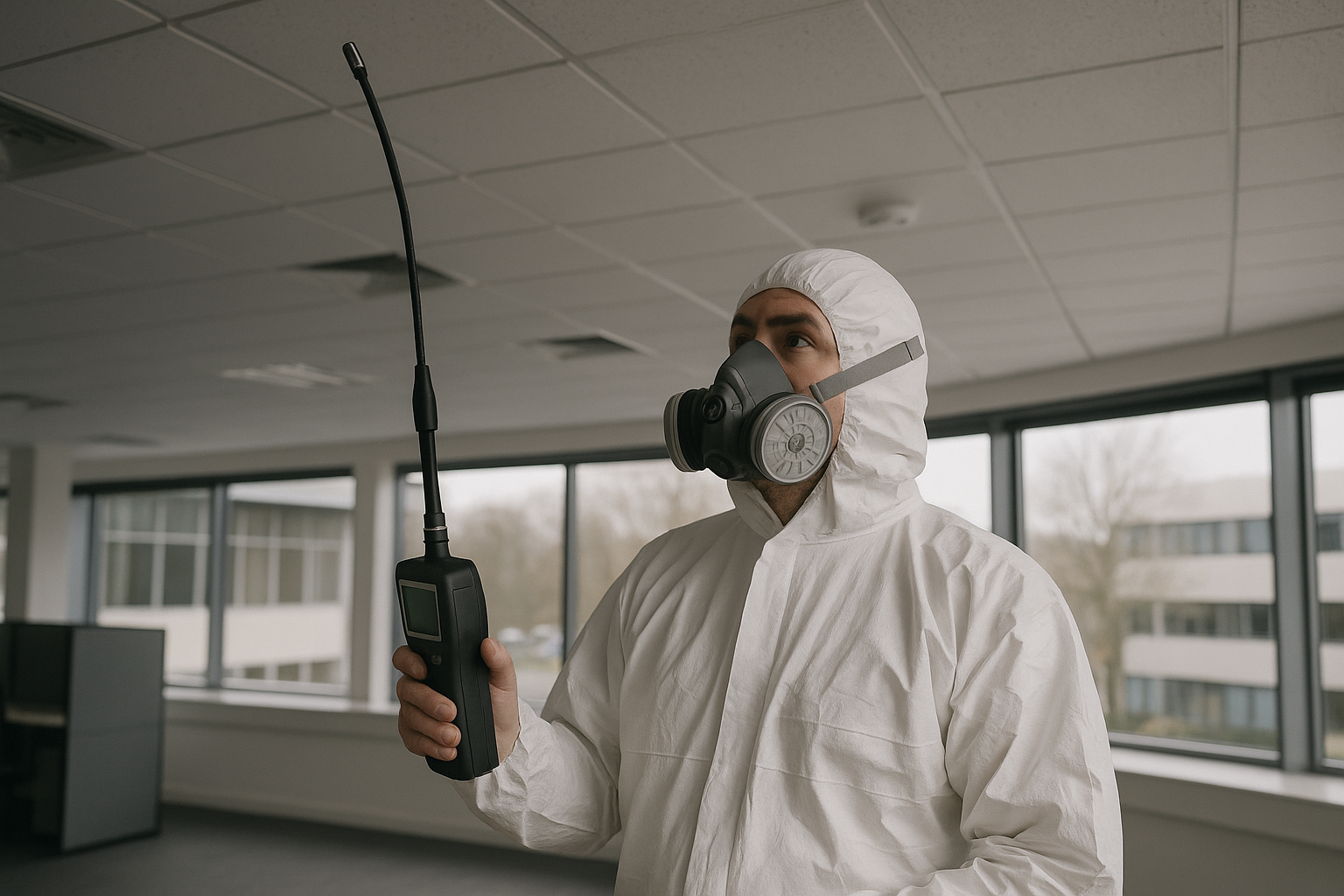
Miss the wrong material during building works and the fallout is immediate: unsafe conditions, halted contractors, rising costs and awkward questions about compliance. That is why asbestos surveys are not just another property document. They are a practical control measure that helps dutyholders, landlords, facilities teams and project managers make safe decisions before anyone drills, strips out or demolishes.
If you manage non-domestic premises, the common parts of residential buildings or a portfolio of older properties, you need asbestos information you can rely on. Under the Control of Asbestos Regulations, dutyholders must take reasonable steps to find out whether asbestos is present, where it is and what condition it is in. In practice, that usually means commissioning the right asbestos survey at the right time and making sure the report is clear enough to act on.
Why asbestos surveys matter
Asbestos was used widely in UK buildings for decades, so it can still turn up in offices, schools, shops, warehouses, plant rooms, communal areas and industrial premises. The risk is not simply that asbestos exists. The real danger starts when asbestos-containing materials are damaged or disturbed and fibres are released.
Good asbestos surveys help you avoid that. They support safe maintenance, inform contractors, guide removal decisions and reduce the chance of discovering hidden asbestos halfway through a job.
A proper survey should help you:
- identify suspected or confirmed asbestos-containing materials
- record where those materials are located
- assess their condition
- highlight the likelihood of disturbance
- show which areas were not accessed
- support an asbestos register and management plan
This is where many property issues begin. People assume an old report covers the whole building, or they order the wrong survey type, or they send contractors in before hidden voids and service areas have been checked. Reliable asbestos surveys prevent those mistakes.
Are asbestos surveys a legal requirement?
In many situations, yes. The Control of Asbestos Regulations place a duty to manage asbestos in non-domestic premises, and that duty commonly leads to asbestos surveys being required to gather the information needed for safe management.
If you are responsible for any of the following, asbestos information is usually essential:
- offices and commercial units
- schools, colleges and universities
- healthcare premises
- shops, restaurants and leisure sites
- warehouses and industrial buildings
- the common parts of flats and residential blocks
That does not mean every building needs the same approach. The right survey depends on what the premises are used for and what work is planned. HSE guidance and HSG264 make that distinction clear.
If the building is occupied and in normal use, the survey approach will be different from a site about to be stripped out or demolished. Using the wrong type of survey creates gaps, and those gaps are where projects start to unravel.
What types of asbestos surveys are there?
Not all asbestos surveys do the same job. Choosing the correct one is one of the most important decisions you will make, because a survey designed for day-to-day occupation will not uncover everything needed before intrusive works.
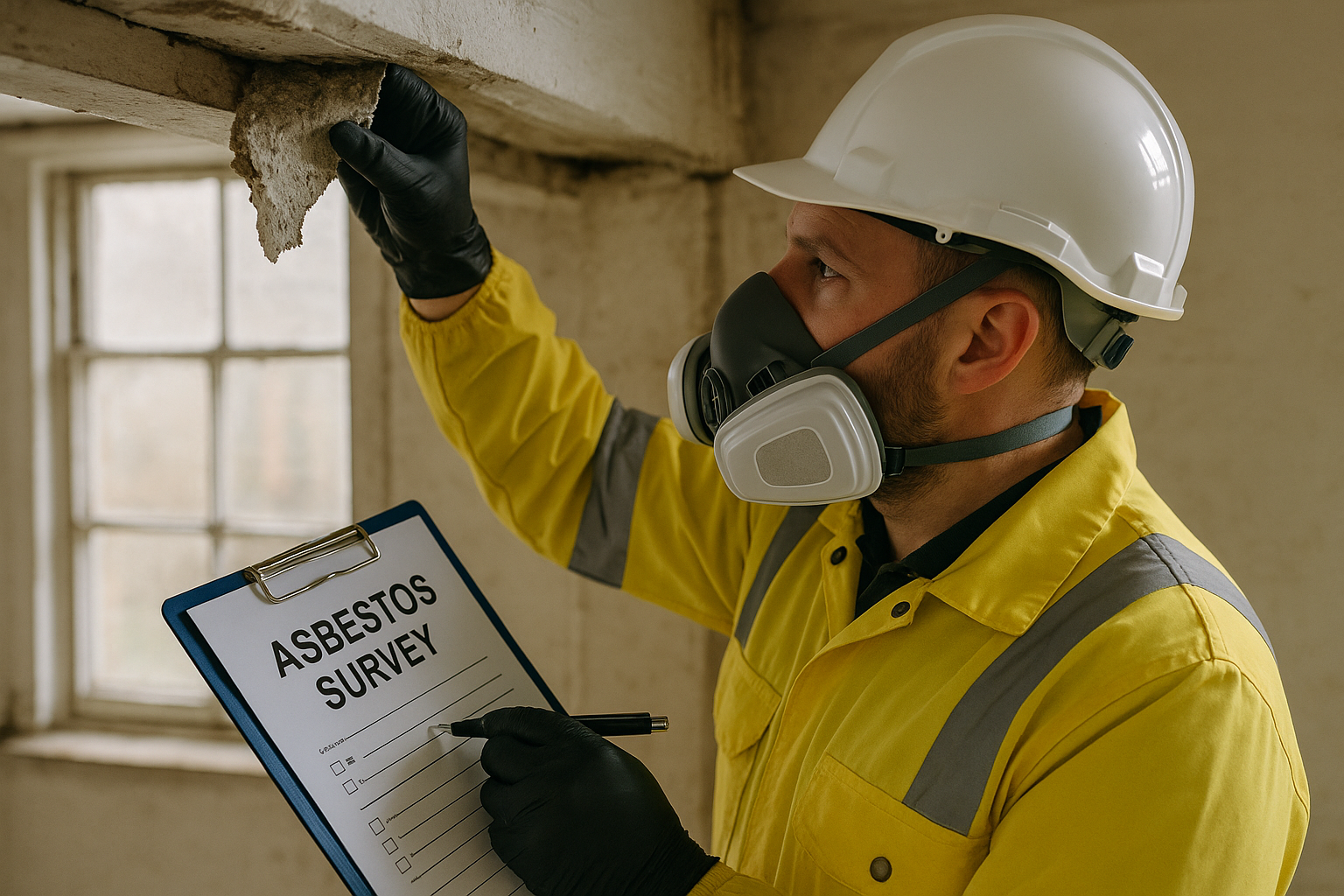
Management survey
A management survey is the standard survey for occupied buildings during normal use. Its purpose is to locate, as far as reasonably practicable, asbestos-containing materials that could be disturbed during routine occupation, maintenance or minor installation work.
Management asbestos surveys are usually non-intrusive or only lightly intrusive. They focus on accessible areas and involve sampling where necessary to confirm whether suspect materials contain asbestos.
This type of survey is often the foundation for:
- your asbestos register
- ongoing asbestos management
- contractor information
- maintenance planning
- condition monitoring
It should also be honest about limitations. If ceiling voids, risers, locked cupboards or roof spaces were not accessed, the report must say so clearly. No one should assume an uninspected area is asbestos-free.
Refurbishment survey
A refurbishment survey is needed before works that will disturb the fabric of the building. That includes fit-outs, rewiring, kitchen and bathroom replacements, HVAC upgrades, structural alterations and major internal changes.
These asbestos surveys are intrusive by design. Surveyors may need to inspect behind walls, under floors, above ceilings and inside service voids to identify asbestos in the specific area affected by the planned works.
If you are planning refurbishment, do not rely on a management survey alone. That is one of the most common and most costly mistakes made on live projects.
Demolition survey
A demolition survey is required before a building, or part of one, is demolished. It is the most intrusive of all asbestos surveys because every reasonably accessible area must be inspected to identify asbestos-containing materials before demolition starts.
This survey is not suitable for occupied areas unless the relevant section has been vacated and isolated. If demolition is on the horizon, commission the survey early enough to avoid programme delays and last-minute surprises.
Re-inspection survey
A re-inspection survey is used when asbestos-containing materials remain in place and need monitoring. It checks whether previously identified materials have deteriorated, been damaged or become more likely to be disturbed.
Re-inspection asbestos surveys are a practical part of ongoing management. If the condition of materials has changed, your asbestos register and management actions may need to be updated.
Who is qualified to conduct asbestos surveys in the UK?
This is the question many dutyholders ask first, and rightly so. The short answer is that asbestos surveys should be carried out by a competent organisation using trained surveyors, suitable procedures and reporting standards that align with HSE guidance and HSG264.
There is no shortcut around competence. A surveyor needs more than a basic awareness of asbestos. They need the knowledge and practical skill to identify suspect materials, assess risk, understand building construction, sample safely where required and record limitations properly.
When appointing a provider, look for:
- recognised asbestos surveying training
- experience with the type of premises you manage
- clear quality procedures
- robust sampling and reporting methods
- an understanding of HSE expectations and HSG264
- reports that are practical, detailed and consistent
Competence applies to the whole organisation, not just the individual on site. The provider should be able to scope the work correctly, ask sensible questions before the visit and produce a report that your maintenance team or contractor can actually use.
If a quote seems unusually low, pause and ask why. Cheap asbestos surveys often mean less time on site, fewer samples, weaker reporting or a vague scope. That can leave you paying twice: once for the poor survey, and again when the gaps become obvious.
What a competent asbestos surveyor should actually do
A good surveyor does more than walk around with a clipboard. Reliable asbestos surveys involve planning, inspection, sampling where needed, clear records and practical recommendations.

You should expect the surveyor or surveying organisation to:
- Confirm the purpose of the survey
They should establish whether the building is occupied, whether intrusive works are planned and which survey type is appropriate. - Define the scope clearly
That means identifying the exact floors, units, rooms, plant areas or structures to be inspected. - Review existing information
Previous asbestos records, refurbishment history and known access issues should be considered before the visit. - Inspect systematically
The survey should follow a logical method, not an informal look around. - Take controlled samples where appropriate
Suspect materials often need analysis to confirm whether asbestos is present. - Record inaccessible areas
This matters as much as recording what was found. - Produce a usable report
The report should support management, maintenance, refurbishment or demolition planning without guesswork.
If any of those steps are weak, the value of the survey drops quickly.
How to arrange asbestos surveys properly
Arranging asbestos surveys should be straightforward, but poor scoping causes no end of trouble. The surveyor can only inspect what has been defined, communicated and made accessible.
Use this process to get it right:
- Define the purpose
Are you managing an occupied building, planning refurbishment, demolishing a structure or reviewing known asbestos-containing materials? - Set the scope
List the exact areas involved, including floors, units, risers, voids, plant rooms and external structures where relevant. - Provide drawings and work details
If works are planned, share specifications and plans so the survey matches the project. - Arrange access
Locked rooms, service cupboards, ceiling voids and roof spaces should be made available where safe and relevant. - Share existing records
Previous surveys, asbestos registers and refurbishment history help avoid duplication and improve accuracy. - Plan around occupancy
Intrusive asbestos surveys may require areas to be vacated or isolated.
Before the survey date, tell the provider about any restrictions, live services, security procedures or fragile finishes. Small details often make the difference between a productive visit and an incomplete report.
Sampling and analysis of suspect materials
Visual inspection alone is not always enough. Many asbestos surveys rely on sampling and analysis to confirm whether a suspect material actually contains asbestos.
When a surveyor identifies a material that may contain asbestos, they may take a small representative sample using suitable controls. That sample is sealed, labelled and sent for laboratory analysis. The result turns suspicion into evidence and allows better decisions on management, repair or removal.
How sampling works
The process usually involves:
- identifying the suspect material
- taking a controlled sample from a representative area
- sealing and labelling the sample correctly
- recording the exact location
- sending it for laboratory testing
Where sampling is not possible, the material may be presumed to contain asbestos until further evidence is available. That is often the cautious and sensible approach.
When targeted analysis is useful
Sometimes you do not need a full survey straight away. If a maintenance team or contractor uncovers a single suspicious board, textured coating, insulation product or panel during minor works, targeted sample analysis can be the quickest next step.
That said, isolated testing should not replace the correct survey where wider management duties apply or where intrusive works are planned across a larger area.
How to check whether a survey report is good enough
The value of asbestos surveys sits in the report. If the report is vague, inconsistent or silent about what was not inspected, it creates false confidence and increases risk.
When reviewing a survey report, check for:
- a clear statement of the survey type and purpose
- the exact scope and areas inspected
- plans, room references and photographs where relevant
- sample results where samples were taken
- condition notes and material assessments
- clear identification of inaccessible areas
- practical recommendations for management or further action
Then compare the report against what you asked to be surveyed. If you expected plant rooms, service risers and roof voids to be included, make sure they are listed specifically.
Ask questions if:
- locations are too vague
- materials are described inconsistently
- floor plans do not match the premises
- access limitations are unclear or missing
- recommendations do not fit the planned work
A strong report should help you update your asbestos register, brief contractors properly and plan the next step without making assumptions.
Common mistakes people make with asbestos surveys
Most problems with asbestos surveys are avoidable. They usually come down to assumptions, poor scoping or using outdated information.
Watch out for these common errors:
- ordering a management survey when refurbishment is planned
- assuming an old report still reflects the current building layout
- failing to provide access to locked or restricted areas
- not sharing survey findings with contractors before work starts
- ignoring inaccessible areas listed in the report
- forgetting to arrange re-inspections for known materials
- treating the survey as a paperwork exercise instead of a live safety document
If your building has been altered since the last survey, review whether the information is still fit for purpose. A report is only useful if it reflects the premises as they stand today.
Where asbestos surveys are especially important
All dutyholders need reliable asbestos information, but some sectors face particular challenges because of building age, complexity and frequent maintenance activity. In these settings, well-planned asbestos surveys make a noticeable difference.
Education
Schools, colleges and universities often operate from mixed-age estates with regular repairs, upgrades and room changes. Survey information needs to be clear so estates teams and contractors can work safely without disrupting teaching.
Healthcare
Hospitals, surgeries and care settings often contain legacy materials in plant rooms, ducts, risers and service areas. Works may need to be carried out in live environments, so accurate asbestos information is essential.
Commercial property
Offices, retail units and mixed-use buildings are frequently reconfigured. Fit-outs, partition changes, ceiling works and service upgrades often trigger the need for the right survey before work begins.
Industrial sites
Factories, workshops and warehouses can contain asbestos in roofs, cladding, insulation, gaskets, pipework and plant components. Surveyors need to understand access constraints, operational risks and the realities of working around equipment.
Residential blocks
The common parts of residential buildings can fall within asbestos management duties. Corridors, service cupboards, risers, plant rooms and external elements may all need to be assessed and managed properly.
Local support for multi-site property portfolios
If you manage buildings across different regions, consistent delivery matters. Working with one provider can make asbestos surveys easier to plan, easier to compare and easier to manage across a portfolio.
Supernova supports clients nationally, including asbestos survey London services, asbestos survey Manchester support and asbestos survey Birmingham coverage. That is useful for managing agents, facilities teams and organisations that need the same reporting standard across multiple sites.
Practical advice before any maintenance, refurbishment or demolition work
If there is one rule to keep in mind, it is this: do not start work until the asbestos information matches the task. The right asbestos surveys should be commissioned before work begins, not after a contractor finds a suspect board halfway through the job.
Use this checklist before authorising works:
- confirm the building has current asbestos information
- check that the survey type matches the planned activity
- review whether any areas were inaccessible
- make sure contractors have the relevant survey findings
- arrange further inspection if the scope has changed
- update the asbestos register after any removal or new findings
That approach is practical, defensible and far less disruptive than reacting to an unexpected discovery once work is underway.
Why choosing the right surveying company matters
Plenty of issues blamed on asbestos are really caused by poor planning and weak reporting. Good asbestos surveys should reduce uncertainty, not create more of it.
The right surveying company will ask sensible questions, recommend the correct survey type, explain any limitations and give you a report that supports real decisions. That is what dutyholders and property managers need: clear information, practical advice and a service that stands up under scrutiny.
If you need help with asbestos surveys anywhere in the UK, Supernova Asbestos Surveys can assist with management, refurbishment, demolition and re-inspection work. Call 020 4586 0680 or visit asbestos-surveys.org.uk to arrange a survey or discuss the right scope for your property.
Frequently Asked Questions
Is a management survey enough before refurbishment works?
No. A management survey is designed for normal occupation, routine maintenance and ongoing management. If refurbishment will disturb the building fabric, a refurbishment survey is usually required for the affected area before work starts.
How often should asbestos-containing materials be re-inspected?
There is no single interval that suits every property. Re-inspection should be based on the type, condition and location of the material, along with the likelihood of disturbance. The key point is that materials left in place must be monitored and records kept up to date.
Can a contractor carry out asbestos surveys themselves?
Only if they are genuinely competent to do so and can meet the standard expected under HSE guidance and HSG264. In practice, most dutyholders are better served by appointing a specialist asbestos surveying organisation with trained surveyors, proper procedures and clear reporting.
What happens if part of the building could not be accessed during the survey?
The report should identify inaccessible areas clearly. Those areas should not be assumed to be free from asbestos. If work is planned in those locations, further inspection may be needed before the job starts.
Do asbestos surveys include sampling?
Often, yes. Where surveyors find suspect materials, sampling and laboratory analysis may be used to confirm whether asbestos is present. If sampling is not possible, the material may be presumed to contain asbestos until proven otherwise.