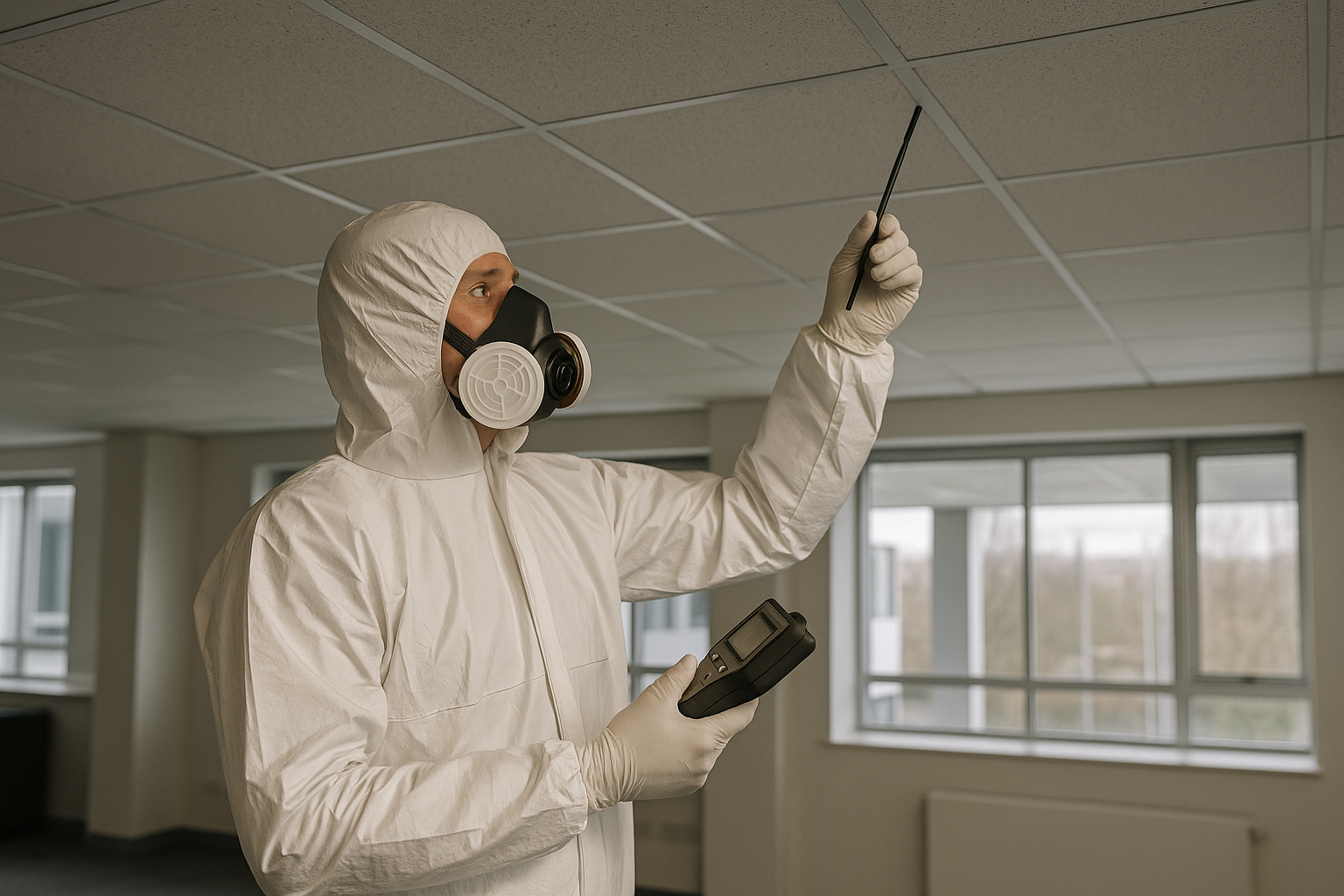
Removing asbestos is not always the safest or most practical option. In many buildings, asbestos encapsulation is the better control measure because it reduces the risk of fibre release without the disruption, cost and waste that full removal can bring.
That does not make it a shortcut. Asbestos encapsulation only works when the material has been properly identified, its condition assessed, and the area can be managed safely afterwards. For landlords, duty holders and property managers, the right choice is the one that protects occupants, supports compliance and stands up to HSE scrutiny.
What is asbestos encapsulation?
Asbestos encapsulation is the process of sealing, covering or protecting asbestos-containing materials so fibres are less likely to be released. Rather than removing the material, a specialist coating, wrap, board system or barrier is applied to keep it stable and isolated.
This approach is commonly used where asbestos is in reasonable condition and unlikely to be disturbed. It can be suitable for some asbestos insulation board, cement products, textured coatings, pipe insulation systems and other asbestos-containing materials, depending on their condition, location and future use.
The aim is straightforward:
- prevent fibre release
- reduce the chance of accidental damage
- allow asbestos to remain in place under controlled management
- avoid unnecessary disturbance where removal could create greater immediate risk
Encapsulation does not make asbestos disappear. The asbestos remains present, must stay on the asbestos register, and must continue to be managed under the Control of Asbestos Regulations and relevant HSE guidance.
When asbestos encapsulation is appropriate
Asbestos encapsulation can be a sensible option when the material is stable, accessible for treatment and not due to be disturbed by planned works. It is often chosen where removal would be disproportionate, highly disruptive or likely to create more fibre release during the work itself.
Typical situations where encapsulation may be considered include:
- asbestos-containing materials in good or fair condition
- areas with low risk of impact or abrasion
- premises that need to remain occupied during works
- locations where access for removal is difficult
- materials that can be effectively sealed and monitored afterwards
Examples include asbestos cement sheets in sound condition, certain textured coatings, and some internal boards or service riser materials where the surface can be protected and the area can be managed.
Why encapsulation can be the better option
Removal is not automatically the safest answer. Disturbing asbestos during stripping works can increase the chance of fibre release, especially where the material is otherwise stable.
Where the risk can be controlled safely in place, asbestos encapsulation may offer a practical balance between safety, cost and disruption. It is particularly useful in occupied buildings where downtime matters.
When asbestos encapsulation may not be suitable
Asbestos encapsulation is not always the right answer. If the material is badly damaged, friable, repeatedly disturbed, or located in an area due for major works, removal is often the more appropriate route.
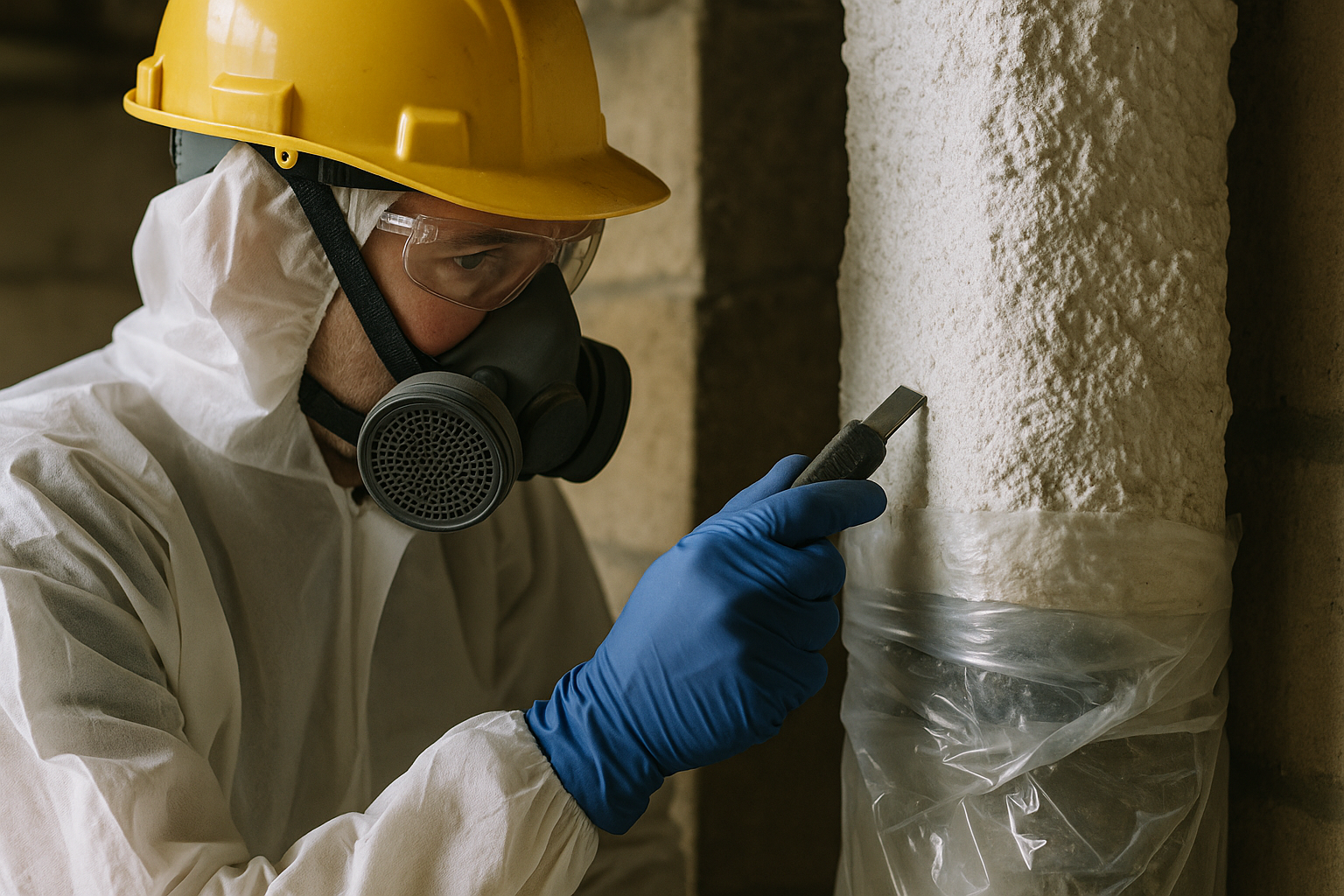
You should be especially cautious where:
- the surface is deteriorating or delaminating
- there is visible debris or dust from the material
- the area is exposed to knocks, vibration, moisture or heat
- maintenance teams regularly need access nearby
- major refurbishment or demolition is planned
If intrusive works are coming up, arrange an refurbishment survey before any work starts. If the building is to be taken down, a demolition survey is required so asbestos can be identified and managed before demolition begins.
Red flags that point towards removal
There are clear cases where leaving asbestos in place is hard to justify. If the material is crumbling, water-damaged, heavily exposed or impossible to monitor properly, a managed removal strategy is usually safer.
Where removal is the right path, use a competent contractor and make sure the scope matches the risk. You can read more about professional asbestos removal options before deciding on the best route.
Methods used in asbestos encapsulation
There is no single method that suits every material. The right asbestos encapsulation method depends on the asbestos product, its condition, the substrate, the environment and the likelihood of future disturbance.
Work should be specified by competent professionals and carried out using suitable controls. Survey information, material assessment and site conditions all matter.
1. Surface coating encapsulation
This is one of the most common approaches. A specialist encapsulant is applied to the surface of the asbestos-containing material to bind and protect it.
There are generally two broad types:
- Penetrating encapsulants that soak into the material and help bind fibres internally
- Bridging encapsulants that form a durable protective coating over the surface
The right product depends on the material and the surface condition. A coating that works on one asbestos product may be unsuitable for another.
2. Cloth wrap or bandage systems
Pipework, bends, valves and awkward service runs may be encapsulated using cloth wraps, bandages or proprietary jacket systems. These provide a sealed outer layer and can help protect vulnerable insulation from minor impact.
This method is often used in plant rooms, service ducts and maintenance areas. It still requires proper assessment because pipe insulation can involve higher-risk asbestos materials.
3. Board or rigid enclosure systems
Sometimes the best form of asbestos encapsulation is a robust physical barrier around the material. This may involve boarding over the asbestos-containing surface or building an enclosure so it cannot be contacted during normal occupation.
In practical terms, this is often described as enclosure as well as encapsulation. It is useful where a coating alone would not provide enough protection.
4. Membrane or laminate coverings
In some settings, a membrane, foil-backed product or laminate system may be used to isolate the asbestos-containing material. This can be suitable where a continuous protective layer is needed and where the substrate is stable enough to support it.
Compatibility matters. Any fixing method must avoid causing unnecessary disturbance to the asbestos beneath.
The usual asbestos encapsulation procedure
Although the exact steps vary by project, a sound asbestos encapsulation process follows a clear sequence. Skipping any stage can leave the building with a control measure that looks tidy but does not actually manage risk properly.

- Identify the material through survey information and, where needed, asbestos testing.
- Assess condition and risk, including surface damage, accessibility, occupancy and future maintenance activity.
- Select the encapsulation method based on the material type and the level of protection required.
- Prepare the area with suitable controls, access restrictions, cleaning methods and personal protective equipment.
- Carry out the work using trained personnel and an appropriate method statement.
- Inspect the finished work to confirm coverage, integrity and labelling.
- Update records, including the asbestos register and management plan.
- Schedule ongoing monitoring so the condition of the encapsulated material is reviewed.
Where there is any doubt about what the material contains, laboratory confirmation is the sensible next step. You can arrange sample analysis for suspect materials, order an asbestos testing kit, or choose a testing kit if you need a simple way to submit a sample safely.
What to consider before choosing asbestos encapsulation
Good decisions are made case by case. Asbestos encapsulation might be ideal in one room and completely wrong in the next.
Before choosing a control option, look closely at the following factors.
Condition of the material
If the asbestos-containing material is intact and stable, encapsulation may be viable. If it is crumbling, flaking or already releasing debris, removal may be safer.
Condition is one of the biggest decision points. Even a low-disturbance location does not make badly damaged asbestos acceptable to leave untreated.
Type of asbestos product
Different asbestos products behave differently. Cement sheets are very different from pipe lagging, and asbestos insulation board is different again.
Higher-risk materials often need stricter controls, and some work may fall within licensed or notifiable categories under HSE guidance. The material type cannot be guessed from appearance alone.
Likelihood of disturbance
Ask how the area is actually used. A locked riser cupboard presents a different risk profile from a busy corridor, school storeroom or plant room used by contractors every week.
Consider:
- foot traffic
- maintenance access
- cleaning routines
- vibration from equipment
- risk of impact from trolleys, ladders or stored items
Future plans for the building
If refurbishment is likely within the next few years, asbestos encapsulation can become a short-term fix that adds cost later. The material will still be asbestos when works begin, and it will still need to be dealt with properly.
If major alterations are planned, removal during a scheduled project may be more practical than repeated management in place.
Access for inspection and maintenance
Encapsulated asbestos must be monitored. If the material cannot be seen again easily after treatment, it may be harder to prove the control measure remains effective.
Duty holders should think beyond the day the work is finished. Ongoing inspection is part of the commitment.
Environment and exposure to damage
Moisture, condensation, temperature changes and mechanical wear can affect the lifespan of an encapsulant. Areas exposed to regular knocks or damp conditions may need a different solution.
A product that performs well in a dry office may not perform the same way in a boiler room or loading area.
Budget and long-term cost
Upfront cost matters, but so does the full life-cycle cost. Asbestos encapsulation is often cheaper initially than removal, but it comes with ongoing inspection, maintenance and management obligations.
A lower invoice today is not always the lowest cost over the life of the building.
Asbestos encapsulation cost in the UK
One of the first questions property managers ask is simple: how much does asbestos encapsulation cost? The honest answer is that costs vary widely because no two jobs are exactly the same.
The price depends on what is being treated, how accessible it is, the method used, the condition of the material and whether specialist controls are needed. Small, straightforward jobs cost far less than work involving difficult access, complex plant areas or higher-risk materials.
What affects asbestos encapsulation cost?
- type of asbestos-containing material
- surface area or linear meterage
- condition of the material before treatment
- location and ease of access
- whether the area is occupied during works
- need for enclosures, access equipment or out-of-hours work
- waste handling and cleaning requirements
- post-work inspection and documentation
Encapsulating a small section of asbestos cement in a low-risk outbuilding is very different from treating asbestos insulation board in an occupied commercial property.
Typical price expectations
There is no single fixed national rate, and anyone quoting one figure without seeing the material should be treated cautiously. In practice, asbestos encapsulation can range from modest sums for very small, simple areas to much larger project costs for complex commercial sites.
As a general rule:
- small domestic or low-complexity jobs may cost a few hundred pounds
- medium commercial works can run into the low thousands
- large or specialist projects can be significantly higher depending on controls and access
These are broad expectations, not universal prices. The only reliable way to price the work is to assess the material properly first.
Encapsulation vs removal cost
Asbestos encapsulation is often less expensive upfront than removal because it usually involves less labour, less waste and less disruption. However, removal can be better value over the long term if the material would otherwise need repeated inspection and future remedial work.
Compare both options on:
- initial project cost
- ongoing inspection costs
- future refurbishment plans
- liability and management burden
- occupancy disruption
If you are deciding between management in place and removal, ask for both scenarios to be costed where possible.
Legal and regulatory compliance
Asbestos encapsulation must comply with the Control of Asbestos Regulations and the wider body of HSE guidance. For surveys, material assessment and reporting, HSG264 remains a key reference point.
The legal position is clear: asbestos does not have to be removed in every case. What matters is that the risk is assessed and controlled properly.
What duty holders need to do
If you manage non-domestic premises, or the common parts of certain residential buildings, you may have a duty to manage asbestos. That means knowing whether asbestos is present, assessing its condition and making sure it is managed safely.
Where asbestos encapsulation is used, practical compliance steps include:
- keeping an up-to-date asbestos register
- recording the location and condition of encapsulated materials
- labelling where appropriate
- reviewing the management plan regularly
- making information available to contractors and maintenance teams
- reinspecting the material at suitable intervals
Encapsulation is a management decision, not the end of the management duty.
Does encapsulation require specialist competence?
Yes. Even where the work itself is lower risk than removal, the assessment and method selection still need competent input. Some asbestos work may be licensed, notifiable non-licensed or non-licensed depending on the material and activity.
That is why the process should begin with proper identification and risk assessment, not guesswork from photographs or old plans.
Testing and surveys before asbestos encapsulation
You cannot plan safe asbestos encapsulation around assumptions. Before any treatment decision is made, you need confidence about what the material is, where it is and what condition it is in.
When testing is needed
If a suspect material has not been confirmed, sampling and laboratory analysis is often the next step. For straightforward identification, you can arrange asbestos testing through a professional service.
Testing is especially useful where records are missing, previous surveys are outdated or the material does not clearly match known asbestos products.
When a survey is needed
If the building is occupied and you need to locate and assess asbestos-containing materials during normal use, an asbestos management survey is usually the starting point. If intrusive work is planned, a refurbishment or demolition survey may be required instead.
For local support, property managers can arrange an asbestos survey London service or an asbestos survey Manchester service depending on site location.
Practical advice for property managers and landlords
If you are weighing up asbestos encapsulation against removal, avoid rushing the decision. The cheapest quote is not always the safest option, and the least disruptive option is not always the most defensible one.
Use this checklist before approving work:
- Confirm the material has been identified properly.
- Check whether its condition genuinely supports encapsulation.
- Review how the area is used day to day.
- Ask whether future works are likely to disturb it.
- Make sure the proposed method is suitable for that specific material.
- Require updated records and a clear reinspection plan.
- Ensure contractors and maintenance staff will be informed afterwards.
It also helps to ask one simple question: will this still be the right decision in two or five years? If the answer is no, removal during a planned project may be the more practical route.
Common mistakes to avoid with asbestos encapsulation
Most problems with asbestos encapsulation do not come from the idea itself. They come from poor assessment, the wrong materials or lack of follow-up.
Watch out for these common mistakes:
- encapsulating material that is already too damaged
- using coatings that are incompatible with the substrate
- failing to consider future access or refurbishment
- covering asbestos without updating the register
- assuming encapsulated asbestos no longer needs inspection
- allowing later trades to drill, cut or disturb the area without checks
A good encapsulation job should make future management easier, not create hidden risks for the next contractor on site.
Frequently Asked Questions
Is asbestos encapsulation safe?
Yes, asbestos encapsulation can be safe when the material is in suitable condition, the method is correctly specified and the asbestos is monitored afterwards. It is not suitable for every situation, especially where materials are badly damaged or likely to be disturbed.
Is asbestos encapsulation cheaper than removal?
Often, yes. Asbestos encapsulation is usually cheaper upfront because it involves less labour, less waste and less disruption. However, removal may offer better long-term value if future works are planned or ongoing management costs are likely to build up.
Does encapsulated asbestos still need to be managed?
Yes. Encapsulated asbestos remains asbestos. It must stay on the asbestos register, be included in the management plan and be reinspected at suitable intervals under the Control of Asbestos Regulations.
Can I paint over asbestos myself?
Simply painting over a suspect material is not the same as professional asbestos encapsulation. Before any treatment, the material should be identified and assessed. Using the wrong product or disturbing the surface can make the risk worse.
When is removal better than asbestos encapsulation?
Removal is usually better where asbestos is badly damaged, friable, exposed to regular disturbance, or located in an area due for refurbishment or demolition. In those cases, leaving it in place may not be a reliable long-term control measure.
If you need clear advice on whether asbestos encapsulation or removal is the right option, Supernova Asbestos Surveys can help. We provide surveys, testing, sampling support and practical recommendations nationwide. Call 020 4586 0680 or visit asbestos-surveys.org.uk to arrange expert support.