What Does an Asbestos Survey Entail at Home — and Do You Actually Need One?
If your home was built before 2000, there is a very real chance it contains asbestos-containing materials (ACMs) somewhere within its fabric. That is not scaremongering — it reflects just how extensively asbestos was used in UK construction throughout the 20th century. Cheap, fire-resistant, and versatile, it found its way into everything from ceiling coatings to floor tiles to pipe lagging. Understanding what does an asbestos survey entail at home is the first step towards protecting yourself, your family, and anyone who carries out work on your property.
Why Asbestos in Homes Remains a Serious Concern
Asbestos was banned from use in new UK buildings in 1999, but that ban did nothing to remove the material already embedded in millions of existing properties. The fibres are invisible to the naked eye and, when left undisturbed, do not pose an immediate risk. The danger arises when ACMs are drilled into, sanded, cut, or disturbed during renovation work.
Inhaled asbestos fibres can cause mesothelioma, asbestosis, and lung cancer — diseases that frequently do not manifest until decades after the original exposure. There is no safe level of asbestos inhalation, which is why identification matters so much before any work begins.
Common locations where asbestos has been found in UK homes include:
- Textured coatings such as Artex on ceilings and walls
- Floor tiles and the adhesive beneath them
- Pipe lagging and boiler insulation
- Roof tiles, soffits, and guttering made from asbestos cement
- Insulation boards in ceiling tiles, partition walls, and airing cupboards
- Garage and outbuilding roofing sheets
- Electrical panels and fuse boxes
If your property was built or significantly refurbished between the 1950s and 1990s, any of the above could apply. A visual inspection alone cannot confirm or rule out asbestos — only laboratory analysis can do that.
What Is an Asbestos Survey?
An asbestos survey is a formal inspection of a building carried out by a trained, qualified surveyor. Its purpose is to locate, identify, and assess any materials that may contain asbestos, then give you the information needed to manage or remove them safely.
The survey produces a written report that includes an asbestos register — a record of all identified or presumed ACMs — along with their condition, location, and a risk assessment. This document becomes the foundation of any asbestos management or remediation plan going forward.
There are different types of asbestos survey, each designed for different circumstances. Choosing the wrong type for your situation is not just ineffective — it could leave you exposed to serious risk.
The Different Types of Asbestos Survey Explained
Management Surveys
A management survey is the standard type for occupied properties not undergoing significant structural work. It is designed to locate ACMs that could be disturbed during normal day-to-day occupation — routine maintenance, minor repairs, or superficial decorating.
The surveyor inspects all accessible areas: walls, ceilings, floors, loft spaces, service areas, and outbuildings. Suspected materials are sampled and sent to a UKAS-accredited laboratory for analysis. The final report confirms what is present, its condition, and what level of risk it poses.
For most homeowners, a management survey is the right starting point. It tells you what is there and whether it needs to be managed in place, monitored, or removed.
Refurbishment Surveys
If you are planning significant building work — a loft conversion, kitchen refit, or extension — a management survey is not sufficient. You will need a refurbishment survey instead.
This type of survey is more intrusive. The surveyor accesses areas that would not normally be disturbed: inside wall cavities, beneath floorboards, within ceiling voids. This may involve minor destructive investigation — removing sections of plasterboard or lifting floor coverings — to properly assess hidden materials.
Builders and tradespeople can unknowingly disturb concealed ACMs if they have not been identified beforehand. Under the Control of Asbestos Regulations, a refurbishment survey is a legal requirement before intrusive work begins on non-domestic properties. For domestic properties, it is equally essential from a safety standpoint, and many contractors will require evidence of a survey before they start work.
Demolition Surveys
Where a property or structure is being demolished in full, a demolition survey is required. This is the most thorough and intrusive type of survey, designed to identify every ACM within the building before demolition commences.
The surveyor will access all areas of the structure, including those that are normally inaccessible. This ensures that demolition contractors can work safely and that ACMs are removed by licensed contractors before the building comes down. Under the Control of Asbestos Regulations, this survey is a legal requirement before demolition work begins on non-domestic premises.
What Does an Asbestos Survey Entail at Home — The Process Step by Step
Knowing exactly what to expect on the day helps you prepare properly and ensures you get full value from the inspection.
Before the Survey
A reputable surveyor will review any existing building plans, previous survey records, or relevant historical information before attending. This helps identify likely ACM locations and ensures no area is overlooked.
If you have any existing records, knowledge of previous works, or are aware that asbestos was identified or removed in the past, share this with your surveyor in advance. The more context they have, the more targeted the inspection can be.
During the Survey
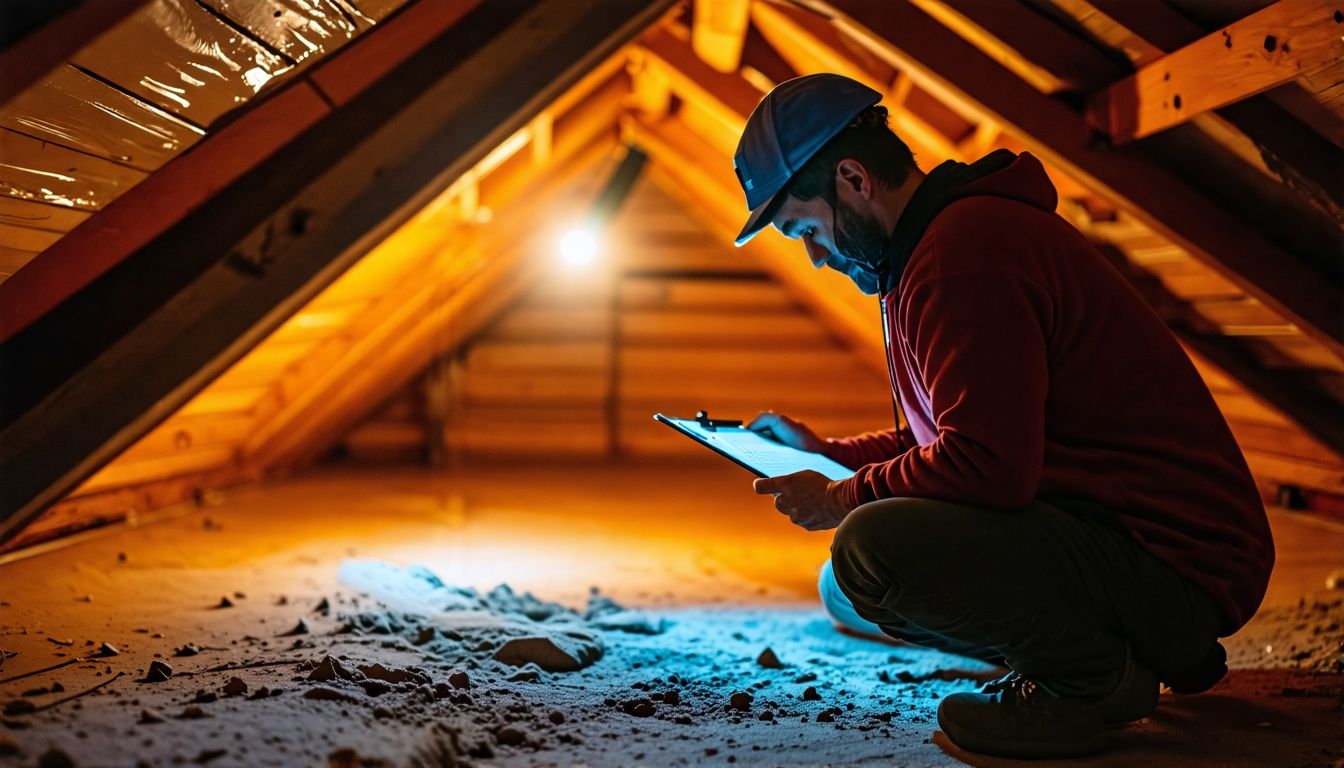
The surveyor conducts a methodical visual inspection of the property, assessing materials against known asbestos-containing product types. Where a material is suspected or cannot be confirmed safe by visual inspection alone, a small sample is taken using controlled techniques designed to minimise fibre release.
Samples are clearly labelled, securely packaged, and sent to a UKAS-accredited laboratory for analysis. You should expect a qualified surveyor holding a relevant BOHS qualification — P402 for buildings surveys — not a general building inspector working from a basic checklist.
The surveyor will typically work through the property room by room, checking:
- All ceiling and wall surfaces, including textured coatings
- Flooring and floor adhesives
- Pipework, boilers, and associated insulation
- Loft insulation and roof spaces
- Outbuildings, garages, and external structures
- Electrical installations and fuse boxes
- Any areas of visible damage or deterioration
The Survey Report
The completed report is the most important output of the entire process. A thorough asbestos survey report will include:
- A full asbestos register listing all identified and presumed ACMs
- Photographs and floor plan annotations showing exact locations
- Laboratory analysis results for all samples taken
- A condition assessment for each material
- A risk priority rating to guide your next steps
- Recommendations for management, monitoring, or removal
This document has real, lasting value. It is required by law for non-domestic properties, essential for insurance purposes, and increasingly requested by solicitors during property transactions.
What the Law Says About Asbestos Surveys for Homeowners
There is a lot of confusion about the legal position for homeowners, so it is worth being direct. The Control of Asbestos Regulations place a legal duty to manage asbestos on the owners and managers of non-domestic premises — commercial buildings, schools, offices, and rental properties. Private homeowners living in their own home are not subject to the same statutory duty.
However, that does not make surveys optional. Consider the following situations:
- Renovation work: Your contractor has a legal obligation under the Control of Asbestos Regulations not to disturb asbestos. If ACMs are encountered unexpectedly because no survey was done, work stops — often at significant cost to you.
- Landlords: If you rent out a property, you have a duty of care to your tenants. Failing to assess and manage asbestos risks in a rental property could expose you to serious legal liability.
- Property sales: Buyers and their solicitors increasingly request evidence of an asbestos survey as part of due diligence, particularly for pre-2000 properties.
Even if you are not legally compelled to commission a survey as a private homeowner, the practical and safety reasons to do so are substantial. The HSE’s guidance document HSG264 sets out best practice for asbestos surveys and is the benchmark against which all reputable surveyors work.
Asbestos Testing — a Targeted First Step
If you have a specific concern about a single material rather than the whole property, asbestos testing can provide a targeted answer. This involves taking a sample of the suspected material and having it analysed by an accredited laboratory.
Supernova offers a professional asbestos testing service as well as an asbestos testing kit that allows you to take a sample yourself and send it for professional laboratory analysis. This can be a practical first step when you have a specific concern about one area of your home.
That said, a DIY sample should not replace a professional survey — particularly if you are planning building work or managing a rental property. Proper sampling technique matters, and an untrained person may inadvertently release fibres during collection. For individual material analysis, you can also order standalone sample analysis directly through Supernova’s online shop.
For a broader picture of your property’s asbestos status, a full survey remains the appropriate route.
What Happens After the Survey?
The outcome of your survey will determine the appropriate next steps. Not every ACM needs to be removed — and in many cases, removal is not the best option. Asbestos that is in good condition and unlikely to be disturbed is often best left in place and managed through a regular monitoring programme.
Your options typically fall into one of three categories:
- Manage in place: ACMs in good condition with low disturbance risk can remain, with periodic re-inspections to monitor their condition over time.
- Encapsulation: Damaged or at-risk materials can sometimes be sealed or encapsulated to prevent fibre release without full removal.
- Licensed removal: Certain types of asbestos — notably sprayed coatings, asbestos insulating board, and pipe lagging — must be removed by a licensed contractor. Asbestos cement products and floor tiles can sometimes be removed by non-licensed contractors, but the work must still be carried out under controlled conditions in line with the Control of Asbestos Regulations.
Supernova provides professional asbestos removal services for both residential and commercial properties, so you are not left navigating multiple contractors independently.
Re-Inspection Surveys — Keeping Your Records Up to Date
If ACMs have been identified and a decision is made to manage them in place, that is not a one-off action. The condition of asbestos-containing materials can deteriorate over time due to age, moisture, physical damage, or general wear. A material that was low-risk a few years ago may not be today.
A re-inspection survey is a periodic assessment that updates your asbestos register and management plan to reflect the current condition of identified materials. For non-domestic properties, this is a legal requirement. For residential landlords and homeowners with identified ACMs, it is simply responsible practice.
The frequency of re-inspections will depend on the condition and type of ACMs identified, but annually is a common baseline for managed materials in occupied properties.
How to Choose the Right Asbestos Surveyor
Not all asbestos surveys are equal. When instructing a surveyor, look for the following:
- BOHS-qualified surveyors — P402 buildings surveys qualification as a minimum
- UKAS-accredited laboratory analysis — all samples should be analysed by an accredited lab, not an in-house facility without independent accreditation
- Clear, detailed reporting — the report should include photographs, floor plans, condition ratings, and actionable recommendations, not just a list of materials
- Transparent pricing — a reputable company will provide a clear quote before the survey, not add unexpected charges afterwards
- Insurance and professional indemnity cover — essential for any surveying work carried out on your property
Be cautious of very low-cost surveys that do not include laboratory analysis or that are carried out by individuals without verifiable qualifications. The survey report is a document you may rely on for years — it needs to be accurate and defensible.
When Should You Commission a Survey?
The honest answer is: sooner rather than later, particularly if your property was built before 2000 and you have never had it assessed. Specific triggers that should prompt you to act immediately include:
- Planning any renovation, extension, or structural alteration
- Purchasing a pre-2000 property
- Preparing a pre-2000 property for sale
- Taking on a new rental property or letting a property for the first time
- Noticing deteriorating or damaged materials in areas where asbestos is commonly found
- Inheriting a property built before 2000
Even if none of the above apply, a survey on an older property gives you a baseline record that is genuinely useful. It informs future decisions, supports insurance claims, and provides peace of mind that is difficult to put a price on.
Frequently Asked Questions
What does an asbestos survey entail at home?
A home asbestos survey involves a qualified surveyor conducting a methodical inspection of your property, assessing materials that may contain asbestos. Suspected materials are sampled under controlled conditions and sent to a UKAS-accredited laboratory for analysis. You receive a written report — known as an asbestos register — detailing the location, condition, and risk level of any identified or presumed ACMs, along with recommendations for management or removal.
Do I legally need an asbestos survey for my home?
Private homeowners living in their own property are not legally required to commission an asbestos survey under the Control of Asbestos Regulations. However, landlords have a duty of care to tenants, contractors are legally required not to disturb asbestos, and solicitors increasingly request survey evidence during property transactions. The legal obligation may not fall directly on you as a homeowner, but the practical and safety case for a survey remains strong.
How long does a home asbestos survey take?
The duration depends on the size and complexity of the property. A standard management survey for a typical three-bedroom house will usually take between one and three hours on site. The surveyor will then send samples for laboratory analysis, and the completed report is typically returned within a few working days of the site visit.
Can I test for asbestos myself without a full survey?
You can use a testing kit to take a sample of a specific material and have it analysed by a laboratory. This is a useful option if you have a single, specific concern. However, DIY sampling carries a risk of fibre release if not done correctly, and a single sample result does not give you the broader picture that a professional survey provides. For any planned building work or rental property management, a full professional survey is the appropriate route.
What happens if asbestos is found during the survey?
Finding asbestos does not automatically mean it needs to be removed. ACMs in good condition and unlikely to be disturbed are often best managed in place, with periodic re-inspections to monitor their condition. Your surveyor’s report will include a risk rating and specific recommendations. Where removal is required, it must be carried out by appropriately licensed contractors in line with the Control of Asbestos Regulations.
Get a Professional Asbestos Survey from Supernova
Supernova Asbestos Surveys has completed over 50,000 surveys nationwide, working with homeowners, landlords, property managers, and commercial clients across the UK. Our surveyors are BOHS-qualified, our laboratory analysis is UKAS-accredited, and our reports meet the standards set out in HSG264.
Whether you need a management survey on your home, a refurbishment survey ahead of building work, or ongoing re-inspection support, we provide a straightforward, professional service with no unnecessary jargon.
Call us on 020 4586 0680 or visit asbestos-surveys.org.uk to get a quote or find out more about how we can help you.