Who Can Help You Identify Asbestos in Your Home?
If you’ve uncovered a suspicious material mid-renovation, or you simply want peace of mind about an older property, asbestos is exactly the right thing to be thinking about. It was used extensively in UK building materials right up until the full ban in 1999, meaning millions of homes built or refurbished before that date could still contain it.
The good news is that you don’t have to figure this out alone. Professional services, regulatory bodies, and practical steps all exist to help you understand what you’re dealing with — and what to do about it.
Can You Identify Asbestos Yourself?
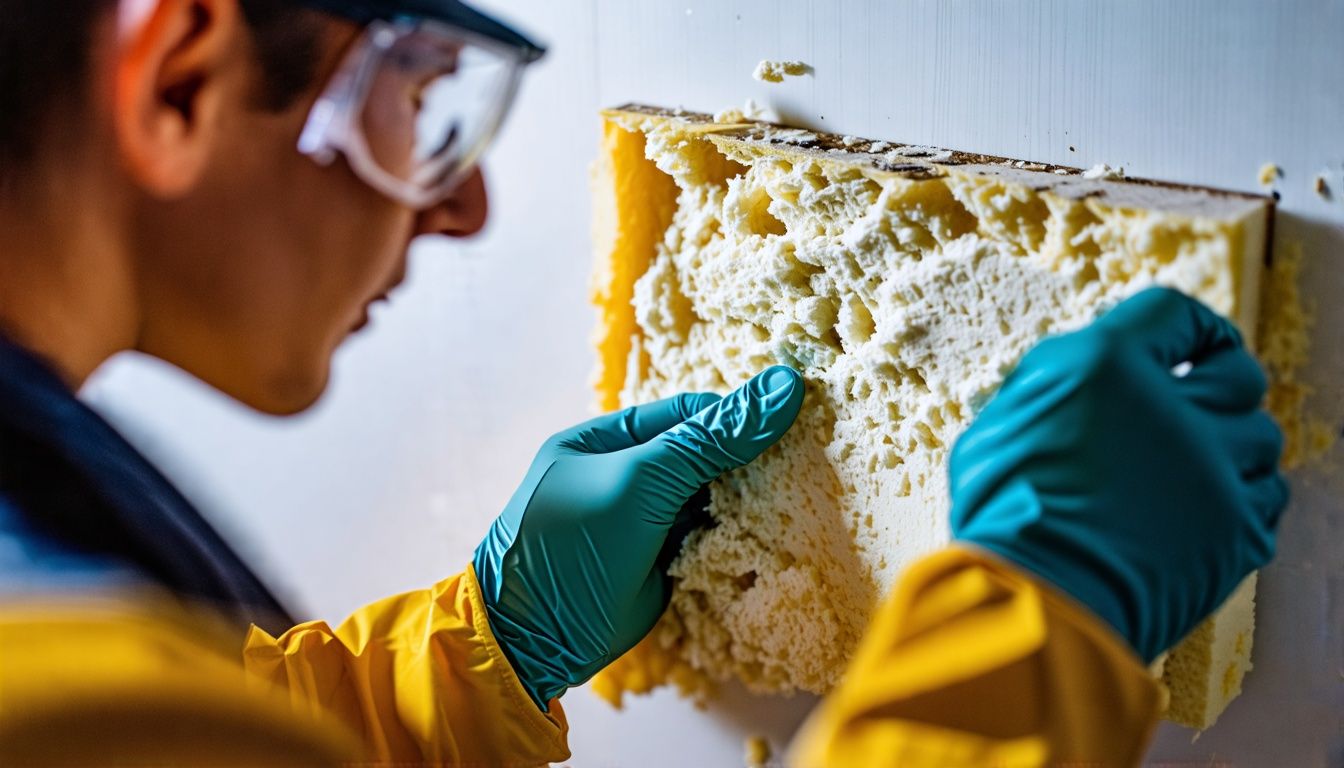
The honest answer is no — not definitively. Asbestos cannot be identified by sight alone. Many asbestos-containing materials (ACMs) look identical to their non-asbestos alternatives, and attempting to inspect or disturb suspected materials yourself creates a very real health risk.
That said, knowing where asbestos was commonly used in UK homes helps you understand where a professional survey should focus its attention.
Common Places Asbestos Is Found in UK Homes
- Textured coatings — Artex and similar decorative finishes on walls and ceilings, particularly popular from the 1950s to 1980s
- Insulation boards — Around boilers, fireplaces, storage heaters, and airing cupboards
- Pipe lagging — White or grey wrapping around hot water pipes and central heating pipework
- Roof materials — Corrugated cement sheets used in garages, sheds, and extensions
- Floor tiles and adhesives — Vinyl floor tiles and the black bitumen adhesive beneath them
- Soffit boards and fascias — Particularly on pre-2000 properties
- Loose-fill loft insulation — A particularly hazardous form; blue-grey or white fluffy material between ceiling joists
- Cement products — Guttering, downpipes, water tanks, and flue pipes in older properties
If your home was built before 2000 — especially if it dates from the 1950s to 1980s — and you’re planning any work, assume asbestos could be present until proven otherwise.
Who Regulates Asbestos in the UK?
Asbestos management in UK buildings is governed by the Control of Asbestos Regulations, enforced by the Health and Safety Executive (HSE). These regulations apply primarily to non-domestic premises, but the guidance they produce is highly relevant for homeowners too.
The Health and Safety Executive (HSE)
The HSE is your first port of call for reliable, free information on asbestos in the UK. Their website contains guidance for both duty holders — landlords, employers, managing agents — and private homeowners, covering:
- How to manage asbestos you suspect or know about
- When and how to arrange a survey
- What licensed contractors are required to do
- How to check whether a contractor holds a valid licence
The HSE also operates an asbestos licensing scheme. You can search their register of licensed asbestos contractors directly on the HSE website — always verify your contractor is listed before any removal work begins.
Local Councils
Your local authority can be a useful resource, particularly if you’re a council tenant or live in a property managed by a housing association. In those cases, the landlord has a legal duty to manage asbestos, and the council’s environmental health team can advise on your rights.
Some councils also provide guidance on asbestos disposal at licensed household waste facilities — relevant if any ACMs have already been removed from a property.
Professional Asbestos Surveys: What’s Available?
For homeowners in the UK, the most reliable route to identifying asbestos is commissioning a professional survey from a qualified surveyor. There are different types of survey depending on your situation and what work — if any — you’re planning.
Management Survey
An asbestos management survey is the standard survey for occupied properties. It identifies ACMs that could be disturbed during normal use or routine maintenance of the building. This is the right starting point if you simply want to understand what’s in your home without any immediate renovation plans.
Refurbishment Survey
If you’re planning renovation work — knocking down walls, replacing a boiler, re-roofing, or fitting a new kitchen — you need a refurbishment survey before work starts. This is more intrusive and focuses specifically on the areas that will be disturbed by the planned works.
Demolition Survey
If the property is being demolished, a full demolition survey is required. This is the most comprehensive type and must be completed before any demolition work begins — no exceptions.
Re-Inspection Survey
If asbestos-containing materials are already known and being managed in place, a re-inspection survey checks their condition periodically to ensure they haven’t deteriorated. This is an essential part of any ongoing asbestos management plan.
At Supernova Asbestos Surveys, we carry out all four types of survey across the UK. Our surveyors are fully qualified, and every survey comes with a clear, actionable report — not a stack of jargon you need a specialist to decode.
Asbestos Testing: What Happens to Samples?
When a surveyor takes samples from suspected ACMs, those samples are sent to an accredited laboratory for analysis under a microscope. The lab will confirm whether asbestos fibres are present and, if so, identify the type — chrysotile (white), amosite (brown), or crocidolite (blue). All three types are hazardous.
The type of asbestos identified and its condition inform the risk assessment and the recommended course of action. Professional asbestos testing through a qualified surveyor ensures samples are taken safely and results are properly interpreted.
DIY Testing Kits
If you want a quick preliminary answer before commissioning a full survey, Supernova offers an asbestos testing kit available directly from our website. You take a small sample yourself following the provided safety instructions, post it to the lab, and receive an analysis result.
This is a useful first step, but it’s worth being clear about its limitations. A single sample from one location doesn’t tell you about other materials throughout the property — a professional survey provides the complete picture. The testing kit is best used as a starting point, not a substitute for a full inspection.
You can also order standalone sample analysis if you already have a sample and need laboratory confirmation of whether asbestos is present.
What to Do If You Suspect Asbestos Is Present
The most important rule is straightforward: don’t disturb it. Asbestos that is in good condition and left undisturbed poses minimal risk. It’s when fibres become airborne — through drilling, sanding, cutting, or general deterioration — that exposure becomes dangerous.
Practical Steps for Homeowners
- Stop any planned work immediately if you’ve uncovered a material you’re unsure about mid-renovation
- Don’t touch, break, or move the suspected material
- Keep the area clear of children, pets, and anyone not directly involved
- Ventilate the space if possible, but avoid creating draughts that could spread fibres
- Contact a professional surveyor to assess the material before any work resumes
- Don’t dispose of asbestos in your household waste — it must go to a licensed facility
If you believe you may have already been exposed to disturbed asbestos fibres, speak to your GP and mention the potential exposure clearly. Keep a record of when and where the exposure may have occurred — this information matters for any future medical assessment.
Asbestos Removal: When Is It Actually Required?
Not all asbestos needs to be removed. In many cases, managing asbestos in place — monitoring its condition and ensuring it isn’t disturbed — is the safest and most practical approach. Removal itself creates a disturbance, which carries its own risks if not carried out correctly.
Removal becomes necessary when:
- The material is deteriorating or damaged and releasing fibres
- Renovation or demolition work will affect the area containing ACMs
- The material is in a location where it’s regularly being disturbed
- You’re preparing to sell and want a clean survey result
Licensed vs Non-Licensed Removal
Under the Control of Asbestos Regulations, certain types of asbestos work must be carried out by an HSE-licensed contractor. This includes work on sprayed coatings, pipe lagging, and most work involving amosite or crocidolite asbestos.
Some lower-risk work — such as removing small amounts of asbestos cement in good condition — may fall under non-licensed work, but it still comes with strict requirements around training, PPE, and disposal. Professional asbestos removal carried out by a licensed contractor is always the safest route.
The critical point: check the HSE register before hiring anyone for asbestos removal. A legitimate contractor will have no hesitation in providing their licence details. Be wary of any company that can’t or won’t.
Supernova Asbestos Surveys works with a trusted network of licensed removal contractors and can advise on the appropriate route based on your survey findings.
Your Legal Rights as a UK Homeowner
If you own your home outright, the responsibility for managing asbestos sits with you. There’s no legal requirement to remove asbestos from a private residence, but you do have an obligation not to expose tradespeople or others to asbestos risk during any work — which is precisely why a management survey before renovation is so important.
Rented Properties
If you’re a tenant, your landlord has a legal duty of care under the Control of Asbestos Regulations to manage asbestos in the property. This means they should have carried out a management survey and have a management plan in place. You have the right to ask for this information.
If you believe your landlord is failing in this duty — particularly if you’ve raised concerns about deteriorating materials or upcoming renovation work — contact your local council’s environmental health department or seek legal advice.
Selling a Property Containing Asbestos
You’re not legally required to remove asbestos before selling, but you are required to disclose known hazards to prospective buyers. A completed asbestos management survey can actually be a positive selling point — it shows buyers exactly what’s there and that it’s being managed responsibly.
Buyers and solicitors increasingly expect to see this documentation on older properties. Having it ready can speed up the conveyancing process and demonstrate transparency.
How Much Does an Asbestos Survey Cost?
Survey costs vary depending on property size, type of survey, number of samples taken, and location. A management survey for a typical residential property generally falls in the range of a few hundred pounds — a modest investment when weighed against the health risks of unknowingly disturbing asbestos during renovation work.
Supernova Asbestos Surveys provides transparent pricing with no hidden extras. Contact us directly for a no-obligation quote based on your specific property and requirements. We cover the whole of the UK and aim to arrange surveys quickly, including priority bookings when time-sensitive work is waiting to proceed.
The Health Risks of Asbestos Exposure
Understanding why asbestos matters is just as important as knowing where to find help. When asbestos-containing materials are disturbed, microscopic fibres are released into the air. These fibres can be inhaled deeply into the lungs, where they become permanently lodged.
The diseases linked to asbestos exposure include:
- Mesothelioma — A cancer of the lining of the lungs or abdomen, almost exclusively caused by asbestos exposure
- Asbestosis — Scarring of the lung tissue that causes progressive breathing difficulties
- Lung cancer — Risk is significantly increased by asbestos exposure, particularly in smokers
- Pleural thickening — Thickening of the membrane surrounding the lungs, causing breathlessness
These conditions typically have a long latency period — symptoms can take decades to appear after exposure. This is why getting the right information and professional help now, rather than assuming everything is fine, matters so much.
Frequently Asked Questions
How do I know if my home contains asbestos?
You cannot tell by looking. If your home was built or significantly refurbished before 2000, asbestos-containing materials could be present in textured coatings, insulation boards, floor tiles, pipe lagging, and cement products. The only way to confirm whether asbestos is present is through professional testing or a survey carried out by a qualified surveyor.
Is asbestos in my home dangerous if I leave it alone?
Asbestos that is in good condition and left completely undisturbed poses minimal risk. The danger arises when fibres become airborne — through drilling, cutting, sanding, or deterioration. If you suspect asbestos is present, do not disturb it, and arrange a professional assessment to determine its condition and the appropriate management approach.
Do I need a licensed contractor to remove asbestos?
It depends on the type and amount of asbestos involved. Under the Control of Asbestos Regulations, certain high-risk work — including sprayed coatings, pipe lagging, and most work involving brown or blue asbestos — must be carried out by an HSE-licensed contractor. Even lower-risk non-licensed work carries strict requirements. Always check the HSE register before hiring any contractor for asbestos removal work.
Can I test for asbestos myself?
You can use a DIY asbestos testing kit to take a sample from a single suspected material and have it analysed by an accredited laboratory. This can provide a useful preliminary answer, but it does not replace a professional survey. A qualified surveyor will assess the whole property, take samples safely, and provide a full risk assessment and management report.
What should I do if I disturb asbestos accidentally?
Stop work immediately. Leave the area and keep others out. Do not try to clean up the material yourself. Ventilate the space carefully without creating draughts that could spread fibres further. Contact a professional asbestos surveyor to assess the situation. If you believe you have already inhaled fibres, speak to your GP and make a clear note of when and where the exposure occurred.
Get the Right Help — Don’t Guess
Asbestos is one of those things where the worst thing you can do is assume everything is fine without checking. The health risks are serious, but they are entirely manageable when asbestos is identified and handled correctly by qualified professionals.
Whether you need a survey on a property you’ve just purchased, a refurbishment survey before a renovation project, a sample analysis for a specific concern, or guidance on what to do after finding a suspicious material, Supernova Asbestos Surveys can help.
With over 50,000 surveys completed nationwide, we have the experience and expertise to give you a clear, honest answer — quickly, and without unnecessary jargon.
Call us on 020 4586 0680 or visit asbestos-surveys.org.uk for a no-obligation quote.