One missed survey, one contractor drilling into the wrong panel, and asbestos law stops being a background issue and becomes an immediate legal and safety problem. If you manage, let, maintain or alter a property built or refurbished before 2000, asbestos law affects decisions you make long before any material is visibly damaged.
That catches people out. Many assume asbestos only matters when it is crumbling or when removal is planned, but the legal duties start earlier: when you assess risk, instruct trades, commission works, keep records and share information with anyone who could disturb asbestos-containing materials.
What asbestos law means in practice
In the UK, asbestos law is built around the Control of Asbestos Regulations, supported by HSE guidance and the survey framework in HSG264. Together, these set out how asbestos should be identified, assessed, managed and, where necessary, removed.
The key point is simple: asbestos law is not only about removal. It also covers surveys, risk assessment, training, communication, record keeping, monitoring and the practical steps needed to prevent exposure.
For most duty holders, the real-world questions are straightforward:
- Could asbestos be present in this building?
- Has the correct survey been carried out?
- Do we know where asbestos-containing materials are located?
- Is their condition recorded and reviewed?
- Have contractors and maintenance teams been told what they need to know?
- Are planned works likely to disturb hidden asbestos?
If the answer to any of those is no, asbestos law is already relevant to your property.
Who has duties under asbestos law?
The best-known obligation under asbestos law is the duty to manage asbestos in non-domestic premises. In practice, that duty usually falls on whoever is responsible for maintenance or repair, whether that is the owner, landlord, managing agent, employer or another party named in a lease or contract.
This applies across a wide range of premises, including:
- Offices and retail units
- Schools, colleges and universities
- Factories, warehouses and workshops
- Hospitals, surgeries and care settings
- Hotels and leisure premises
- Communal areas of residential blocks
- Industrial and agricultural buildings
Under asbestos law, duty holders must take reasonable steps to find out whether asbestos is present, assess the risk, keep records up to date and manage the material so it is not disturbed. That does not always mean removing it. In many cases, the lawful and safest option is to identify asbestos properly and leave it in place under a suitable management plan.
What duty holders are expected to do
A sensible, compliant approach usually includes the following actions:
- Identify whether asbestos-containing materials may be present.
- Arrange the right survey for the building and the planned works.
- Create and maintain an asbestos register.
- Assess the condition and risk of any materials found.
- Prepare an asbestos management plan where required.
- Share asbestos information with contractors and maintenance teams.
- Review and re-inspect known materials at suitable intervals.
These are not paperwork exercises for the sake of it. They are the day-to-day expectations created by asbestos law and reflected in HSE guidance.
Does asbestos law apply to homes, landlords and domestic work?
Asbestos law applies differently in domestic settings than it does in non-domestic premises. If you own and occupy your own home, there is no equivalent formal duty to manage asbestos in the same way that applies to commercial buildings and common parts.
That said, asbestos law still matters when work is planned. Contractors working in domestic premises must be protected from exposure, and anyone arranging works should avoid asking trades to cut, drill, sand or strip materials that have not been checked.
Landlords sit in a more sensitive position. While the formal duty to manage is mainly aimed at non-domestic premises and common parts, landlords still need to act reasonably, especially where repairs, maintenance or refurbishment could disturb asbestos-containing materials.
Practical advice for homeowners and landlords is straightforward:
- Assume asbestos may be present in pre-2000 properties until proven otherwise.
- Do not rely on appearance alone.
- Check before drilling, sanding, removing ceilings, lifting old floor tiles or replacing panels.
- Give contractors asbestos information before work starts, not halfway through the job.
Surveys required under asbestos law
One of the most common failures under asbestos law is ordering the wrong survey, or no survey at all. The correct survey depends on how the building is used and what work is planned.
HSG264 sets out the survey types and what each is designed to achieve. Choosing correctly matters because a survey suitable for normal occupation is not enough for intrusive works.
Management survey
A management survey is used to locate, as far as reasonably practicable, asbestos-containing materials that could be disturbed during normal occupation, routine maintenance or simple installation work. This is the survey most duty holders need for occupied non-domestic premises.
It supports your asbestos register and management plan, helping you show that asbestos law is being followed on an ongoing basis. If you are responsible for a building that remains in use, this is often the starting point.
Refurbishment survey
Before intrusive works begin, a refurbishment survey is usually required. This survey is more intrusive and is designed to find asbestos in the specific area where refurbishment or major maintenance will take place.
If walls, ceilings, floors, risers, ducts or fixed installations are going to be opened up, asbestos law expects the risk to be identified before the work starts. Beginning refurbishment without the right survey can expose workers and leave both client and contractor in breach of their duties.
Demolition survey
A demolition survey is required before a building, or part of it, is demolished. This is the most intrusive survey type because it aims to identify all reasonably accessible asbestos-containing materials so they can be dealt with before demolition proceeds.
Demolition without this level of investigation is a serious failure under asbestos law. It creates obvious risks for workers, waste handlers, neighbours and anyone else affected by the site.
Re-inspection survey
Asbestos law is not satisfied by a one-off survey that is then forgotten. If asbestos-containing materials remain in place, they need to be monitored. A re-inspection survey checks whether known materials have changed in condition and whether your asbestos register still reflects the reality on site.
Many duty holders arrange re-inspection at regular intervals, often annually, but the right frequency depends on the material, its location and the likelihood of disturbance. The practical rule is this: if the condition could change, review it before it becomes a problem.
Why asbestos testing matters under asbestos law
You cannot confirm asbestos by sight alone. Some materials look typical and turn out not to contain asbestos, while others are easy to miss. Under asbestos law, decisions should be based on evidence rather than assumptions.
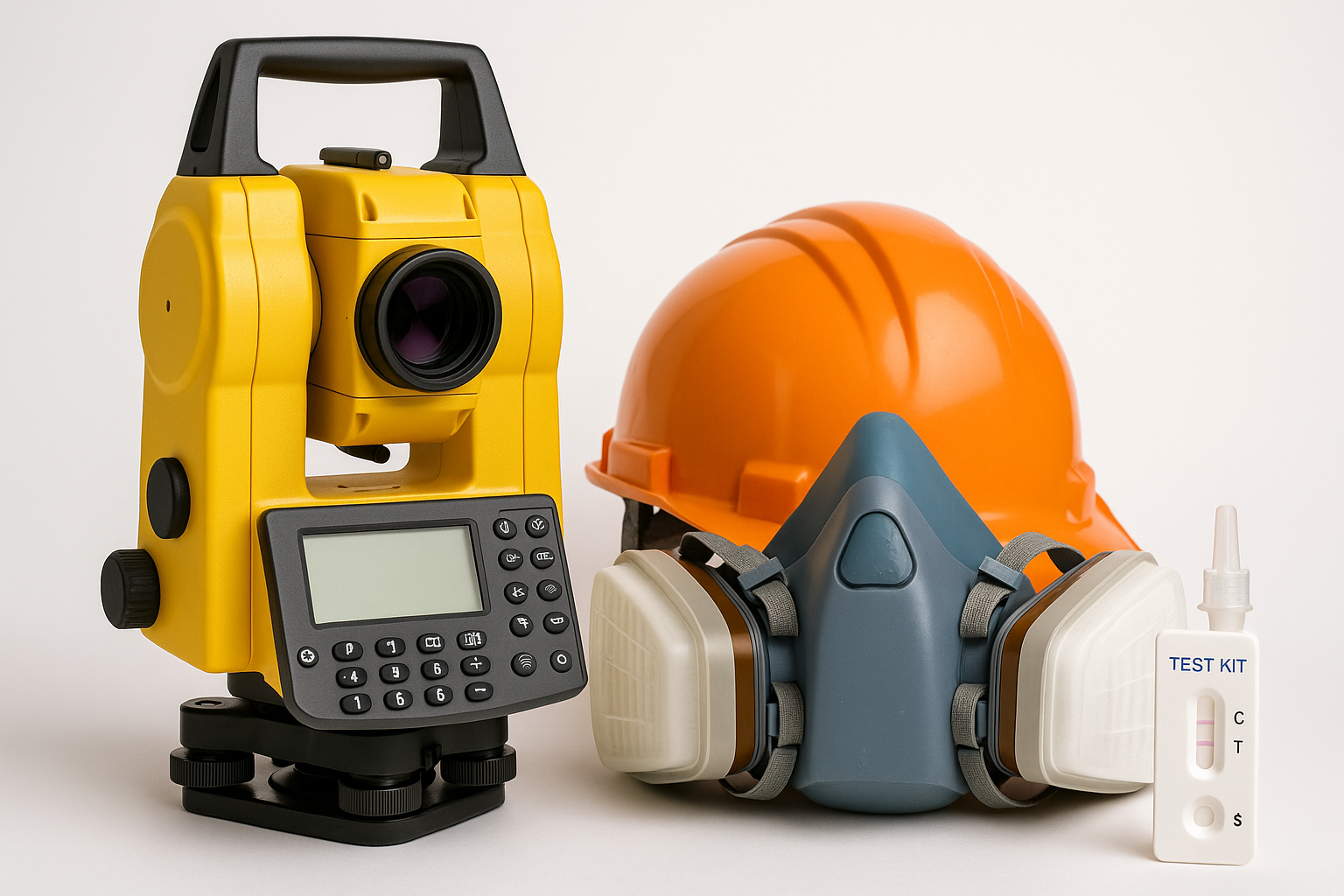
Where a suspect material needs confirmation, asbestos testing allows samples to be taken and analysed by a suitable laboratory. This is often the clearest route when a specific material needs identifying before maintenance, purchase decisions or small-scale works.
There are also situations where clients need direct support for a single concern in a home, flat, office or small commercial unit. In those cases, targeted asbestos testing can help establish whether a material needs managing, removing or simply leaving alone.
When sample analysis is appropriate
If a material is intact and can be sampled safely, sample analysis can be a fast way to confirm whether asbestos is present. This is useful where the question is narrow, such as a textured coating, cement sheet, floor tile, soffit board or insulation board panel.
It is not a replacement for a full survey where wider duty-to-manage obligations apply. If you need to understand the condition, extent and location of asbestos across a building, testing alone will not satisfy asbestos law.
Using a testing kit sensibly
For lower-risk situations, an asbestos testing kit may be suitable where the material is in good condition and can be sampled without spreading debris. Some people simply want a testing kit because they have one suspect item and need a clear answer before arranging works.
Use caution. If the material is friable, damaged, overhead, difficult to access or likely to release dust when disturbed, do not attempt to sample it yourself. In those cases, professional sampling is the safer and more legally sensible option.
Licensed, non-licensed and notifiable work under asbestos law
Another area where asbestos law is often misunderstood is the difference between licensed work, notifiable non-licensed work and non-licensed work. Not every task involving asbestos requires a licence, but many do, and the category matters because the controls, records and contractor requirements are different.
Licensed asbestos work
Higher-risk work involving materials such as pipe lagging, sprayed coatings and loose-fill insulation generally requires a licensed contractor. These materials release fibres easily and demand strict controls.
Licensed work commonly involves:
- Notification to the relevant enforcing authority
- A detailed plan of work
- Suitable enclosure and control measures
- Decontamination procedures
- Air monitoring and clearance arrangements where required
If a job is licensed, using an unlicensed contractor is not a minor oversight. It is a breach of asbestos law with potentially serious consequences.
Notifiable non-licensed work
Some lower-risk work does not require a licence but must still be notified and properly controlled. Workers must be trained, and employers must keep the required records and health information where applicable.
This category catches people out because “non-licensed” sounds informal. It is not. Asbestos law still expects risk assessment, suitable methods, exposure controls and competent workers.
Non-licensed work
A limited amount of very low-risk work can be carried out without a licence or notification, provided the material type, condition and method fall within legal guidance. Even then, workers need the right level of asbestos awareness or task-specific training where relevant, and the work must be planned to keep exposure as low as reasonably practicable.
If there is any doubt about the category, get professional advice before work starts. Guessing is one of the fastest ways to create an avoidable breach of asbestos law.
When asbestos removal is legally necessary
Asbestos law does not say every asbestos-containing material must be removed. In many buildings, the safest and most compliant option is to leave sound materials in place and manage them properly. Removal becomes the likely route when the material is damaged, deteriorating, likely to be disturbed or impossible to manage reliably.
Removal is commonly needed when:
- The material is damaged or breaking down
- Refurbishment or maintenance will disturb it
- Its location makes accidental disturbance likely
- Demolition is planned
- Management in place is no longer realistic
Where removal is required, use a competent contractor and make sure the work category has been assessed correctly. If you need specialist support, professional asbestos removal helps ensure the work is handled safely, legally and with proper waste procedures.
Waste matters too. Asbestos waste is hazardous waste and must be packaged, transported and disposed of correctly. Poor disposal is not just careless; it is another route to enforcement under asbestos law.
Records, registers and communication: the part of asbestos law people neglect
One of the simplest ways to stay compliant with asbestos law is to keep your asbestos information organised and usable. A survey report buried in an inbox does not protect anyone if the contractor on site never sees it.
Your asbestos records should usually include:
- The latest survey report
- An asbestos register showing location and condition
- A management plan where required
- Records of re-inspections
- Details of remedial work or removal
- Relevant waste documentation where removal has taken place
Share the right information before work begins. Waiting until contractors are already drilling, stripping out or opening ceiling voids is too late.
Practical site controls that actually help
Good compliance is often built on simple habits rather than complicated systems. These practical controls make a real difference:
- Issue asbestos information with permits to work
- Brief contractors before access is granted
- Mark or otherwise identify known asbestos-containing materials where appropriate
- Review the register after any works
- Update plans when layouts, occupancy or access routes change
These are not bureaucratic extras. They reduce confusion on site and help show that asbestos law is being followed in a live working environment.
Common mistakes that lead to breaches of asbestos law
Most asbestos law failures are not complicated. They usually come from assumptions, rushed programmes and poor communication between the client, managing agent, contractor and maintenance team.
Watch for these common mistakes:
- Assuming a building is asbestos-free because no issues have been reported before
- Relying on an old survey that does not cover the planned work area
- Using a management survey for refurbishment or demolition works
- Failing to update the asbestos register after removal or alteration
- Not telling contractors where known asbestos is located
- Allowing intrusive work to start before sampling or survey results are available
- Assuming domestic work carries no legal responsibilities for contractors
- Choosing the cheapest option without checking competence
If you manage multiple properties, build asbestos checks into your standard works process. Ask for the survey status before approving maintenance, fit-out, strip-out or demolition. That one step prevents a large share of avoidable problems.
How to stay compliant with asbestos law in day-to-day property management
Compliance works best when it is built into routine management rather than treated as a one-off exercise. If you are responsible for a property portfolio, a school estate, commercial units or residential blocks, use a repeatable process.
A practical approach looks like this:
- Identify which buildings may contain asbestos based on age and history.
- Check whether the current survey type matches the building use and planned works.
- Review the asbestos register and management plan.
- Arrange testing or further survey work where information is missing.
- Share clear asbestos information with contractors before they attend site.
- Re-inspect known materials at suitable intervals.
- Update records after any changes, removals or discoveries.
For planned works, ask three questions before approving the job:
- Will the work disturb the fabric of the building?
- Do we have the correct asbestos information for that exact area?
- Has the contractor seen it and confirmed the method is safe?
If any answer is uncertain, pause the works and check. That is usually the cheapest point to solve the problem.
What asbestos law means for contractors and trades
Contractors are not exempt from asbestos law simply because they are following instructions. If your work could disturb the building fabric, you need to know whether asbestos is present and what controls apply.
Before starting work, contractors should:
- Ask for the relevant survey and asbestos register
- Check whether the information covers the exact work area
- Stop and query anything unclear or incomplete
- Make sure staff have the right level of asbestos training
- Use suitable controls and methods for the material involved
For clients and property managers, that means choosing contractors who ask sensible asbestos questions. A contractor who never asks about asbestos is often the one most likely to create a problem.
When to get professional help
If you are unsure whether asbestos is present, whether a survey is needed or whether planned works change your legal duties, get advice before the job starts. Asbestos law is manageable when the right steps are taken early. It becomes expensive when people try to work around uncertainty.
Bring in professional help when:
- You are responsible for a pre-2000 non-domestic building
- You are planning refurbishment, strip-out or demolition
- Your asbestos register is old, incomplete or missing
- You have suspect materials that need confirmation
- Known asbestos has been damaged
- Contractors are due on site and information is unclear
Early action usually means a clearer scope, safer work and fewer delays.
Frequently Asked Questions
What is the main law covering asbestos in the UK?
The main legal framework is the Control of Asbestos Regulations, supported by HSE guidance and HSG264 for asbestos surveys. Together, they set out how asbestos should be identified, assessed, managed and, where necessary, removed.
Does asbestos law mean all asbestos must be removed?
No. Asbestos law does not require every asbestos-containing material to be removed. If the material is in good condition and unlikely to be disturbed, it can often remain in place and be managed safely through records, monitoring and communication.
Which asbestos survey do I need?
That depends on what the building is used for and what work is planned. A management survey is usually used for occupied premises, while refurbishment and demolition works need more intrusive surveys covering the exact areas affected.
Can I identify asbestos just by looking at it?
No. Visual checks can raise suspicion, but they cannot confirm whether a material contains asbestos. Testing or sampling by a suitable laboratory is needed for reliable identification.
How often should asbestos be re-inspected?
There is no single interval that suits every building. Re-inspection frequency depends on the material, its condition, where it is located and how likely it is to be disturbed. Many duty holders review known asbestos-containing materials regularly, often annually, but the correct interval should reflect the actual risk.
If you need clear advice on asbestos law, the right survey, or support with testing, re-inspection or removal, Supernova Asbestos Surveys can help. We carry out surveys nationwide and provide practical guidance that keeps projects moving safely and legally. Call 020 4586 0680 or visit asbestos-surveys.org.uk to arrange the right service for your property.