Asbestos alternatives changed the way buildings, plant and products were designed across the UK. They were not simply newer materials brought in for convenience. They became necessary because asbestos could no longer be justified where safer substitutes could deliver the same job without the same risk when materials are damaged or disturbed.
That matters if you manage property, oversee maintenance or plan refurbishment work. Many older premises still contain asbestos-containing materials, and modern replacement products can look surprisingly similar. If a building was constructed or refurbished before 2000, you should never assume a board, sheet, panel or insulation product is asbestos-free just because it appears newer than the rest of the building.
Why asbestos alternatives became essential
Asbestos was once used because it offered several useful properties at the same time. It resisted heat, improved insulation, added strength, helped with fire protection and performed well in harsh industrial settings. For decades, that made it attractive in construction, engineering, transport and manufacturing.
The problem is equally clear. When asbestos-containing materials are drilled, cut, broken, sanded or allowed to deteriorate, fibres can be released and inhaled. That is why the Control of Asbestos Regulations place clear duties on those responsible for non-domestic premises, and why HSE guidance and HSG264 remain central to asbestos identification and management.
In practical terms, asbestos alternatives matter because they:
- Allow modern projects to avoid specifying hazardous asbestos-based products
- Support safer repair, replacement and refurbishment decisions
- Provide equivalent or better performance in insulation, sealing, reinforcement, fire protection and friction applications
- Reduce the chance of repeating historic material choices that created long-term risk
There was never one single substitute for every asbestos use. The best asbestos alternatives depend on what the original product needed to do. A material suitable for thermal insulation may be completely wrong for a gasket, brake component or fire-resistant fabric.
Are asbestos alternatives as effective as asbestos?
In many applications, yes. In some cases, asbestos alternatives perform better because they are designed for a specific task rather than expected to cover multiple functions at once.
The key is proper specification. Asbestos was valued partly because it was versatile, but modern materials tend to be more specialised. That usually leads to better performance when the right product is chosen for the right environment.
When comparing asbestos alternatives, look at:
- Operating temperature
- Fire resistance requirements
- Moisture exposure
- Chemical resistance
- Mechanical stress and wear
- Acoustic performance
- Installation method and maintenance access
Some substitutes are lighter and easier to install but less suitable for extreme heat. Others work exceptionally well in demanding conditions but need thicker sections, different fixings or more careful detailing. That does not make them inferior. It simply means modern material selection is more precise.
Common asbestos alternatives used in construction and industry
Most asbestos alternatives are well established rather than experimental. They have been used for years across buildings, industrial plant, transport systems and manufacturing processes.
Cellulose fibres
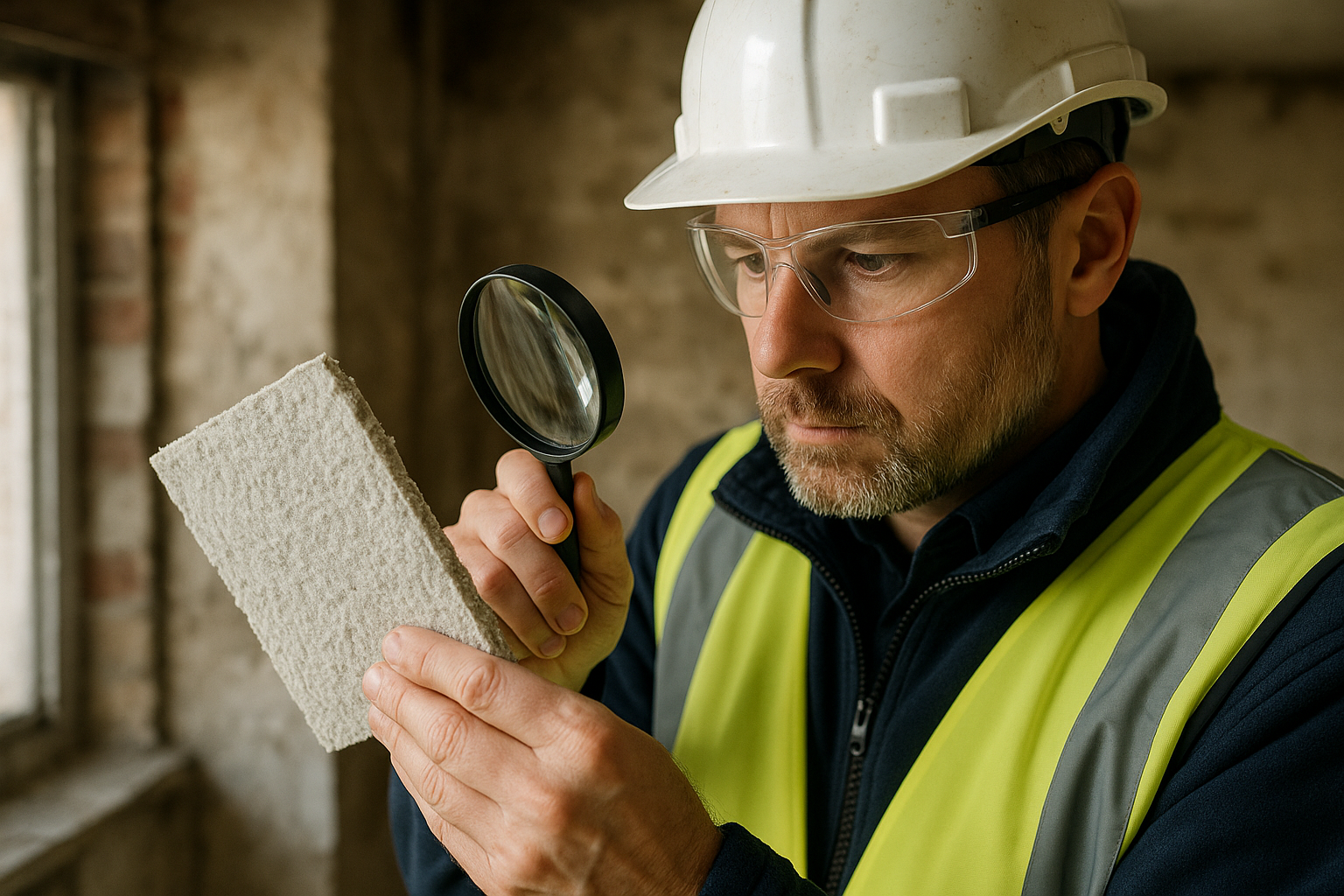
Cellulose fibres are among the most familiar asbestos alternatives in the built environment. Usually derived from plant-based sources such as wood fibre or paper pulp, they are used in insulation products and modern fibre cement materials.
They became especially useful as replacements for asbestos cement products. You now see cellulose-reinforced materials in roofing sheets, cladding components, soffits and boards.
For property managers, there is one obvious caution. Modern fibre cement can look very similar to older asbestos cement. You cannot confirm content by sight alone. If there is any doubt in an occupied building, arrange a management survey before routine maintenance starts.
Flour fillers
Flour fillers are finely milled organic materials, often based on wood flour or similar plant-derived powders. They have been used as filler materials where asbestos once added bulk or support in composite products.
These are generally more suitable for lower-temperature applications. Where severe heat or thermal cycling is involved, other asbestos alternatives are usually a better fit.
Thermoset plastic flour
Thermoset plastic flour is produced by grinding cured thermoset resins into a fine powder. It is used in moulded products, industrial composites and some friction materials where dimensional stability and heat tolerance are needed.
Because thermoset materials do not soften again once cured, they can perform well under pressure and changing temperatures. That made them a practical replacement in certain products once associated with asbestos.
Polyurethane foams
Polyurethane foams became a major substitute where thermal insulation and acoustic control were needed. They are available as rigid boards and spray-applied systems, which gives designers plenty of flexibility.
Rigid boards are common in roofs, walls and floors because they provide strong insulation performance for their thickness. Spray-applied products can suit awkward voids, but they need careful consideration because they may affect inspection access and later maintenance.
One useful rule is to think beyond thermal performance. If a product makes future inspection difficult, it can create practical problems even if it is not an asbestos issue in itself.
Amorphous silica fabrics
Amorphous silica fabrics are widely used where flexible, heat-resistant textile materials are needed. They replaced asbestos cloth in many industrial applications and remain one of the most effective asbestos alternatives for high-temperature textile uses.
Typical applications include:
- Welding blankets
- Furnace curtains
- Pipe wrapping
- Thermal barriers
Aramid fibres
Aramid fibres are strong, heat resistant and well suited to demanding mechanical uses. They became an important part of the move towards asbestos alternatives in brake pads, clutch facings and specialist reinforcement products.
They are not a universal replacement, but they are highly effective where friction performance and durability matter.
Glass fibre and mineral-based materials
Glass fibre products and other mineral-based materials are also common asbestos alternatives. Depending on the product, they may be used for insulation, reinforcement, thermal shielding or fire-resistant textiles.
Selection matters. Different mineral and glass fibre products have different limits, so the right choice depends on the actual service conditions rather than the general idea of needing a non-asbestos material.
Calcium silicate boards
Calcium silicate boards are widely used for fire protection, insulation and lining applications. They became a practical substitute where asbestos insulating boards were once used for heat resistance and structural stability.
These boards are common in service risers, ceiling systems, fire-rated enclosures and plant areas. They can offer strong performance, but they still need correct installation and detailing to achieve the intended fire resistance.
Mineral wool
Mineral wool is one of the most widely used asbestos alternatives in modern buildings. It is commonly specified for thermal insulation, acoustic control and fire stopping.
You will often find it in partition walls, roof spaces, floor systems, ductwork and service penetrations. It is versatile, readily available and familiar to most contractors, which makes it one of the more practical replacements for historic asbestos insulation uses.
PTFE and graphite-based products
Where asbestos was once used in gaskets, seals and packing materials, PTFE and graphite-based products became important asbestos alternatives. These materials can perform well in chemical processing, pipework systems and plant equipment.
They are often chosen for their sealing performance, temperature resistance and chemical stability. As always, the correct grade matters.
Asbestos alternatives in building materials
Many people searching for asbestos alternatives are really asking a site-level question: what replaced asbestos in the materials I see every day?
Historically, asbestos appeared in a wide range of building products, including:
- Cement sheets and roof panels
- Insulation boards
- Pipe insulation and thermal lagging
- Textured coatings
- Floor tiles and backing materials
- Fire protection products
- Gaskets and seals
Over time, those roles were taken over by combinations of cellulose fibre, fibre cement, mineral wool, calcium silicate, polyurethane insulation, glass fibre products and engineered polymers.
Some common replacements include:
- Asbestos cement sheets replaced by fibre cement reinforced with cellulose or synthetic fibres
- Insulating applications replaced by mineral wool, glass fibre and foam insulation products
- Asbestos textiles replaced by silica, glass fibre and aramid-based materials
- Gaskets and seals replaced by PTFE, graphite and other engineered compounds
The practical lesson is simple. Replacement materials may look familiar, but older versions may still contain asbestos. Before drilling, stripping out, rewiring or refurbishing, confirm what is present rather than relying on appearance.
Asbestos alternatives in the automotive industry
The automotive sector once relied heavily on asbestos because it handled heat and friction well. Brake pads, clutch facings, gaskets, seals and heat shields all made use of it.

Replacing it meant finding asbestos alternatives that could withstand pressure, wear and temperature without creating the same long-term hazard.
Common replacements include:
- Aramid fibres in brake pads and clutch facings
- Thermoset plastic flour in friction materials
- PTFE in seals and gaskets
- Ceramic and mineral-based composites in high-temperature parts
- Steel fibres in some heavy-duty braking systems
These materials are now standard across much of the industry. When correctly specified, modern non-asbestos friction materials can provide stable and predictable performance.
If you manage workshops, depots or transport premises, remember that legacy asbestos may still be present in plant rooms, old insulation, historic stock or redundant equipment. If you need support in the capital before maintenance starts, booking an asbestos survey London service can help establish exactly what is on site.
Asbestos alternatives in textiles and high-heat applications
Asbestos was widely used in textiles where heat resistance and fire performance were critical. Cloths, ropes, tapes, blankets and packing materials were common in industrial settings.
Modern asbestos alternatives in this area include woven and non-woven materials designed for thermal protection without the same asbestos hazard profile.
Typical substitutes include:
- Amorphous silica fabrics for welding protection and thermal curtains
- Glass fibre textiles in heat-resistant applications
- Ceramic fibre textiles for very high-temperature environments
- Aramid fabrics for specialist protective clothing and industrial use
Each material has a different role. Some are chosen for flexibility, some for abrasion resistance and some for prolonged high-temperature exposure. The right answer depends on the operating environment rather than simply the need to avoid asbestos.
How to choose the right asbestos alternatives
Choosing between asbestos alternatives should start with function, not product names. Ask what the original material was expected to do and what conditions it will face in service.
A simple selection process helps:
- Identify the original application, such as insulation, sealing, fire protection or friction
- Assess the service conditions, including heat, moisture, chemicals and mechanical wear
- Check compliance requirements and product certification
- Review installation details, maintenance access and replacement cycles
- Confirm whether any existing material needs testing before work begins
For property managers, the final point is often the most urgent. If you are replacing a suspect board, panel, lagging section or roof sheet, do not assume the existing material is safe to disturb just because a modern equivalent exists.
Questions worth asking before specifying a substitute
- Will the replacement meet the required fire performance?
- Can it cope with the actual operating temperature, not just occasional peaks?
- Will moisture or chemicals affect durability?
- Does the product need specialist installation?
- Will it make future inspection harder?
- Could the existing material still contain asbestos?
Are asbestos alternatives more expensive?
Sometimes, but not usually in a way that changes the decision. Many asbestos alternatives are now standard products with established supply chains and familiar installation methods.
For mainstream building uses, materials such as fibre cement, mineral wool and rigid insulation boards are widely available and often cost-effective. In specialist industrial settings, higher-performance materials like silica fabrics or engineered composites may cost more, but they are chosen because they suit the application.
The better question is not whether asbestos alternatives cost more per unit. It is whether the chosen material is appropriate, durable and safe over the life of the installation. A cheaper product that fails early or complicates maintenance is rarely the best value.
What asbestos alternatives do not change
Using modern substitutes does not remove the need to manage legacy asbestos in existing premises. This is where confusion often arises. A building may contain both modern non-asbestos materials and much older asbestos-containing materials in adjacent areas.
For example, a plant room might have newer insulation around one section of pipework and older asbestos insulation or asbestos insulating board elsewhere. A roof may include replacement fibre cement sheets beside original asbestos cement sheets.
That is why visual assumptions are risky. If the age or composition of a material is uncertain, stop work and verify it properly.
This is especially relevant during:
- Refurbishment projects
- Mechanical and electrical upgrades
- Roof repairs
- Fire door and riser works
- Demolition planning
- Maintenance in service ducts, basements and ceiling voids
Practical advice for property managers and dutyholders
If you are responsible for non-domestic premises, asbestos alternatives are only part of the picture. You also need to know whether asbestos is already present and whether planned work could disturb it.
Use these practical steps:
- Review the building age and any available asbestos records
- Check whether previous surveys are still suitable for the work being planned
- Do not rely on product appearance or verbal assumptions from contractors
- Arrange sampling or a survey before intrusive work if materials are uncertain
- Make sure contractors know where asbestos-containing materials are located
- Keep records updated after removal, encapsulation or replacement works
If you manage a portfolio across different regions, consistency matters. The same cautious approach should apply whether you are overseeing a school, office, warehouse, retail unit or industrial site.
For regional support, Supernova can assist with an asbestos survey Manchester appointment or an asbestos survey Birmingham service where local premises need checking before maintenance or refurbishment.
When a survey is needed before dealing with asbestos alternatives
A survey is needed when you do not know whether an existing material contains asbestos and the planned work could disturb it. The fact that a modern replacement exists does not make the original safe to handle.
Under HSE guidance and the approach set out in HSG264, the type of survey depends on what you are doing. Routine occupation and normal maintenance needs differ from intrusive refurbishment or demolition work.
In practice:
- A management survey helps locate and assess asbestos-containing materials that could be disturbed during normal occupation, including foreseeable maintenance
- A refurbishment or demolition survey is needed before more intrusive work where materials will be disturbed
If there is uncertainty, pause the job and get competent advice. That is far cheaper than contaminating an area, delaying contractors or exposing occupants and workers to avoidable risk.
Frequently Asked Questions
What are the main asbestos alternatives used today?
The main asbestos alternatives include cellulose fibre, mineral wool, glass fibre, calcium silicate, polyurethane foam, aramid fibres, silica fabrics, PTFE and graphite-based materials. The right choice depends on whether the application involves insulation, fire protection, sealing, reinforcement or friction.
Can you identify asbestos alternatives by appearance alone?
No. Many asbestos alternatives look similar to older asbestos-containing products, especially fibre cement sheets, boards and insulation materials. If the age or composition is uncertain, the material should be assessed properly before work starts.
Did one material replace asbestos in every application?
No. There is no single universal replacement. Different asbestos alternatives were adopted for different uses, including construction, industrial textiles, automotive friction products, insulation and gaskets.
Are asbestos alternatives always safer?
They avoid the specific hazards associated with asbestos, but they still need to be selected, installed and handled correctly. Safety depends on proper specification, competent installation and understanding the environment the product will be used in.
Do I still need an asbestos survey if modern replacement materials are present?
Yes, if there is any chance that older asbestos-containing materials remain in the building and planned work could disturb them. Newer non-asbestos products do not prove that all earlier materials were removed.
Need clear advice on asbestos alternatives and certainty about what is actually in your building? Supernova Asbestos Surveys has completed more than 50,000 surveys nationwide and can help with management surveys, refurbishment surveys and sampling across the UK. Call 020 4586 0680 or visit asbestos-surveys.org.uk to book a survey.