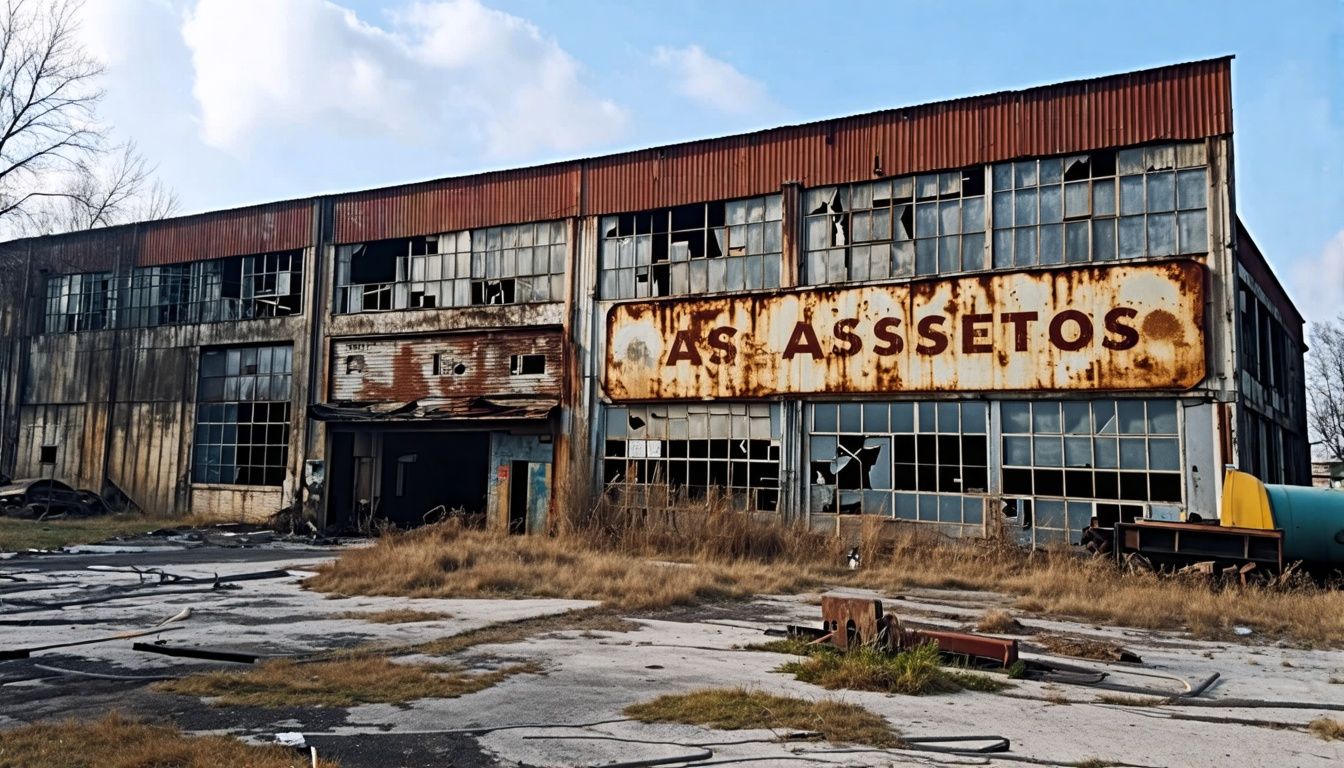
Economic Freedom Fighters, Asbestos, and a Century of Suppressed Science That Still Shapes UK Buildings Today
The story of economic freedom fighters and asbestos is not a comfortable one. It is the story of working-class communities, political movements, and ordinary people who paid with their health — and often their lives — because those with economic power chose profit over safety. Understanding this history is not merely academic. It directly explains why so many UK buildings still contain asbestos-containing materials today, and why the legal and moral obligation to manage them properly has never been more pressing.
What Are the Economic Freedom Fighters and What Do They Have to Do With Asbestos?
The term “economic freedom fighters” refers broadly to those who have campaigned — politically, legally, and socially — against the economic systems that allowed dangerous industries to thrive at the expense of vulnerable workers and communities. In the context of asbestos, these fighters include trade union activists, occupational health researchers, legal campaigners, and affected community groups who fought for decades to expose the truth about asbestos-related disease.
In South Africa, the Economic Freedom Fighters (EFF) political party has specifically highlighted the asbestos crisis as a symbol of how colonial and capitalist economic structures left Black South African mineworkers exposed to lethal conditions without protection, compensation, or acknowledgement. The Cape Blue asbestos mines of the Northern Cape are among the most cited examples of industrial-scale negligence anywhere in the world.
But this pattern — of economic power suppressing health evidence, of working-class communities bearing the heaviest burden — is not unique to South Africa. It played out in the UK too, in shipyards, factories, power stations, and council housing estates across the country.
Ancient Reverence: Why Asbestos Was Treated as Miraculous
Asbestos has been used by humans for thousands of years. Archaeological evidence places its use in Finland at around 2500 BCE, where fibres were mixed into clay to strengthen pottery. Greek and Roman craftspeople wove asbestos into fire-resistant cloth used in royal garments and funeral shrouds.
Pliny the Elder documented its fireproof properties, and a widespread myth held that asbestos was the fur of a salamander that could survive flames. That myth tells you everything about how this material was perceived — not as a mineral, but as something almost supernatural. Charlemagne reportedly owned an asbestos tablecloth he would throw into fire to clean, astonishing his guests and reinforcing the idea that this was a material of power and wonder.
This cultural reverence mattered enormously. A material treated as a gift from the natural world does not attract scepticism easily. That psychological inheritance made the Industrial Revolution’s embrace of asbestos feel entirely natural — and made the eventual health reckoning all the more devastating.
The Industrial Revolution and the Economics of a “Miracle Mineral”
The Industrial Revolution transformed asbestos from a curiosity into a cornerstone of modern industry. Factories, steam engines, shipyards and power stations all ran hot, and asbestos solved a very practical problem: how do you insulate, fireproof and protect structures exposed to extreme heat?
For over a century, the answer was asbestos — in boiler insulation, pipe lagging, roofing felt, floor tiles, ceiling boards, electrical insulation, and brake linings. It could be woven, sprayed, mixed into cement, or pressed into boards. It was cheap to extract, abundant, and straightforward to work with.
The term “miracle mineral” was not invented by a marketing department. It was the genuine view of engineers, architects and industrialists who saw asbestos solving real problems at scale. The economic incentive to keep using it was overwhelming — and that incentive would later become the very reason health evidence was suppressed for decades.
How Economic Power Silenced the Evidence
Once asbestos was woven into the economics of industrial society, challenging it became enormously difficult. Companies that mined, processed and sold asbestos were major employers. Communities in regions like Hebden Bridge and Clydeside had entire local economies tied to asbestos manufacturing.
Internal documents from major asbestos companies later revealed that health risks were known, studied, and deliberately obscured for decades. Workers were kept in the dark. Governments were lobbied. Research was suppressed. This was not a failure of knowledge — it was a failure of ethics, compounded by economic self-interest at an industrial scale.
This is precisely the dynamic that economic freedom fighters in South Africa, the UK, and elsewhere have spent decades fighting to expose. The pattern is consistent: those with least economic power bear the greatest health risk, while those with most economic power control the information.
The Socioeconomic Inequality of Asbestos Exposure
The health consequences of asbestos use were not distributed equally. The people who suffered most were overwhelmingly working-class people employed in industries with the highest exposure: shipbuilding, construction, insulation installation, plumbing, and electrical work.
These workers rarely had access to adequate protective equipment. Safety information was withheld or ignored. The economic reality of losing a job often felt more immediate than a health risk that might not manifest for decades. Housing inequality compounded the problem — older, poorly maintained properties in lower-income areas were more likely to contain deteriorating asbestos materials.
This pattern has not entirely disappeared. Communities in former industrial towns continue to carry a disproportionate burden of mesothelioma cases. The legacy of who was protected and who was not reflects the social structures of the time — and remains a powerful argument for why proper asbestos management must never be treated as optional.
Post-War Britain and the Asbestos Embedded in Its Buildings
Post-war Britain accelerated asbestos use dramatically. The urgent need to rebuild after the Second World War, combined with a housing programme that prioritised speed and cost, embedded asbestos into millions of homes, schools, hospitals and public buildings.
Asbestos insulation board was used in partition walls. Artex ceilings contained chrysotile fibres. Roof tiles, guttering, floor tiles, pipe lagging and textured coatings frequently contained asbestos materials. It was everywhere — not because anyone was being reckless, but because it was cheap, widely available, and considered perfectly safe at the time.
This is the direct legacy that the UK’s property sector still manages today. Any building constructed before the year 2000 must be treated as potentially containing asbestos until proven otherwise. That is the practical consequence of how thoroughly asbestos was embedded in 20th-century construction culture.
When the Science Finally Won: The Regulatory Journey
The link between asbestos and lung disease had been suspected since the early 20th century. Factory inspectors in the 1930s noted unusually high death rates among asbestos workers. But it was not until the 1960s that the evidence became impossible to ignore — researchers established clear statistical links between asbestos exposure and mesothelioma, an aggressive cancer of the lung lining almost exclusively caused by asbestos fibres.
The latency period — often 20 to 40 years between exposure and diagnosis — had allowed the industry to obscure the connection for decades. Workers’ unions, occupational health researchers and campaigners pushed hard for regulatory change. The UK’s regulatory response developed progressively:
- 1931 — The first Asbestos Industry Regulations introduced basic dust controls in factories
- 1969 — The Asbestos Regulations expanded protections to more workers
- 1974 — The Health and Safety at Work Act strengthened general workplace safety obligations
- 1985 — Crocidolite (blue asbestos) and amosite (brown asbestos) were banned in the UK
- 1999 — All remaining asbestos types, including chrysotile (white asbestos), were banned
- Current — The Control of Asbestos Regulations set out the duty to manage asbestos in non-domestic premises, requiring surveys, risk assessments, and written management plans
None of this happened quickly enough for those already exposed. Each regulatory step came after prolonged pressure from researchers, unions, legal cases, and affected communities — the economic freedom fighters of their time.
Global Disparities: Where the Fight Is Still Being Fought
The UK’s total ban on asbestos is not universal. While the European Union, Australia, Japan and many other developed nations have implemented comprehensive bans, asbestos continues to be mined, sold and used in parts of the world today.
Russia remains one of the world’s largest producers of chrysotile asbestos and continues to export it to countries where demand persists, often framed with the argument that “controlled use” is safe. The scientific consensus firmly rejects this — there is no safe level of asbestos exposure.
In South Africa, the legacy of the Cape asbestos mines represents one of the starkest examples of how economic systems can sacrifice communities for profit. The Economic Freedom Fighters have used this legacy as a central argument in their broader case for economic justice — that the communities most harmed by extractive industries are the last to receive compensation or protection.
Cultural attitudes, economic dependencies and differing levels of political will explain these global disparities. Where asbestos mining supports regional economies, regulatory change faces fierce resistance — exactly as it did in the UK a century ago.
What This History Means for UK Property Owners Right Now
The cultural and societal forces that drove asbestos adoption have left a very practical legacy: a significant proportion of UK buildings constructed before 2000 contain asbestos-containing materials (ACMs). This is an active legal and safety responsibility, not a historical footnote.
Under the Control of Asbestos Regulations, anyone with responsibility for a non-domestic building has a legal duty to:
- Identify whether asbestos is present
- Assess its condition and the risk it poses
- Produce a written asbestos management plan
- Ensure that anyone likely to disturb it is informed
- Monitor condition and re-inspect regularly
This duty does not only apply to large commercial buildings. Landlords, housing associations, schools, hospitals, and anyone managing premises built before the millennium needs to take this seriously. The HSE’s guidance document HSG264 sets out exactly how asbestos surveys should be conducted and what they must cover.
The Right Survey for Your Building
Different buildings and different circumstances require different types of survey. Understanding which one applies to your situation is the first practical step in meeting your legal obligations.
Management Surveys
If you are managing an occupied building and need to understand what ACMs are present and in what condition, a management survey is the starting point. It identifies materials, assesses their condition, and forms the basis of your legal management plan. This is the survey most duty holders will need first.
Demolition and Refurbishment Surveys
If you are planning any structural work, refurbishment or demolition, a demolition survey is a legal requirement before work begins. This is a more intrusive inspection that locates all ACMs that could be disturbed during the works, including those hidden within the building fabric. Proceeding without one puts workers at serious risk and exposes duty holders to significant legal liability.
Re-Inspection Surveys
If you already have an asbestos register in place, a re-inspection survey keeps your management plan current and ensures that any changes in the condition of known ACMs are identified promptly. The Control of Asbestos Regulations require regular monitoring — a register that has not been updated is not a compliant register.
Asbestos Testing and Sample Analysis
If you have a suspected material and need confirmation before commissioning a full survey, asbestos testing can provide rapid, reliable answers. Supernova offers professional sample analysis through accredited laboratories, delivering results you can act on with confidence.
For those who need a cost-effective first step, a testing kit allows you to collect a sample safely and send it for professional analysis. If you are unsure whether testing or a full survey is the right approach, the asbestos testing guidance on our website explains the options clearly.
Supernova Surveys Across the UK
Supernova Asbestos Surveys operates nationwide, with specialist teams covering every region of the UK. Whether you need an asbestos survey in London, an asbestos survey in Manchester, or an asbestos survey in Birmingham, our UKAS-accredited surveyors are available to carry out compliant, thorough inspections with fast turnaround times.
With over 50,000 surveys completed, we have the experience to handle everything from a single residential property to a complex multi-site commercial estate.
The Moral Weight of Getting This Right
The history of economic freedom fighters and asbestos is ultimately a history of what happens when health evidence is subordinated to economic interest. The communities that suffered most from asbestos exposure had the least power to protect themselves. That is precisely why the regulatory framework exists — and why those who now have the power and the legal responsibility to act must do so properly.
Managing asbestos correctly is not a bureaucratic inconvenience. It is the continuation of a long struggle to ensure that the people who live and work in our buildings are not exposed to a risk that was known, concealed, and allowed to harm generations of workers before the law finally caught up.
If you manage a property built before 2000 and you do not have a current, compliant asbestos management plan in place, the time to act is now — not after an incident, and not after a regulatory inspection.
Call Supernova Asbestos Surveys on 020 4586 0680 or visit asbestos-surveys.org.uk to book a survey, request a quote, or speak to one of our specialist surveyors about your specific situation.
Frequently Asked Questions
What is the connection between the Economic Freedom Fighters and asbestos?
The Economic Freedom Fighters (EFF), a South African political party, have highlighted the asbestos mining industry as a symbol of how colonial and capitalist economic systems exposed Black South African workers to lethal conditions without adequate protection or compensation. More broadly, the term “economic freedom fighters” applies to the trade unionists, researchers and campaigners worldwide who fought to expose the health dangers of asbestos and force regulatory change — often against fierce resistance from powerful industrial and commercial interests.
Why does the history of asbestos matter to UK property owners today?
Because the widespread use of asbestos in UK construction throughout most of the 20th century means that a significant proportion of buildings constructed before 2000 still contain asbestos-containing materials. Under the Control of Asbestos Regulations, duty holders — including commercial landlords, employers, schools, hospitals and housing associations — have a legal obligation to identify, assess and manage any ACMs in their premises. The history explains how this situation arose; the law determines what must be done about it now.
What types of asbestos survey do I need?
The survey you need depends on your circumstances. A management survey is required for occupied buildings where you need to identify and monitor ACMs as part of an ongoing management plan. A demolition survey is legally required before any refurbishment or demolition work begins. A re-inspection survey is needed to keep an existing asbestos register up to date. A qualified surveyor can advise which applies to your specific building and situation.
Is asbestos still being used in other countries?
Yes. While the UK, the European Union, Australia, Japan and many other countries have implemented comprehensive bans on asbestos, it continues to be mined and used in some parts of the world. Russia remains a significant producer and exporter of chrysotile asbestos. The scientific consensus is that there is no safe level of asbestos exposure, and international health organisations continue to call for a global ban.
How do I know if my building contains asbestos?
The only reliable way to confirm whether asbestos-containing materials are present is through a professional asbestos survey or laboratory testing of suspected materials. Any building constructed before 2000 should be treated as potentially containing asbestos until a survey has confirmed otherwise. Supernova Asbestos Surveys offers management surveys, demolition surveys, re-inspection surveys and asbestos testing services across the UK. Call us on 020 4586 0680 or visit asbestos-surveys.org.uk to arrange an assessment.