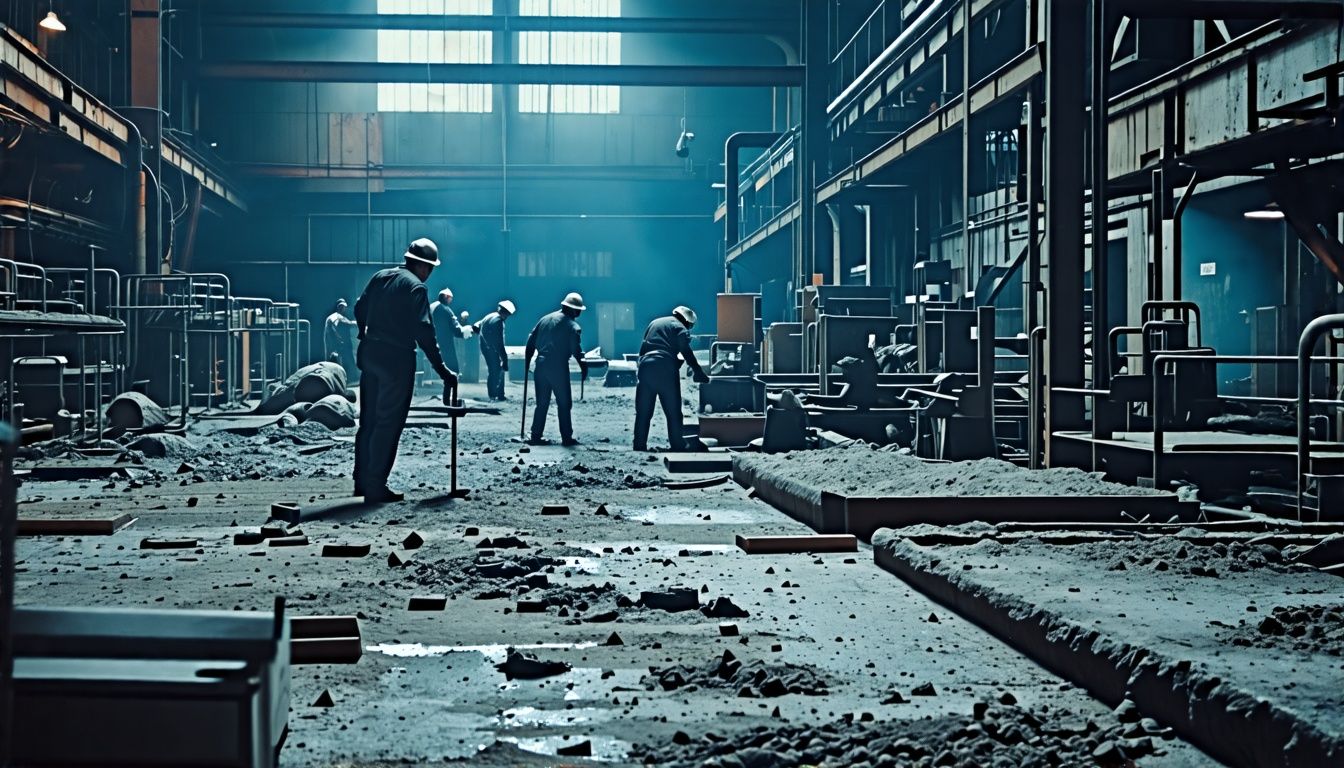
The Economic Case for Asbestos — And Why the Bill Is Still Being Paid
Asbestos didn’t become one of the most widely used industrial materials of the 20th century by accident. The asbestos benefits that industry and governments recognised were genuine — it was cheap, abundant, fire-resistant, and extraordinarily versatile. Understanding why it was adopted so enthusiastically isn’t just industrial history. It explains why so many buildings across the UK still contain it today, and why the consequences of its use continue to be felt decades after the final ban came into force.
This post examines the real economic case for asbestos as it was understood at the time, the hidden costs that eventually demolished that case entirely, and what the legacy means for property owners and managers right now.
Why Asbestos Was Considered a Miracle Material
The appeal of asbestos was rooted in its physical properties. It was naturally fibrous, extremely resistant to heat and fire, chemically stable, and inexpensive to mine. No synthetic material of the era came close to matching that combination.
For industrialising economies in the early-to-mid 20th century, those properties solved real, costly problems. Buildings burned down. Industrial machinery overheated. Ships caught fire. Electrical insulation failed. Asbestos offered practical, affordable solutions to all of these risks — and industry adopted it accordingly.
Fire Resistance and Insulation
Asbestos dramatically reduced fire risk in construction. It was woven into insulation boards, ceiling tiles, pipe lagging, roof sheeting, and spray coatings. For the construction industry, this wasn’t just a performance benefit — it reduced insurance premiums, helped meet fire safety codes, and made large-scale building projects significantly cheaper.
Thermal insulation in power stations, chemical plants, and heavy industry also benefited enormously. Maintaining temperature-controlled environments is expensive. Asbestos made it cheaper and more reliable, contributing directly to the profitability of energy-intensive industries.
Automotive and Manufacturing Applications
Car manufacturers used asbestos extensively in brake pads, clutch linings, and gaskets. Its ability to withstand intense friction-generated heat made it genuinely difficult to replace. Vehicle safety improved as a result — at least in the narrow, immediate sense of brake performance.
Chemical plants used asbestos in filtration systems, pipe insulation, and gaskets exposed to corrosive substances. The material’s chemical resistance meant it outlasted alternatives in harsh environments, reducing maintenance downtime and operational costs.
The Economic Scale of the Asbestos Industry
To understand the economic argument for asbestos, it helps to appreciate the scale of the industry at its height. This wasn’t a niche material — it was embedded in the industrial fabric of the UK and many other nations.
Employment and Community Dependency
Asbestos mining and processing supported substantial workforces across multiple countries. In the UK, manufacturing facilities and shipyards employed thousands of workers in direct asbestos-related roles, with many more employed in adjacent trades.
In regions where asbestos processing was the dominant industry, entire local economies were built around it. When the health risks became undeniable and regulation tightened, these communities faced significant economic disruption. The decline of the asbestos industry caused real job losses and regional hardship, particularly in areas with few alternative employment options.
Contribution to Construction and Industrial Output
Asbestos-containing materials reduced construction costs at a time when the UK was undergoing rapid post-war rebuilding. Council housing estates, schools, hospitals, and offices built between the 1940s and 1970s all benefited from cheaper, fire-resistant materials.
The National Health Service estate, expanded significantly during this period, relied heavily on asbestos-containing construction methods. In manufacturing, asbestos contributed to the competitiveness of British industry at a time when that mattered enormously. Lower insulation costs, reduced fire damage, and longer-lasting equipment all fed into industrial productivity.
The Asbestos Benefits That Were Never on the Balance Sheet — And the Costs That Were Hidden
The economic case for asbestos was built on incomplete accounting. The benefits were visible and immediate. The costs were hidden, delayed, and ultimately catastrophic.
Health Costs That Were Never Factored In
Asbestos causes mesothelioma, asbestosis, and lung cancer. These diseases typically develop 20 to 40 years after exposure, which meant the full health impact wasn’t apparent until long after the economic decisions had been made.
The burden on the NHS and the wider social care system has been substantial. Mesothelioma remains an incurable disease. Treatment is palliative, long-term, and costly. Lost working years, disability benefits, and the ripple effects on families represent an enormous economic cost that was never reflected in the original calculations.
Litigation and Compensation
Asbestos litigation has been among the most expensive in UK legal history. Employers, insurers, and the government have faced substantial liability for occupational asbestos exposure. The Diffuse Mesothelioma Payment Scheme, established to support victims who cannot trace a liable employer or insurer, represents an ongoing financial commitment that continues to this day.
For many companies that used or manufactured asbestos products, the legal costs of the 1980s and 1990s were existential. The economic gains of earlier decades were, for some businesses, more than erased by compensation claims.
The Cost of What Was Left Behind
Perhaps the most tangible ongoing economic consequence of asbestos use is the cost of managing and removing it from the existing building stock. The UK banned the use of all forms of asbestos in 1999, but that ban did nothing to address the millions of tonnes already installed in buildings across the country.
Asbestos is present in a significant proportion of commercial and public buildings constructed before 2000. Managing it safely — through surveys, monitoring, and eventual removal — represents a long-term financial obligation for property owners, landlords, and public bodies. This is the real, lasting price of those historical asbestos benefits.
The Regulatory Shift and Its Economic Effects
The transition away from asbestos was not purely voluntary. It was driven by mounting scientific evidence of harm and the regulatory response that followed.
How UK Regulation Evolved
In the UK, crocidolite (blue asbestos) was banned first, followed by amosite (brown asbestos), with chrysotile (white asbestos) banned last in 1999. The Control of Asbestos Regulations now govern how asbestos-containing materials must be managed in non-domestic premises, placing a legal duty on those responsible for buildings to identify, assess, and manage asbestos risk.
The HSE’s guidance document HSG264 sets out the standards for asbestos surveying in detail. Globally, the pattern was similar across many Western countries, though some nations with significant asbestos mining industries were slower to act.
New Industries Emerged From the Decline
The decline of asbestos created economic opportunities in adjacent sectors. The asbestos surveying, testing, and removal industry grew substantially as regulatory requirements created consistent demand.
Alternative insulation materials — mineral wool, cellulose fibre, ceramic fibre, and various synthetics — developed rapidly to fill the gap asbestos left behind. R&D investment in fire-resistant materials accelerated as manufacturers sought compliant alternatives. In many cases, the replacements are safer and perform comparably or better. The economic disruption of the transition was real, but it also drove genuine innovation.
The Legacy for UK Property Owners Today
The historical economic argument for asbestos benefits is largely academic at this point. What matters now is the practical reality: asbestos-containing materials are present in a large proportion of UK buildings, and managing them carries legal obligations and financial implications.
Your Legal Duty Under the Control of Asbestos Regulations
If you own, manage, or have responsibility for a non-domestic building constructed before 2000, the Control of Asbestos Regulations apply to you. You are required to identify whether asbestos-containing materials are present, assess their condition and risk, and put a management plan in place.
Failure to comply is a criminal offence. More importantly, failure to manage asbestos properly puts people at risk of developing diseases that have no cure.
The Financial Logic of Proactive Management
Addressing asbestos proactively is almost always cheaper than reacting to it. A management survey carried out before refurbishment work begins costs a fraction of what it costs to halt a project midway because asbestos has been disturbed unexpectedly. Remediation under emergency conditions is expensive, disruptive, and sometimes legally complicated.
Property transactions are also affected. Buyers and their surveyors increasingly scrutinise asbestos management records. Buildings with a clear, documented asbestos register and an up-to-date management plan present less risk — and less uncertainty — than those without.
Types of Survey You May Need
Depending on your circumstances, you may require one or more of the following:
- Management survey — identifies and assesses asbestos-containing materials in occupied buildings to support an ongoing management plan
- Demolition survey — required before any intrusive refurbishment or demolition work begins; locates all asbestos that may be disturbed
- Re-inspection survey — periodic review to check the condition of known asbestos-containing materials and update your register
If you’re unsure what’s in your building, asbestos testing can confirm or rule out the presence of asbestos-containing materials before decisions are made. Professional sample analysis gives you laboratory-verified results that stand up to regulatory scrutiny.
For smaller properties or preliminary checks, an asbestos testing kit offers a straightforward starting point. You collect the sample; our accredited laboratory does the rest.
Property managers in the capital can access specialist asbestos survey London services tailored to the particular challenges of older commercial and residential stock in the city. If you’re based in the North West, our asbestos survey Manchester team covers the full range of commercial and industrial properties across the region.
Where to Start If You’re Unsure
Many property managers and building owners know they probably have asbestos somewhere but aren’t sure what to do next. The answer is usually straightforward: start with a survey or a test, depending on the urgency and the nature of the property.
Here’s a simple decision framework:
- Building in active use, no works planned — commission a management survey to establish what’s present and put a management plan in place
- Refurbishment or demolition planned — a demolition survey is legally required before intrusive work begins
- Known asbestos already registered — schedule a re-inspection survey to check condition and update your records
- Unsure whether a specific material contains asbestos — arrange asbestos testing or use a testing kit for a quick preliminary check
Acting early is always cheaper than acting under pressure. The history of asbestos is, in many ways, a lesson in what happens when the full costs of a decision are deferred rather than faced.
A Material That Made Economic Sense — Until It Didn’t
The economic benefits of asbestos were real within the context of what was known at the time. It reduced costs, enabled industrial growth, and solved genuine engineering challenges. The problem was that the full cost was never on the balance sheet.
The health consequences of widespread asbestos use are still unfolding. Mesothelioma cases in the UK continue to be diagnosed in significant numbers each year, predominantly in people exposed occupationally decades ago. That ongoing human cost is the true measure of what the economic case for asbestos failed to account for.
For property owners and managers today, the lesson is straightforward: the cost of managing asbestos properly now is modest compared to the cost — financial and human — of getting it wrong.
Frequently Asked Questions
What were the main economic benefits of asbestos that made it so widely used?
Asbestos was cheap to mine, abundant in supply, and offered exceptional fire resistance, thermal insulation, and chemical stability. These properties made it invaluable across construction, manufacturing, shipbuilding, and the automotive industry. It reduced insurance costs, lowered construction expenses, and improved the durability of industrial equipment — all of which translated into significant economic advantages for businesses and governments during the 20th century’s rapid industrialisation.
Why were the health costs of asbestos not factored into the original economic calculations?
Asbestos-related diseases such as mesothelioma and asbestosis typically take 20 to 40 years to develop after initial exposure. This long latency period meant that the full health consequences weren’t apparent until decades after the economic decisions had already been made. Early warning signs were often suppressed or dismissed by industry interests, and regulatory frameworks took time to catch up with the emerging scientific evidence.
Does asbestos still need to be managed in UK buildings today?
Yes. The UK banned the use of asbestos in 1999, but the ban did not remove the material already installed in buildings. A significant proportion of commercial and public buildings constructed before 2000 still contain asbestos-containing materials. Under the Control of Asbestos Regulations, those responsible for non-domestic premises have a legal duty to identify, assess, and manage any asbestos present. This typically involves commissioning an asbestos management survey and maintaining an up-to-date asbestos register.
What type of asbestos survey do I need for my building?
The type of survey you need depends on your circumstances. A management survey is appropriate for occupied buildings where no major works are planned — it identifies asbestos-containing materials and informs your management plan. A demolition survey is required before any intrusive refurbishment or demolition work. A re-inspection survey is used to periodically check the condition of known asbestos materials. If you’re uncertain whether a specific material contains asbestos, sample analysis or an asbestos testing kit can provide a quick, laboratory-verified answer.
How do I find out if my building contains asbestos?
The most reliable method is to commission a professional asbestos survey from an accredited surveying company. Alternatively, if you suspect a specific material may contain asbestos, you can arrange for sample analysis through a UKAS-accredited laboratory, or use an asbestos testing kit to collect a sample yourself for professional analysis. Any building constructed or refurbished before 2000 should be treated as potentially containing asbestos until confirmed otherwise.
How Supernova Asbestos Surveys Can Help
At Supernova Asbestos Surveys, we’ve completed over 50,000 surveys for properties across the UK. Whether you’re managing an existing building, planning renovation work, or buying a commercial property, we can give you a clear picture of what you’re dealing with and what your legal obligations are.
We carry out management surveys, demolition surveys, re-inspection surveys, and professional asbestos testing for all property types — commercial, industrial, educational, healthcare, and residential. We also offer an asbestos testing kit through our online shop if you need a straightforward sample without a full survey.
Managing asbestos isn’t optional — but with the right support, it doesn’t have to be complicated. Call us on 020 4586 0680 or visit asbestos-surveys.org.uk to find out how we can help.