Who Invented Asbestos? The Ancient Origins of Earth’s Most Controversial Mineral
Asbestos wasn’t invented — it was discovered. The question of who invented asbestos is really a question about who first recognised its extraordinary properties, and how that recognition shaped thousands of years of human history across every major civilisation on earth. It’s also a question with a direct bearing on the present day, because that same history of widespread use is precisely why asbestos remains embedded in millions of UK buildings right now.
The Earliest Known Uses of Asbestos: Going Back 6,000 Years
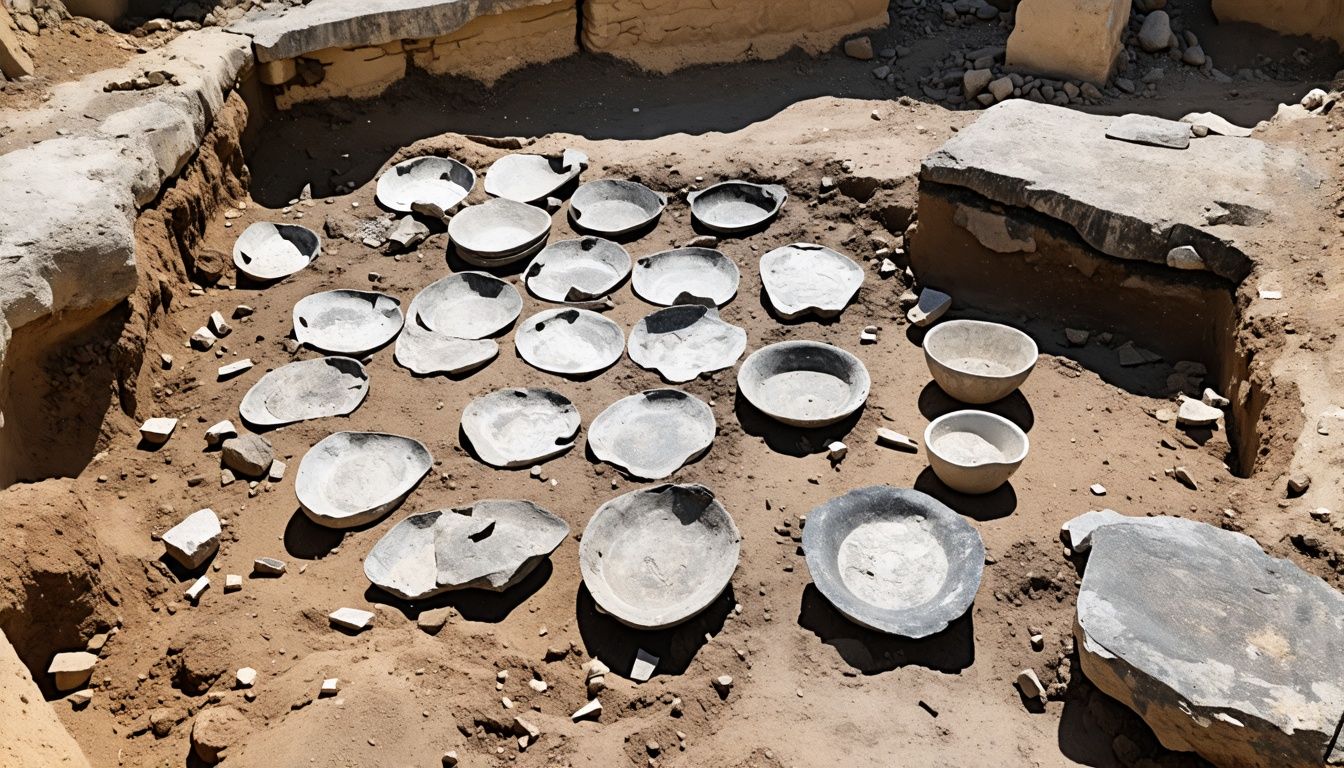
The oldest documented evidence of asbestos use dates back to around 4,000 BCE. Archaeological finds from the Stone Age show asbestos fibres woven into clay pottery — the fibres strengthened the ceramic and prevented cracking during the firing process. Nobody needed to understand the mineral’s chemistry. Observation was enough.
From that point, use spread across cultures and continents, driven almost entirely by one remarkable property: asbestos doesn’t burn. In a world where fire was both essential and terrifying, a material that appeared immune to it was nothing short of extraordinary.
What’s striking about these earliest uses is how consistent they are across cultures that had no contact with one another. From Scandinavia to the Middle East, early peoples independently arrived at the same conclusion — this material is useful precisely because it refuses to combust.
Ancient Greece and Rome: Where the Name Came From
The ancient Greeks are widely credited with giving asbestos its name. The word derives from the Greek meaning “indestructible” or “unquenchable” — which tells you exactly what they thought of it.
Greek and Roman craftsmen wove asbestos into textiles: tablecloths, napkins, and ceremonial cloths that could be “cleaned” simply by throwing them into fire. The flames would burn away food and grease whilst the cloth emerged intact. This trick was reportedly used to impress guests at royal banquets, and asbestos quickly acquired an almost mythological status.
Pliny the Elder, the Roman naturalist and writer, described asbestos cloth in his writings with obvious fascination, noting its resistance to flame as something bordering on supernatural. Roman engineers also put asbestos to practical use — there is evidence of it in building materials, lamp wicks, and candle holders throughout the empire. Logical applications in a world where open flames were a constant presence in every structure.
Roman Engineering and Asbestos
Roman construction was among the most sophisticated of the ancient world, and asbestos found a natural home within it. Engineers used it to reinforce building materials, and there is evidence to suggest it was incorporated into mortar and plaster in certain high-temperature environments.
The Roman military also had practical applications in mind. Asbestos-woven materials were reportedly used to create fire-resistant pouches and wrappings for transporting lit torches and other combustibles — a genuinely useful property on campaign.
Ancient Egypt, China, and the Far East
Asbestos and the Pharaohs
In ancient Egypt, asbestos cloth was reportedly used in burial practices. Pharaohs were said to have been wrapped in asbestos linen during cremation to keep their ashes separated from those of the funeral pyre, preserving the purity of the remains. Whether this was widespread practice or something more limited remains debated by historians.
The association between asbestos and preservation reflects a sophisticated understanding of its properties — even without any knowledge of its mineralogy. These ancient Egyptians didn’t know what asbestos was on a molecular level, but they understood precisely what it could do.
Fire Cloth and Mythology in the Far East
In China, asbestos was known as “fire cloth” and used to create fire-resistant textiles. Chinese craftsmen also mixed asbestos with other materials, including lead, to produce more durable cookware and construction elements. References appear in Chinese texts dating back well over a thousand years, often describing the material in mythological terms — as the wool of a fire-resistant animal, or stone spun into thread.
Across the Far East more broadly, asbestos was associated with magic and the supernatural. Its apparent immunity to flame made it genuinely difficult for early observers to classify as a naturally occurring mineral at all. The mythology surrounding it wasn’t ignorance — it was a reasonable response to something that appeared to defy the natural order.
Medieval Europe and the Salamander Legend
By the medieval period, asbestos had accumulated considerable folklore across Europe. The most persistent myth was that it was the fur or skin of the salamander — a creature believed to live in fire. Merchants and travellers brought asbestos textiles back from Asia and the Middle East, and the salamander story made for a far more compelling sales pitch than “naturally occurring silicate mineral.”
Marco Polo, travelling through Asia in the 13th century, is credited with debunking this particular legend. After witnessing asbestos mining operations firsthand, he wrote that the “salamander” cloth was in fact a mineral extracted from the earth — one of the earliest recorded attempts to document asbestos accurately rather than mythologically.
Despite Polo’s account, the salamander myth persisted for centuries. Asbestos cloth remained a luxury item in Europe, used in religious ceremonies, displayed in court, and occasionally presented as a curiosity to royalty. The gap between what asbestos actually was and what people believed it to be remained wide for a very long time.
The Industrial Revolution: From Curiosity to Industrial Staple
Asbestos remained a relatively exotic material until the Industrial Revolution transformed the scale of its use entirely. As steam power, factories, and heavy industry spread across Britain and Europe through the 18th and 19th centuries, demand for fireproofing and insulation materials skyrocketed — and asbestos ticked every box.
It was heat-resistant, durable, flexible when processed into fibres, and abundant enough to mine commercially. Scotland, Canada, Russia, and South Africa became major suppliers, and industrial-scale extraction began in earnest.
Key Industrial Applications That Drove Demand
- Steam engines and boilers: Asbestos insulated boilers, steam pipes, and engine components — essential for the railways and factories that powered the industrial age.
- Shipbuilding: The Royal Navy and commercial shipyards became major consumers. Asbestos was applied to boiler rooms, engine rooms, pipe lagging, bulkheads, and decking. Workers handled loose fibres daily, often in confined spaces with no ventilation.
- Building construction: Asbestos cement became a widely used product — strong, cheap, and fire-resistant. It appeared in roof tiles, wall panels, guttering, and pipe systems across British housing, schools, hospitals, and commercial buildings.
- Insulation: Loose-fill asbestos was blown into wall cavities and loft spaces. Sprayed coatings were applied to structural steelwork. Asbestos insulating board (AIB) became a common interior construction material.
- Textiles and manufacturing: Asbestos-woven gloves, aprons, and protective clothing were standard in foundries and high-heat environments.
- Automotive: Asbestos was used in brake pads, clutch linings, and gaskets well into the 20th century.
By the mid-20th century, asbestos was genuinely everywhere. The peak of its use in UK construction ran roughly from the 1950s through to the 1980s — which is precisely why so many buildings from that era contain asbestos-containing materials (ACMs) in some form today.
When the Health Risks Became Impossible to Ignore
The health risks of asbestos were not entirely unknown, even in the early days of industrial use. As far back as the late 19th century, physicians were noticing unusually high rates of lung disease among workers who handled asbestos fibres.
Dr H. Montague Murray is typically credited with documenting one of the earliest clinical cases of asbestosis — a scarring of the lung tissue caused by inhaled fibres — in a young asbestos textile worker who had spent years in heavily contaminated conditions.
In the 1920s, further research began to formalise the connection between asbestos dust and serious lung disease. The term “asbestosis” entered medical use, and by the 1930s the UK government had introduced some of the earliest occupational health regulations in the world specifically addressing asbestos exposure.
Despite this, the industry continued to expand. Economic interests, wartime demand, and a significant gap between early research and public awareness meant that asbestos use actually accelerated through the 1940s, 50s, and 60s. It wasn’t until the 1970s and 1980s that the link between asbestos and mesothelioma — an aggressive cancer of the lung lining — became widely accepted and acted upon with any urgency.
The UK banned blue (crocidolite) and brown (amosite) asbestos in 1985. White asbestos (chrysotile) wasn’t banned until 1999, making the UK one of the later Western nations to impose a full prohibition.
The Three Types of Asbestos and Why They Matter
Not all asbestos is the same. The three types most commonly encountered in UK buildings each carry different risk profiles:
- Crocidolite (blue asbestos): The most hazardous type. Fine, needle-like fibres that penetrate deep into lung tissue. Banned in the UK in 1985.
- Amosite (brown asbestos): Commonly used in insulating board, ceiling tiles, and thermal insulation. Also banned in 1985.
- Chrysotile (white asbestos): The most widely used type globally and the last to be banned in the UK. Found in cement products, floor tiles, and textured coatings. Still considered hazardous despite being regarded as less dangerous than the other two types.
All three types can cause serious and fatal disease when fibres are inhaled. There is no safe level of asbestos exposure, and this principle underpins every aspect of the UK’s regulatory framework for managing the material today.
The Legacy of Asbestos in UK Buildings Today
That long history of use — from ancient pottery kilns to 20th-century tower blocks — has left the UK with an enormous stock of buildings containing asbestos. Any non-domestic building constructed or refurbished before the year 2000 may contain ACMs. That includes schools, hospitals, offices, industrial units, and rental properties.
Asbestos is also found in many residential properties, particularly those built or extended between the 1950s and 1980s. The material doesn’t announce itself — it’s embedded in floor tiles, ceiling panels, pipe lagging, roof sheets, and textured coatings that look entirely ordinary.
The Control of Asbestos Regulations place a legal duty on those responsible for non-domestic premises to manage asbestos risk. That means knowing what’s in your building, where it is, what condition it’s in, and having a plan to manage or remediate it. This isn’t a historical concern — it’s an active legal and health responsibility affecting hundreds of thousands of buildings across the country right now.
From Ancient Discovery to Modern Management: What You Need to Do
Understanding the history of who invented asbestos and how it came to be used so widely is one thing. Knowing what to do about it in a building you’re responsible for is another. Here’s what the practical management process looks like.
Management Surveys
An asbestos management survey is the baseline requirement for any non-domestic building in normal occupation. It identifies the location, type, and condition of ACMs so that a management plan can be put in place. If you don’t have one for your building, you’re likely already in breach of the Control of Asbestos Regulations.
The management survey is non-intrusive by design — it’s intended to locate ACMs in accessible areas without disturbing them. It gives you the information you need to manage risk without creating unnecessary disturbance to materials that are better left alone.
Refurbishment and Demolition Surveys
Before any construction work, renovation, or demolition, a more intrusive survey is required. A refurbishment survey is needed before any renovation work begins, accessing areas that would be disturbed during the project.
Where a building is being torn down entirely, a demolition survey goes even further — it is a legal requirement before any significant demolition work commences, ensuring all ACMs are identified and safely managed before structural work begins.
Re-Inspection Surveys
Where ACMs are being managed in place rather than removed, a periodic re-inspection survey is needed to check whether their condition has deteriorated and whether the risk level has changed. The HSE’s HSG264 guidance recommends these are carried out at least annually, though higher-risk materials may require more frequent assessment.
Asbestos Testing and Sample Analysis
Where the presence of asbestos is suspected but unconfirmed, material samples can be sent for laboratory analysis. Professional asbestos testing provides definitive identification of fibre type and confirms whether a material contains ACMs.
Our sample analysis service uses UKAS-accredited laboratory testing to give you a clear, legally defensible result. If you want to take a first step yourself, an asbestos testing kit allows you to collect samples safely for professional analysis — the kit includes everything you need to take samples without disturbing the material unnecessarily.
For a broader overview of your options, our dedicated asbestos testing service page sets out the full range of sampling and analytical services we provide. Whether you need a single sample confirmed or a full programme of testing across a large estate, we can help.
Why the History of Asbestos Still Matters
It might seem like an academic exercise — tracing who invented asbestos back through millennia of human history. But the reason this history matters is practical. Every era of enthusiastic asbestos use left a physical legacy in the built environment. The Romans used it in mortar. The Victorians used it to lag pipes. The post-war building boom embedded it in schools, hospitals, and homes across the country.
Each of those layers of use is still present somewhere. Understanding the scale and longevity of asbestos adoption helps explain why the UK’s regulatory framework takes it so seriously, and why the duty to manage it falls on such a wide range of building owners and managers today.
The mineral that ancient civilisations revered as indestructible turns out to be indestructible in another, less welcome sense — it persists in our buildings, in our lungs when disturbed carelessly, and in the disease burden that continues to affect thousands of people in the UK every year.
Managing that legacy well isn’t optional. It’s a legal duty, a moral responsibility, and — when done properly — a straightforward process that protects everyone who uses the buildings in your care.
Frequently Asked Questions
Who invented asbestos, and when was it first used?
Asbestos wasn’t invented — it’s a naturally occurring mineral. The earliest documented evidence of human use dates to around 4,000 BCE, when Stone Age peoples wove asbestos fibres into clay pottery to strengthen it and prevent cracking during firing. Ancient Greek and Roman civilisations later used it extensively in textiles and building materials, and the Greeks gave it its name, derived from a word meaning “indestructible.”
Why was asbestos used so widely throughout history?
Its fire resistance was the primary driver across every era of use. In a world without modern fire suppression, a material that genuinely would not burn was extraordinarily valuable. The Industrial Revolution added further demand — asbestos was also heat-resistant, durable, cheap to process, and flexible enough to be woven, sprayed, or mixed into building materials. These properties made it almost universally adopted across industry, construction, and manufacturing throughout the 19th and 20th centuries.
When did the UK ban asbestos?
The UK banned blue (crocidolite) and brown (amosite) asbestos in 1985. White asbestos (chrysotile) remained in use until 1999, when a full ban came into force. Any building constructed or refurbished before 2000 may therefore contain asbestos-containing materials, and the Control of Asbestos Regulations place a legal duty on those responsible for non-domestic premises to manage that risk.
Does asbestos in older buildings still pose a risk today?
Yes — but the risk depends heavily on the condition and type of the material. Asbestos that is in good condition and left undisturbed generally poses a low risk. The danger arises when ACMs are damaged, deteriorating, or disturbed during maintenance or refurbishment work, releasing fibres into the air. This is why regular re-inspection and proper management are essential, not just a one-off survey.
What should I do if I think my building contains asbestos?
Don’t disturb it. Commission a professional asbestos management survey to identify what’s present, where it is, and what condition it’s in. If you need to confirm whether a specific material contains asbestos before work begins, professional sample analysis or an asbestos testing kit can provide a definitive answer. From there, a qualified surveyor can advise on whether management in place or removal is the appropriate course of action.
Speak to Supernova Asbestos Surveys
Supernova Asbestos Surveys has completed over 50,000 surveys across the UK, working with property managers, local authorities, housing associations, schools, and commercial landlords. Whether you need a baseline management survey, a pre-refurbishment inspection, or laboratory testing of a suspected material, our team can help you meet your legal obligations and protect the people in your buildings.
Call us on 020 4586 0680 or visit asbestos-surveys.org.uk to find out more or book a survey.