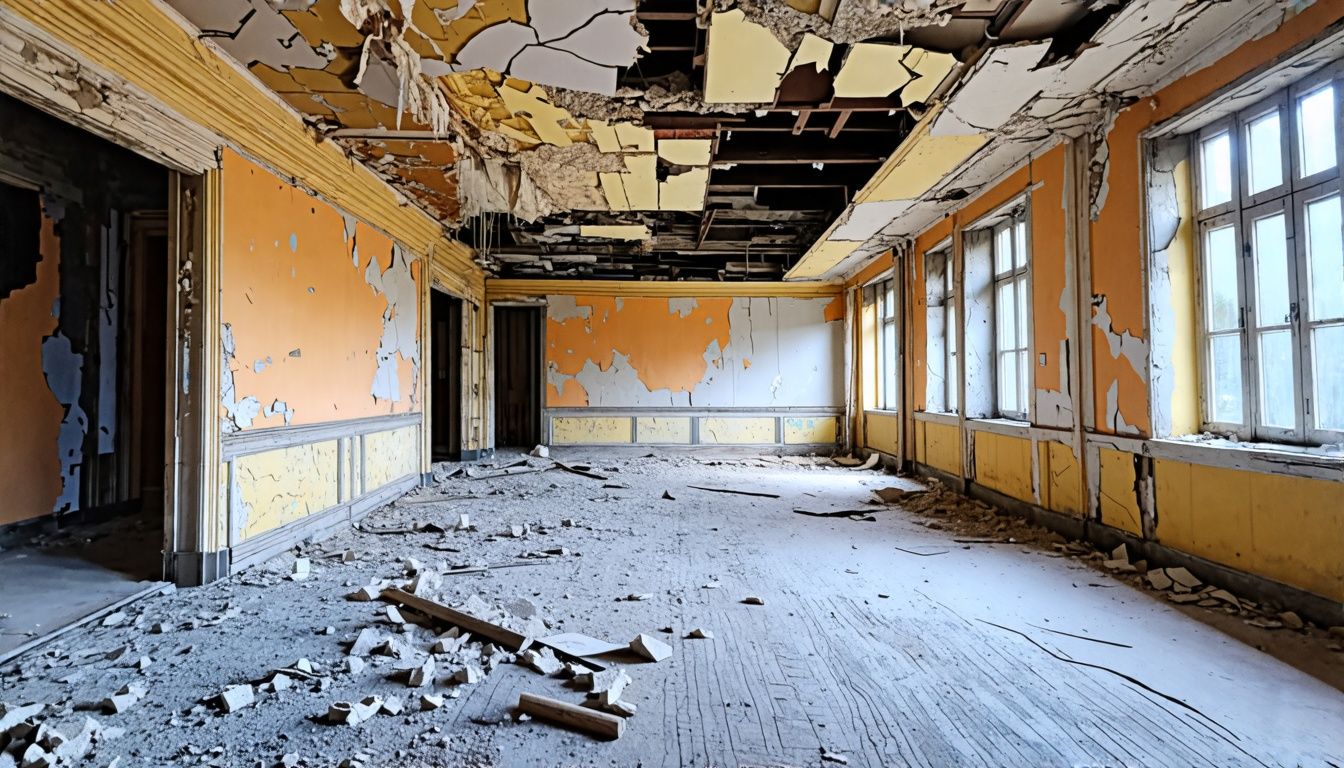
Old Buildings Frequently Used This Material in Insulation and Ceiling Tiles — And the Fibres May Cause Lung Cancer
If your building went up before 2000, there is a realistic chance it contains asbestos. Old buildings frequently used this material in insulation and ceiling tiles, and the fibres it releases can cause lung cancer, mesothelioma, and other fatal diseases. That is not scaremongering — it is the documented reality of UK construction history, and it is why the law places a clear duty on property owners and managers to find out what is in their buildings and manage it responsibly.
Understanding where asbestos hides, what the health risks genuinely are, and what you are legally required to do is the foundation of responsible property management. This could be the most consequential thing you do for your building this year.
Why Old Buildings Contain Asbestos
Asbestos is not a single substance. It is a group of naturally occurring fibrous minerals prized in construction for their heat resistance, tensile strength, chemical resistance, and low cost. For much of the twentieth century, it was considered a wonder material — cheap, durable, and extraordinarily versatile.
It was incorporated into hundreds of building products: insulation boards, ceiling tiles, textured coatings, floor tiles, roofing sheets, pipe lagging, and more. The UK was among the largest consumers of asbestos in the world. By the time a full ban came into effect in 1999, it had been embedded into the fabric of millions of buildings across the country.
If your building dates from the 1950s through to the late 1990s, the question is rarely whether asbestos was used — it is where, in what form, and in what condition. That distinction matters enormously when it comes to managing risk.
Where Is Asbestos Typically Found in Buildings?
One of the biggest challenges with asbestos is that it blends into building materials rather than standing apart from them. You cannot identify it reliably by sight. Knowing the common locations, however, helps you understand where risk is most likely to exist and where to direct investigation.
Insulation on Pipes, Boilers, and Ductwork
Thermal insulation applied to pipes, boilers, and ductwork was one of the most common applications of asbestos in commercial and industrial buildings. This lagging can appear as a white or grey coating wrapped around pipework, sometimes covered with a canvas or foil finish.
Loose-fill asbestos insulation was also used in cavity walls and loft spaces. This is among the most hazardous forms because the fibres are already in a loose state — even light foot traffic in a loft can be enough to disturb them.
Insulation Boards and Ceiling Tiles
Old buildings frequently used this material in insulation boards and ceiling tiles throughout the 1950s to 1980s. Asbestos insulating board (AIB) was a standard product in offices, schools, hospitals, and public buildings — used for ceiling tiles, partition walls, soffit boards, and fire doors.
AIB is considered a higher-risk material because it is relatively friable, meaning it can crumble and release fibres when damaged or drilled. It requires careful management and, where removal is necessary, a licensed contractor. If your premises were built or refurbished during this period, AIB should be near the top of your investigation list.
Textured Coatings on Ceilings and Walls
Artex and similar textured coatings applied to ceilings and walls commonly contained asbestos, particularly products applied before the mid-1980s. This is one of the most widespread sources of asbestos in domestic and light commercial properties.
If a pre-2000 property has a stippled or heavily textured ceiling, it should be investigated before any sanding, drilling, or redecoration work begins. Disturbing it without knowing its composition is a risk that catches many property owners off guard.
Asbestos Cement Products
Asbestos cement — sometimes called AC sheet or Eternit — was used to manufacture corrugated roofing sheets, cladding panels, guttering, downpipes, water tanks, and flue pipes. It contains a lower proportion of asbestos than some other materials and is generally lower risk when intact and undamaged.
However, it becomes hazardous when broken, cut, weathered, or drilled. Any maintenance or replacement work involving asbestos cement products needs to be approached with appropriate controls in place — never treated as routine building work.
Floor Tiles and Adhesives
Vinyl floor tiles manufactured from the 1950s through to the 1980s frequently contained chrysotile (white) asbestos. The black bitumen adhesive used to fix these tiles — often referred to as black mastic — can also contain asbestos fibres.
Undisturbed and in good condition, these materials pose a low risk. Sanding, grinding, or removal work is where the danger lies. Any floor refurbishment in a building of this age should be preceded by testing — without exception.
Sprayed Coatings on Structural Steelwork
In commercial and industrial buildings, sprayed asbestos coatings were applied directly to structural steelwork for fire protection. This is one of the highest-risk materials — it is friable, difficult to contain, and can release fibres very readily when disturbed.
Sprayed coatings require licensed removal and should never be approached without a full survey and a licensed contractor in place. There is no safe shortcut here.
Gaskets, Rope Seals, and Electrical Components
Boiler rooms and plant rooms often contain asbestos in the form of rope seals, gaskets, and packing around pipes and valves. Maintenance engineers working in these areas are at particular risk if the presence of asbestos is not known and managed.
Older fuse boxes, consumer units, and electrical panel boards sometimes used asbestos as an insulating material — particularly in older industrial premises where electrical infrastructure has not been updated for decades.
The Health Risks: Why Asbestos Fibres May Cause Lung Cancer and Other Diseases
Asbestos is the single greatest cause of work-related deaths in the UK. The risk comes from inhaling microscopic fibres that are released when asbestos-containing materials are disturbed. These fibres are too small to see and too fine to be expelled by the body once inhaled.
Once lodged deep in lung tissue, they cause chronic inflammation, scarring, and cellular damage. The diseases that result are serious, progressive, and in most cases fatal. The long latency periods involved — often decades — mean that harm done today will not become apparent for years.
Mesothelioma
Mesothelioma is a cancer of the lining of the lungs or abdomen. It is almost exclusively caused by asbestos exposure and is always fatal — there is currently no cure. It typically develops between 20 and 50 years after initial exposure, which means people dying of it today were often exposed decades ago without knowing it.
Asbestos-Related Lung Cancer
Old buildings frequently used this material in insulation and ceiling tiles, and the fibres released from those materials may cause lung cancer. Asbestos exposure significantly increases the risk of lung cancer, and that risk is multiplied substantially in people who also smoke. Latency periods are typically 15 to 35 years.
Asbestosis
Asbestosis is a chronic, progressive scarring of the lung tissue caused by prolonged heavy exposure. It causes breathlessness and reduced lung function, developing over 10 to 20 years. There is no cure — only management of symptoms.
Pleural Plaques and Pleural Thickening
Pleural plaques are areas of scarring and calcification on the pleura — the lining of the lungs. They are generally benign and symptom-free, but their presence confirms past asbestos exposure and indicates an elevated risk of more serious disease.
Pleural thickening can restrict lung function and cause breathlessness that significantly affects quality of life. The long latency periods involved in all of these conditions are precisely why preventing exposure now is so critical.
Your Legal Obligations Under the Control of Asbestos Regulations
Asbestos management in non-domestic buildings is governed by the Control of Asbestos Regulations. These regulations place a clear legal duty to manage on those responsible for non-domestic premises — that includes employers, building owners, managing agents, and landlords of commercial properties.
The Duty to Manage
If you have responsibility for maintenance and repair of a non-domestic building built before 2000, you are legally required to:
- Find out whether asbestos-containing materials are present — typically through a management survey
- Assess the condition and risk posed by any asbestos identified
- Produce and maintain a written asbestos management plan
- Keep a register of all identified asbestos-containing materials
- Ensure that anyone who might disturb asbestos — contractors, maintenance staff — is made aware of its location and condition
- Monitor the condition of asbestos-containing materials periodically
Failure to comply is not just a regulatory matter. It puts people at risk and can result in enforcement action, significant fines, and — in serious cases — prosecution. The HSE takes this duty seriously, and so should you.
Before Refurbishment or Demolition
If any building work is planned that could disturb the fabric of the structure, a refurbishment survey or demolition survey is required before work starts. These are more intrusive investigations than a management survey — areas are accessed and materials sampled that would not be disturbed during normal occupancy.
These surveys must be completed before any contractor begins work. Sending workers in without one is not just legally negligent — it is potentially lethal, and the courts have treated it as such.
Asbestos Removal
Most removal work involving higher-risk materials — asbestos insulating board, sprayed coatings, and pipe lagging — must be carried out by a contractor holding a licence from the Health and Safety Executive. Even for non-licensed work, strict controls apply around personal protective equipment, containment, and waste disposal.
Asbestos waste is classified as hazardous waste. It must be double-bagged, clearly labelled, and disposed of at a licensed facility — it cannot go into a skip or general waste stream. If you need to arrange asbestos removal, always use a licensed and accredited contractor.
How to Manage Asbestos in Your Building: Practical Steps
Managing asbestos becomes far more straightforward once you understand the process. Here is what responsible management looks like in practice.
Step 1: Commission a Survey
If you do not already have an up-to-date asbestos survey, this is your starting point. A management survey covers all areas of the building that are normally accessible during occupancy. It identifies and assesses the condition of any asbestos-containing materials and provides you with a register you can act on.
The survey must be carried out by a competent surveyor working to the standards set out in HSG264, the HSE’s guidance on asbestos surveying. UKAS-accredited surveyors provide the highest level of assurance — always check accreditation before appointing anyone.
Step 2: Produce an Asbestos Management Plan
Based on the survey findings, you need a written plan that sets out:
- Where asbestos is located and in what condition
- The risk each material poses
- What action is required and by when
- How and when conditions will be re-inspected
- How contractors and maintenance staff will be informed
This is a living document — it needs to be reviewed and updated as conditions change, work is carried out, or materials are removed.
Step 3: Communicate With Anyone Working on the Building
Your asbestos register is only useful if the people who need it can access it. Before any contractor, maintenance engineer, or tradesperson begins work on your building, they must be made aware of the location and condition of any asbestos-containing materials in the areas they will be working.
This is not optional — it is a legal requirement under the Control of Asbestos Regulations, and it is the single most effective way to prevent accidental disturbance.
Step 4: Re-inspect Regularly
Asbestos-containing materials in good condition and left undisturbed pose a low risk. But conditions change — materials deteriorate, buildings are modified, and maintenance activities can inadvertently cause damage. Regular re-inspection, typically annually, ensures your register remains accurate and your management plan reflects current conditions.
Step 5: Act on Deteriorating Materials Promptly
If a re-inspection identifies materials that have deteriorated, been damaged, or are at risk of disturbance, you need to act. That may mean encapsulation, over-boarding, or licensed removal — depending on the material type and extent of damage. Leaving deteriorating asbestos-containing materials unaddressed is both a legal failing and a genuine risk to health.
Asbestos Surveys Across the UK
Asbestos management obligations apply to buildings across the country, and access to competent, accredited surveyors matters wherever your property is located. Supernova Asbestos Surveys operates nationwide, with specialist teams covering every region.
If you manage property in the capital, our asbestos survey London service covers all London boroughs, from commercial offices to mixed-use developments. For properties in the North West, our asbestos survey Manchester team handles everything from industrial units to listed buildings. In the Midlands, our asbestos survey Birmingham service provides the same standard of UKAS-accredited surveying to property managers and owners across the region.
Wherever your building is located, the same legal obligations apply — and the same standard of professional service is available to you.
Common Mistakes Property Managers Make With Asbestos
Even well-intentioned property managers can fall into traps that create legal exposure and genuine risk. Here are the most common errors to avoid.
- Assuming a clean-looking building is asbestos-free. Asbestos-containing materials can look perfectly sound and still release fibres when disturbed. Appearance tells you nothing about composition.
- Relying on an outdated survey. A survey carried out years ago may not reflect the current condition of materials, especially if work has been done on the building since.
- Failing to pass information to contractors. The duty to manage includes an obligation to share asbestos information with anyone who might disturb it. Keeping the register in a filing cabinet and never referring to it defeats its purpose entirely.
- Treating all asbestos the same. The risk posed by asbestos-containing materials varies enormously depending on the type of asbestos, the form of the material, its condition, and the likelihood of disturbance. A blanket approach — either removing everything or ignoring everything — is rarely appropriate.
- Using unlicensed contractors for licensed work. Using an unlicensed contractor to remove higher-risk asbestos materials is a criminal offence, not just a procedural failing. The consequences — for the contractor and for the duty holder — can be severe.
Frequently Asked Questions
Does my building definitely contain asbestos if it was built before 2000?
Not necessarily — but the probability is high enough that you should not assume otherwise without evidence. Buildings constructed or refurbished between the 1950s and 1999 are most likely to contain asbestos-containing materials. The only reliable way to establish whether asbestos is present is through a professional survey and, where necessary, laboratory analysis of samples.
Is asbestos dangerous if it is left undisturbed?
Asbestos-containing materials that are in good condition and are not likely to be disturbed pose a low risk. The danger arises when fibres are released into the air — typically through damage, deterioration, or poorly controlled maintenance or construction work. Managing asbestos in situ, rather than removing it, is often the appropriate approach provided the material is stable and monitored regularly.
Who is legally responsible for managing asbestos in a building?
Under the Control of Asbestos Regulations, the duty to manage falls on the person or organisation responsible for the maintenance and repair of non-domestic premises. This is typically the building owner, employer, or managing agent — sometimes referred to as the duty holder. In multi-tenanted buildings, responsibility may be shared or allocated by the terms of the lease.
What is the difference between a management survey and a refurbishment survey?
A management survey is designed to locate and assess asbestos-containing materials in areas that are normally accessible during day-to-day occupancy. It is the standard survey required to fulfil the duty to manage. A refurbishment survey is more intrusive — it involves accessing areas that would normally be left undisturbed and is required before any refurbishment or demolition work that could disturb the fabric of the building. The two serve different purposes and are not interchangeable.
Can I remove asbestos myself?
For the majority of higher-risk asbestos-containing materials — including asbestos insulating board, pipe lagging, and sprayed coatings — removal must be carried out by a contractor licensed by the Health and Safety Executive. Even for materials that fall outside the licensed work category, strict controls apply. Attempting to remove asbestos without the appropriate competence, equipment, and controls is dangerous, illegal in many circumstances, and can expose you to significant legal liability.
Get Expert Help From Supernova Asbestos Surveys
Supernova Asbestos Surveys has completed over 50,000 surveys across the UK. Our UKAS-accredited surveyors work to the standards set out in HSG264 and the Control of Asbestos Regulations, providing management surveys, refurbishment surveys, demolition surveys, and asbestos removal coordination for commercial and residential properties of all types.
If you are not certain what is in your building, or if you know asbestos is present but are unsure how to manage it, the right next step is a conversation with a qualified professional. Do not wait until a contractor disturbs something — or until a re-inspection reveals deterioration that should have been caught sooner.
Call us on 020 4586 0680 or visit asbestos-surveys.org.uk to arrange a survey or speak to one of our team. We cover the whole of the UK and can typically mobilise quickly to meet your timescales.